
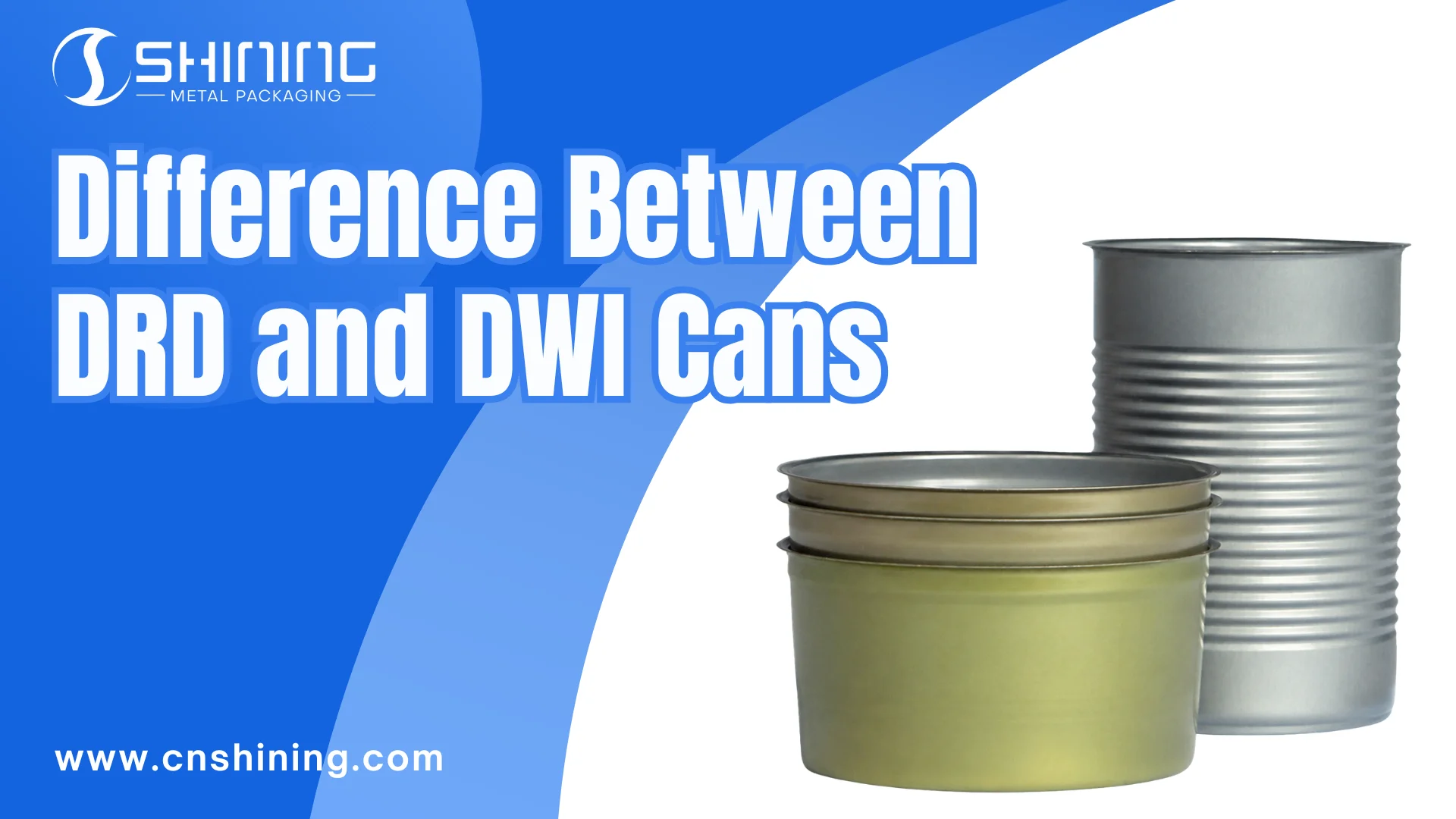
DRD and DWI cans are both two-piece food cans, but they are not made in the same way.
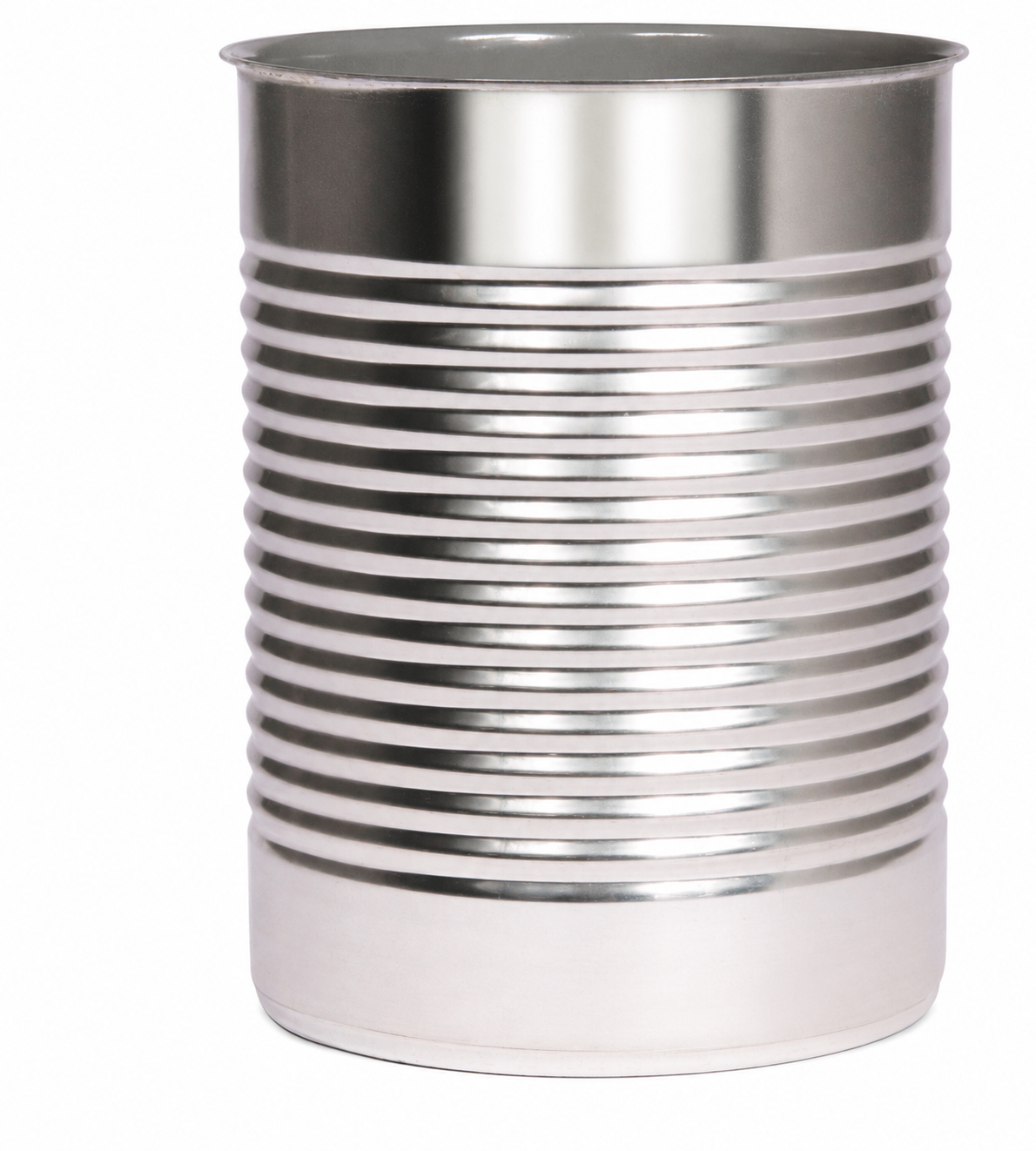
A two-piece can has one formed body and one separate end. The body includes the side wall and the bottom, so there is no welded side seam. This structure can reduce one possible leakage point compared with a three-piece welded can.
The real difference is in the forming process.
DRD cans are made by drawing and redrawing.
DWI cans are made by drawing and wall ironing.
That sounds like a small process difference. In production, it affects wall thickness, shape flexibility, material use, printing method, line speed, and cost.
1. What Are DRD Cans?
DRD means Draw Redraw.
A DRD can is formed by drawing a metal blank into a cup shape, then redrawing it one or more times until the required depth and diameter are reached.
The important point is that DRD cans are not mainly made by thinning the side wall through wall ironing. The shape is built through drawing and redrawing.
This makes DRD suitable for shallow cans, compact cans, and shaped cans. It is often used when the can shape is not a simple high-volume standard cylinder.
DRD cans can be made from tinplate, tin-free steel, or aluminum. The lid or easy-open end may also use tinplate, tin-free steel, or aluminum, depending on the product and sealing requirement.
1.1 How DRD Cans Are Made
The process usually starts with a coated or uncoated metal sheet.
The sheet is cut into blanks. Each blank is drawn into a shallow cup. The cup is then redrawn one or more times to reduce the diameter and increase the height.
After that, the bottom is formed, the open edge is flanged and trimmed, and the can body is inspected.
During body forming, a punch presses the metal into the required shape. Depending on the complexity of the can design, additional forming steps may be needed before the final body is completed.
For some simple DRD cans, pre-printing or pre-coating can be used before forming. For deeper or more difficult shapes, coating and printing may need to be adjusted because drawing can distort the surface.
1.2 Main Advantages of DRD Cans
DRD cans are useful when shape flexibility matters.
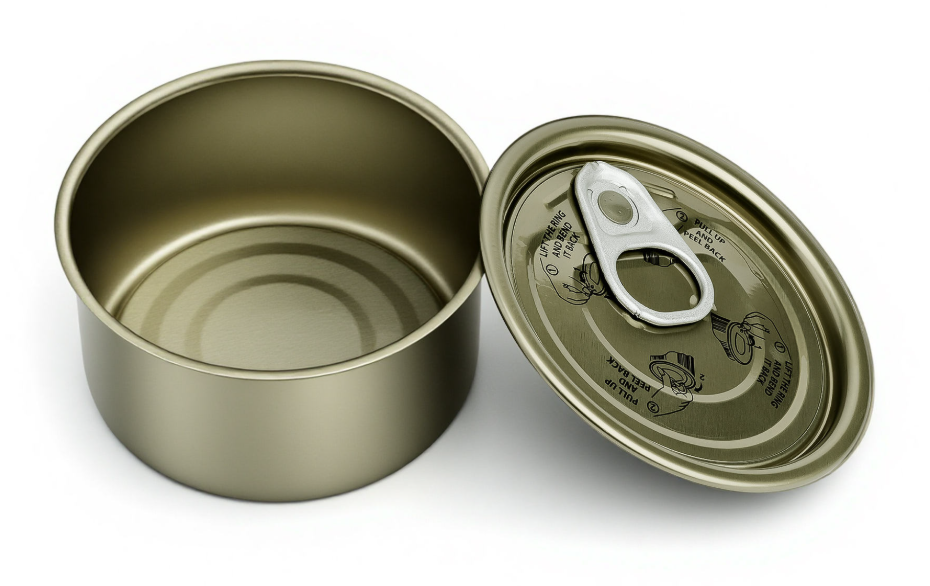
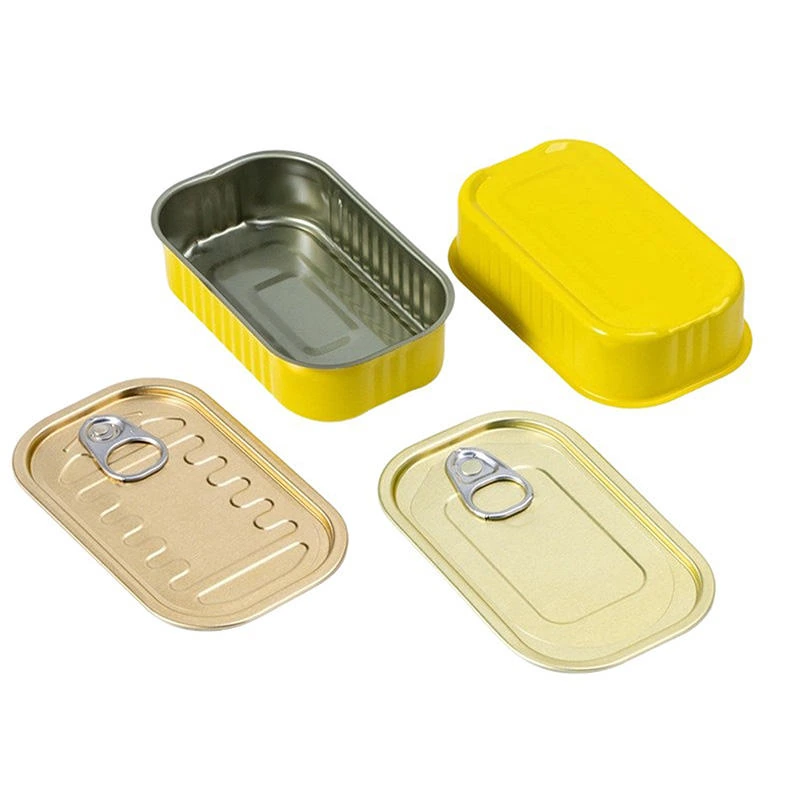
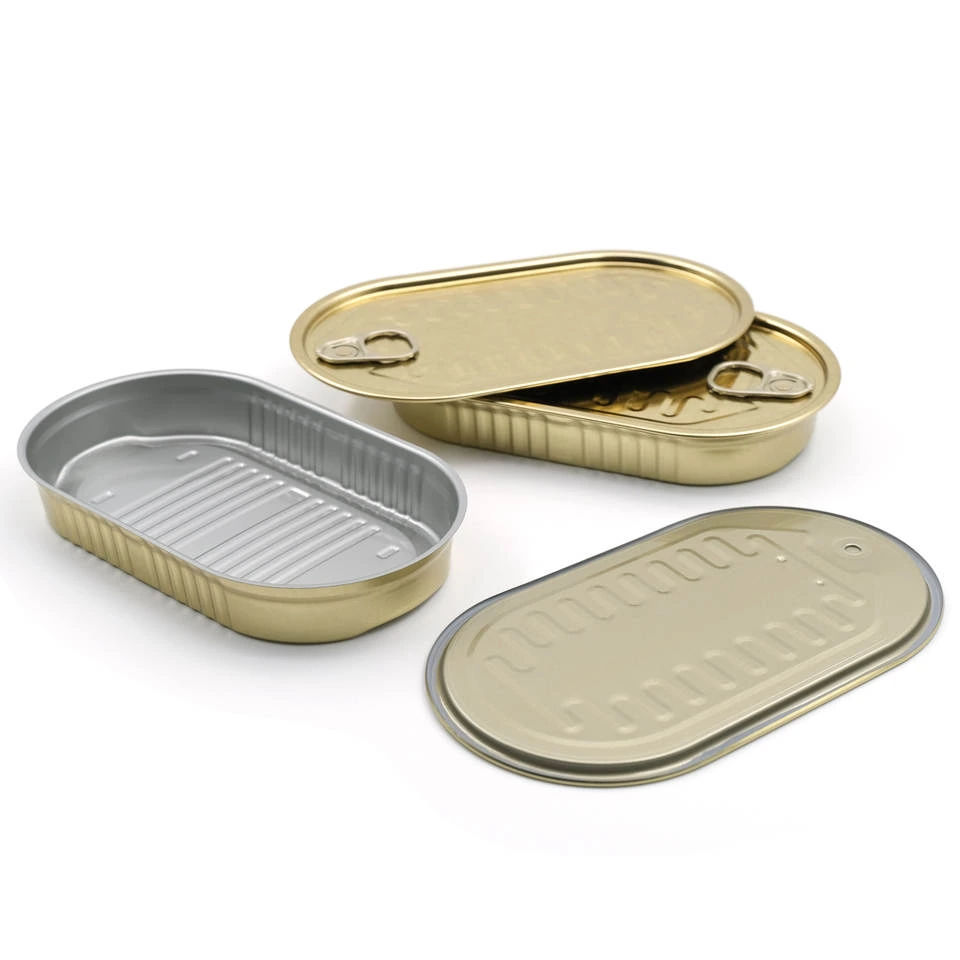
They can be made into round, rectangular, oval, bowl-shaped, conical, or other compact shapes. They are also suitable for smaller-volume production where a high-speed DWI line may not be the best fit.
Another practical advantage is decoration flexibility. In many DRD applications, direct printing is easier to manage than in DWI production, although the final decision still depends on the can shape and forming depth.
1.3 Common Applications of DRD Cans
DRD cans are often used for:
- Seafood cans
- Fish cans
- Tuna cans
- Single-serve pet food cans
- Small food cans
- Bowl-shaped cans
- Rectangular or specialty shaped cans
The basic judgment is simple: if the package needs a special shape or a smaller format, DRD is usually easier to justify.
2. What Are DWI Cans?
DWI means Drawn and Wall-Ironed.
A DWI can is first drawn into a cup. Then the cup is passed through ironing rings. These rings make the side wall thinner and increase the body height.
This is the key feature of DWI.
The bottom keeps more of its original thickness, while the side wall becomes thinner. That gives the can a taller body with better material efficiency.
DWI is usually used for straight-wall cans or standard food can formats. It makes the most sense when the can size is stable and the production volume is high.
For food cans, the DWI body is usually made from tinplate. The lid or easy-open end may use tinplate, tin-free steel, or aluminum.
2.1 How DWI Cans Are Made
The process usually starts with tinplate coil.
The metal is lubricated, cut, and drawn into shallow cups. The cups are then redrawn and pushed through ironing rings. During ironing, the side wall becomes thinner and the can body becomes taller.
After forming, the can is trimmed, washed, coated, printed, flanged, beaded, internally sprayed, baked, inspected, and packed.
The process is more sensitive to material consistency and lubrication than a simple drawing process. If the sheet thickness, surface quality, or lubrication is unstable, wall ironing defects can appear quickly.
2.2 Main Advantages of DWI Cans
DWI cans are strong in high-volume production.
The main advantage is material efficiency. Since the side wall is ironed thinner, the can body can use less metal while still keeping the required height and strength.
DWI also works well when the product uses standard can dimensions. Once the line is stable, the process is fast and repeatable.
The seamless body is another advantage. Since the bottom and wall are formed from one piece of metal, there is no welded side seam on the body.
2.3 Common Applications of DWI Cans
DWI cans are often used for:
- Standard food cans
- Wet food cans
- Vegetables
- Beans
- Soups
- Ready meals
- Pet food in standard sizes
- Other high-volume food products
DWI is often associated with beverage cans, but it is not limited to beverages. For standardized food products, it can also be a practical two-piece can process.
3. DRD vs DWI Cans: Key Differences
| Comparison Point | DRD Cans | DWI Cans |
|---|---|---|
| Full name | Draw Redraw | Drawn and Wall-Ironed |
| Main forming method | Drawing and redrawing | Drawing, redrawing, and wall ironing |
| Wall thickness | Usually not aggressively thinned | Side wall is ironed thinner |
| Best for | Specialty shapes, smaller cans, lower-volume runs | Standard cans, high-volume production |
| Shape flexibility | Выше | Ниже |
| Body height | Usually moderate, with a maximum diameter-to-height ratio typically around 1:1 | Can be taller |
| Печать | Can support direct printing in many cases | Usually less suitable for pre-forming direct printing |
| Typical products | Seafood, fish, pet food, shaped cans | Wet foods, vegetables, soups, beans, pet food |
| Cost logic | Better for specialty or lower-volume formats | Better for large-volume efficiency |
| Material efficiency | Хороший | Stronger advantage in thin-wall design |
| Can body material | Tinplate, tin-free steel, or aluminum | Usually tinplate |
| Lid / easy-open end material | Tinplate, tin-free steel, or aluminum | Tinplate, tin-free steel, or aluminum |
4. How to Choose the Right Food Can Packaging
The right choice depends on the product shape, filling volume, expected output, coating requirement, and the main risk you want to control. Do not choose DRD or DWI only by the name of the can. Start from the product and the production condition.
4.1 Use DRD When Shape Flexibility Matters
DRD is usually a better choice when the can needs a shallow, compact, or shaped body.
This includes seafood cans, fish cans, tuna cans, single-serve pet food cans, bowl-shaped cans, and other specialty food formats.
DRD also makes sense when the production volume is not extremely high. For these products, flexibility may matter more than maximum line speed.
If the package needs direct printing or a more customized appearance, DRD may also be easier to manage. The forming depth still needs to be checked, because drawing can stretch or distort the printed surface.
4.2 Use DWI When Volume and Material Efficiency Matter
DWI is usually a better choice for standard food cans produced in high volume.
It is suitable for products such as vegetables, beans, soups, ready meals, wet pet food, and other standardized wet foods.
The main reason is simple. DWI can make a taller can body with a thinner side wall, so it has a clear material-efficiency advantage when the process is stable.
DWI also works well when the can diameter, height, and product format remain consistent for long runs. If the product changes frequently or needs a special shape, the advantage becomes less obvious.
5. A Few Practical Notes
DRD and DWI cans are both two-piece cans, but they should not be treated as interchangeable options.
DRD is not just a “small DWI can.” It is a different forming route. It is better suited to shaped, shallow, compact, or lower-volume cans.
DWI is not only for beverage cans. It is also used for food cans when the product format is standardized and the production volume is high enough to justify the process.
Two-piece cans are not always better than three-piece cans either. A two-piece can removes the welded side seam, but three-piece cans still work well for many food products, dry products, powders, nutrition products, and flexible size requirements.
The better question is not which can is better.
The better question is: what does the product need the can to do?
If the product needs shape flexibility, DRD is usually the more practical route.
If the product needs high-volume efficiency in a standard format, DWI is usually the stronger option.