1. A Bottle Designed to Be Recognized by Touch, Not Just by Logo
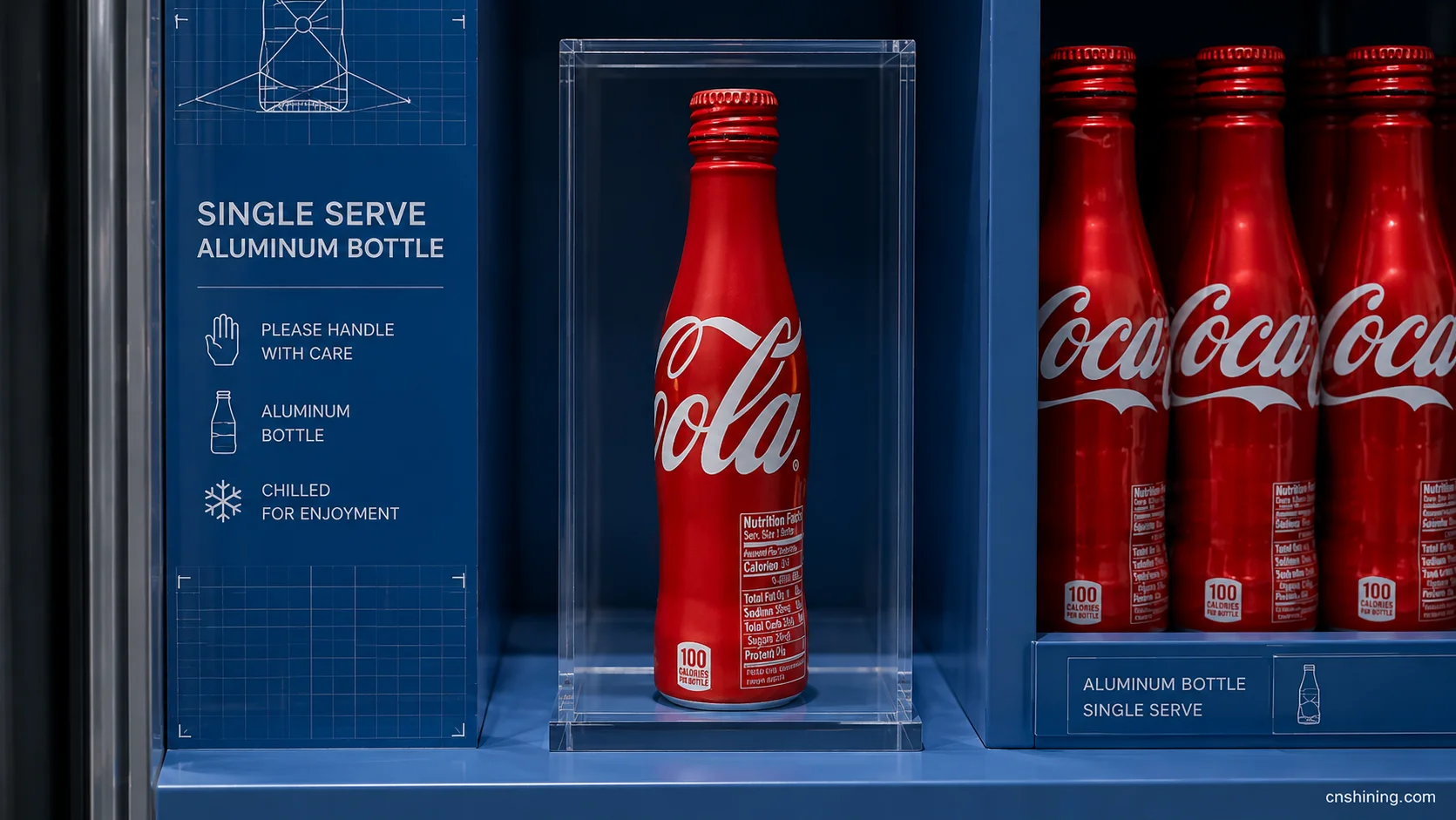
Coca-Cola’s original packaging brief was unusually physical: the bottle had to be distinctive enough to be recognized by touch alone. More than a century later, that idea explains the Кока-Кола алюминиевая бутылка better than a generic argument about changing packaging materials. The brand already owns a recognizable silhouette; aluminum becomes useful when it gives that silhouette a different temperature, surface and visual character without asking consumers to relearn the package.
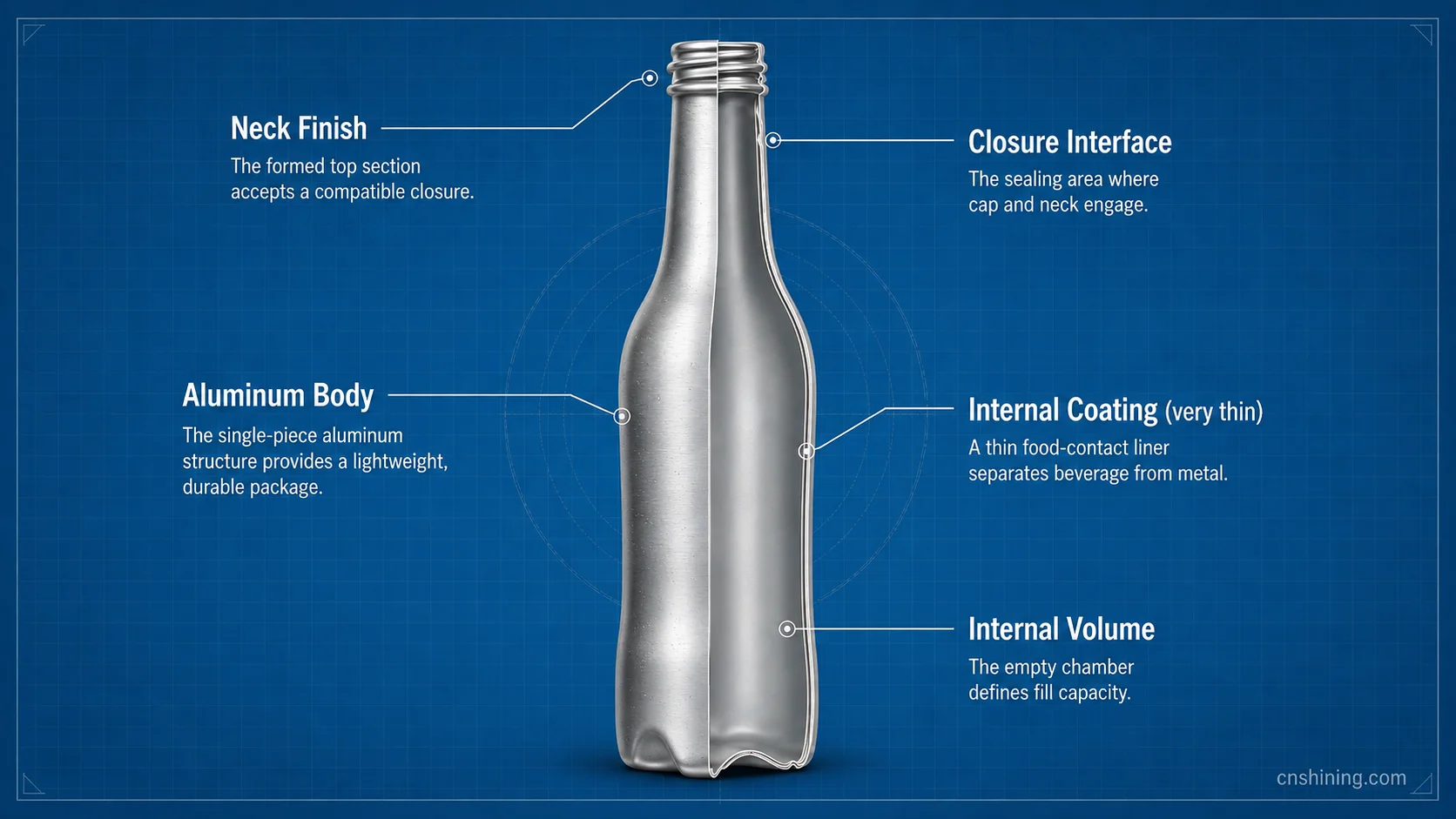
The company’s official contour-bottle history records the introduction of an aluminum version in 2005. Japan later translated the same principle into a 250 mL slim aluminum bottle. Its official description emphasized the inherited contour, one-serving volume and a drinking experience tied to the feel of aluminum; regional landmarks, sporting events, New Year and cherry-blossom designs turned the package into a location- and occasion-specific object. That Japanese slim bottle has since ended regular sales.
That history suggests a fairly specific role for aluminum. A shaped bottle makes sense where recognition, collectibility, a controlled serving size and an occasion-specific graphic system justify more packaging complexity. It is much less persuasive as a blanket replacement for Coca-Cola’s established high-volume formats. The useful packaging tension is therefore not “aluminum versus plastic” or “bottle versus can,” but how much additional brand value the contour can create before the extra complexity of the bottle stops paying for itself.
2. What Makes the Coca-Cola Aluminum Bottle Technically Different
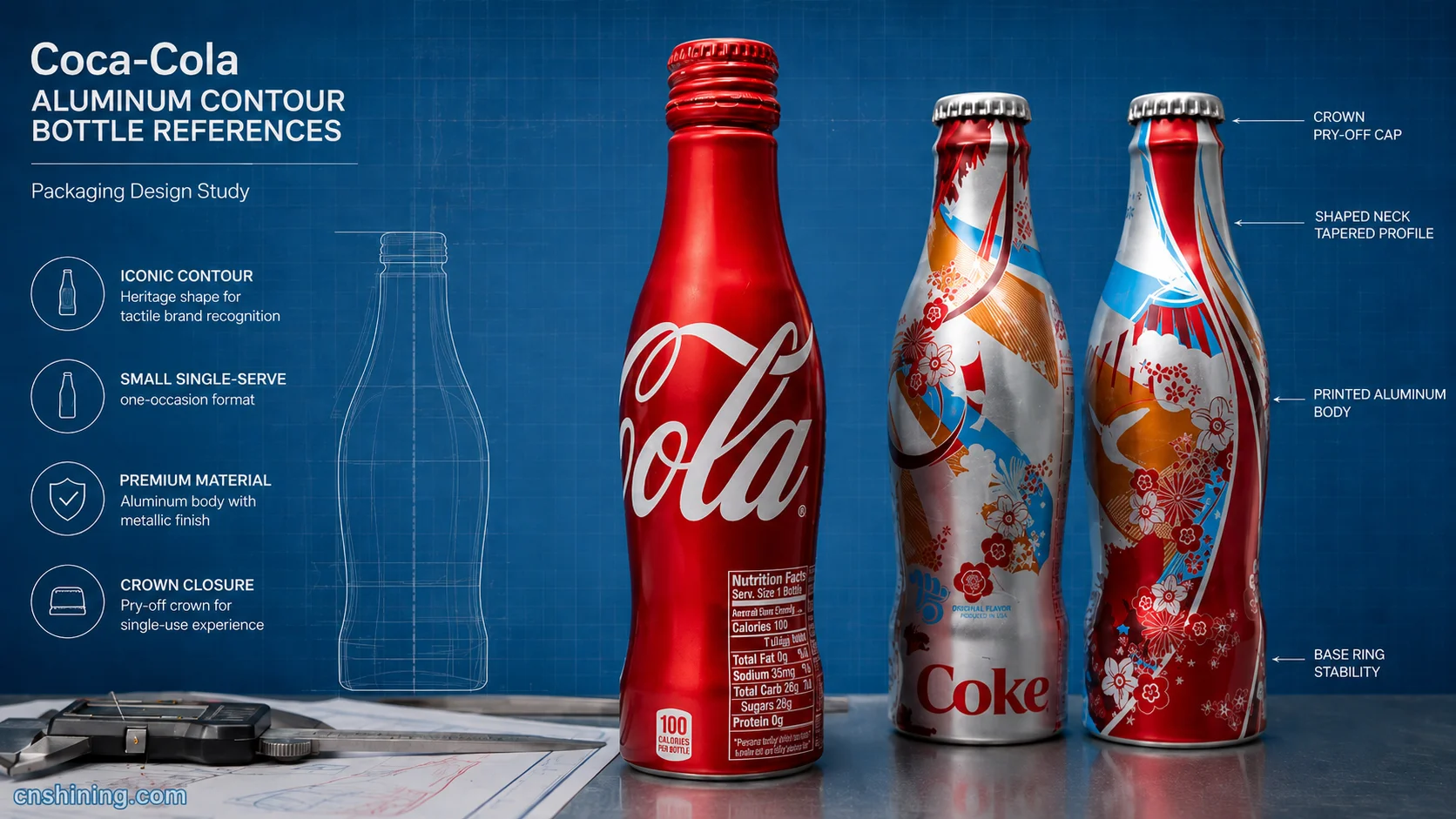
The outside of the bottle is the brand asset; the inside is a food-contact and pressure-management problem. Coca-Cola Original’s published ingredient list includes carbonated water and phosphoric acid. For an aluminum package, that makes a suitable internal coating a functional barrier rather than a decorative specification. The coating system, its cure, coverage and compatibility have to be evaluated against the actual formula, filling process, storage temperature and intended shelf life.
| Decision area | Coca-Cola-specific packaging requirement | Development question that matters |
|---|---|---|
| Body geometry | A shaped body should retain enough of the contour language to be recognizable without creating unnecessarily fragile local transitions. | Where do shoulder, waist and base geometry begin to increase dent sensitivity, line-handling difficulty or dimensional variation? |
| Внутреннее покрытие | The acidic, carbonated beverage should remain isolated from direct metal contact throughout shelf life. | Does the selected coating remain intact after forming, filling, transport exposure and the full intended time-temperature profile? |
| Neck and closure | The package must hold carbonation while providing tamper evidence and a predictable opening experience. | What neck finish, cap construction, liner system and application window produce stable seal integrity without excessive opening torque? |
| Декоративная отделка поверхности | The body may carry highly recognizable red-and-white graphics as well as limited regional or event artwork. | Can color, registration, varnish and abrasion resistance stay consistent across curved and reduced-diameter body zones? |
| Consumer handling | The cold metal touch and contour should feel deliberate rather than like a conventional can with a neck added. | Are grip, condensation, drinking-lip geometry and visible dent tolerance acceptable in the intended channel? |
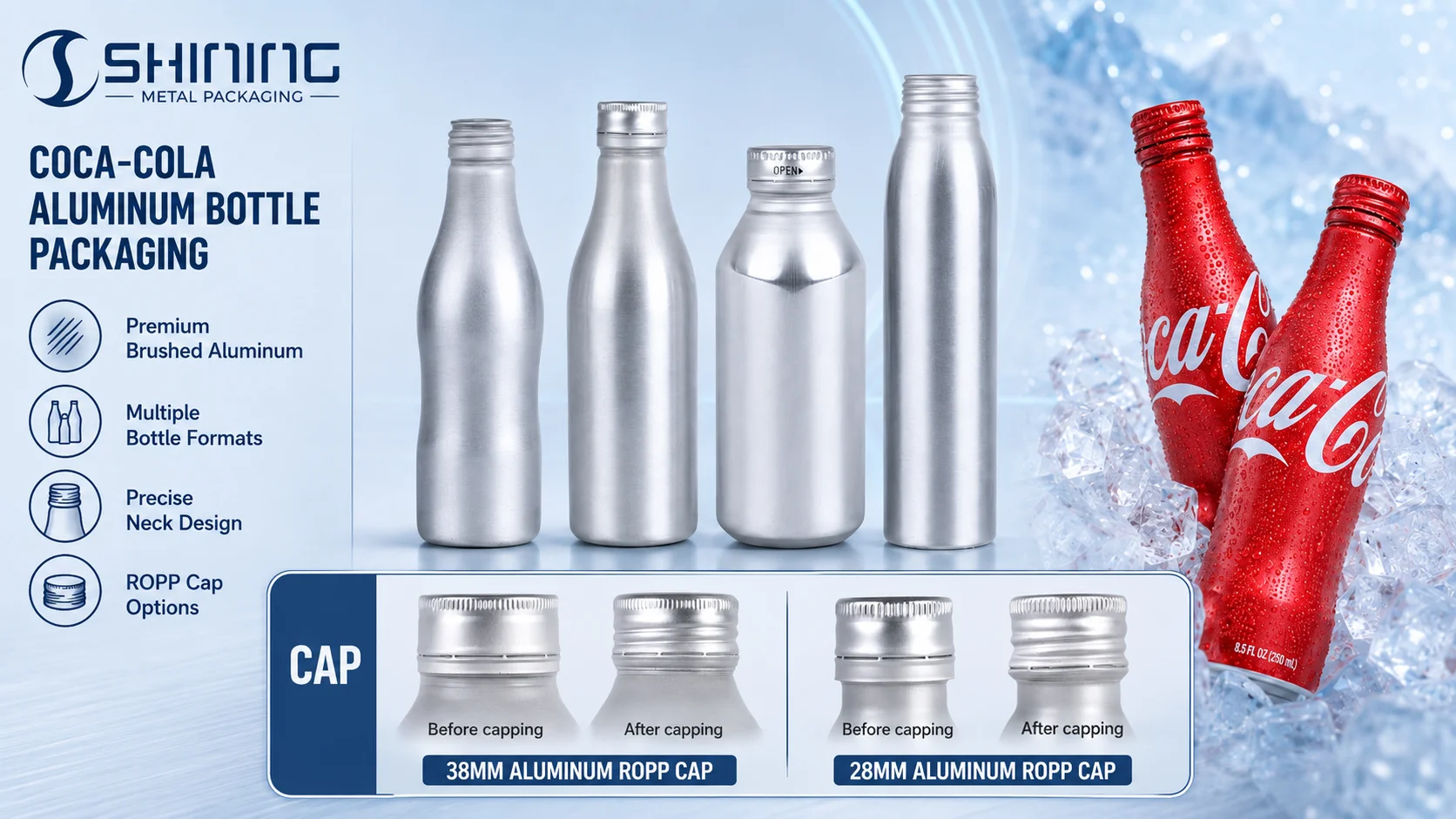
Coca-Cola’s U.S. 8.5 oz aluminum-bottle development has also been publicly documented with a roll-on pilfer-proof closure. That matters because the closure is not a finishing detail: forming the кепка ROPP threads correctly, controlling application force, maintaining the tamper band and holding carbonation all meet at the neck. The documented ROPP program for the 8.5 oz bottle shows that bottle geometry and closure engineering have to be developed as one system.
Regulatory work belongs inside the same engineering decision. In the United States, components of a food-contact material that may reasonably migrate into food require an applicable regulatory basis under FDA rules or an appropriate authorization pathway. In the European Union, Commission Regulation (EU) 2024/3190 prohibits BPA in food-contact materials within its scope except for specified derogations and also establishes compliance-documentation requirements. A coating should therefore be selected for the formula и target market rather than described simply as “food grade” or “BPA-free.”
3. Why the Small Aluminum Bottle Works Best as an Occasion Format
The most coherent Coca-Cola aluminum-bottle executions have tended to be small enough to function as a single serving and distinctive enough to justify being noticed. Japan’s 250 mL slim bottle explicitly combined one-drink sizing with regional, tourism, sporting and seasonal graphics. In the United States, public retail listings continue to show an 8.5 fl oz Coca-Cola aluminum bottle, confirming that the small-format route is not merely a historical design exercise.
This scale changes what the package is asked to do. A 250 mL or 8.5 oz bottle is not trying to win a volume-efficiency contest against a standard can or a large PET bottle. Its value is concentrated into a shorter consumption occasion: cold cabinet purchase, venue service, travel stop, souvenir purchase, event activation or a limited design that a consumer may keep after drinking. The contour and metal surface have enough time to be noticed because the package itself becomes part of the occasion.
That also shifts the mechanical priorities. A visible dent on an ordinary high-volume container may be treated primarily as a distribution defect; on a collectible or design-led bottle, the same dent damages the reason the consumer accepted the format in the first place. Secondary packaging therefore matters only where it protects the bottle’s appearance: dividers, tray contact points, pallet compression and surface-to-surface abrasion should be checked against shoulder dents, scuffing, varnish damage and cap deformation rather than optimized as a separate packaging project.
The result is a useful boundary for brand teams. The Coca-Cola aluminum bottle is strongest when the product brief contains a specific reason for the consumer to notice and handle the bottle. If the brief is simply “put regular Coca-Cola into aluminum at the lowest possible unit cost,” a conventional can starts with a structural and economic advantage that the shaped bottle does not need to challenge.
4. Competitor Benchmark: Carbonated Soft Drinks in Aluminum Bottles
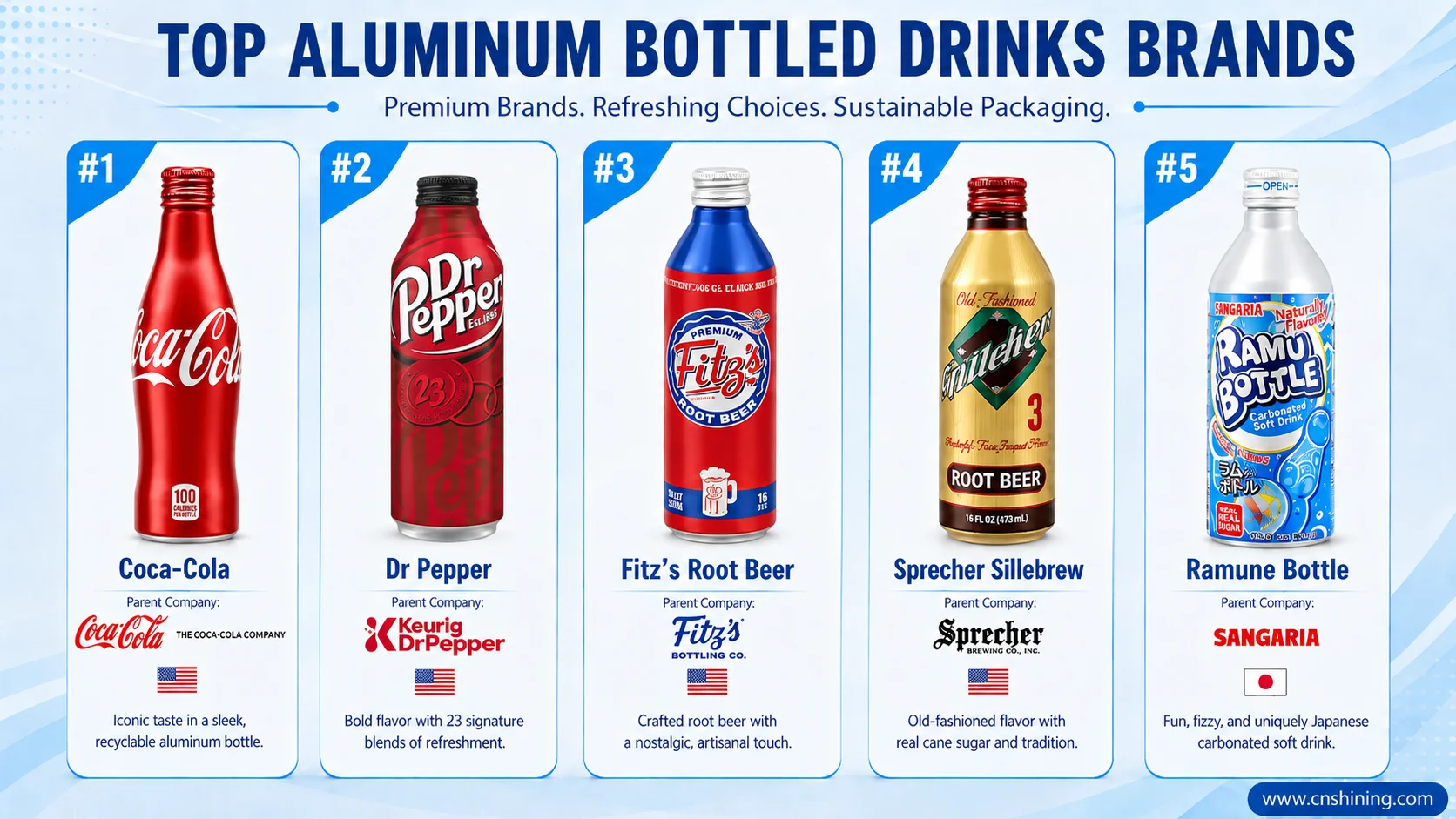
Current, directly comparable cola brands in verified retail aluminum bottles are surprisingly scarce. Rather than mix in ordinary cans, PET bottles or collector-only historical packages, the benchmark below uses the closest independently branded carbonated-soft-drink products for which an aluminum bottle, capacity and single-unit retail reference could be verified. That leaves four useful peers rather than forcing the table to five.
| Бренд | Страна | Parent company / brand owner | Емкость | Retail price, single unit | Core packaging proposition |
|---|---|---|---|---|---|
| Dr Pepper | Соединенные Штаты | Keurig Dr Pepper Inc. | 16 fl oz / 473 mL | US$7.34 | Large single-serve aluminum bottle applied to a nationally familiar carbonated soft drink; utility and package differentiation are emphasized more than reduced serving size. |
| Fitz’s Root Beer | Соединенные Штаты | Fitz’s Bottling Company | 16 fl oz / 473 mL | US$3.25 | Craft-soda positioning combined with a wide-mouth aluminum bottle; the package supports a nostalgic beverage identity while adding resealable bottle behavior. |
| Killebrew Root Beer | Соединенные Штаты | RJM Distributing, Inc. (exclusive licensee) | 16 fl oz / 473 mL | US$1.49 | Regional, sports-linked nostalgia in a bottle-like metal format, with a larger serving and straightforward single-unit retail proposition. |
| Sangaria Ramu Bottle | Япония | Japan Sangaria Beverage Co., Ltd. | 500 мл | US$5.99 | A resealable aluminum interpretation of Japanese Ramune, using a larger volume and novelty/import identity rather than a sculptural heritage bottle shape. |
The pattern is more useful than a ranking. Fitz’s, Killebrew and Sangaria use roughly 473–500 mL formats, turning the aluminum bottle into a longer drinking session or a resealable alternative to conventional soda packaging. Dr Pepper also sits at 16 fl oz. Coca-Cola takes almost the opposite route with its 8.5 oz U.S. bottle and former 250 mL Japanese slim bottle: less liquid, more concentration of brand identity per package.
That distinction matters commercially. Coca-Cola does not need aluminum to make the beverage recognizable. It needs the bottle only where aluminum amplifies an asset competitors cannot easily reproduce: the contour itself. Regional art, event graphics or souvenir relevance can then be layered onto that recognizable physical form. A straight-sided 16 oz aluminum bottle may offer excellent functionality, but for Coca-Cola it would surrender part of the very reason to accept the bottle’s additional complexity.
5. What Packaging Teams Should Preserve Before Scaling the Format
For a product like Coca-Cola Original, development should begin with information that the bottle cannot solve by itself: target market, carbonation level, filling temperature, process conditions, intended shelf life and distribution temperature. Only then should the team freeze the coating system, neck finish and closure application window. Artwork and special finishes come later because they are easier to change than a failed beverage-container interface.
The same order keeps the visual design honest. A shaped aluminum body can carry high-impact graphics, but a printable surface is not automatically a durable surface. Color matching should be checked after forming; varnish and ink should be challenged for rub and condensation exposure; decorated samples should pass real line handling and transport simulation. For a design-led bottle, appearance after distribution is a performance requirement rather than a cosmetic afterthought.
For projects with similar acidic carbonated products, Блестящая упаковка can support ROPP neck and cap matching, internal-coating selection, surface trials and pre-production bottle validation.
The central lesson of the Coca-Cola aluminum bottle is therefore narrower—and more useful—than the claim that aluminum is simply a better package. Coca-Cola gains the most when metal reinforces something the brand already owns: a contour meant to be recognized in the hand. The format becomes compelling when that tactile identity is paired with a small serving, a defined occasion and technically disciplined coating and closure validation. Remove those conditions, and aluminum alone is not enough to justify the bottle.