
Canned food stays shelf-stable because it is heat-processed and sealed inside a container that prevents recontamination.
The heat controls microorganisms and food enzymes. The hermetic seal keeps microorganisms from entering after processing. The metal body also blocks oxygen, moisture, light, and external odors.
The can does not preserve food by itself. The process and the package must work as one system.
1. How Metal Food Cans Protect the Product
1.1 Thermal Processing Controls Microorganisms
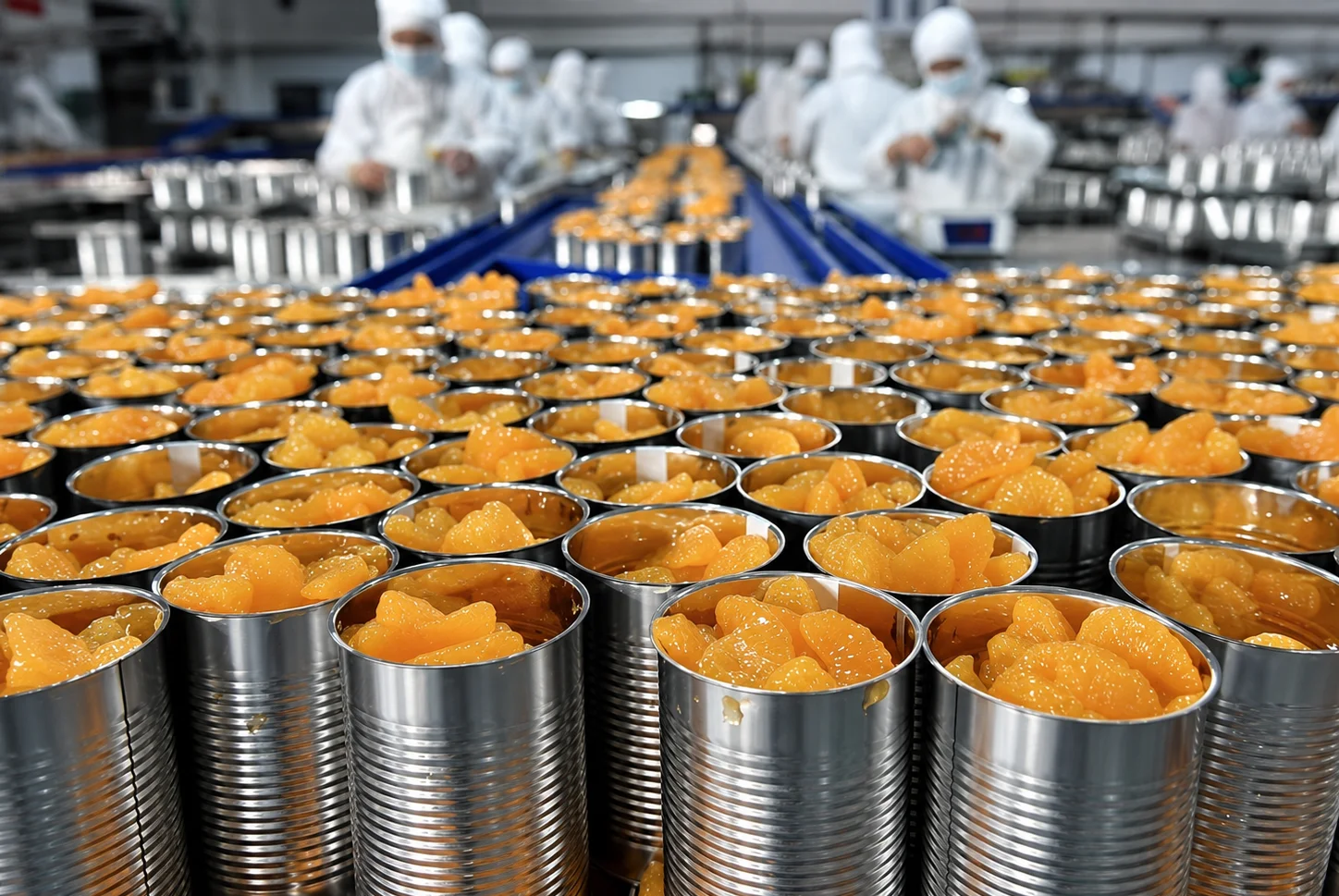
After filling and sealing, canned food is heated in a retort. The process may use steam, hot water, or a steam–air mixture.
The target is commercial sterility, not the destruction of every living cell. Commercial sterility means that microorganisms capable of growing under normal non-refrigerated storage conditions have been controlled.
Low-acid foods need a carefully validated process because they may support the growth of heat-resistant spores, including Clostridium botulinum. FDA defines low-acid canned foods as products with an equilibrium pH above 4.6 and water activity above 0.85, with limited regulatory exceptions.
There is no standard retort time that works for every product. The scheduled process depends on the recipe, pH, viscosity, solid-piece size, fill weight, starting temperature, container dimensions, and heating method. FDA requires separate process filings for each relevant product, style, container type, container size, and processing method. (источник)
Heat also inactivates many natural food enzymes. These enzymes can continue changing flavor, color, and texture if they are not controlled.
1.2 Hermetic Sealing Prevents Recontamination
Heating controls what is already inside the can. It does not protect the food if cooling water, air, or microorganisms enter later.
Metal can ends are normally attached with a double seam. The body hook and cover hook interlock, while sealing compound closes small spaces inside the seam.
Seam quality depends on overlap, hook dimensions, seam thickness, tightness, and correct seamer adjustment. FDA guidance calls for visual inspection and, where appropriate, teardown examination against the specifications supplied by the can and end manufacturer. (источник)
A strong can body cannot compensate for a defective seam.
1.3 Metal Provides a Stable Barrier
An intact metal can is impermeable to oxygen, carbon dioxide, moisture, and aroma compounds. It also blocks light. This slows fat oxidation, color changes, aroma loss, moisture transfer, and light-related deterioration.
Many products also develop a partial vacuum during cooling. Lower residual oxygen can reduce oxidation and internal pressure, but vacuum alone does not make food safe. C. botulinum can grow in low-oxygen conditions if the thermal process is inadequate.
Internal coatings help limit corrosion and food–metal interaction. The coating must match the food’s acidity, salt content, sulfur compounds, fat level, and expected storage conditions. Poor coating compatibility may cause discoloration, corrosion, or eventual package failure.
2. How Long Does Canned Food Last?
USDA separates commercial canned food into two broad groups.
High-acid canned foods generally retain their best quality for 12 to 18 months. Low-acid canned foods generally retain their best quality for two to five years, provided that the unopened can remains in good condition and is stored in a cool, dry place. (источник)
These figures are quality guidelines. They are not guaranteed safety limits for every product. The manufacturer’s label and storage instructions still apply.
2.1 Canned Food Shelf Life Chart
The figures below refer to best quality, not fixed safety expiration dates. They apply to unopened, undamaged cans stored in a cool, dry place. Always follow the date and storage instructions provided by the manufacturer.
| Commercial canned product | Unopened shelf life for best quality | After opening |
|---|---|---|
| Shelf-stable canned ham | About 2 years | 3–4 days refrigerated |
| Canned meat, poultry, fish, soups, stews, and beans | 2–5 years | 3–4 days refrigerated |
| Canned vegetables | 2–5 years | 2 days refrigerated |
| Tomatoes, tomato sauce, and other tomato products | 12–18 months | 5–7 days refrigerated |
| Commercial canned fruit | 12–18 months | 5–7 days refrigerated |
| Canned or reconstituted fruit juice | 12–18 months | 8–12 days refrigerated after opening or reconstitution |
| Evaporated or condensed milk | 12 months | 4–5 days refrigerated |
FoodSafety.gov gives shelf-stable canned ham a room-temperature storage period of about two years and recommends refrigerating it for three to four days after opening. (источник)
NDSU Extension provides several narrower product-level recommendations: two refrigerated days for opened canned vegetables, five to seven days for tomato sauce, 12 to 18 months for unopened canned fruit juice, and eight to twelve days for opened or reconstituted full-strength fruit juice. It lists unopened evaporated or condensed milk at 12 months and opened milk at four to five refrigerated days. (источник)
2.2 Does “Best Before” Mean “Unsafe After”?
Usually not.
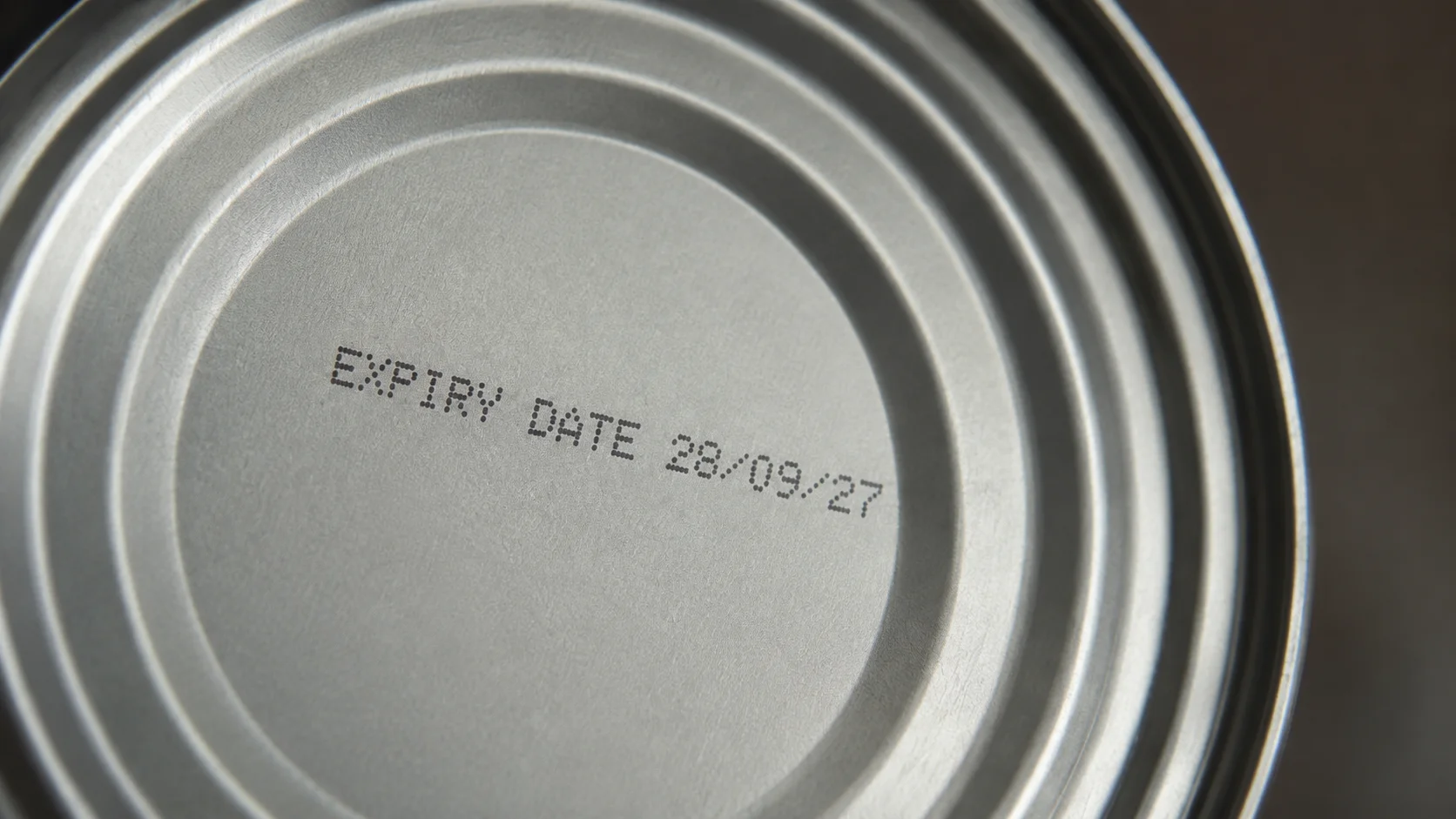
A best-before or best-if-used-by date normally indicates expected product quality. It is not automatically a safety cutoff. Flavor, texture, color, and nutritional quality may decline before the package becomes unsafe.
That does not mean canned food lasts forever. Corrosion, high storage temperatures, impact damage, and seam deterioration can shorten its usable life.
An intact can may remain acceptable beyond its quality date, but there is no universal extension period. Check the package condition and follow the manufacturer’s instructions.
3. How to Tell if Canned Food Is Unsafe
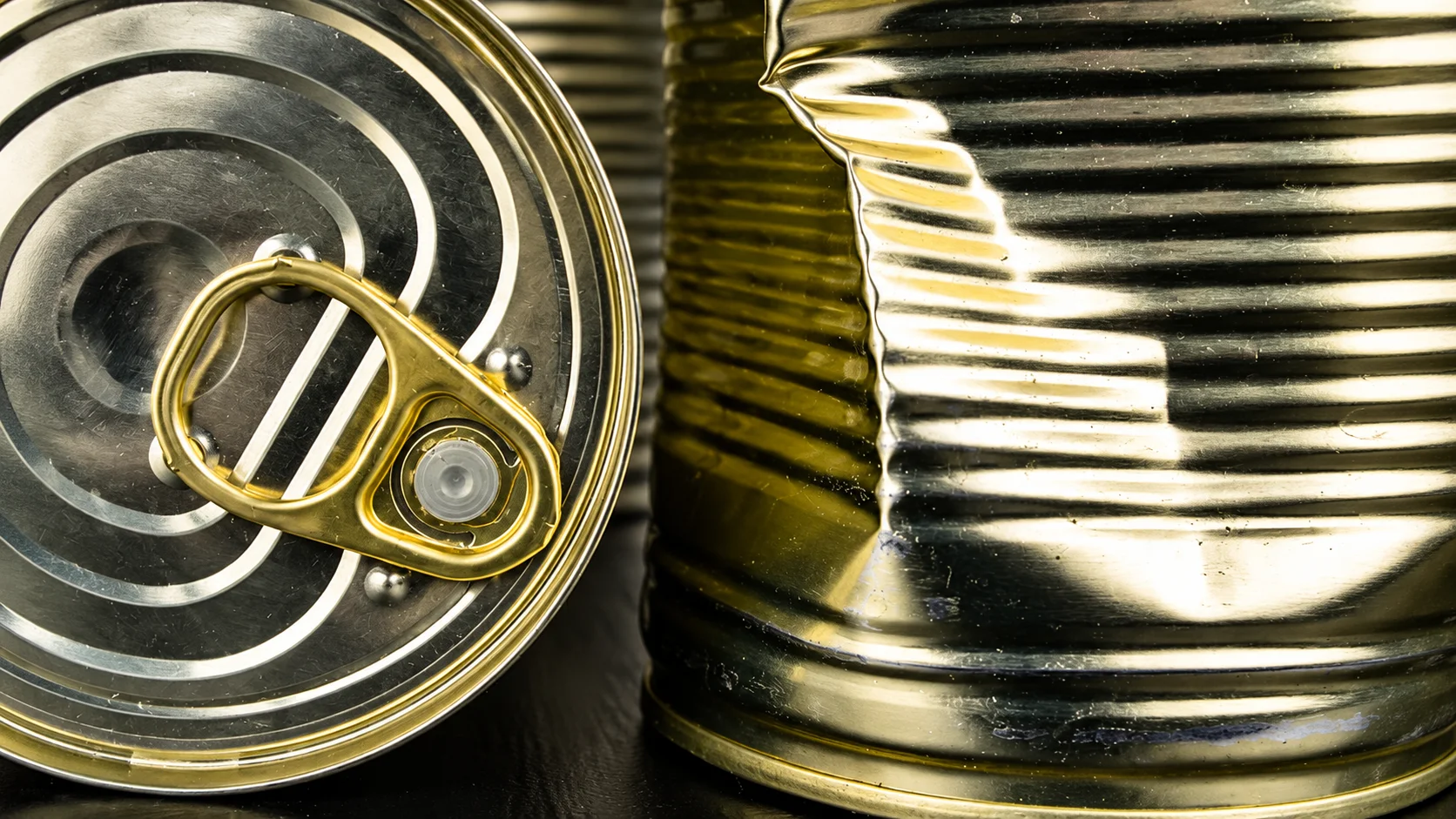
Discard cans that are swollen, leaking, badly rusted, punctured, or deeply dented. A deep dent on or near a seam is a particular concern because it may break the hermetic seal.
Also discard a can if the seam appears distorted or if liquid spurts forcefully from the container when it is opened. Unusual odor, color, or texture is another reason to reject the food.
A light hiss may simply be air entering a vacuum-packed can. A loud hiss combined with forceful liquid release or package swelling is different and should be treated as a warning sign. (источник)
Never taste food from a swollen, leaking, or badly damaged can to decide whether it is safe.
4. How Food Manufacturers Can Improve Canned Food Shelf Life
4.1 Match the Can to the Product
The container structure, steel grade, dimensions, end design, and internal coating must suit the food and the retort process.
A change in can diameter or height can affect heat penetration. A change in coating can affect corrosion resistance and product appearance. Packaging changes should therefore be reviewed as process changes, not simple purchasing substitutions.
4.2 Validate the Seam and Thermal Process
The double-seam specification should be based on the exact body-and-end combination. Routine inspection should include visual checks and scheduled teardown measurements.
The thermal process must also be established for the exact product and container. A process used for one recipe or can size should not be copied to another without technical review.
4.3 Control Filling, Seaming, Handling, and Storage
Fill weight, headspace, product temperature, and contamination around the flange can affect both processing and seam formation.
The seamer must remain correctly aligned and maintained. After retorting, cans should be cooled, dried, conveyed, packed, and transported without damaging the body or seam. FDA inspection guidance specifically identifies dents, abrasions, seam damage, and handling defects as package-integrity concerns.
Warehouse conditions matter as well. Heat accelerates product deterioration, while moisture can cause external corrosion.
4.4 Test the Complete Package System
Thermal-process validation shows whether the required heat treatment was delivered. Shelf-life testing answers different questions.
The manufacturer still needs to confirm coating compatibility, corrosion resistance, seam integrity, sensory quality, and package performance during storage and distribution.
Real-time studies provide the most direct evidence. Accelerated testing can support development, but it cannot fully replace testing under expected storage conditions.
5. Заключение
Canned food lasts because heat processing controls microorganisms and enzymes, while the sealed metal package prevents recontamination and limits exposure to oxygen, moisture, and light.
Reliable shelf life depends on the food formulation, scheduled process, double seam, coating compatibility, handling conditions, and storage environment. A failure in any one of these areas can reduce package performance.
6. FAQ
There is no single shelf-life period for all jarred food.
Commercial jarred products may be shelf-stable when they receive an adequate process and use a validated hermetic closure. Their shelf life depends on the food, process, lid system, vacuum, light exposure, and storage temperature.
The manufacturer’s date and storage instructions should be followed. A period stated for metal cans should not automatically be applied to glass jars.
Not necessarily.
Heat processing, acidity control, and hermetic sealing can make food shelf-stable without chemical preservatives. Salt, sugar, acids, or permitted preservatives may still be used for flavor, texture, or formulation control.
They do not replace a required thermal process.
A shallow dent away from the seam may not affect the seal. A deep dent, sharp crease, or dent on the top, bottom, or side seam is different.
USDA recommends discarding deeply dented cans because seam damage may allow microorganisms to enter.
Нет.
Vacuum can reduce oxygen and slow oxidation, but it does not destroy microorganisms or bacterial spores. Low-acid canned foods still require a validated thermal process.