
A bean can cannot be selected by capacity alone.
Bean variety, packing liquid, viscosity, hydration, fill weight, headspace, and retort conditions all affect the package. Two products sold as canned beans may need different can dimensions, internal coatings, and thermal processes.
The product should be defined before the container specification is finalized.
1. Common Types of Canned Bean Products
1.1 Whole Beans in Brine or Seasoned Liquid
Whole beans are commonly packed in water, brine, or seasoned liquid. The formula may also contain salt, sugar, spices, or other flavoring ingredients.
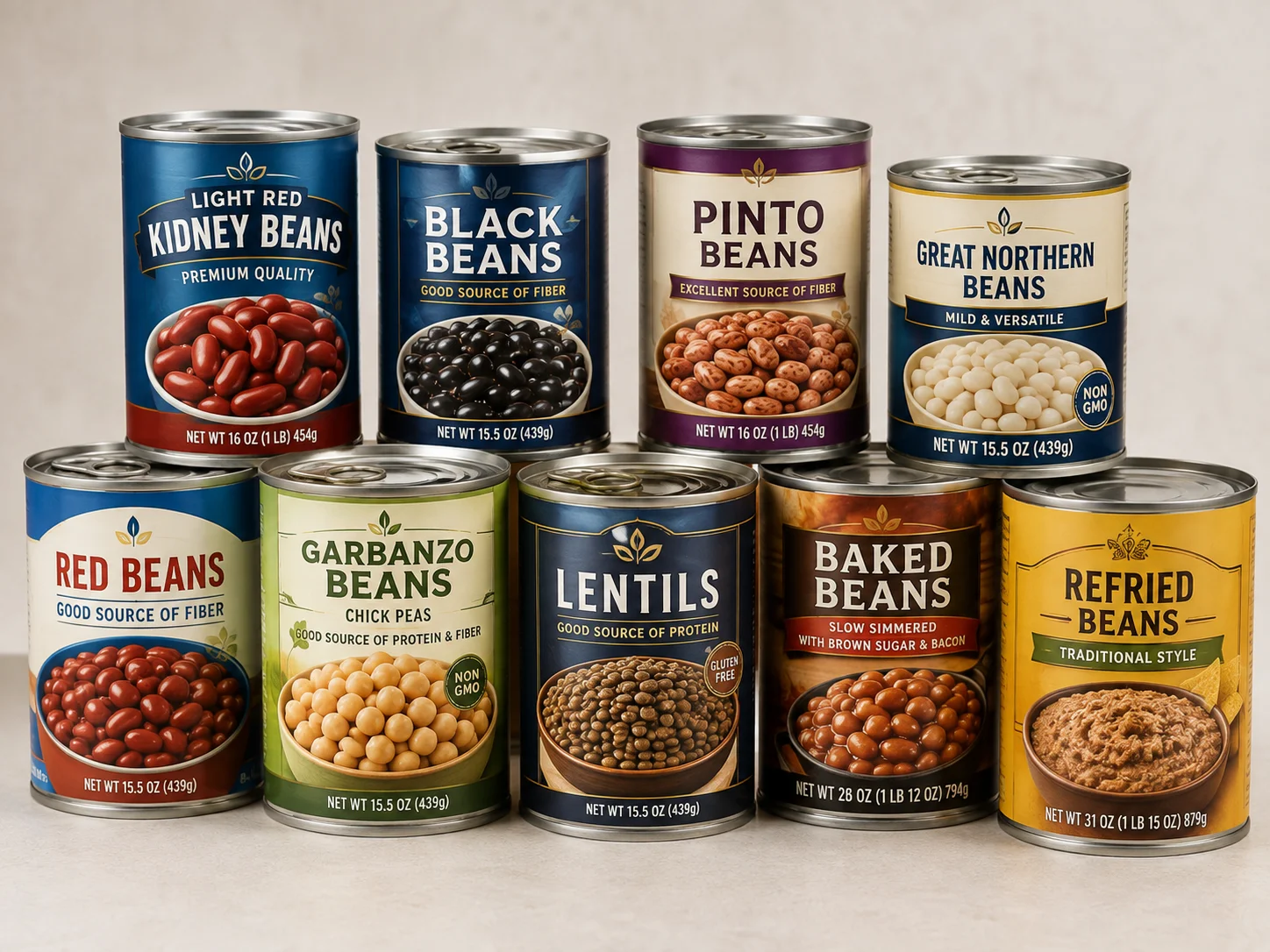
A kidney bean can must account for the relatively large bean size, hydration level, skin splitting, color migration, and bean-to-liquid ratio. Light red and dark red kidney beans may also behave differently during preparation and retorting.
For a black bean can, internal staining and dark deposits should be checked during storage testing. These marks do not always indicate corrosion, but they still affect package appearance and need to be understood.
Pinto beans may be packed whole or processed into refried beans. Whole pinto beans are mainly affected by hydration and skin damage. Mashed products are more affected by viscosity, filling consistency, and heat transfer.
“White bean” is too broad for a technical specification. It may refer to navy beans, Great Northern beans, small white beans, or cannellini beans. A navy bean can usually contains small beans with a high water absorption rate, while a cannellini beans can contains larger white kidney beans that require closer control of texture, starch release, and bean integrity.
A red bean can should not automatically be treated as a kidney bean can. In many markets, red beans refer to small red beans rather than red kidney beans. The distinction affects bean size, filling behavior, processing, and labeling.
The word “bean” alone is not enough to select a can lining.
1.2 Chickpeas, Garbanzo Beans, and Lentils
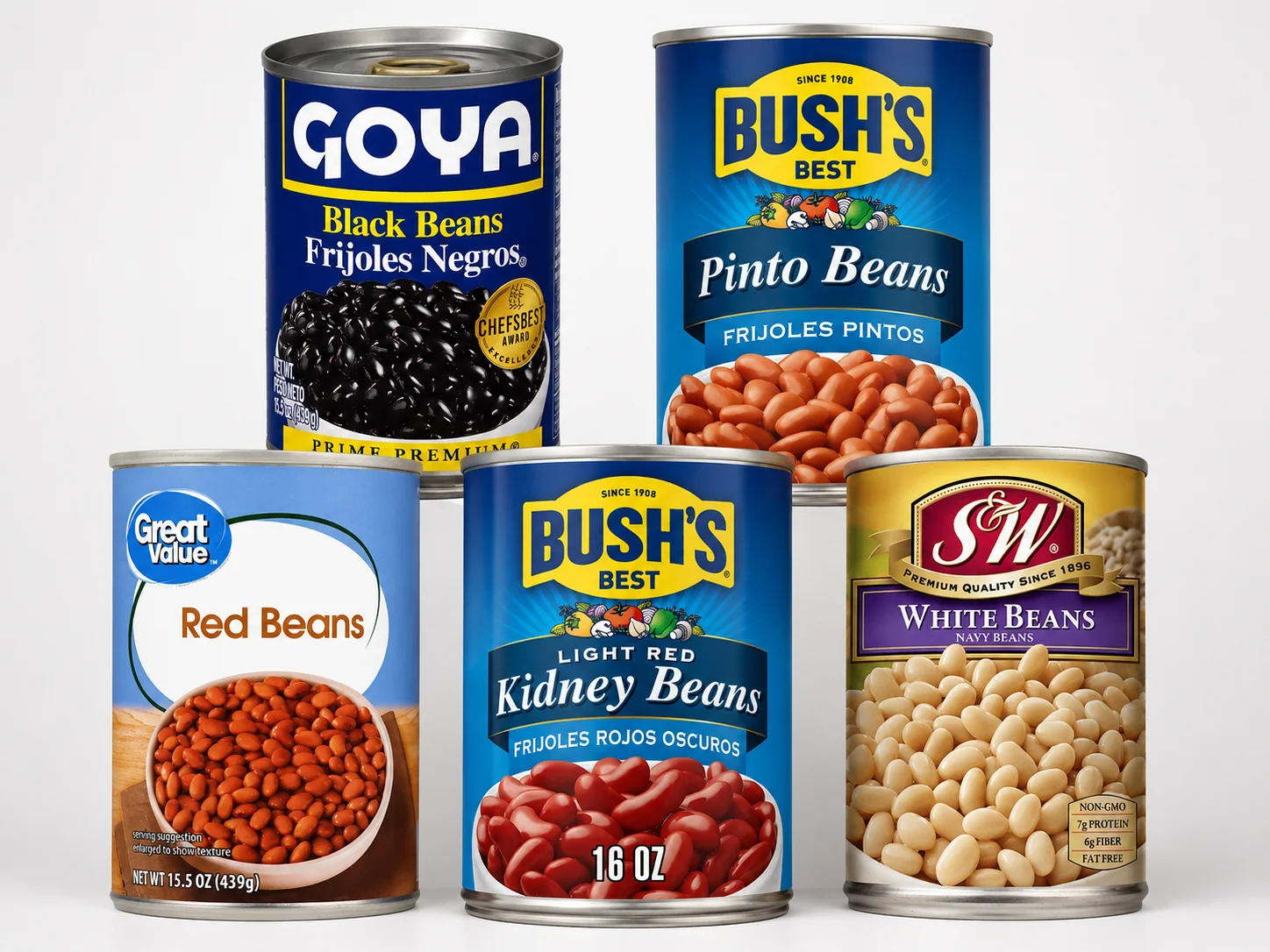
Chickpea and garbanzo bean are two common names for the same product. Both terms may appear in product descriptions, but they do not represent separate product categories.
For a chickpea can or garbanzo bean can, the processor needs to consider bean diameter, hydration, final hardness, brine composition, fill weight, and retort conditions. Chickpeas are relatively large and dense, so changes in hydration or particle size can affect heat penetration.
Lentils require a separate assessment. A lentil can may contain more broken particles and suspended solids than a whole-bean product. These solids can change filling consistency and product movement during heating.
1.3 Beans in Sauce or High-Viscosity Products
Beans packed in sauce should not be processed as if they were beans in clear brine.
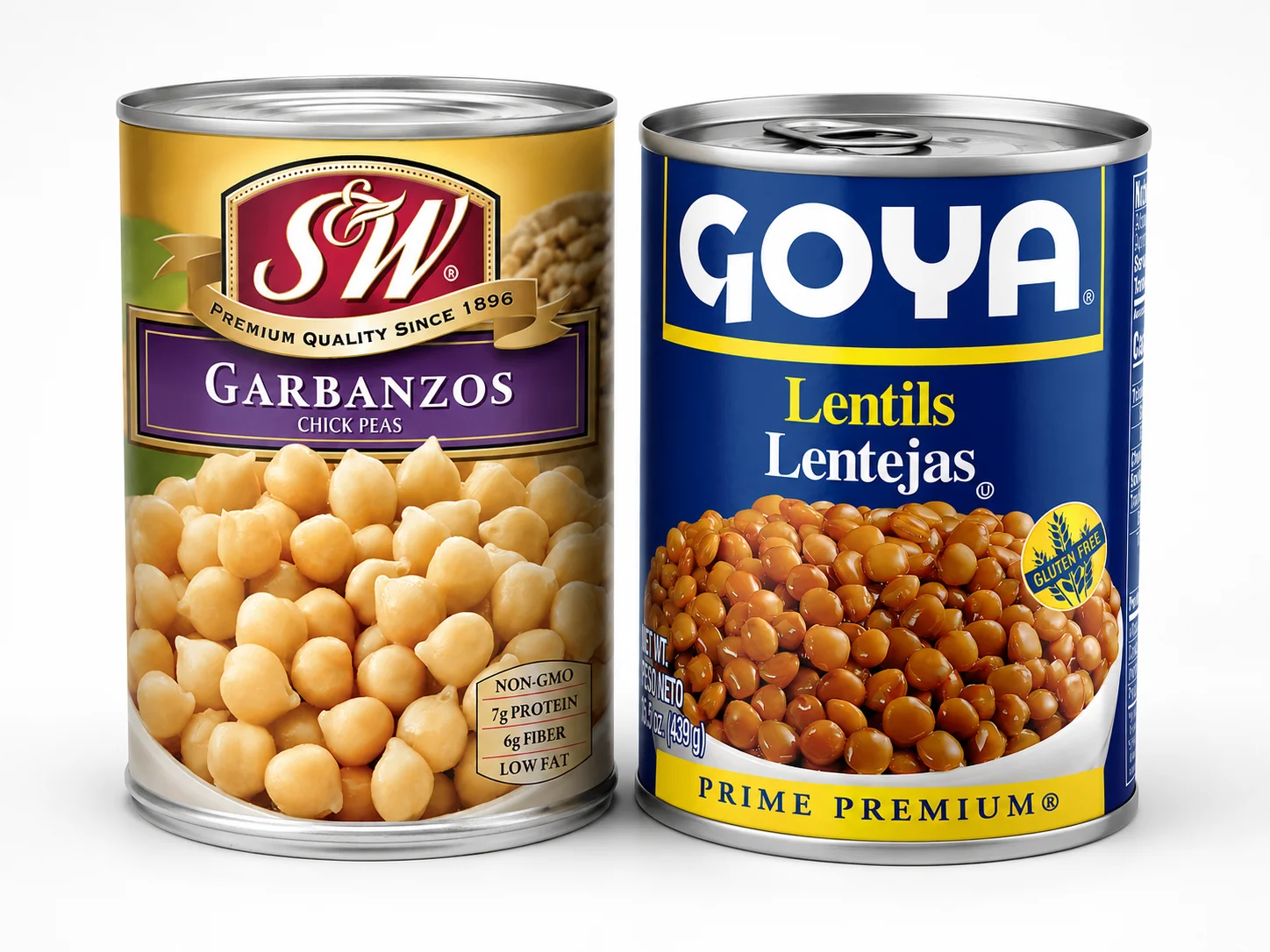
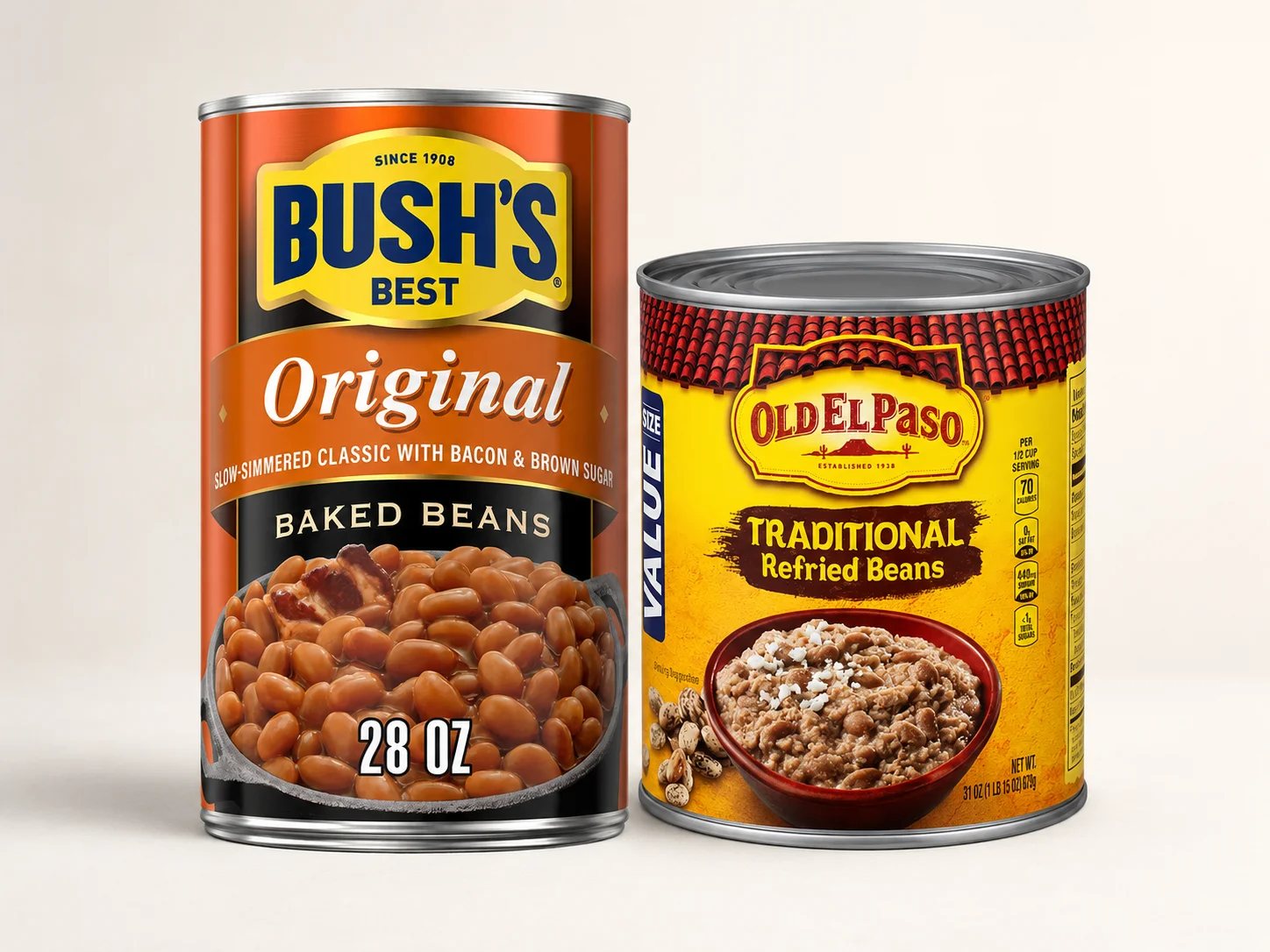
A baked bean can may contain tomato sauce, sugar, salt, spices, oil, or other seasoning ingredients. Sauce viscosity, soluble solids, starch, and oil can all affect heating behavior and coating compatibility.
Refried beans are more demanding. A refried beans can normally contains a thick, mashed, or semi-mashed product made from pinto beans, black beans, or a mixture of ingredients.
Because the product does not flow freely, air pockets, headspace, fill weight, and the location of the cold point become harder to control. The finished product may also stick to the can wall or become difficult to remove after opening.
A thermal process developed for whole beans in brine should not be applied directly to refried beans.
2. How Brine, Starch, and Solids Affect Retort Processing
2.1 Most Shelf-Stable Beans Need a Validated Thermal Process
Most shelf-stable beans packed in water, brine, or sauce are evaluated as high-moisture, low-acid foods.
In the United States, a low-acid canned food generally has a finished equilibrium pH above 4.6 and water activity above 0.85. It is packed in a hermetically sealed container and commercially sterilized.
Tomato sauce does not automatically make a bean product an acidified food. The final classification depends on the equilibrium pH, water activity, complete formula, and the assessment of the process authority.
Each formula and container format needs its own scheduled process. Changing the can diameter, bean size, fill weight, sauce viscosity, or starch level may change how the product heats.
2.2 Heat Penetration Depends on More Than Retort Temperature
Retort temperature and holding time are only part of the process.
Heat penetration is also affected by bean size, initial moisture, hydration, solids content, fill weight, headspace, product viscosity, starch level, sugar concentration, and fill temperature. Static and rotary retorts may also produce different heating patterns.
The first processing question should not simply be, “What type of bean is it?”
A more useful question is:
Is the product packed in clear brine, thick sauce, or a semi-solid bean purée?
Clear brine allows more natural convection inside the can. A thick sauce reduces product movement. A semi-solid purée may heat mainly by conduction. These products should not share a retort schedule without supporting process data.
Starch is often a major factor. It does not necessarily corrode the metal directly, but it raises viscosity and reduces internal circulation. The cold point may shift, heating may slow down, and product can build up on the can wall.
The specification should state the starch type, maximum starch percentage, total solids, and viscosity test method. A viscosity value without a test temperature is not very useful because the product may behave differently during hot filling and after cooling.
2.3 Hydration, Expansion, and Matting
Dry beans continue to absorb water during soaking, precooking, and retorting.
If hydration is incomplete before filling, the beans may absorb more liquid after the can is sealed. The liquid level can fall, beans at the top may become dry, and the contents may pack tightly together. Changes in drained weight, split skins, excessive softening, and poor discharge can follow.
Severe compaction is sometimes described as matting. The beans become so tightly packed that they cannot be poured out normally without breaking or turning into a paste.
Adding more brine does not automatically solve the problem. Hydration, bean-to-liquid ratio, headspace, and processing conditions need to be evaluated as one system.
3. Choosing the Right Can Body and Internal Coating
3.1 Brine Is Not a Completely Mild Environment
Beans are less acidic than many pickled foods, but brine still contains chloride ions.
Chlorides can increase localized corrosion when the coating has pinholes, scratches, exposed metal, incomplete weld repair, or thin areas around formed sections. Retorting may also reduce coating adhesion or change its barrier properties.
The resin name alone does not confirm suitability. The actual combination of product, coating, retort cycle, and storage conditions needs to be tested.
3.2 One Coating Does Not Fit Every Bean Product
Food-can coatings may use epoxy, phenolic, polyester, acrylic, vinyl, or oleoresin systems. None should be treated as a universal lining for all bean products.
A lining used for whole beans in light brine may behave differently with baked beans, oily refried beans, sulfur-containing ingredients, or a high-salt formula.
Testing should check chloride resistance, retort resistance, coating adhesion, porosity, weld side-stripe coverage, staining, flavor neutrality, and migration compliance. The can body, ends, and weld repair coating should be tested together.
Real product testing is more useful than relying only on a model brine. Beans, oil, starch, salt, spices, and heat can interact in ways that a simple salt solution does not reproduce.
3.3 Sulfur Staining and Internal Discoloration
Bean proteins and added ingredients such as onion, meat, or certain spices may release sulfur compounds during processing and storage.
These reactions can produce dark staining on the internal can surface. In some cases, they may also contribute to underfilm corrosion.
Storage testing should determine whether the discoloration is cosmetic or linked to coating failure. The body, ends, weld area, and formed sections should all be inspected.
3.4 Can Construction and Double-Seam Control
Both three-piece welded cans and two-piece cans can be used for bean products. The choice depends on the required can size, coating coverage, retort pressure, filling line, and end compatibility. For three-piece cans, the weld side stripe needs to withstand the bean formula and the full retort cycle. For two-piece cans, coating coverage in drawn and formed areas should be checked after processing. Neither construction should be approved based on can type alone.
Double-seam control is especially relevant for beans packed in thick sauce or purée. Starch, sauce, and small bean particles can remain on the flange and interfere with sealing. Seam measurements, teardown inspection, flange cleanliness, retort pressure, and cooling conditions should therefore be included in routine process control.
4. Common Bean Can Sizes for Retail and Foodservice
Can size should be identified by dimensions and capacity, not by net weight alone. Products with similar net weights may use different can diameters or heights because bean size, sauce density, drained weight, and headspace are different.
4.1 Small and Standard Retail Cans
Retail bean products are commonly sold in the 10.5 to 16 oz range.
Examples include 10.5 oz kidney beans, 15 oz cannellini beans, 15.5 oz whole beans, and 16 oz refried beans. These formats are generally intended for household use or a single recipe.
The exact can dimensions still need to be confirmed. A 15 oz can from one product line may not use the same body size as another 15 oz product.
4.2 Larger Retail and Family-Size Cans
Larger household formats commonly include 29 oz and 31 oz cans. Kidney beans and cannellini beans may be packed in 29 oz formats, while refried beans are also sold in 31 oz cans.
Some whole-bean products are available in 47 oz cans. These larger formats require more attention to can strength, fill consistency, heat penetration, and cooling pressure.
4.3 Foodservice Cans
The #10 can is a common foodservice format. A typical size code is 603 × 700, with a capacity of about 2.84 liters.
“#10” is a trade size, not a 10 oz capacity. Actual net weight depends on the bean variety and packing medium. Chickpeas and kidney beans may be packed at around 110 oz, while baked beans may be closer to 117 oz.
5. Finalizing the Bean Can Specification
The final specification should describe the actual product, not just the product name. Bean variety, hydration, particle size, packing medium, salt level, starch content, viscosity, pH, fill temperature, net weight, drained weight, and headspace all affect packaging performance.
The container specification should identify the can dimensions, capacity, body construction, internal lining, weld side stripe where applicable, end type, and double-seam limits. These details need to match the filling line and retort system.
The can body, ends, coating, seam, formula, and scheduled process work as one package. When the formula or container changes, the coating compatibility and thermal process may need to be checked again.