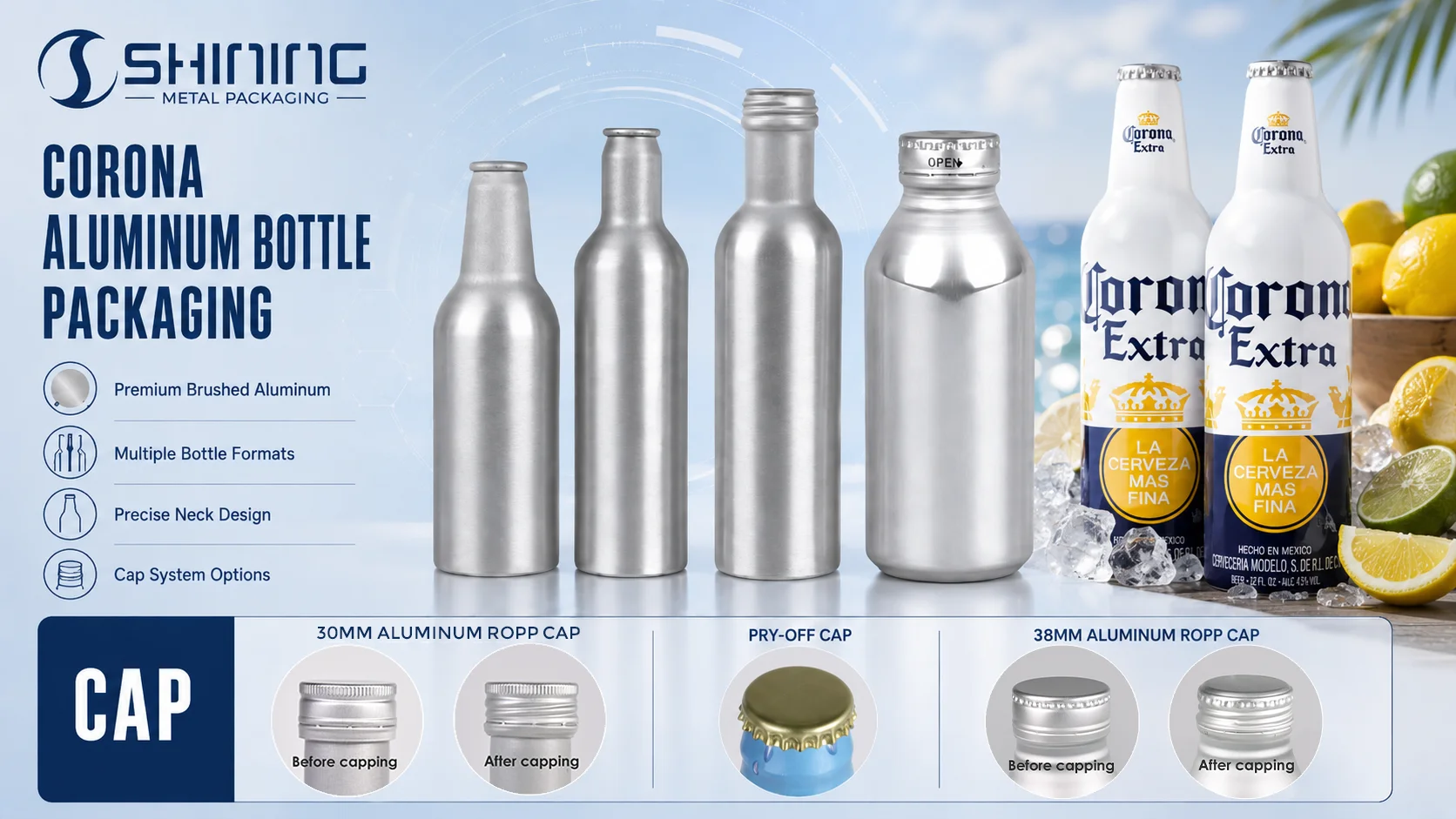
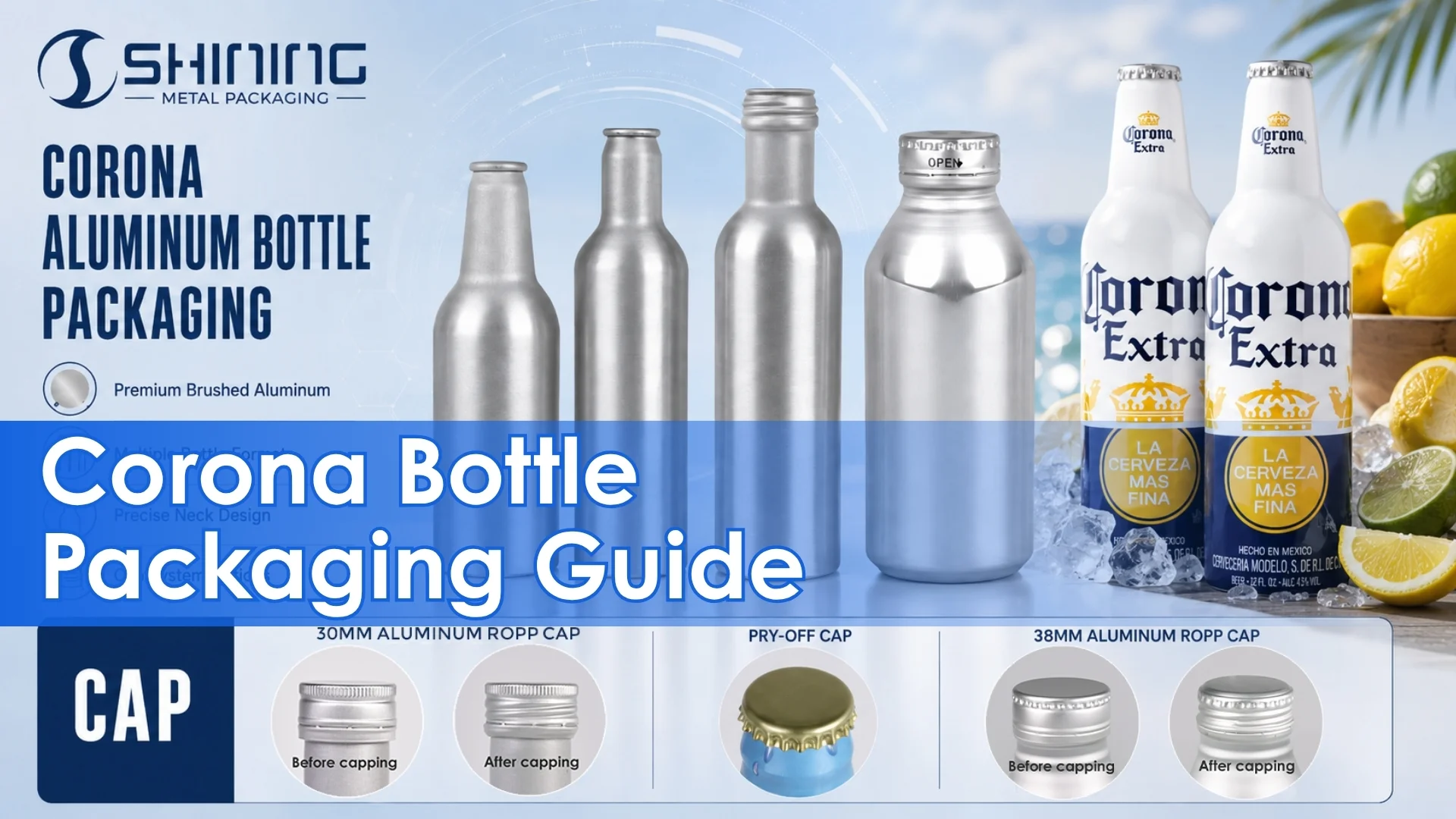
1. The Brand Problem Is Not “Glass Versus Aluminum”
Corona’s global brand language gives packaging development an unusually clear starting point. In 2026, Global Vice President Clarissa Pantoja described the brand around “nature, human connection and real experiences,” while Corona’s U.S. history connects its growth directly with the sunny beaches of Acapulco and Puerto Vallarta. Corona Extra itself is a 4.6% ABV lager positioned for “the beach, the backyard, or whatever you’re feeling.” A Corona Aluminiumflasche therefore makes sense only if it preserves that relaxed bottle-drinking ritual while solving a real limitation of glass in outdoor or controlled-venue use.
There is an important factual boundary. Current U.S. Corona materials clearly support bottle and can formats, but they do not establish a resealable aluminum bottle as a mainstream, long-term Corona SKU. The most defensible way to study the idea is therefore as a packaging-development case rather than to present a speculative container as an existing product.
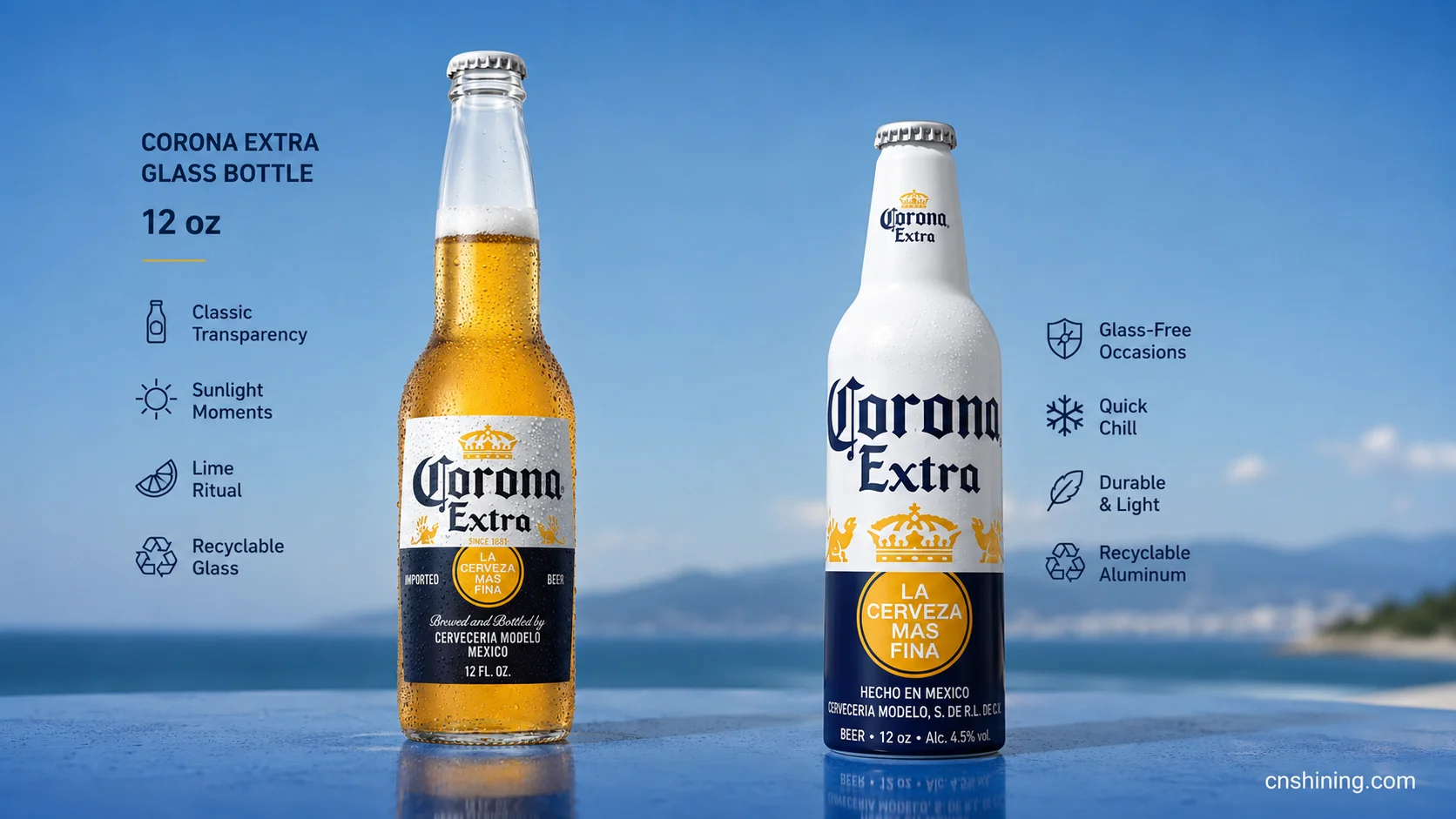
That distinction changes the design brief. The objective is not to make Corona look more metallic or more futuristic. Corona’s transparent bottle is already a powerful recognition device: consumers see the pale beer, recognize the crown-and-script graphics and understand the lime ritual before opening it. Moving to an opaque metal wall gains complete light exclusion but removes that visual familiarity. The missing visual cue has to be recovered through bottle-shaped handling, opening behavior, restrained white-blue-gold decoration and an unmistakably Corona-like outdoor context rather than through generic “premium aluminum” styling.
2. What a Corona Aluminum Bottle Must Prove Before It Becomes a Product
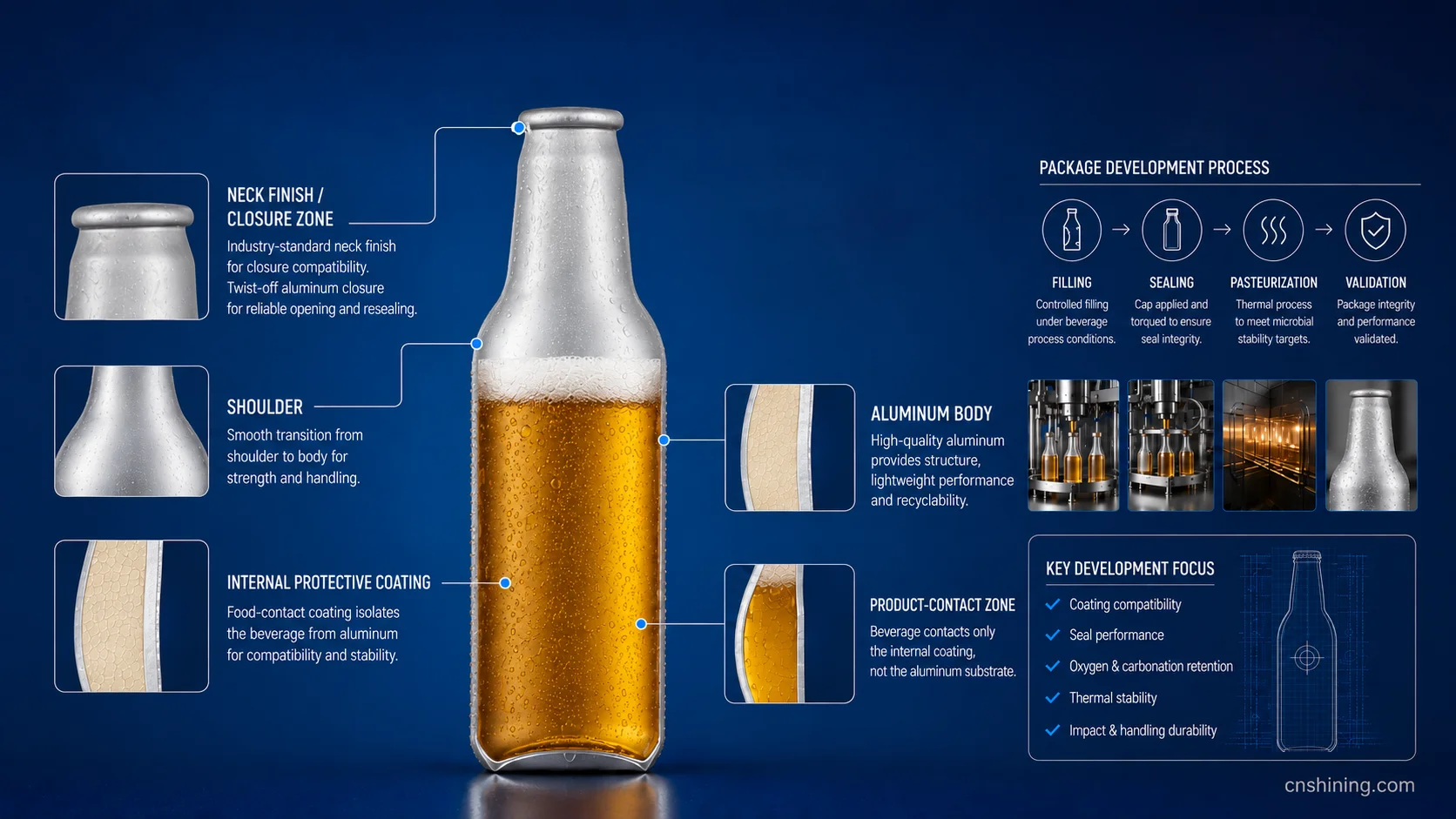
Light protection is the simplest part of the engineering case. Beer is susceptible to photochemical reactions involving hop-derived bitter compounds and riboflavin that contribute to lightstruck flavor; an opaque aluminum wall removes incident light from that equation. It does not, however, solve oxygen pickup, an imperfect closure or an incompatible internal coating. Those variables remain process and package-system problems rather than automatic benefits of changing the container material.
Corona adds another unusually relevant process condition: its U.S. FAQ states that Corona products are pasteurized at approximately 60°C for a predetermined period. Any bottle development would therefore need the coating, decoration, neck finish, cap interface and seal to remain stable through the actual thermal cycle used by the filling operation, rather than being approved only on the basis of a cold-filled laboratory sample.
| Verpackungsentscheidung | Development direction | Why it matters for Corona |
|---|---|---|
| Bottle geometry and capacity | Use a mature straight-sided bottle architecture as the first prototype; 16 fl oz / 473 mL is a useful U.S. development reference rather than a claimed Corona SKU. | A conventional geometry separates brand testing from the additional risk of an unproven custom shape. |
| Neck and closure | Evaluate a threaded twist-off system with dependable short-term reclosure and appropriate tamper evidence. | The opening gesture and bottle-like drinking experience matter more to Corona than simply reproducing can economics. |
| Innenbeschichtung | Select a food-contact coating only after compatibility work with the actual beer, process conditions and intended shelf life. | The metal should not be treated as a bare food-contact surface. Coating integrity is part of the functional package. |
| Filling and pressure | Validate carbonation retention, total package oxygen, cap torque, leak resistance, thermal exposure and pressure performance on the real filling line. | An attractive bottle does not compensate for oxygen pickup, loss of carbonation or sealing variation. |
| Decoration | Favor a clean white, deep blue and restrained gold system with controlled metallic exposure and an abrasion-resistant exterior finish. | The objective is to translate sunlight, beach and bottle familiarity into metal, not to borrow the visual grammar of energy drinks. |
Research on beverage aluminum packages reinforces why the liner cannot be treated as a secondary specification. Studies of real coated aluminum packages show that corrosion behavior is affected by coating condition and beverage chemistry, while U.S. food-contact regulation treats packaging components and substances applied to packaging surfaces as part of the food-contact system. For Corona, the most consequential technical interface is therefore the combination of coating integrity, closure seal and post-fill thermal exposure—not the exterior artwork.
3. The Format Earns Its Complexity in Specific Channels
A resealable metal bottle is difficult to justify if its only job is to replace a standard retail can. Its stronger role is at the boundary between Corona’s established bottle identity and occasions where broken glass, carrying an open drink or repeated movement makes the conventional bottle less convenient. Beaches and pool environments, festivals, stadium-style venues, hotel events, outdoor hospitality and selected convenience-store cold-box occasions all give a bottle-shaped metal pack a more specific reason to exist.
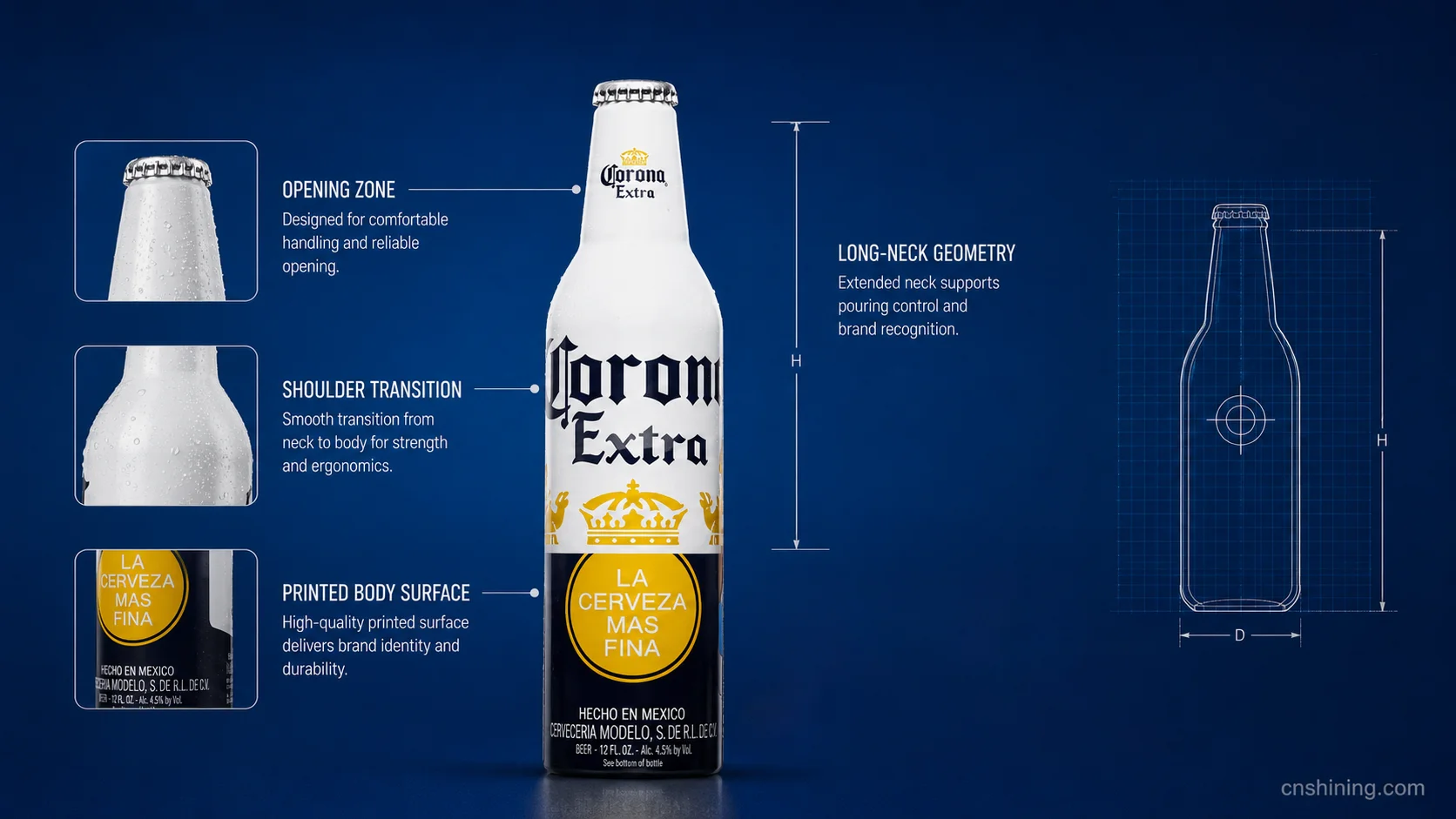
The details of use should be tested against Corona’s existing rituals rather than borrowed from another beer. The drinking aperture needs to feel natural when consumed directly from the package; the closure should be easy to operate with wet hands; condensation should not make the bottle uncomfortably slippery; and any design intended to support the familiar lime ritual needs to prove that interaction physically during prototyping rather than assuming that a conventional threaded neck will work.
Even coding becomes brand-specific. Corona tells U.S. consumers to find the Best By End Month code on the neck of a bottle or the bottom of a can. An aluminum bottle would need an equivalent coding zone with sufficient contrast and abrasion resistance after chilling, condensation, ice-bucket exposure and distribution handling. That is a small detail, but it is the kind of detail that turns a visual into a controlled commercial package.
For the U.S. market, artwork development also has to respect malt-beverage labeling rules. TTB lists brand name, class/type, net contents, name and address and other applicable declarations among required information, while the federal health warning must appear on alcohol beverage containers. For a 16 fl oz package, TTB specifically identifies “1 Pint” as the required U.S. net-contents statement; the metric equivalent 473 mL may be added. Mandatory information generally cannot simply be moved onto the cap or closure to free decoration space.
4. Competitor Comparison: The 16 oz Aluminum Beer Bottle Is Not Inherently Premium
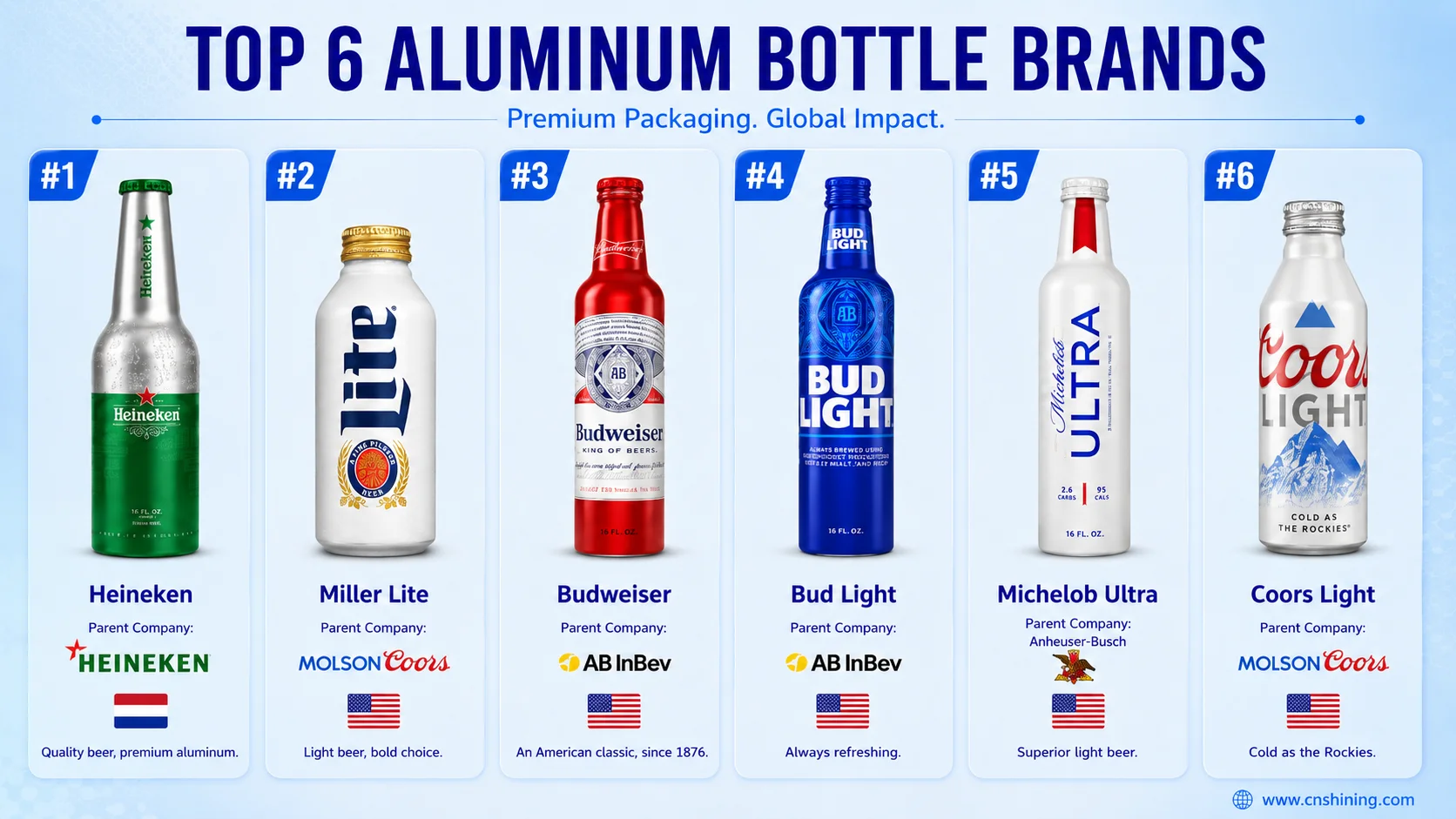
The U.S. market already contains several recognizable lager brands in 16 fl oz aluminum bottles. That makes the format useful as a competitive benchmark, but it also removes one easy marketing assumption: aluminum-bottle geometry alone does not create differentiation. The observed prices below are current or recently indexed single-unit online listings where a true single bottle was identifiable; they are location- and promotion-sensitive and should not be treated as national price averages.
| Marke | Land | Muttergesellschaft | Kapazität | Observed single-unit retail price | Core selling point |
|---|---|---|---|---|---|
| Bud Light | Vereinigte Staaten | Anheuser-Busch (AB InBev) | 16 fl oz / 473 mL | US$1.99 | Easy-drinking American light lager positioned around casual gatherings and refreshment. |
| Budweiser | Vereinigte Staaten | Anheuser-Busch (AB InBev) | 16 fl oz / 473 mL | US$1.99 | Classic American lager identity built around heritage, familiarity and social occasions. |
| Michelob ULTRA | Vereinigte Staaten | Anheuser-Busch (AB InBev) | 16 fl oz / 473 mL | US$1.50 | Light-beer proposition tied explicitly to an active and balanced lifestyle. |
| Miller Lite | Vereinigte Staaten | Molson Coors Beverage Company | 16 fl oz / 473 mL | US$1.79 | “Original Light Beer” identity centered on pilsner taste and accessible light-beer familiarity. |
| Coors Light | Vereinigte Staaten | Molson Coors Beverage Company | 16 fl oz / 473 mL | US$1.39 | Cold-refreshment positioning with a format already associated with larger-volume portable beer occasions. |
The comparison exposes Corona’s real opportunity. Four of the five bottles sit in essentially the same 16 oz structural territory, and the group spans value, mainstream, heritage and lifestyle positioning. A Corona aluminum bottle would therefore gain little from saying “aluminum,” “16 oz” or “resealable” louder than everyone else. Its credible differentiation is the combination of La Playa, the lime ritual, a restrained imported-beer visual language and access to occasions where consumers still want a bottle-shaped drinking experience without glass. Corona should also resist visually borrowing cold-activation cues historically associated with Coors Light; those cues solve another brand’s recognition problem, not Corona’s.
5. Development Verdict: Treat Aluminum as a Channel Extension, Not a Blanket Replacement
The viable Corona aluminum bottle is a focused extension of the bottle experience, not an argument that every Corona package should move to metal. Standard cans remain structurally simpler for broad-volume distribution, while a resealable bottle earns its additional cost and qualification work when bottle handling, short-term reclosure, glass avoidance and channel distinction actually matter. That channel-specific interpretation is also the most consistent with the underlying packaging decision logic: use aluminum bottles where brand value and occasion fit justify the complexity rather than forcing them into every retail role.
A useful pilot should answer a short list of physical questions before marketing language is finalized: Does the real beer remain compatible with the selected liner after aging and the actual pasteurization cycle? Does cap torque remain inside a controlled window? What happens to leakage, carbonation, opening force and reclosure after thermal cycling and impact? How readily does the body dent in distribution and in an ice bucket? Does condensation reduce grip? Does the exterior finish resist scuffing? Can consumers use the opening naturally with a lime? And does the production code remain readable after the same handling?
For a project like this, Shining Packaging can align bottle geometry, closure fit, inner-coating validation, decoration, prototyping and production checks around the chosen beer and filling process.
The strongest conclusion is therefore narrower than “aluminum is better.” A Corona aluminum bottle works when it translates the brand’s established bottle-and-beach ritual into a glass-free, reclosable package for occasions where that change has a clear purpose. If it merely puts familiar graphics on a metal container, the five mainstream competitors above already demonstrate how quickly the material itself becomes ordinary.