1. Dasani’s Aluminum Bottle Is a Channel Decision, Not a Material Swap
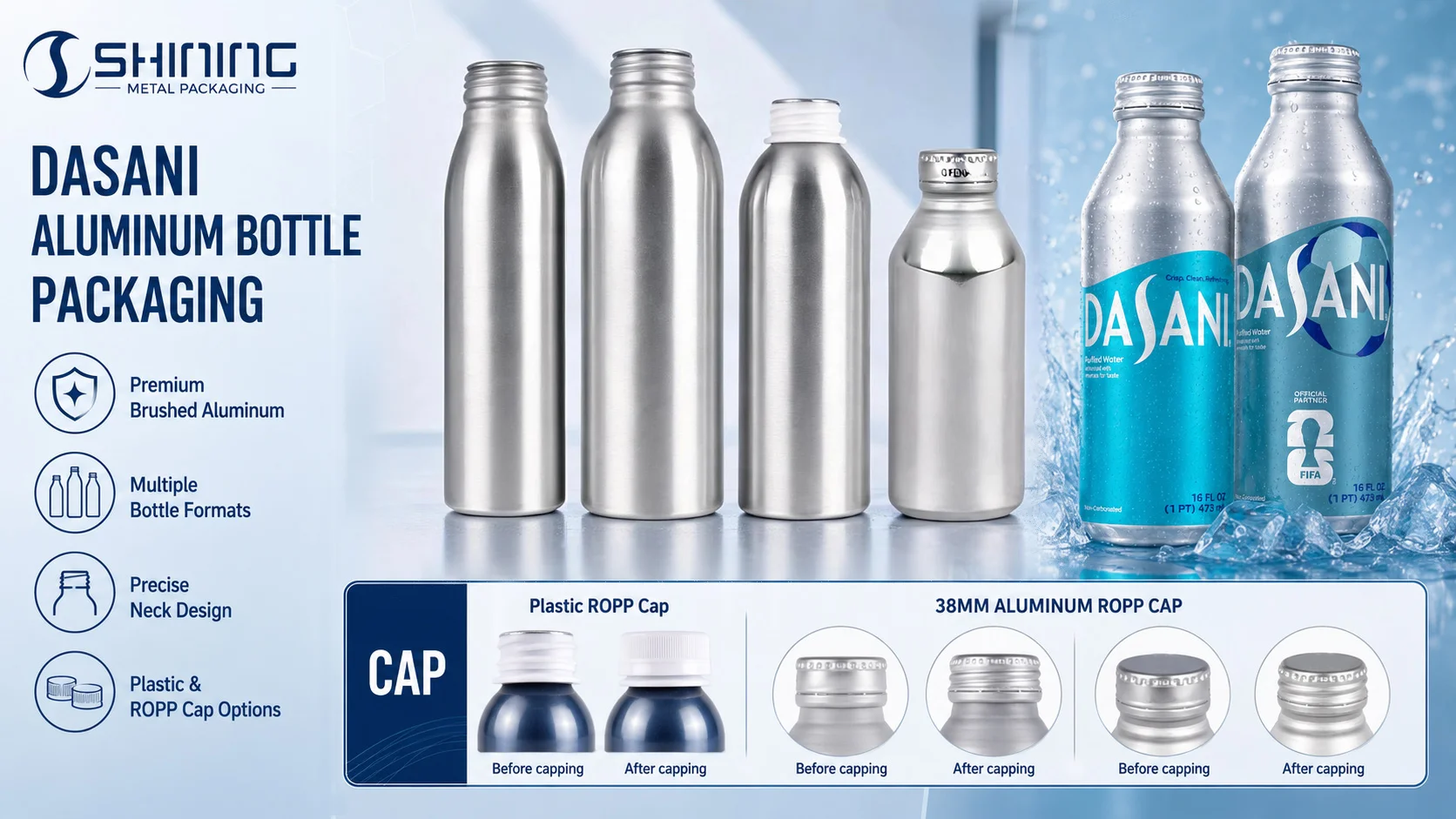
The most useful way to understand a Dasani Aluminiumflasche is not as a replacement for every plastic water bottle the brand sells, but as a different way to package a familiar hydration occasion. That interpretation is consistent with Dasani’s own packaging history. In 2019, Coca-Cola described a multi-format strategy for the brand that included recycled-material bottles, dispensing systems, aluminum cans and aluminum bottles rather than presenting one material as the universal answer. The company specifically planned an aluminum-bottle extension for the U.S. market as part of that broader package portfolio.
That distinction still matters. The current U.S. Dasani brand page continues to present a broad mainstream bottled-water range, from small individual formats through 1.5-liter bottles, while describing Dasani as purified water enhanced with magnesium sulfate and potassium chloride for taste. At the same time, U.S. retail has a real aluminum path: a current retail listing for Dasani purified water in a 16 fl oz aluminum bottle confirms that the format is not merely a design exercise.
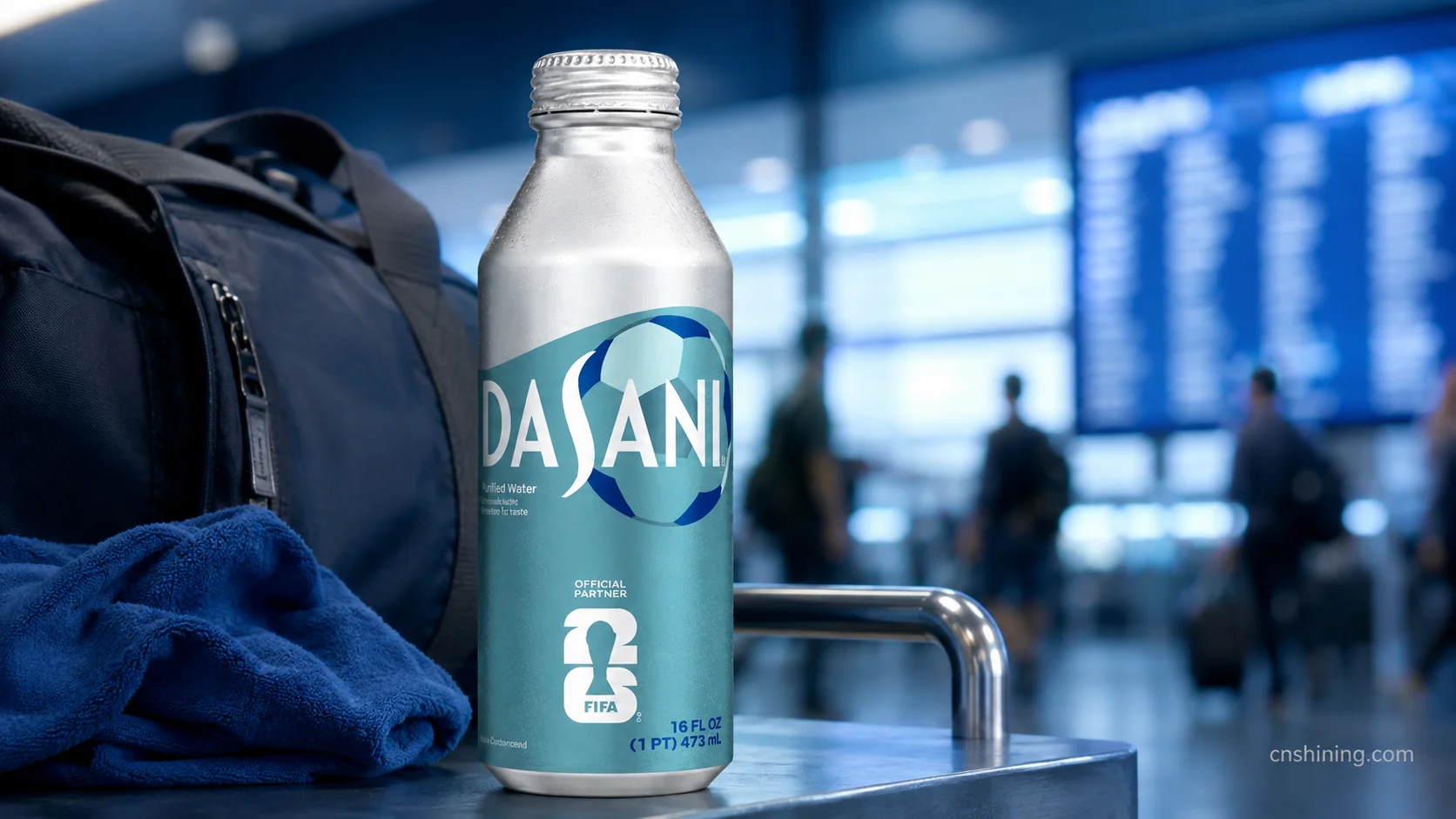
The commercial tension is therefore unusually specific. Dasani already has national recognition and a mass-market hydration identity; it does not need aluminum to explain what the product is. The package instead has to make selected occasions feel different enough to justify the change: a chilled bottle picked up at an airport, gym, hotel, event venue or premium convenience cooler; a resealable package carried between activities; or a limited program where a larger printable metal surface has more value than the lowest possible package cost.
This also explains why an all-line conversion would weaken the logic. A high-volume family or multipack purchase rewards cost efficiency differently from a single cold bottle consumed away from home. Aluminum becomes more persuasive when portability, tactile differentiation, resealing and visible decoration are part of the purchase decision. For Dasani, the material works best where it changes the occasion without changing the water proposition.
2. Where the Dasani Aluminum Bottle Engineering Risk Actually Sits
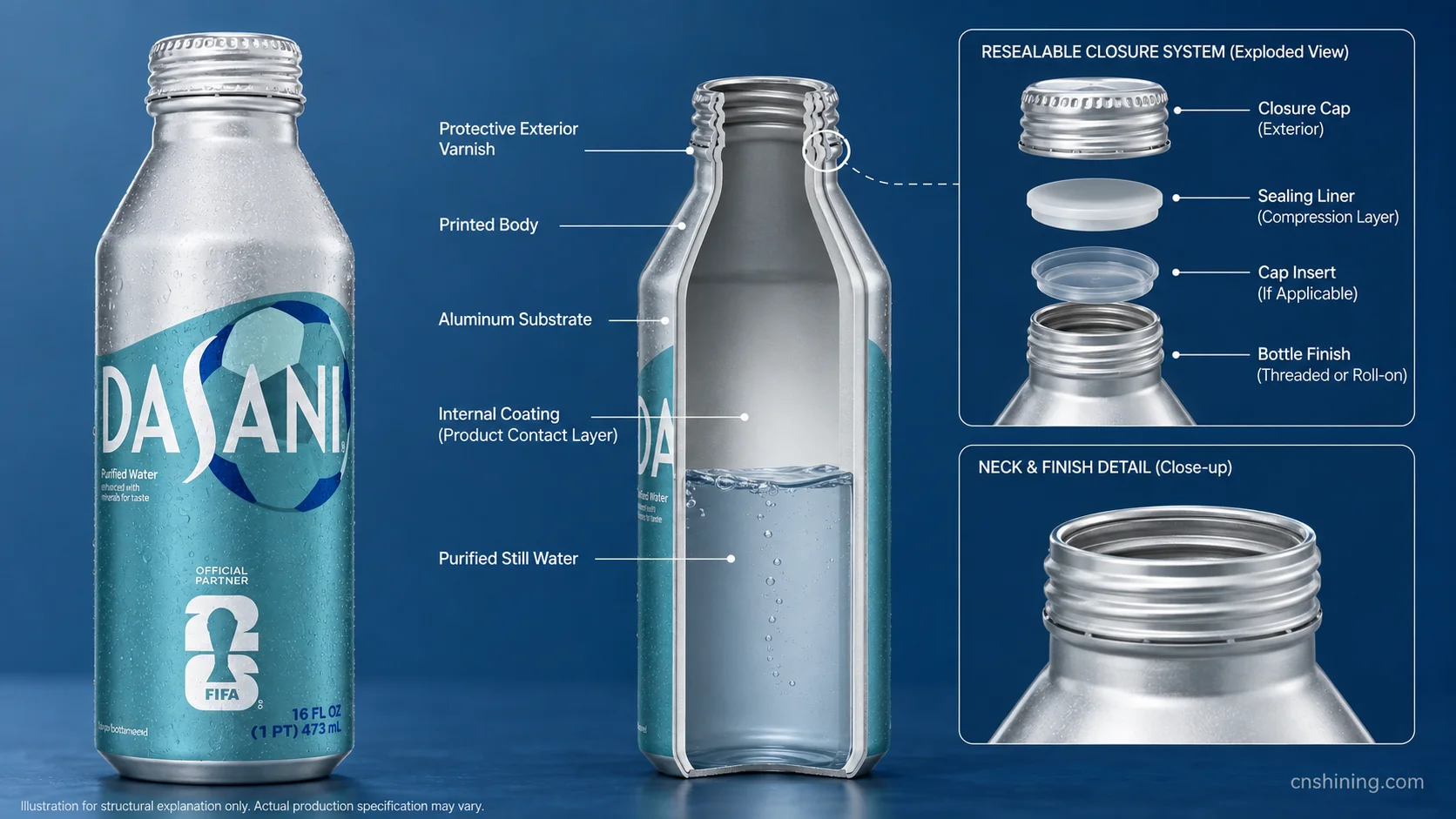
A still-water bottle appears mechanically simple because it does not need to contain carbonation pressure. That simplicity can be misleading. For Dasani, the decisive engineering questions sit at the interfaces consumers rarely see: the internal coating in continuous contact with mineral-containing water, the neck-and-closure system that must survive first opening and repeated resealing, and the exterior finish that has to remain visually controlled after filling, packing and transport.
| Decision Variable | Why It Matters for Dasani | Validation Priority |
|---|---|---|
| Innenbeschichtung | Dasani is a high-water system containing magnesium sulfate and potassium chloride. Product-specific compatibility matters more than assuming that all purified waters behave identically in coated aluminum. | Run real-product storage and accelerated compatibility work across intended shelf life, including organoleptic checks and inspection for coating or corrosion defects. |
| Neck, closure and liner | Resealability is one of the strongest reasons to choose a bottle instead of a can. That benefit disappears if opening torque, tamper evidence, cap back-off or repeat sealing is inconsistent. | Validate application and removal torque, first-open behavior, inverted leakage and repeated open-close cycles after filling and transport. |
| Bottle body and base | The bottle must feel deliberate in the hand without becoming unnecessarily heavy. Visible dents are especially important for a package whose commercial value partly depends on appearance. | Combine drop, compression and vibration work with an agreed cosmetic defect standard rather than evaluating leakage alone. |
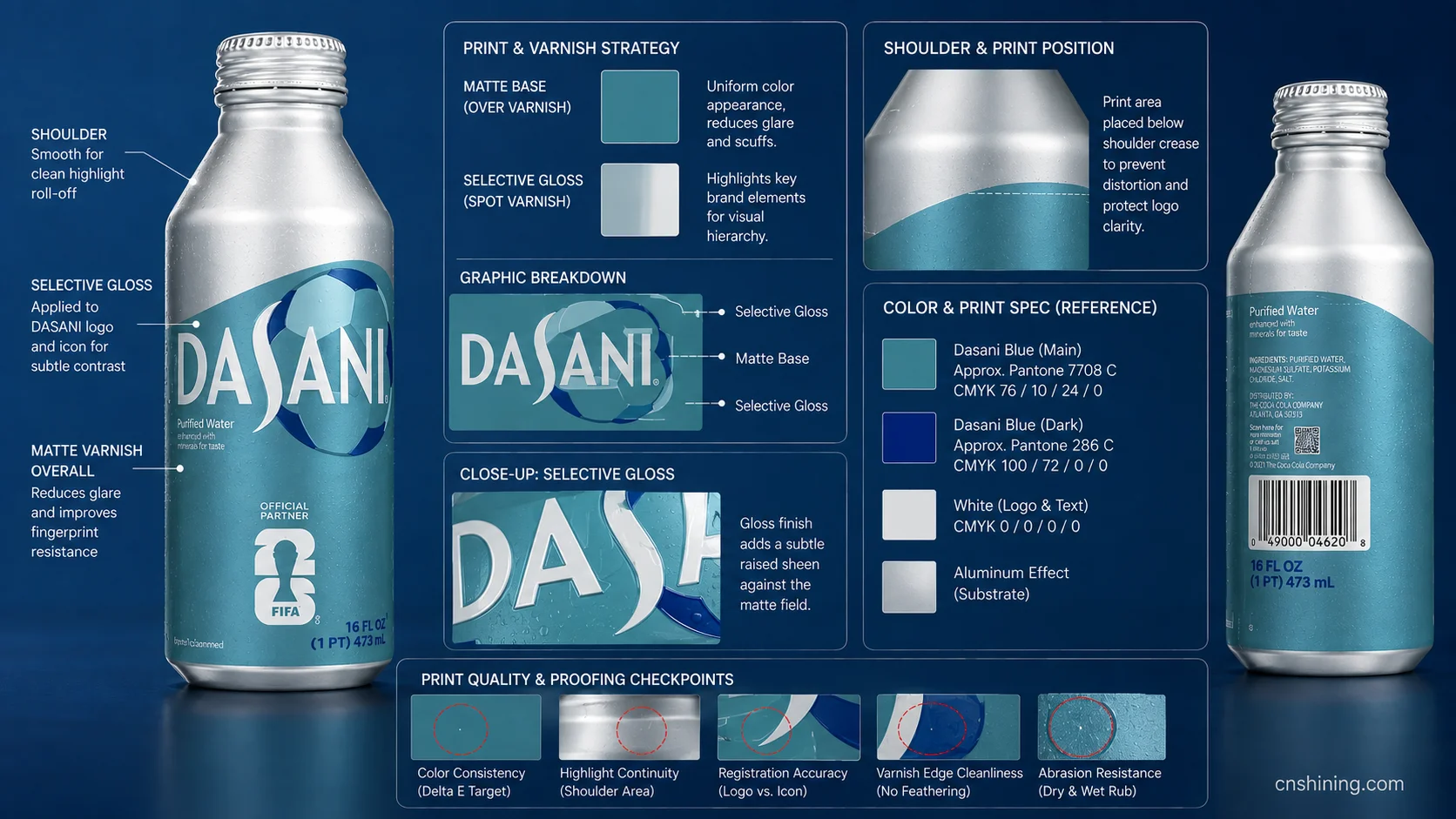
| Printing and protective varnish | Dasani’s blue identity can translate strongly to metal, but shoulder distortion, rub marks and inconsistent gloss can make a large printed surface less controlled rather than more distinctive. | Approve color on formed bottles and test abrasion after realistic case packing, condensation and transport exposure. |
| Filling and shelf-life conditions | The public product information identifies purified still water but does not establish every filling parameter needed for a new metal package. | Confirm actual filling temperature, sanitation sequence, cap application conditions and finished-package shelf-life protocol before specification freeze. |
The most consequential pair is the liner-plus-closure interface. Water has little flavor complexity to conceal an unintended odor or taste shift, while repeated closing is central to the bottle’s value in commuting, fitness and travel situations. Neither item should therefore be finalized from a generic “water-compatible” material statement alone.
Consumer perception adds another useful signal. Verified 2026 reviews on the current Dasani aluminum listing describe the package as seeming to stay cold longer and producing less exterior sweating than familiar plastic bottles. Those comments are valuable as experience data, but they should remain consumer observations rather than being converted into an insulation or thermal-performance claim without controlled testing.
For a still-water program like this, Shining Packaging can support bottle geometry, closure matching, liner compatibility Und printed-surface validation before scale-up.
3. The Design Should Feel Colder and Cleaner, Not Louder
Dasani does not need the visual behavior of a challenger water brand. Its existing advantage is recognition: a cool blue identity, purified-water familiarity and an uncomplicated hydration message. Moving that identity onto aluminum should therefore make the package feel more precise and portable rather than radically changing its personality.
A useful design direction is a controlled blue-and-silver field with enough unprinted or metallic character to make the substrate visible, supported by matte or low-gloss areas and selective gloss only where it reinforces water movement or the brand mark. The exact execution should follow production proofing rather than a screen rendering: artwork close to a curved shoulder can distort, fine reverses can close during printing, and a finish that looks sophisticated on an untouched sample can deteriorate quickly if varnish and case-contact points are not validated.
Direct decoration also gives the bottle a clearer reason to exist. Instead of making an aluminum bottle imitate a labeled plastic pack, the metal body can carry the principal graphics itself, leaving the front panel disciplined and reserving denser legal or traceability information for secondary viewing areas. The result should be recognizable as Dasani from several feet away while still reading as a materially different SKU at hand distance.
The regulatory logic remains conventional even when the material changes. FDA treats bottled water as food, so a metal package does not remove bottled-water identity, quality, manufacturing or labeling obligations. It also makes the food-contact package system—coating, closure liner and other product-contact components—a documented part of development rather than a decorative decision.
Environmental language deserves similar discipline. Aluminum can support a strong recycling narrative, but package claims should reflect the actual bottle, closure, liner, decoration and recycling infrastructure in the market where the product is sold. The FTC Green Guides specifically address qualification of recyclable claims when appropriate recycling access is not broadly available. For Dasani, restrained wording about the aluminum bottle body and local disposal guidance is more credible than absolute claims such as “zero impact,” “100% sustainable” or “recyclable everywhere.”
4. Competitive Landscape: Aluminum-Bottle Water Is Already Segmented by Story
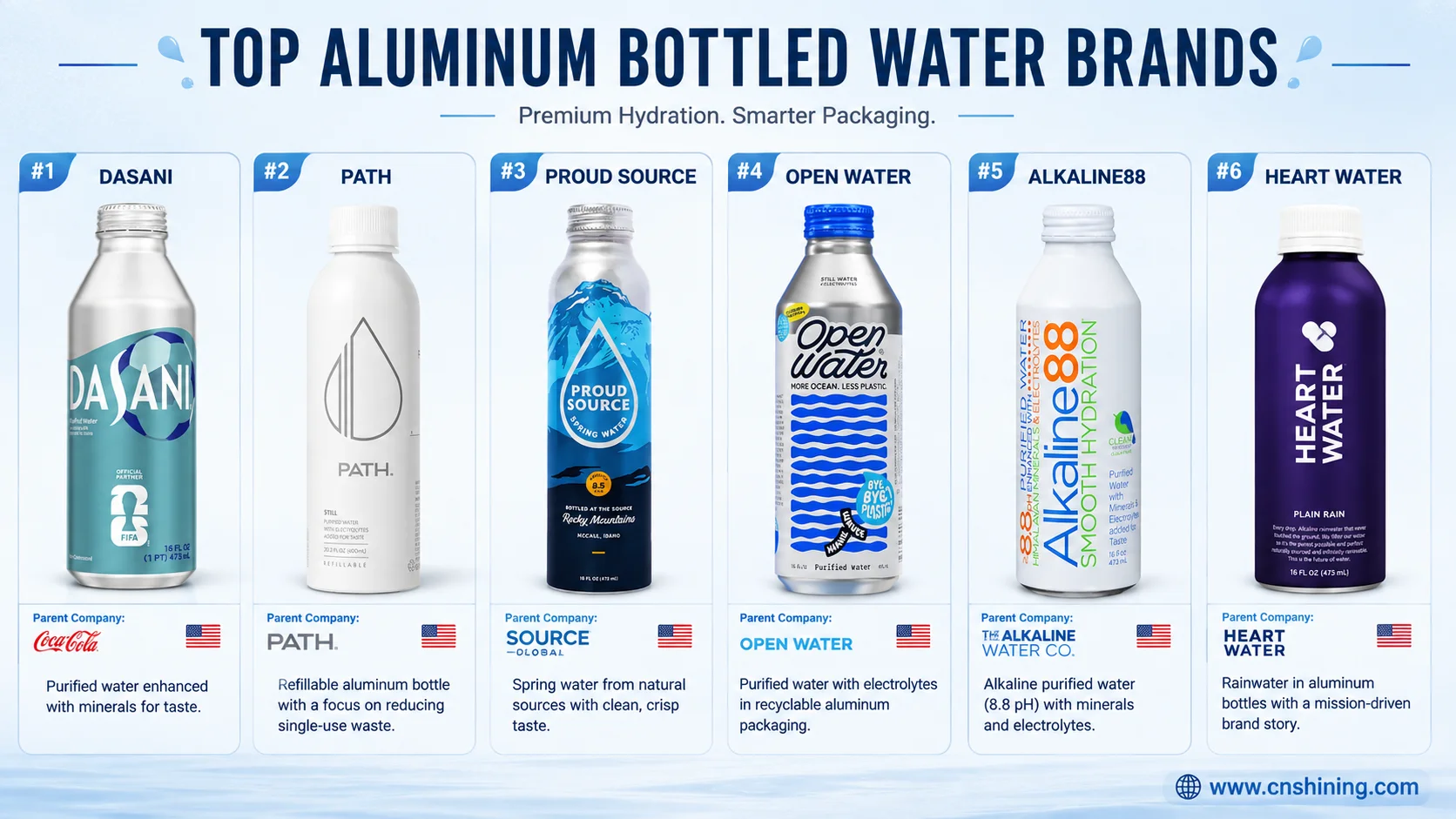
The relevant competitors are not simply “other premium waters.” The useful comparison is finished still-water brands that already use resealable or refillable aluminum bottles. Their positioning shows that the material does not create one standardized premium tier; it supports several very different product stories.
| Marke | Land | Muttergesellschaft | Kapazität | Retail Price | Core Selling Point |
|---|---|---|---|---|---|
| PATH | Vereinigte Staaten | PATH Water, privately held | 25 fl oz | US$3.50 | Purified still water in a refillable aluminum bottle, with repeated use treated as part of the product proposition. |
| Proud Source | Vereinigte Staaten | SOURCE Global, PBC | 16 fl oz | US$1.99 | Spring-water provenance and mineral character combined with an aluminum package and restrained premium visual language. |
| Offenes Wasser | Vereinigte Staaten | Open Water, independent | 16 fl oz | From US$1.79 | Purified still water with electrolytes in a resealable, refillable aluminum bottle and a sustainability-led identity. |
| Alkaline88 | Vereinigte Staaten | The Alkaline Water Company, Inc. | 16 fl oz | US$1.49 listed | Purified alkaline water positioned around an 8.8 pH proposition and mineral-based formulation rather than packaging alone. |
| Heart Water | Vereinigte Staaten | Heart Water, Inc., independent | 16 fl oz | From US$1.99 | Still rainwater with a distinctive source narrative, refillable aluminum presentation and purpose-oriented brand story. |
The table makes Dasani’s position clearer. PATH builds much of the proposition around refill behavior. Proud Source uses spring origin and natural mineral cues. Alkaline88 adds a functional pH identity, while Heart Water turns source itself into the narrative. Dasani does not need to imitate any of those positions. Its product already has a recognizable purified-water identity and a highly established blue visual system.
That gives the Dasani Aluminiumflasche a different job: upgrade a familiar mass-market hydration ritual rather than invent a new mythology around the water. A 16 fl oz-class package also places it close to the most common comparison size in this set, making reseal behavior, hand feel, graphic control and channel placement more important differentiators than an unusual capacity.
Its strongest competitive space is therefore between commodity grab-and-go water and brands that ask consumers to buy into an entirely new source, wellness or lifestyle story. The aluminum format can make Dasani more deliberate without requiring the brand to stop being Dasani.
5. The Strategic Value Is Selectivity
The strongest development plan is not to ask whether aluminum is categorically “better” than Dasani’s existing formats. It is to identify the occasions in which a resealable metal bottle earns its additional complexity. Premium cold-box retail, airports, hotels, gyms, entertainment venues, foodservice partnerships, event programs and selected collaborations all give the package something specific to do: remain portable after opening, carry a more durable graphic surface and create a visibly different single-bottle experience.
That selectivity should continue into validation. A disciplined program would first freeze the actual still-water formulation and target shelf life, then match and test the internal coating, establish the neck-and-closure system, confirm application and repeat-seal torque, and only afterward lock print standards. Finished bottles should then move through product aging, leakage, drop, vibration, compression, abrasion and cold-to-ambient cycling before commercial artwork becomes untouchable.
Cosmetic criteria deserve to be written into the specification rather than treated as subjective inspection. A bottle can remain perfectly leak-tight after a dent yet still fail the commercial reason for choosing aluminum in the first place. For a highly recognizable consumer-water brand, acceptable shoulder dents, base deformation, rub marks, print scuffing and cap damage should therefore be defined alongside functional tolerances.
This is also where the limited-extension strategy protects the economics. Dasani can retain efficient mainstream formats for high-volume, price-sensitive consumption while using aluminum only where portability, resealability, tactile differentiation and decoration contribute measurable value. Channel testing can then determine whether consumers respond to that difference before the brand commits to broader scale.