
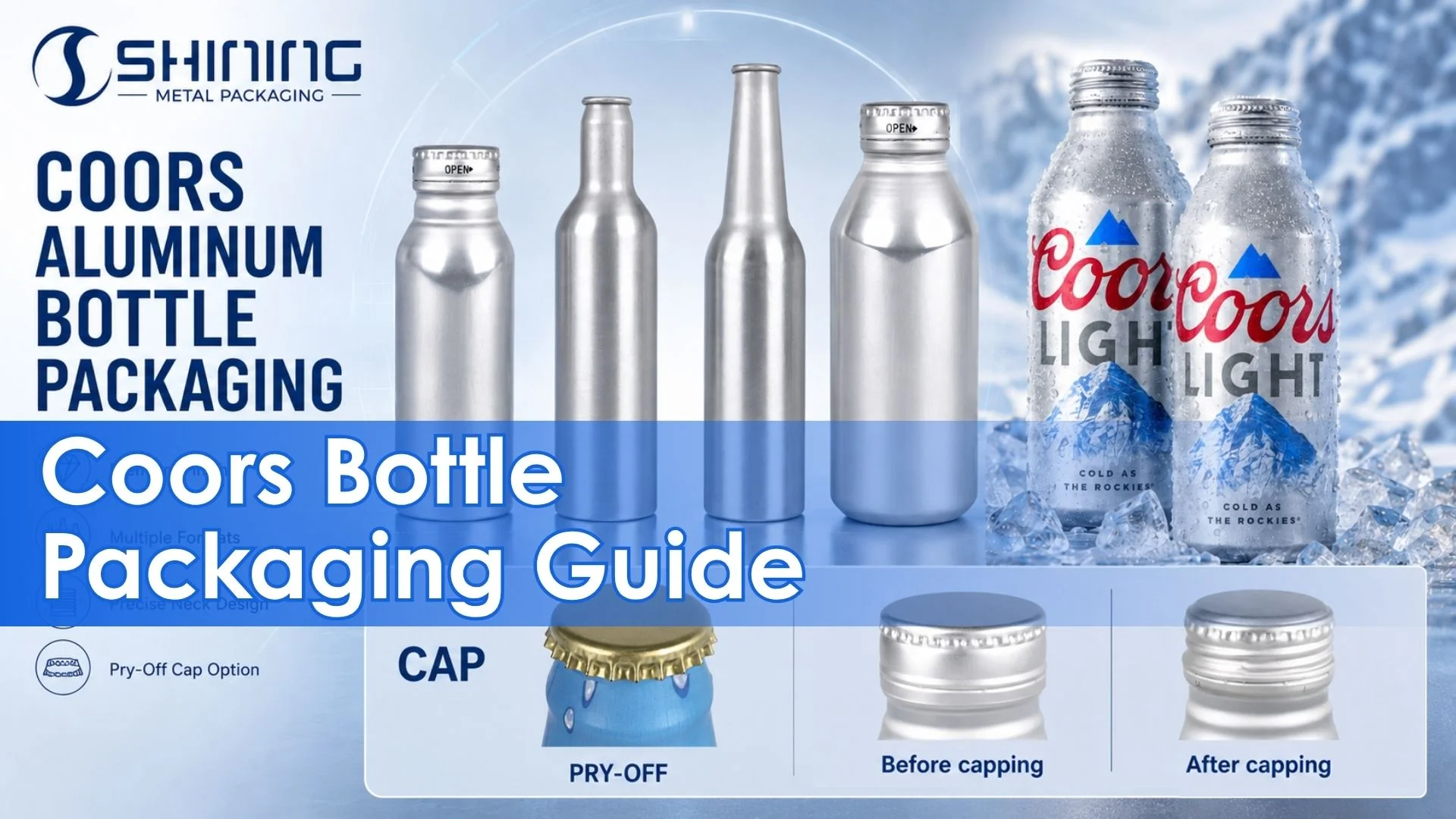
The Coors Light aluminum bottle is not simply a metallic alternative to a beer can. Its strongest role is to turn the brand’s long-standing cold-refreshment language into a package that can be seen, held, opened and temporarily resealed.
1. Cold is the brand brief, not a secondary aluminum claim
“Cold Lagered, Cold Filtered, Cold Packaged.”
The sequence used on the official Coors Light beer page explains why aluminum is relevant to this product. Coors Light is a 4.2% ABV American light lager with 102 calories and 5 grams of carbohydrates per 12 oz serving, but the brand does not organize its identity primarily around nutritional reduction. It organizes the product around cold processing and immediate refreshment.
That distinction determines how the bottle should look and feel. Silver metal, blue mountain imagery and a refrigerated surface can reinforce the established Coors vocabulary without introducing an unrelated luxury code. A dark, heavy or highly ornamental finish might make an garrafa de alumínio appear more expensive, but it would also weaken the visual impression of lightness and cold that makes this brand recognizable.
The 16 oz format also places the product in a specific American drinking context. Retail descriptions consistently connect it with tailgates, barbecues, camping trips and informal gatherings. These are cooler-led, hand-held occasions in which the package must remain visually clear through condensation, tolerate repeated handling and feel appropriate outside the conventional glass-bottle ritual.
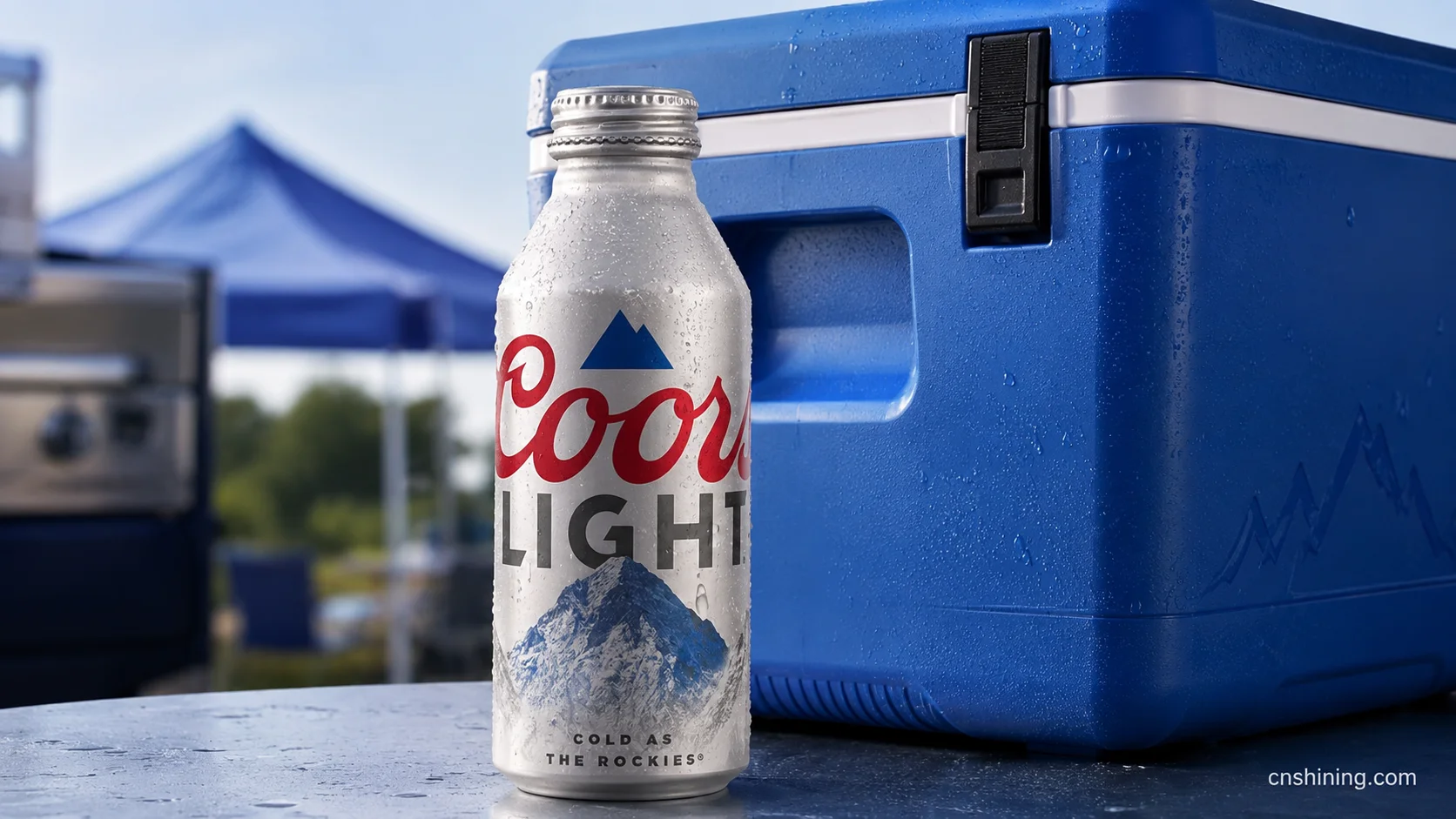
2. What the Coors Light aluminum bottle changes after it leaves the cooler
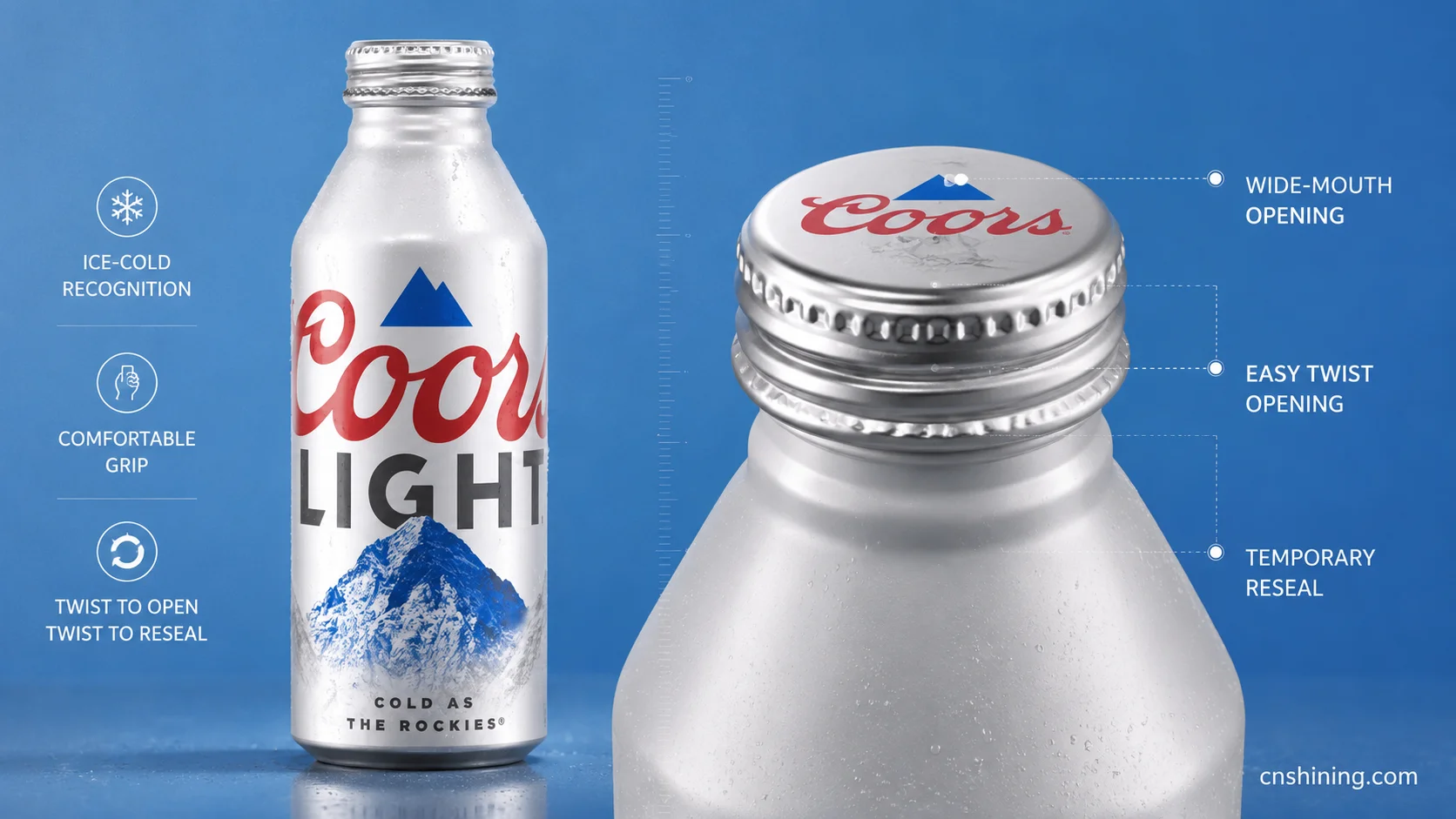
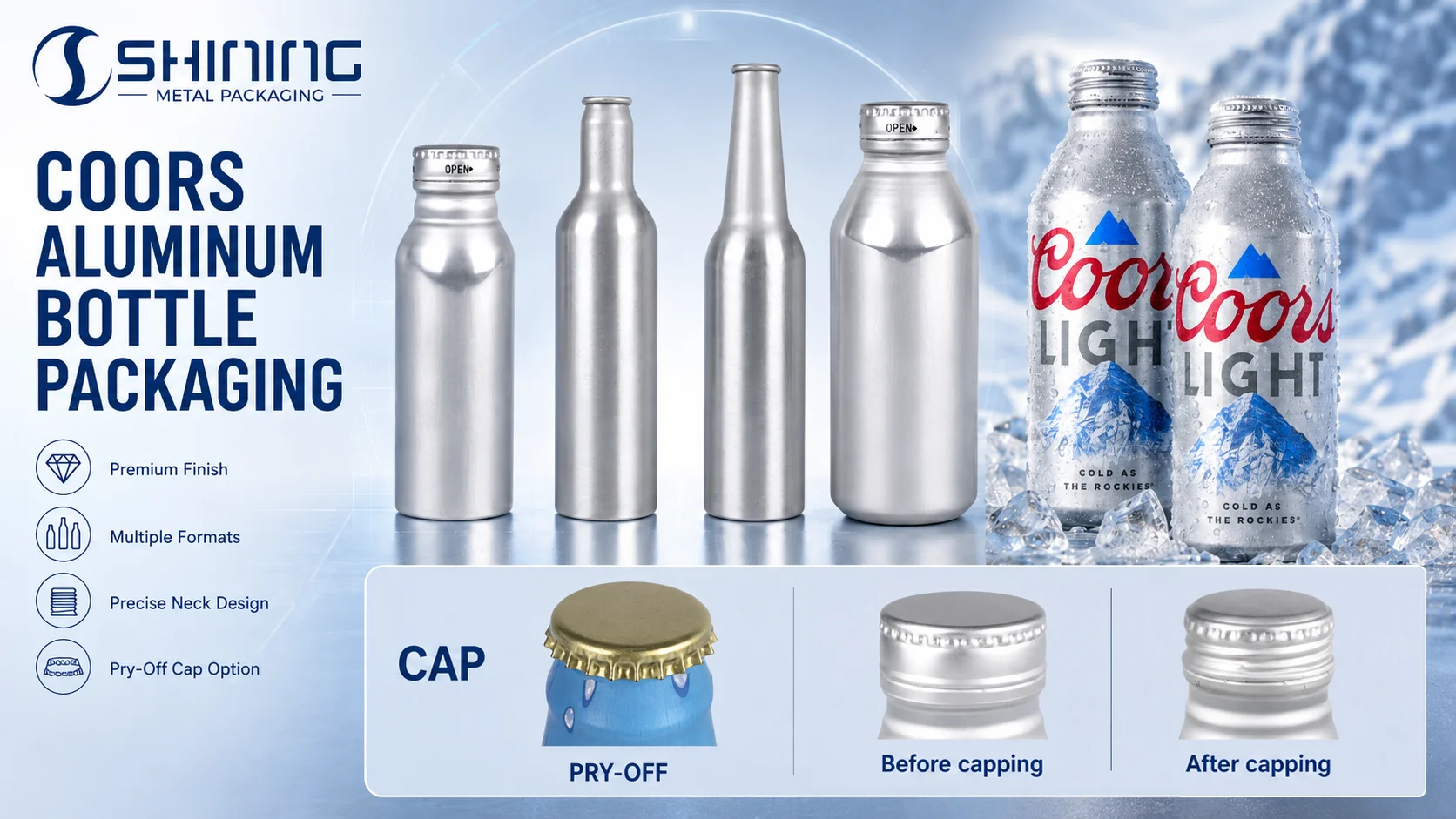
The aluminum pint was originally developed around three connected actions: a wide-mouth opening, a resealable twist closure and cold-responsive mountain graphics. A contemporary account of the package launch described the wide mouth as a pouring feature and the cap as a portability feature. Together, they allowed the package to behave differently from both a conventional beer can and a pry-off glass bottle.
Temporary resealing has a narrow but useful purpose. It can reduce the likelihood of a spill when a consumer moves between a cooler, seat, table or outdoor activity. It should not be presented as indefinite preservation after opening. Once the seal has been disturbed, carbonation retention depends on the liner, closure torque, remaining headspace, temperature and the length of time before the bottle is reopened.
The drinking opening is also a consumer-visible detail. On the current 9-pack retail listing, one verified purchaser specifically associated the wide-mouth bottle with a better drinking experience. A single review does not establish a broad preference, but it shows that the opening geometry is noticed rather than disappearing into the background of the package.
The 16 oz capacity extends the interaction. Compared with a 12 oz serving, the consumer holds the bottle longer, making grip comfort, closure handling and printed-surface durability more consequential. Capacity therefore supports the format’s role as an occasion-led package, not merely a larger unit of beer.
3. The bottle must be developed as a coated, closed pressure system
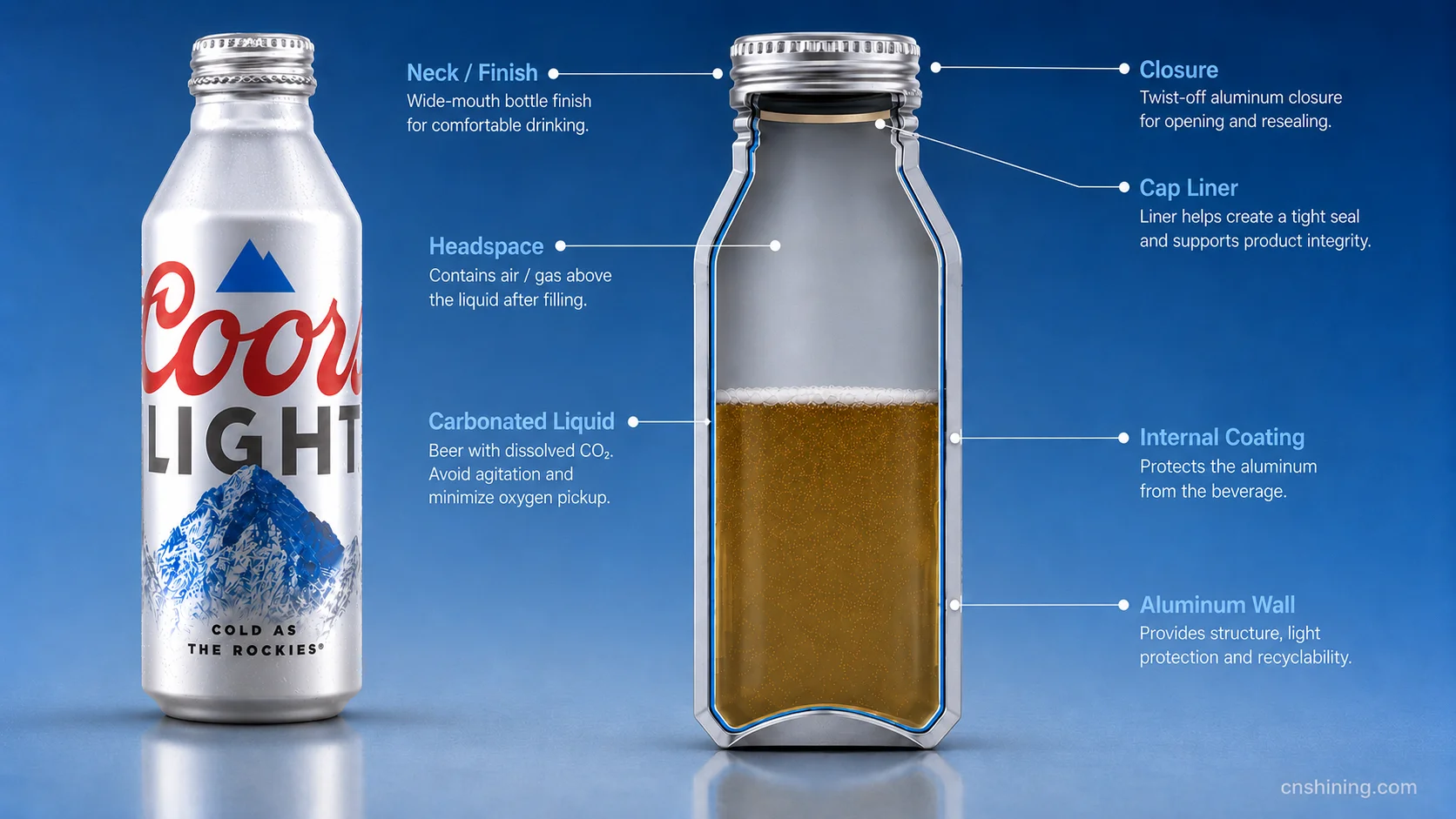
Carbonated beer does not interact with an aluminum body in isolation. Package performance depends on the combined behavior of the internal coating, neck finish, cap liner, applied closure, headspace, filling process and storage environment. Public product information does not establish the beer’s actual CO₂ volume, filling temperature, dissolved-oxygen specification, pasteurization route or coating chemistry, so these must remain project validation variables rather than assumed specifications.
| Structural area | Brand-specific function | Required validation |
|---|---|---|
| Bottle body, shoulder and base | Maintains the short aluminum-pint silhouette while providing stable grip and a broad area for the silver-and-blue design. | Filled-package stability, shoulder deformation, dent resistance, line handling and performance after vibration or impact exposure. |
| Revestimento interno | Separates the beer from the metal and protects flavor neutrality during the intended shelf life. | Finished-beer compatibility, migration documentation, cure integrity, corrosion screening and accelerated storage under the actual filling and thermal conditions. |
| Wide-mouth neck and closure | Creates the package’s most recognizable functional difference through opening, pouring and temporary resealing. | Thread-profile confirmation, liner selection, application torque, removal torque, pressure release, leakage and repeat-close performance. |
| Filling and immediate closure | Limits foaming and oxygen pickup while creating a stable carbonated package. | Counter-pressure filling trials, headspace control, closure timing, warm-pressure behavior, seam or seal inspection and commercial line speed. |
| Printing and protective varnish | Keeps the cold mountain language legible after refrigeration, condensation and repeated handling. | Color consistency, cold-effect control where specified, condensation resistance, ice-bucket exposure, carton rub and barcode readability. |
U.S. artwork must leave stable, readable space for the information covered by the TTB mandatory malt-beverage labeling rules, including the brand name, class or type, net contents, responsible company information and the federal health warning. Mandatory copy should remain on a sufficiently cylindrical area rather than being forced into a sharply curved shoulder or onto the closure.
The coating and liner also fall within the intended-use logic of the FDA food-contact conditions-of-use framework. A general beverage declaration is not a substitute for confirming the authorized composition, specifications and conditions applicable to the selected package components.
Shining Packaging can align bottle geometry, closure selection, inner-coating compatibility, decoration trials and pilot validation before a carbonated-beer design is released for commercial production.
4. Competitor landscape: a shared bottle format with different brand jobs
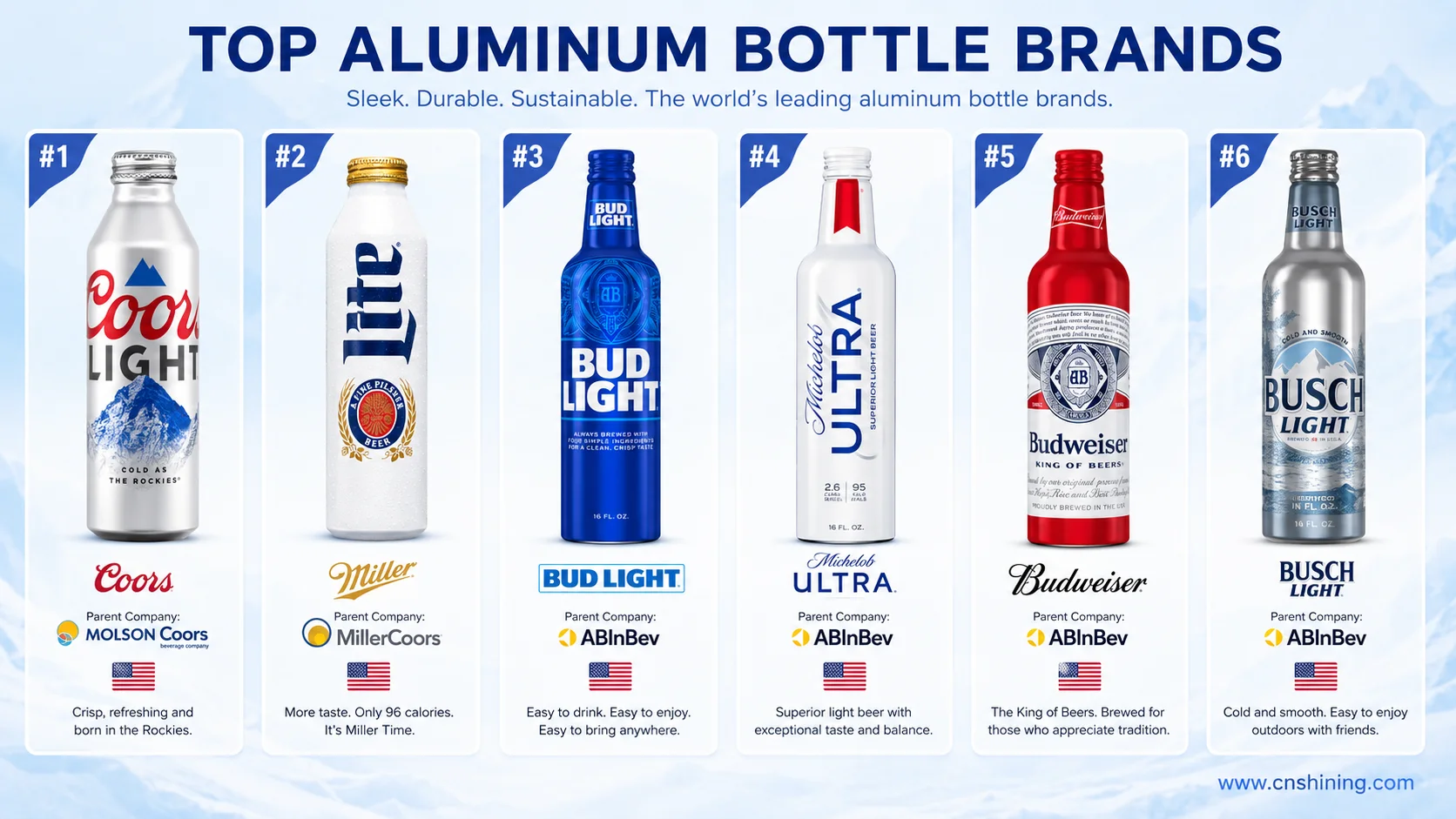
The most relevant U.S. comparisons are finished lager brands sold in 16 fl oz aluminum bottles. The group includes one other Molson Coors light-lager brand and four brands in the Anheuser-Busch beer portfolio. Their common container size makes positioning, closure behavior, graphic language and price perception more informative than a comparison with unrelated aluminum cans.
| Marca | País | Empresa controladora | Capacidade | Retail price per bottle | Core selling point |
|---|---|---|---|---|---|
| Miller Lite | Estados Unidos | Molson Coors Beverage Company | 16 fl oz | $1.12 | The Original Light Beer, supported by a hop-forward profile, 96 calories and 3.2 grams of carbohydrates per 12 oz serving. |
| Bud Light | Estados Unidos | Anheuser-Busch / AB InBev | 16 fl oz | $1.23 | A clean, crisp mainstream light lager associated with beach days, game viewing and backyard barbecues. |
| Michelob ULTRA | Estados Unidos | Anheuser-Busch / AB InBev | 16 fl oz | $1.36 | Active-lifestyle positioning reinforced by 95 calories, 2.6 grams of carbohydrates and a clean light-lager profile. |
| Budweiser | Estados Unidos | Anheuser-Busch / AB InBev | 16 fl oz | $1.25 | A full-strength American lager using heritage, medium-bodied taste and shared occasions rather than light-beer reduction language. |
| Busch Light | Estados Unidos | Anheuser-Busch / AB InBev | 16 fl oz | $0.92 | A value-led light lager linked to cold refreshment, fishing, camping and other outdoor occasions. |
The comparison confirms that aluminum alone cannot differentiate Coors Light. Miller Lite has a stronger claim to light-beer originality, Michelob ULTRA has a clearer nutritional-performance platform, Busch Light competes more aggressively on outdoor value, and Budweiser uses the same bottle category to support heritage rather than lightness.
The Coors Light aluminum bottle instead occupies a cold-first position. Its current 15-pack listing at approximately US$1.33 per bottle places it above the lowest-cost choices but close to Michelob ULTRA. The price does not establish a luxury tier; it asks the wide-mouth package, resealable closure and silver-blue cold language to justify a modest experiential premium.
The strategic implication is not that Coors should exaggerate the bottle’s metallic character. It should protect the elements that competitors use less coherently: cold processing as a brand story, cold graphics as a recognition device and the closure as a practical response to mobile drinking occasions.
5. A memorable bottle should complement the volume package, not replace it
The strongest commercial role for the aluminum pint is as a recognizable occasion-led SKU. Standard cans remain better suited to broad multipack distribution, mature high-speed lines and price-sensitive volume. The bottle earns its place where the consumer spends more time seeing and handling an individual package: convenience retail, outdoor gatherings, sports viewing and event-led consumption.
Development should therefore protect the existing visual and behavioral system before adding decorative complexity. The practical priorities are consistent closure application, liner compatibility, controlled pressure release, coating validation, shoulder resistance and a varnish system that remains legible after condensation, cooler contact and carton abrasion.
Sustainability language should stay secondary and construction-specific. An aluminum-dominant bottle may enter established metal-collection streams, but the completed package also contains coatings, inks, varnish and a lined closure. Claims should describe the actual recovery route and local infrastructure rather than presenting the entire package as impact-free.
Final conclusion
The Coors Light aluminum bottle is valuable because it converts one brand idea into several connected package decisions. Cold processing establishes the narrative, the silver-blue body makes it visible, and the wide-mouth resealable closure changes how the bottle is used. Preserving that coherence is more important than adding another generic aluminum benefit.