
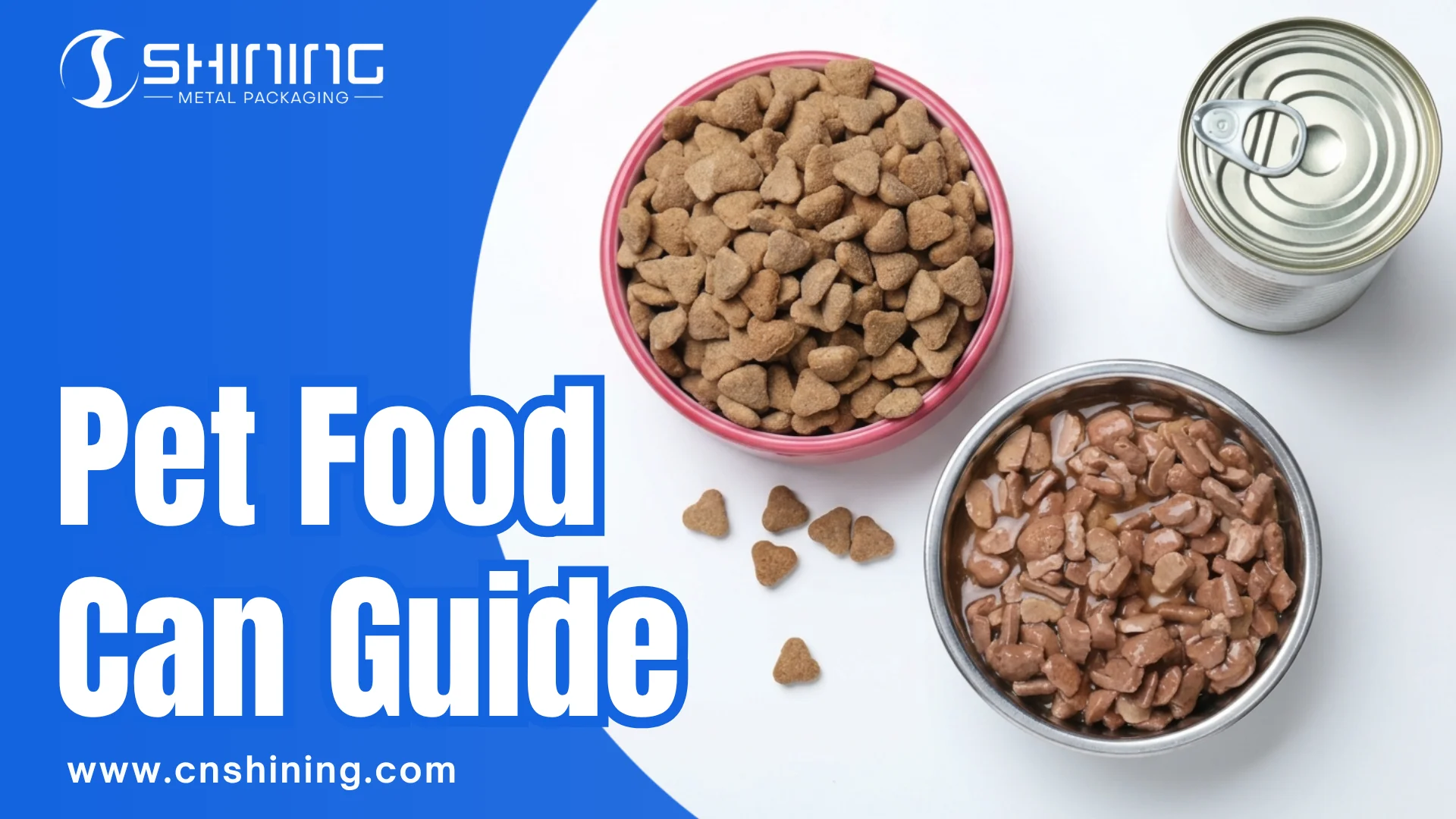
A pet food can has to do more than hold the product. It must work with the food formula, filling process, retort conditions, shelf-life target, and the way the consumer opens the package.
Wet dog and cat foods also vary widely. A smooth pâté behaves very differently from chunks in gravy. A high-meat formula may create different demands on the internal coating than a lower-protein recipe. Even can size can affect how the product heats during retort.
So choosing a pet food can usually starts with a few practical questions: What food is going into it? How much product is needed per serving? How will it be filled and thermally processed? And what type of end and internal coating does the application require?
1. Common Cat Food Can and Dog Food Can Sizes
Pet food cans are available in several common capacities. The right size depends mostly on portion size, animal type, product positioning, and feeding habits.
| Размер банки | Approx. Metric Weight | Типичное использование |
|---|---|---|
| 3 унции | ≈ 85 g | Single-serve cat food, kitten food, smaller premium portions |
| 5.5 oz | ≈ 156 g | Standard wet cat food |
| 12 унций | ≈ 340 g | Larger wet food formats |
| 12,5 унций | ≈ 354 g | Large cat food and dog food cans |
| 13 унций | ≈ 369 g | Common wet dog food size and some large cat food formats |
| 13.2–13.5 oz | ≈ 374–383 g | Common larger wet food sizes in the US market |
| 22 унции | ≈ 624 g | Economy packs, multi-pet households, shelters, and large dogs |
1.1 3 oz Pet Food Cans
The 3 oz can is strongly associated with wet cat food.
It works well for single meals, small portions, kitten food, and products where the owner does not want to store leftovers after opening. This size is also common in products positioned around controlled portions.
For can buyers, it is worth checking both the nominal ounce size and the actual fill weight. Two cans described as “3 oz” do not always use exactly the same dimensional specification.
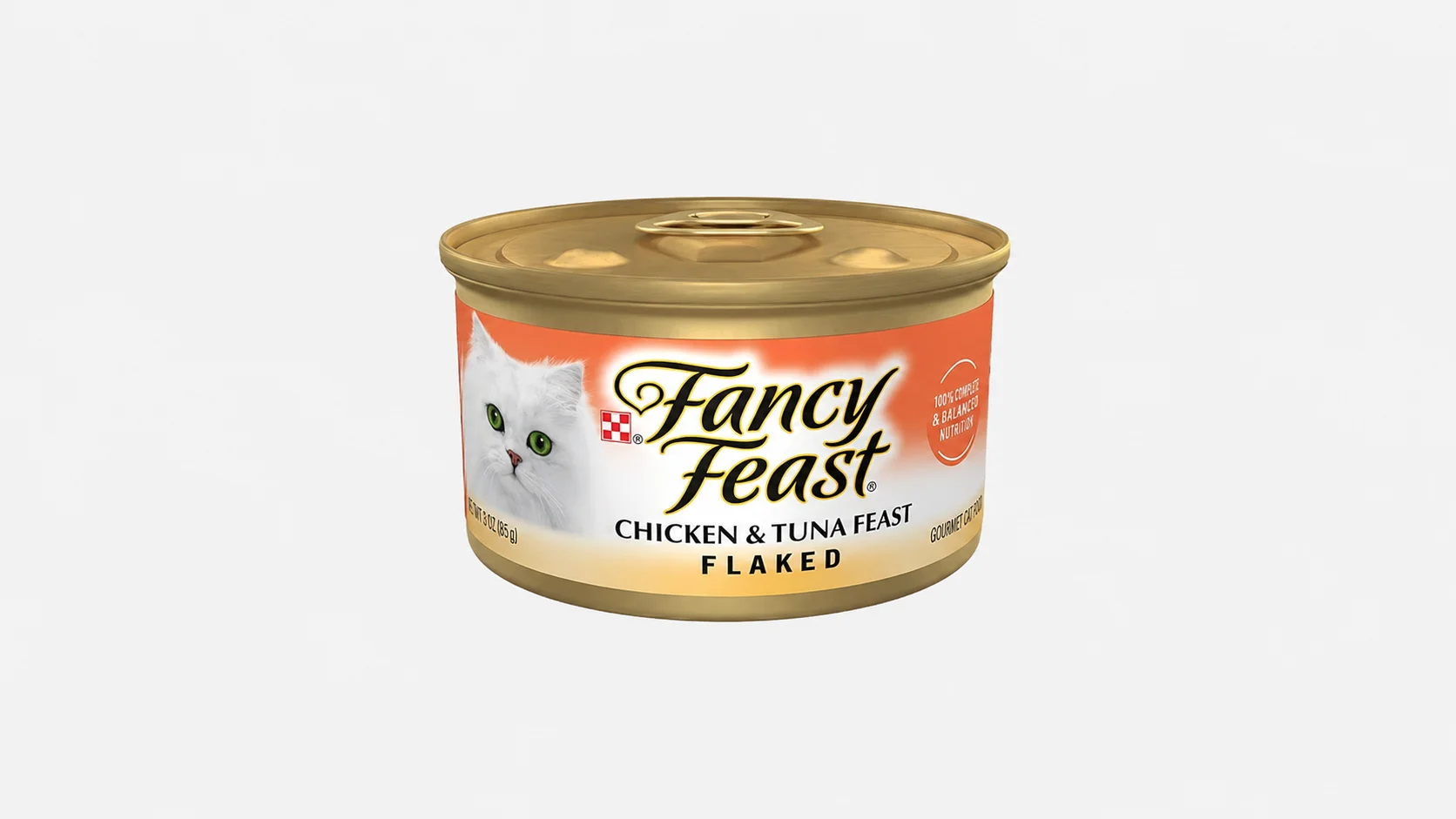
1.2 5.5 oz Pet Food Cans
The 5.5 oz can is another standard format for wet cat food.
It gives manufacturers more product volume than a single-serve 3 oz can while still remaining relatively compact. For many adult-cat formulas, it sits in a practical middle range between small portions and large multi-serving cans.
1.3 12 oz and 12.5 oz Pet Food Cans
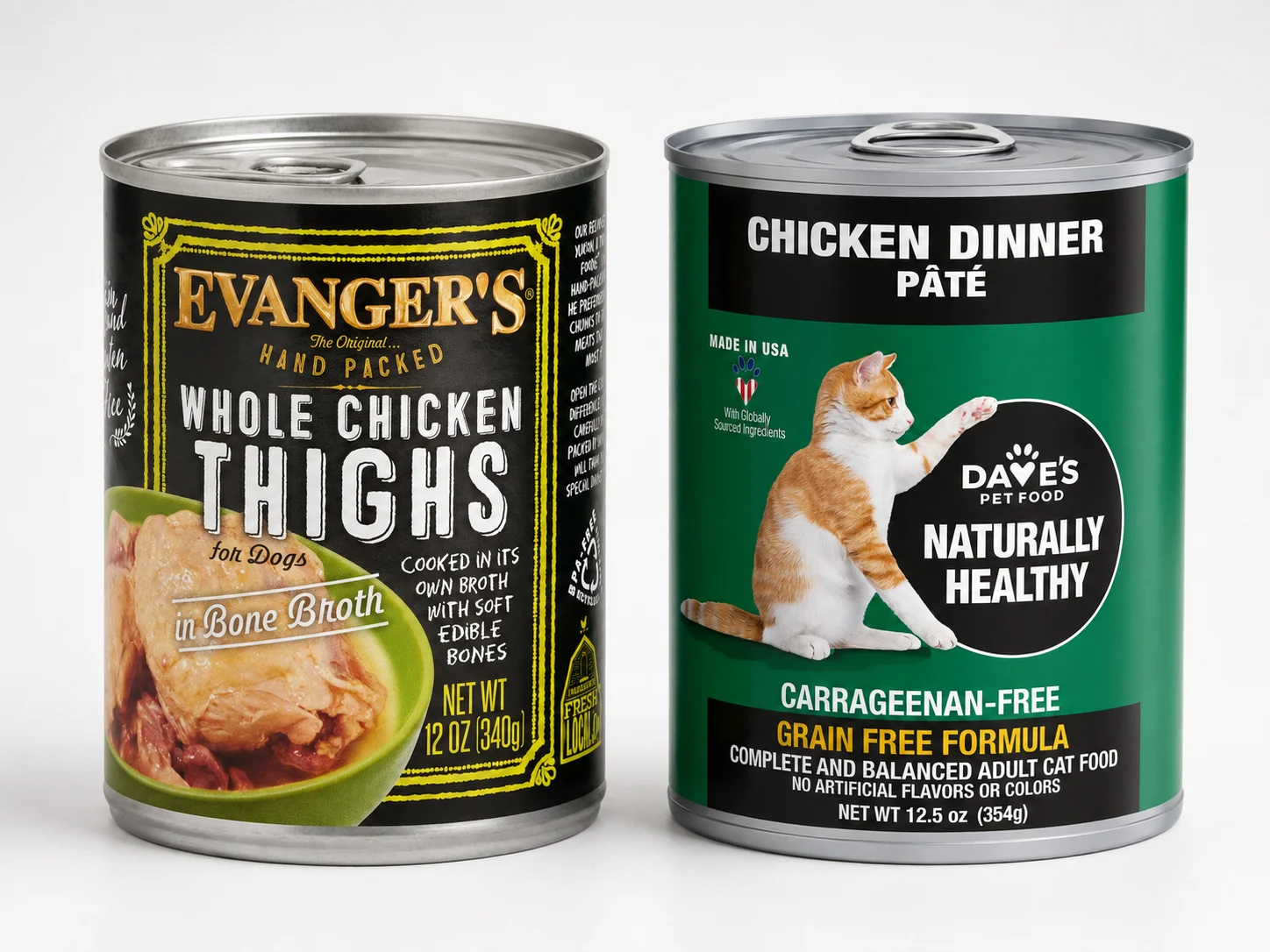
These sizes should not automatically be treated as the same specification.
A 12 oz can is roughly 340 g, while a 12.5 oz can is about 354 g. Both appear in the wet pet food market, but 12.5 oz is a particularly common larger format for cat and dog food.
If a purchasing specification simply says “12 oz pet food can,” confirm the required dimensions and fill volume before production. The difference may look small on a product label but still matter for the actual package.
1.4 13 oz to 13.5 oz Pet Food Cans
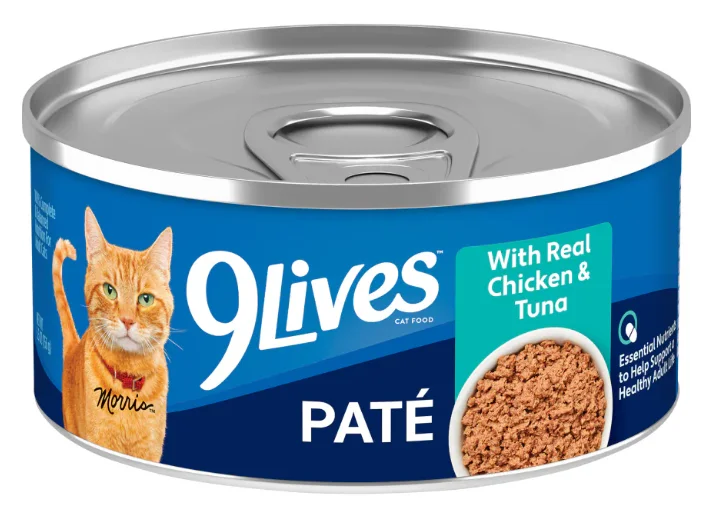
For wet dog food, cans around 13 oz are very common. They are also used for some larger-format cat food products. For example, 9Lives offers 13 oz canned cat food pâté.
Current product formats also include 13.2 oz and 13.5 oz sizes, which are commonly seen in the US wet pet food market.
Again, the ounce description alone is not enough for manufacturing. Can diameter, height, end specification, and filling volume should all be confirmed.
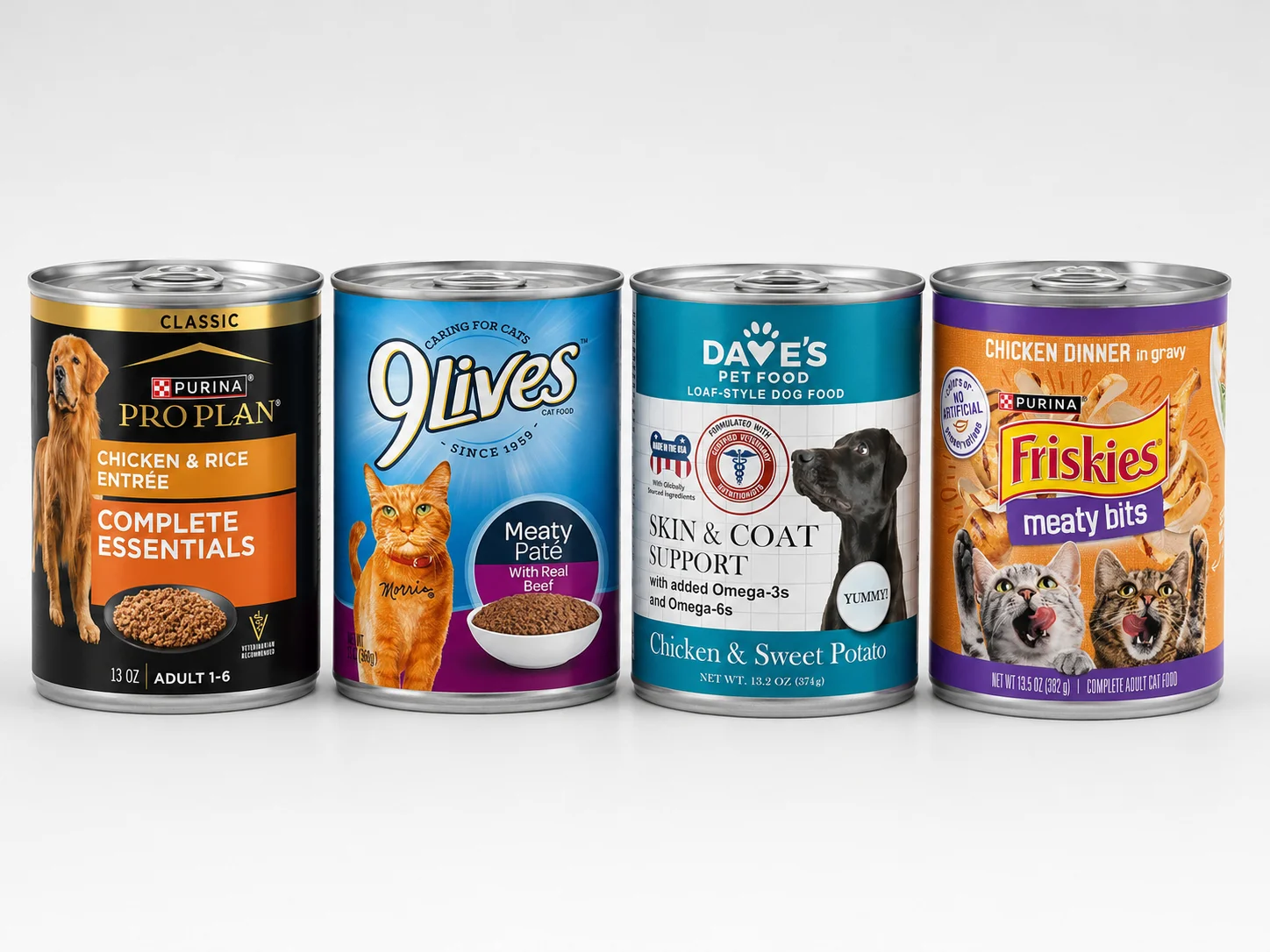
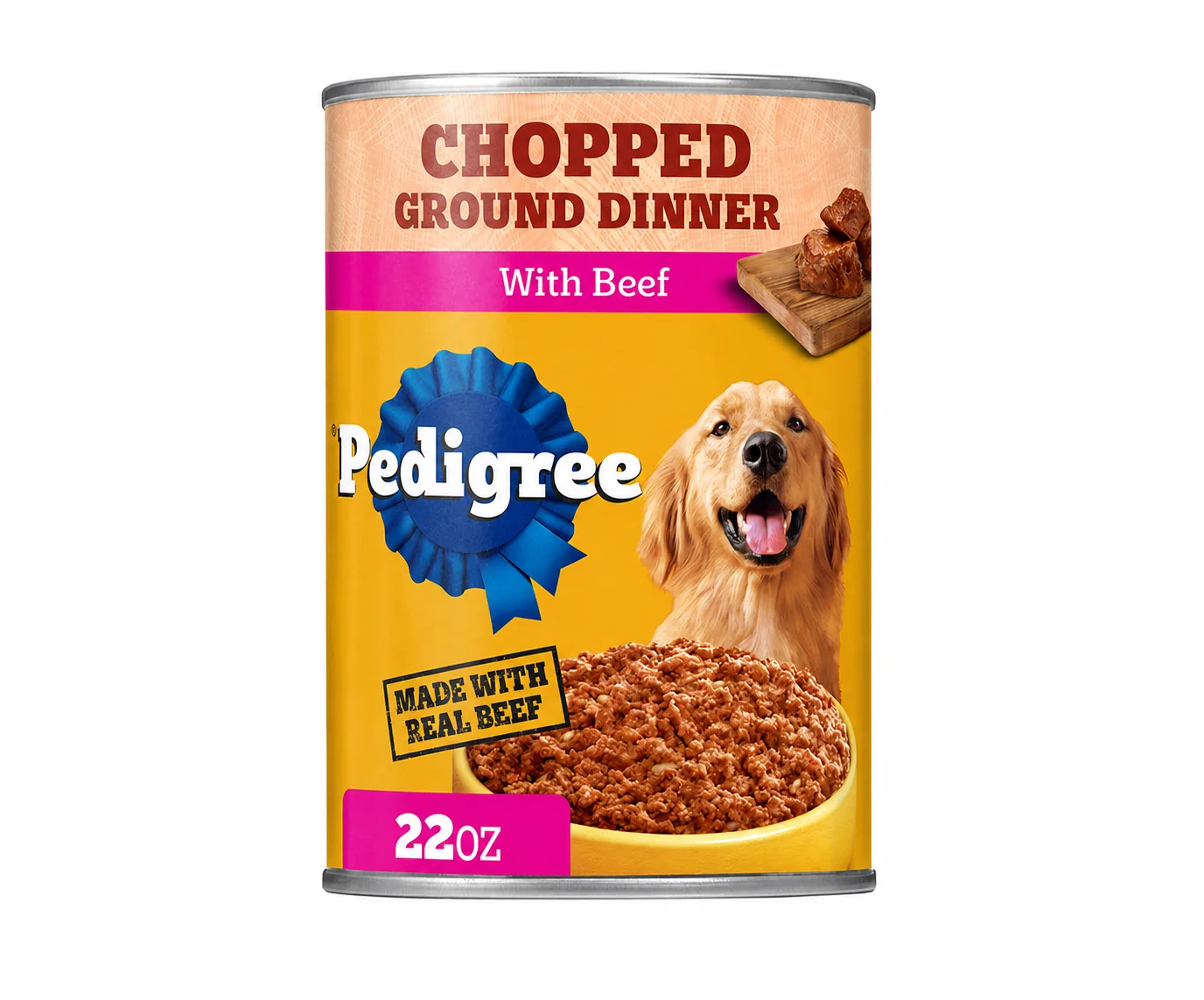
1.5 22 oz Pet Food Cans
A 22 oz can serves a different use case.
It is better suited to large dogs, multi-pet households, shelters, or economy-oriented products where a larger amount of food is used after opening.
Larger volume also means the can and process need to be evaluated as a complete system. A retort process developed for a smaller can should not simply be assumed to work for a larger format.
2. Two-Piece vs. Three-Piece Pet Food Cans
In general, two-piece cans are often used when a seamless can body and a clean internal surface are preferred. Банки из трех частей are commonly used for larger sizes or applications where flexible body dimensions and conventional welded-can production are practical.
The choice depends on the required can specification, production setup, food formula, and processing conditions. Rather than selecting a construction type by habit, it makes more sense to match it to the actual filling and retort process.
3. Easy-Open Ends for Pet Food Cans
The term “pet food can lid” can refer to two completely different products.
For can manufacturers and food processors, this distinction matters.
3.1 Easy-Open Ends
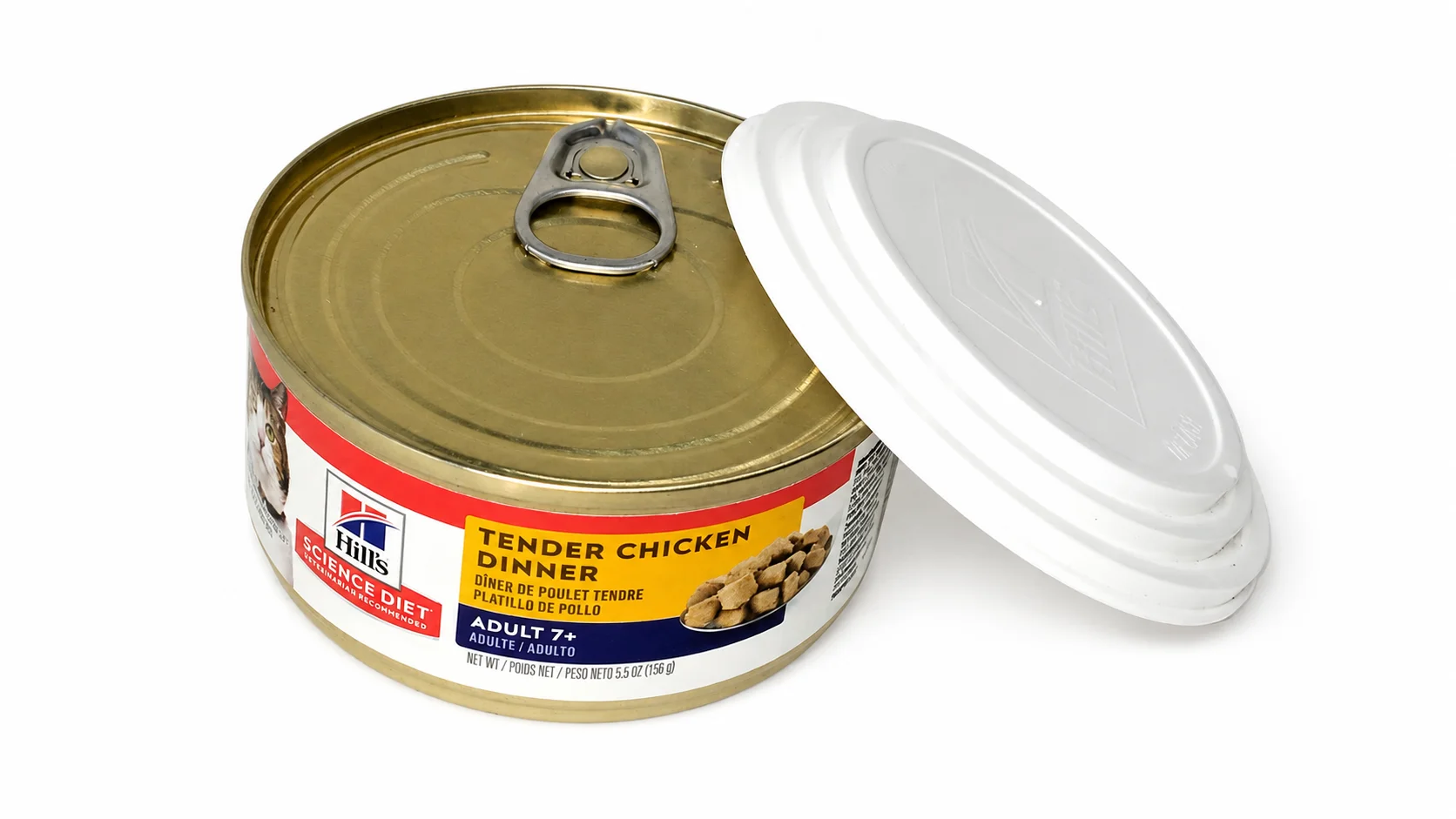
Ан easy-open end, also called an EOE, ring-pull end, или can end, is the metal closure sealed onto the can after filling.
It goes through the thermal processing stage together with the filled container.
This is the actual packaging component used to hermetically close the pet food can. Its dimensions and material specification need to match the can body and seaming requirements.
Easy-open ends are common in both cat food cans and dog food cans because they allow consumers to open the package without a separate can opener.
3.2 Reusable Pet Food Can Covers
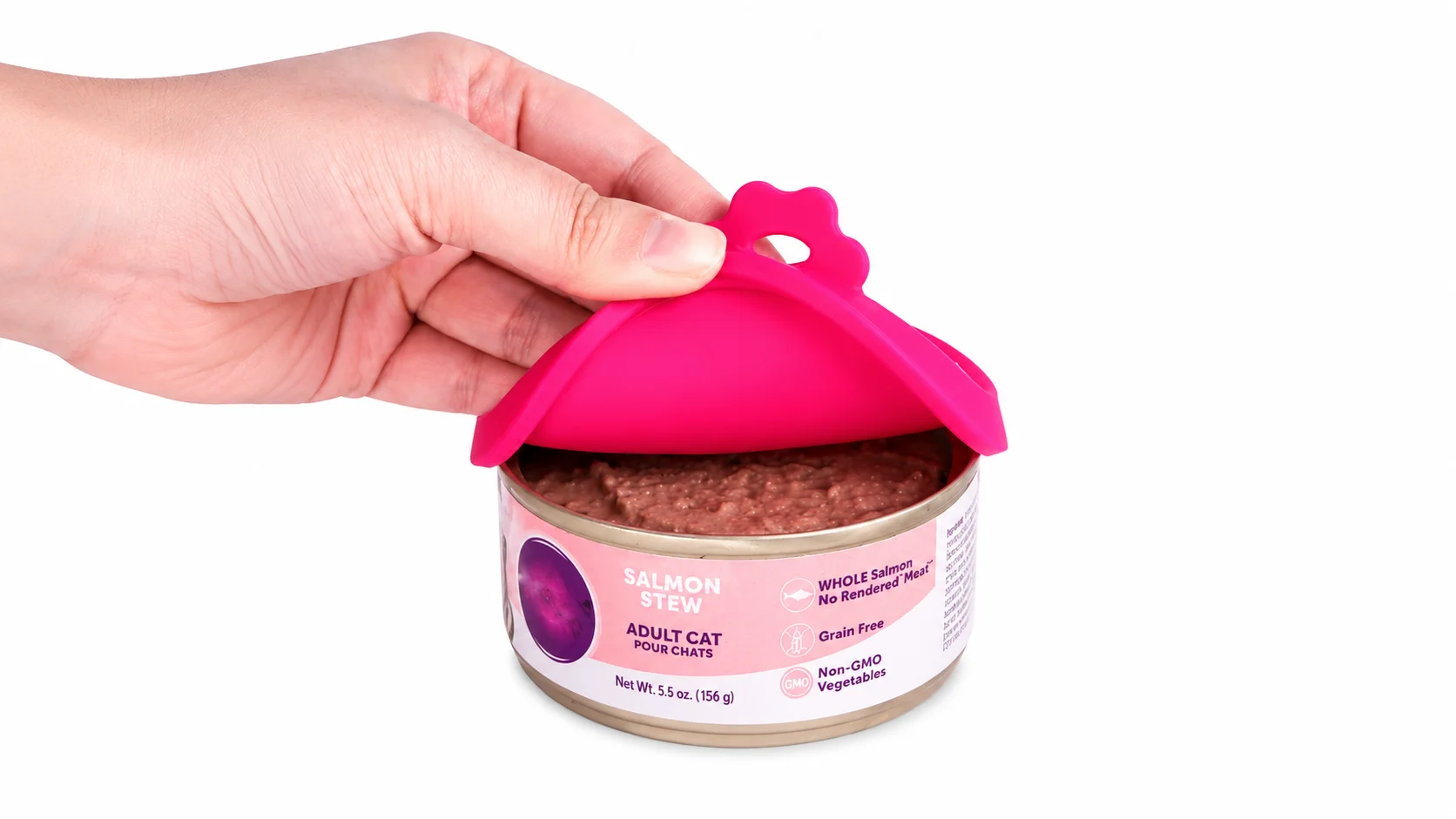
A reusable pet food can cover или plastic can lid is different.
It is used only after the metal can has already been opened. The consumer places it over the open container before storing leftover food in the refrigerator.
It does not replace the metal end used for commercial sealing and retort processing.
This distinction sounds obvious to packaging engineers, but it is worth stating because searches for “pet food can lids” often mix the two products together.
4. How Wet Pet Food Can Filling Works
Wet pet food is not one uniform product. The filling and thermal process depends heavily on the food structure.
Common product types include:
- Pâté or loaf: High viscosity and relatively uniform texture. Fill consistency and product viscosity can affect heat penetration.
- Chunks in gravy: Chunk dimensions, solid-to-liquid ratio, and gravy viscosity can influence heat transfer.
- Stew: Larger meat or vegetable particles make particle size and distribution more relevant.
- Shredded or flaked food: Consistent ingredient distribution and liquid ratio need attention during filling.
- High-meat formulations: Can place additional demands on internal coating selection and long-term package compatibility.
The basic process is straightforward: the product is filled into the can, the metal end is seamed onto the container, and the sealed can is thermally processed.
The details are not so simple.
Heat can move through canned food by conduction, convection, or a combination of both. Product consistency and viscosity affect that behavior. The size of meat chunks, the packing medium, and the formula itself can also change the rate of heat transfer.
Pâté is a good example. It is usually thick and has relatively little internal movement compared with a thinner stew or chunks in gravy. Its heating behavior can therefore be different even when the external can dimensions are similar.
That is why a retort schedule should not be selected only by looking at a label such as “canned dog food pâté” or “canned cat food pâté.”
The actual process needs to be validated against the specific formula, can size, fill condition, and processing equipment.
5. Internal Coatings for Pet Food Cans
Internal coating selection is easy to overlook until a formula starts reacting with the package.
Wet pet food often contains meat, fish, minerals, salt, fat, and a high level of moisture. The filled can may then undergo high-temperature thermal processing and remain in direct contact with the product for a long shelf life.
Those conditions create a demanding food-to-metal environment.
High-protein meat and fish formulas may generate sulfur-containing compounds during thermal processing. This can contribute to sulfide staining or blackening under certain conditions. The behavior can also be affected by product pH, the metal surface, coating type, and any defects or exposed areas in the coating system.
Salt and chloride content also need attention because they are related to the corrosion environment inside the package. Product pH, fat and oil content, minerals, additives, retort temperature, processing time, and expected shelf life can all affect coating compatibility.
There is no useful “one coating fits every pet food” rule.
A coating suitable for one chicken pâté formula may not automatically be suitable for a high-fish recipe with a different salt level, pH, and retort process. The package should be evaluated against the actual product rather than only the general category of “wet pet food.”
For long-shelf-life products, compatibility testing under realistic processing and storage conditions is the safer engineering approach.
6. Choosing the Right Pet Food Can
Start with the food rather than the empty can.
Define the product type, target fill weight, can dimensions, end style, filling conditions, retort process, and shelf-life requirement. Then check whether the can body, easy-open end, seam specification, and internal coating work together under those conditions.
For a typical wet pet food project, the key specifications to confirm are:
- Target net weight and can capacity
- Can diameter and height
- Two-piece or three-piece construction
- Easy-open end specification
- Food texture and viscosity
- Particle or chunk size
- Product pH and salt level
- Protein and fat content
- Retort time and temperature
- Совместимость внутреннего покрытия
- Expected shelf life
A 3 oz cat food pâté and a 13 oz dog food stew may both use metal cans, but they are not the same packaging problem.
The can specification should follow the product and process. That is usually the most reliable place to start.