

A retortable meat can is part of the thermal processing system, not just a container.
It must remain sealed and stable during filling, seaming, retorting, cooling, transport, and storage. Its dimensions and shape also affect how heat moves through the product.
Canned meat includes products with very different structures, from dense luncheon meat to chicken in broth and ready meals containing meat, pasta, or sauce. Most shelf-stable meat products are treated as low-acid canned foods, but “low acid” is a regulatory classification. It does not simply mean high protein.
The target is commercial sterility, not absolute sterility. The product, can, closure, and scheduled thermal process must therefore be evaluated as one system.
1. Start with the Product Structure
The product structure determines how heat moves through the can.
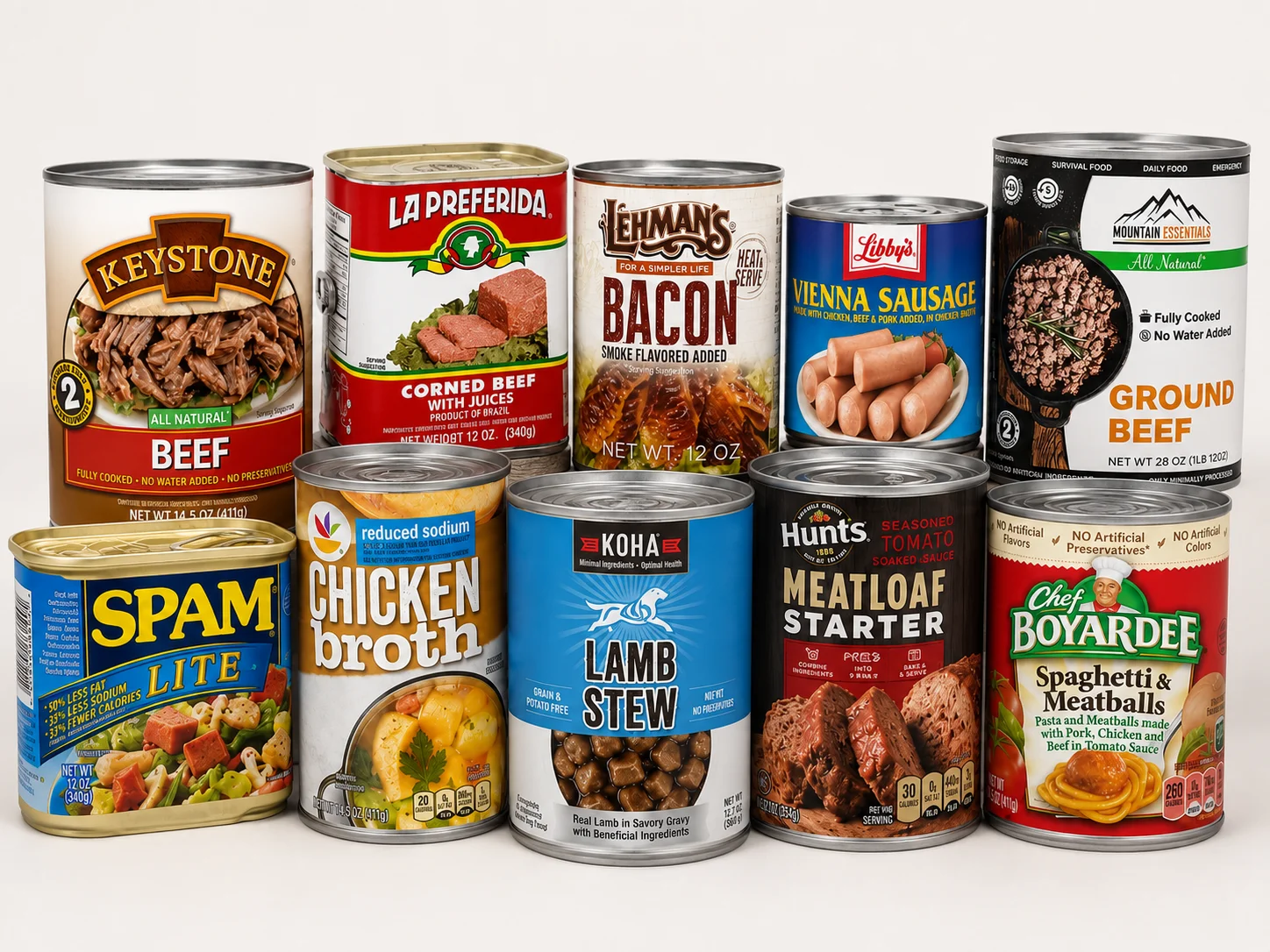
1.1 Dense and Homogeneous Meat Products
Examples include:
- Luncheon meat
- Chopped meat
- Meat loaf
- Pâté-type products
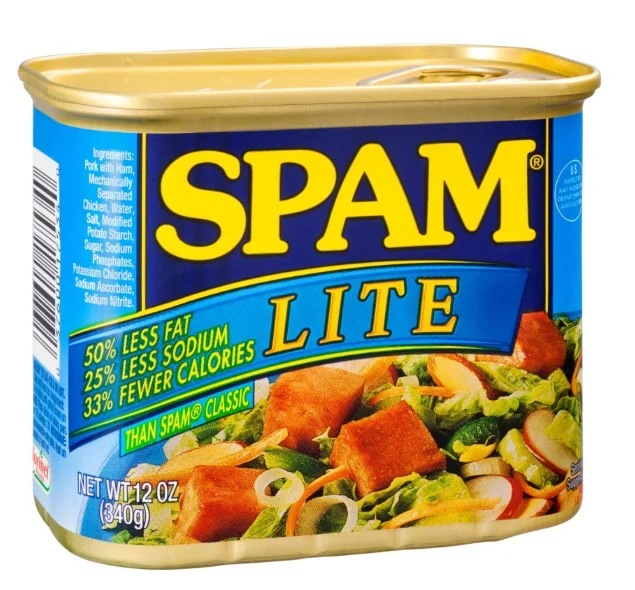
- SPAM-style luncheon meat
- Some corned beef products
These products normally heat mainly by conduction. The center of the pack may heat slowly, especially when the product is tightly filled.
Fill weight, initial temperature, density, fat, starch, hydrocolloids, trapped air, and can dimensions can all affect heat penetration. A formulation that becomes firmer during retorting may not heat in the same way as the original test product.
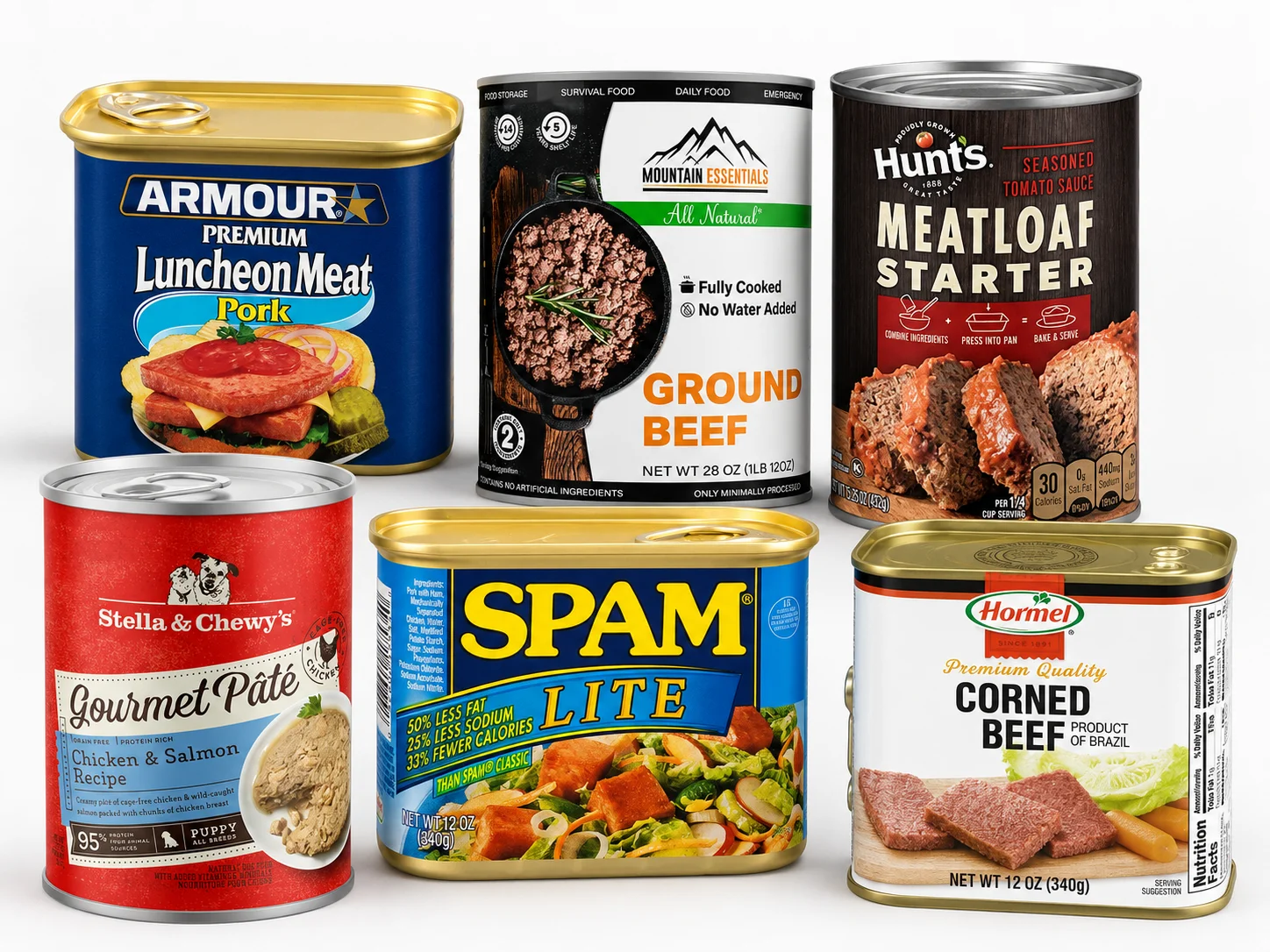
Rectangular cans are common for luncheon meat and corned beef. Their shape supports product presentation and slicing, but the corners, flat panels, and product thickness must be considered during package design.
1.2 Meat Chunks in Broth, Gravy, or Sauce
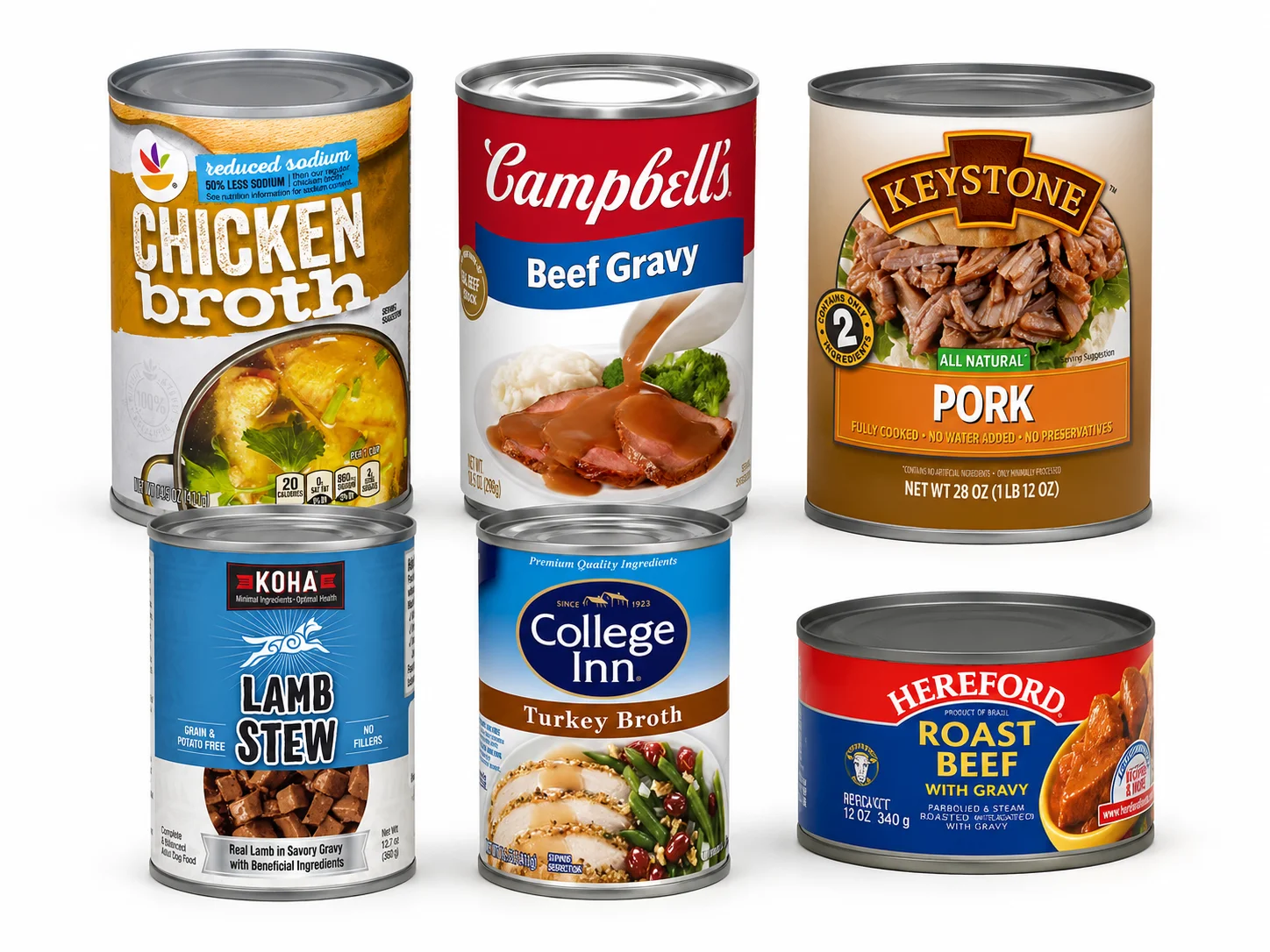
Examples include:
- Chicken in broth
- Beef in gravy
- Pork chunks
- Lamb stew
- Turkey in broth
- Roast beef with juice
These products may heat through a combination of conduction and convection. The liquid can circulate, while the meat pieces heat more slowly.
The result depends on meat-piece size, solid-to-liquid ratio, drained weight, sauce viscosity, settling, and the position of the solids. A thin broth may circulate well. A thick gravy may restrict movement.
1.3 Multi-Component Ready Meals
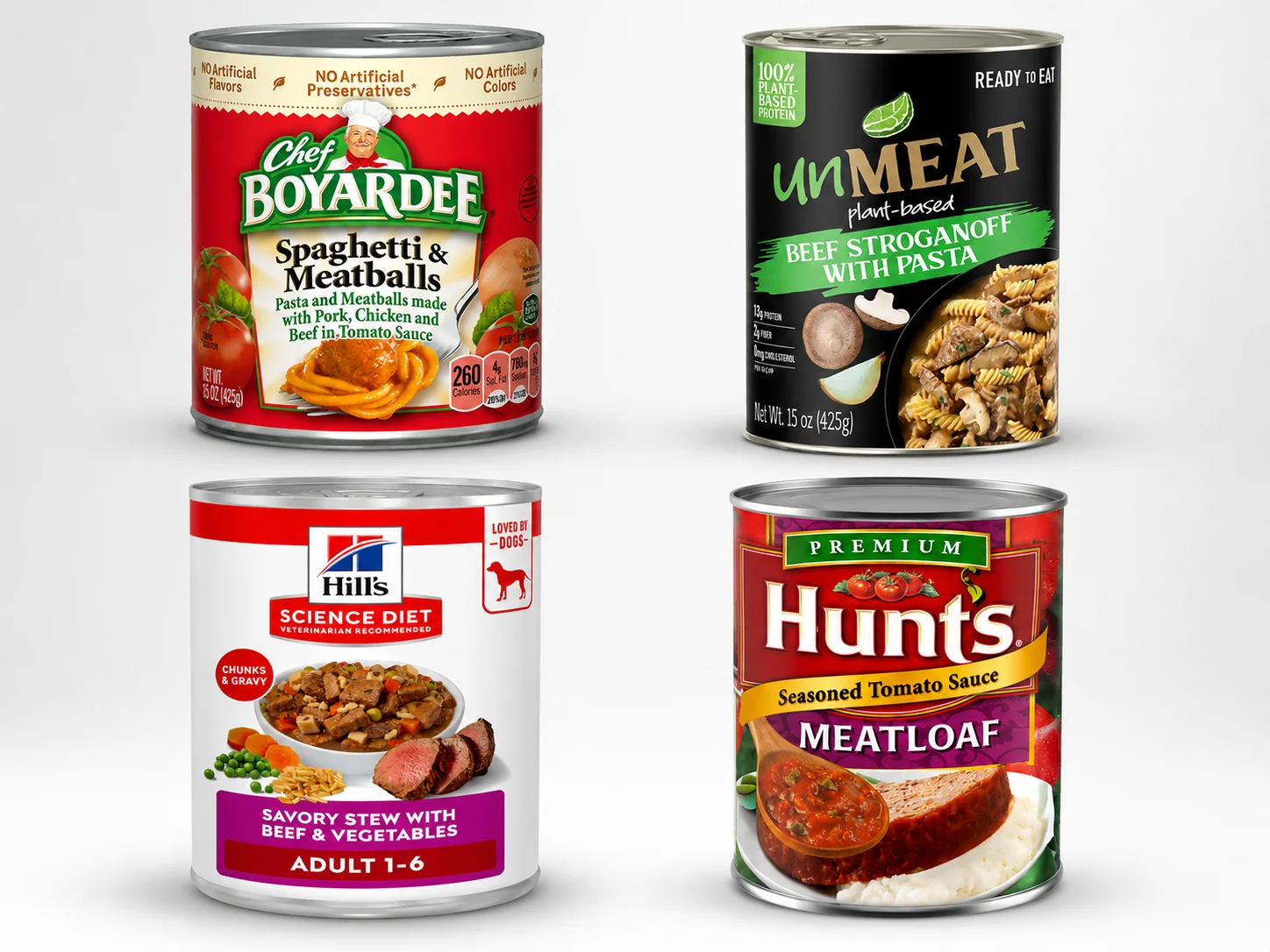
Examples include:
- Spaghetti and meatballs
- Meat with pasta
- Meat and vegetable stews
- Meat in thick tomato sauce
These products are less predictable because several components affect heat transfer at the same time.
Meatball size, pasta hydration, sauce viscosity, starch content, total solids, and product layering may all change the heating pattern. Even holding time before retorting can affect viscosity and water absorption.
The can may stay the same while the required process changes.
2. Two-Piece or Three-Piece Can?
The choice between a two-piece and three-piece can depends on the required dimensions, production volume, opening system, tooling, and retort conditions.
2.1 Three-Piece Cans
A three-piece can consists of a welded body, a bottom end, and a top end.
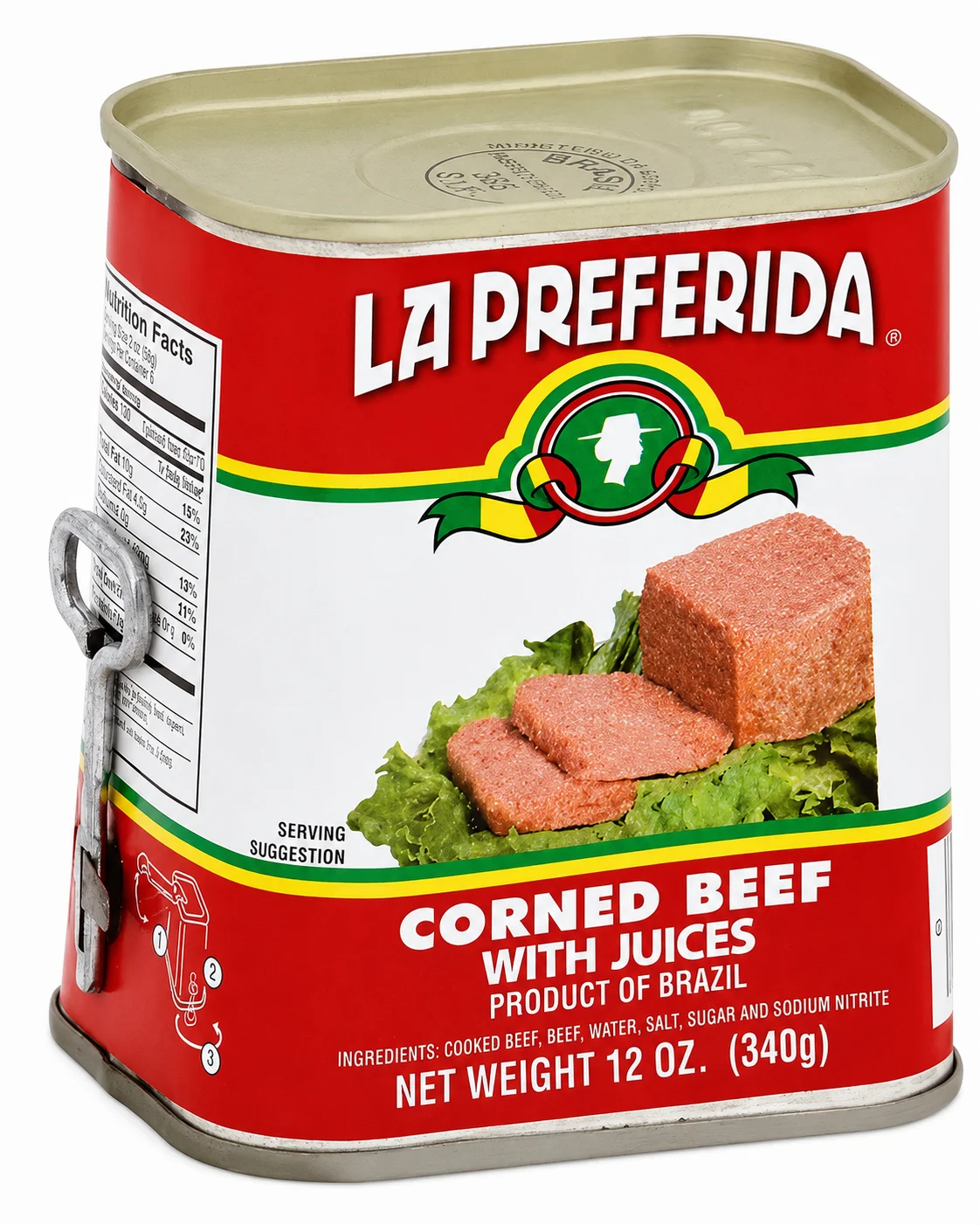
Because the body is formed from flat sheet, this structure offers flexibility in can height and capacity. Traditional rectangular or tapered cans for corned beef are often made as three-piece cans, sometimes with easy-open or key-opening ends.
The side weld, repair coating, body coating, and both double seams must withstand the retort process.
2.2 Two-Piece Cans
A two-piece can has an integrated body and bottom, with one separate end attached after filling.
Shallow-drawn and DRD cans can be produced in round, rectangular, tapered, bowl-like, and other formed shapes. Rectangular luncheon meat cans are commonly made as two-piece drawn cans. The seamless body removes the side weld and bottom double seam.
The main considerations are draw depth, material formability, coating performance, tooling cost, production volume, and retort conditions.
3. Select the Opening System with the Can
The opening system should be selected together with the body and end design.
Standard, easy-open, and key-opening ends respond differently during retorting. Score depth, tab strength, coating coverage, and post-retort opening performance must therefore be controlled.
Key-opening systems are common on some traditional luncheon meat and corned beef cans. The score and opening strip must remain intact during processing and open cleanly during use.
The opening system is part of the complete retortable package, not a feature added after the can body has been selected.
4. Commercial Sterility and the Scheduled Thermal Process
There is no universal retort schedule for canned meat.
The scheduled process must be established for a defined combination of product, formulation, fill weight, container, closure, and retort system. A fixed instruction such as “process all canned meat at 121°C for a set time” leaves out the variables that control heat penetration.
A larger meat piece may heat more slowly. Additional starch may reduce internal movement. A higher fill weight may change both heat transfer and internal pressure. Changing the can dimensions can also move the slowest-heating point.
The process should be established or reviewed by a qualified processing authority for the actual product and package. (source)
4.1 Can Strength and Retort Pressure
Metal thickness alone does not define can strength.
During heating, the product, residual air, and water vapor expand, raising the pressure inside the can. During pressure cooling, the external pressure may temporarily become higher than the internal pressure.
If the pressure profile is not matched to the package, the can may develop paneling, buckling, end distortion, score damage, or seam stress.
Rectangular and tapered cans require particular attention to flat-panel stiffness, corner radii, and local stress concentration. The finished can must also withstand stacking, retort-basket handling, pallet transport, and warehouse loads.
4.2 Validate the Filled Package
Calculations and empty-can tests can screen a specification, but they cannot approve the complete package.
Validation should use the actual formulation, maximum permitted fill weight, production seamer, retort cycle, cooling method, and distribution conditions. Depending on the project, testing may include pressure resistance, axial load, leakage, seam teardown, drop, vibration, coating, corrosion, and full-retort-cycle trials.
Water-filled samples may not represent the behavior of a dense meat product, thick sauce, trapped air, fat, starch, or solid particles.
The can should be approved under the customer’s real filling, seaming, retorting, cooling, and transport conditions.
5. Double-Seam Integrity Comes First
A successful thermal process cannot compensate for a defective hermetic seal.
If the seam leaks during cooling or handling, microorganisms may enter after retorting. Seam integrity must therefore be controlled throughout production.
Typical seam measurements include seam width, thickness, body hook, cover hook, overlap, countersink, tightness, and compound distribution. Measurements should be supported by visual inspection and destructive teardown. (source)
Defects such as false seams, droops, cut-overs, deadheads, damaged curls, excessive wrinkles, and insufficient overlap should be treated as equipment or process problems, not cosmetic variation.
Inspection frequency should follow the applicable regulation and the plant’s documented control procedure. A frequency used in one country should not be presented as a global rule.
6. Match the Internal Coating to the Recipe
“Suitable for meat” is not enough to define an internal coating.
Meat products may contain sulfur-bearing proteins, salt, nitrite, fat, spices, organic acids, starch, or tomato sauce. Each formulation creates a different environment inside the can.
A plain chicken product in broth may not need the same coating as a cured meat product or a tomato-based meal. Headspace oxygen, retort conditions, shelf life, and storage temperature can also affect corrosion performance.
The coating must retain adhesion and coverage after forming, flanging, seaming, and retorting. Corners, beads, flanges, scores, and repaired weld areas deserve close attention because the coating is stretched or mechanically disturbed in these locations.
Some products may require resistance to sulfur staining. Others may place more demand on acid, fat, or corrosion resistance.
The coating should be selected from the actual recipe and confirmed through pack testing.
7. A Practical Selection Process
Start with the product structure, maximum fill weight, initial temperature, largest solid piece, liquid ratio, and viscosity.
Then select a can size and shape that support filling, heating, opening, stacking, and transport. Compare two-piece and three-piece options based on forming limits, seam configuration, coating, tooling, and production volume.
Review the proposed can against the real retort pressure and cooling profile. Run seam trials and full retort cycles on normal production equipment.
The thermal process can only be finalized after the product, fill, container, closure, and retort system have been defined.
A retortable meat can is ready when the complete filled package performs reliably under the actual production and distribution conditions.