
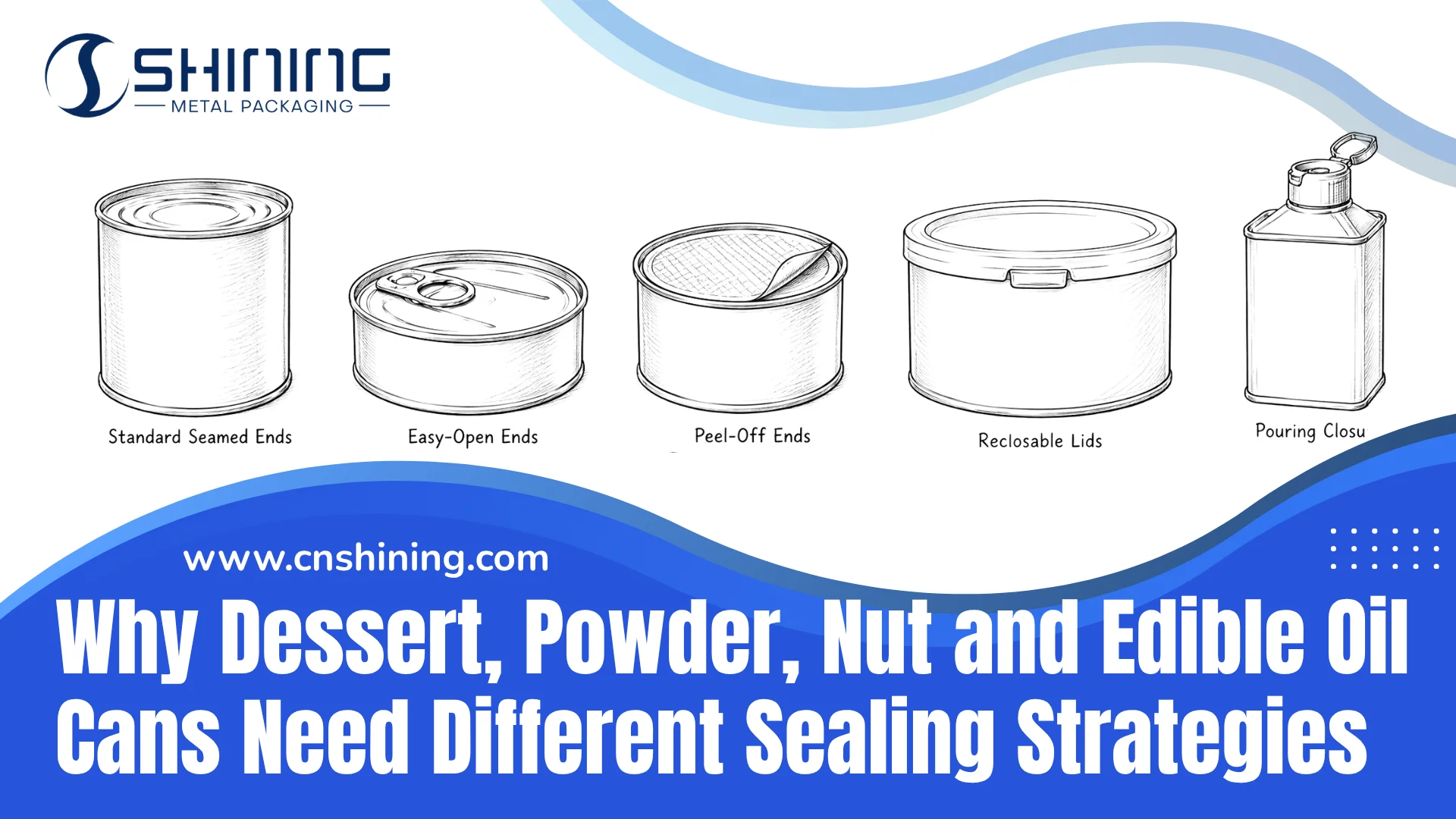
A metal food can is not sealed by the seaming operation alone.
Its sealing performance comes from the complete system: the can body, closure, sealing compound and closing process.
For most food manufacturers, the filling line and processing method are already fixed before they choose a can. So the more useful question is not simply, “How should this food be sealed?”
It is:
Which can and closure fit the filling and processing conditions already in use?
The answer changes significantly between desserts, powders, nuts and edible oils.
1. Different Foods Ask the Seal to Do Different Jobs
The main difference is not the appearance of the can. It is what the closure has to do after filling.
| Еда | Main sealing requirement | Typical closure focus |
|---|---|---|
| Pudding, custard, dessert | Stay sealed during heating and cooling | Thermal-process compatibility |
| Milk powder, coffee, cocoa | Limit moisture and air entry during storage | Long-term barrier integrity |
| Peanuts, cashews, almonds | Limit oxygen, moisture and recontamination | Hermetic sealing and protective-atmosphere compatibility |
| Edible oil, olive oil, ghee | Prevent leakage and support repeated use | Liquid-tight sealing, pouring and reclosing |
A dessert can may have to pass through retort processing after sealing. A milk powder can usually does not. Its main job is to protect a dry, moisture-sensitive product during storage.
Oil creates another requirement entirely: the closure needs to seal reliably, but the consumer also needs to pour and reclose the package.
This is why using the same closure logic for all metal food cans does not work.
2. The Closure Is Where Sealing Requirements Become a Packaging Decision
A closure is not just the part the consumer opens. It is part of the package barrier.
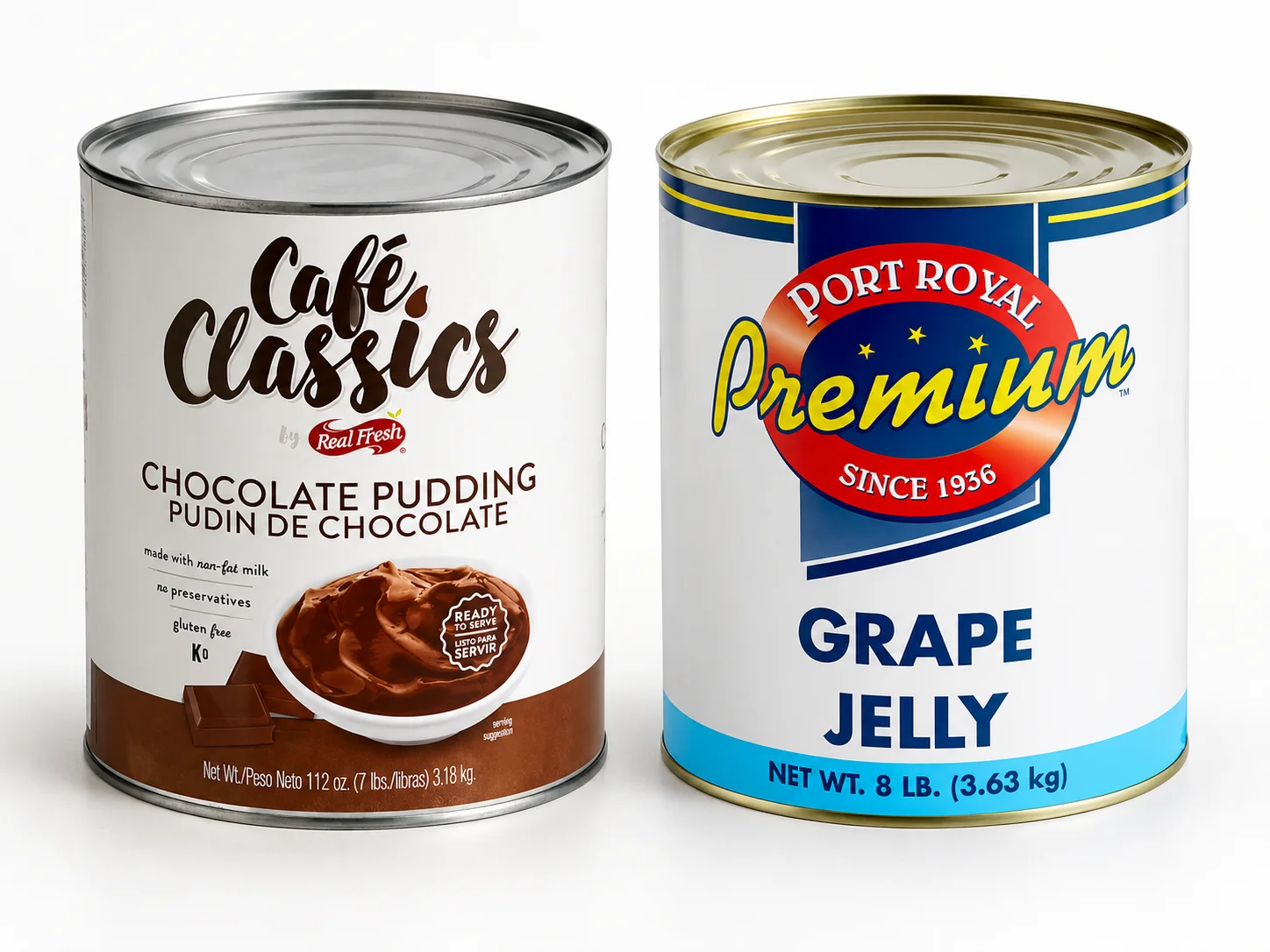
2.1 Standard Seamed Ends
A standard metal end has a formed outer curl that carries sealing compound. During double seaming, the end curl and the can-body flange are folded into interlocking cover and body hooks and then compressed together. The compound fills small voids in the seam, helping create the hermetic barrier while keeping the end compatible with conventional filling and seaming lines.
For products that undergo retort or other thermal processing, the end, can flange, sealing compound and seam must work as one system. The closure has to remain intact not only after seaming, but also during heating, pressure changes and cooling.
This makes standard seamed ends a practical choice for many shelf-stable desserts and dairy products.
The trade-off is simple: opening normally requires a can opener.
2.2 Easy-Open Ends
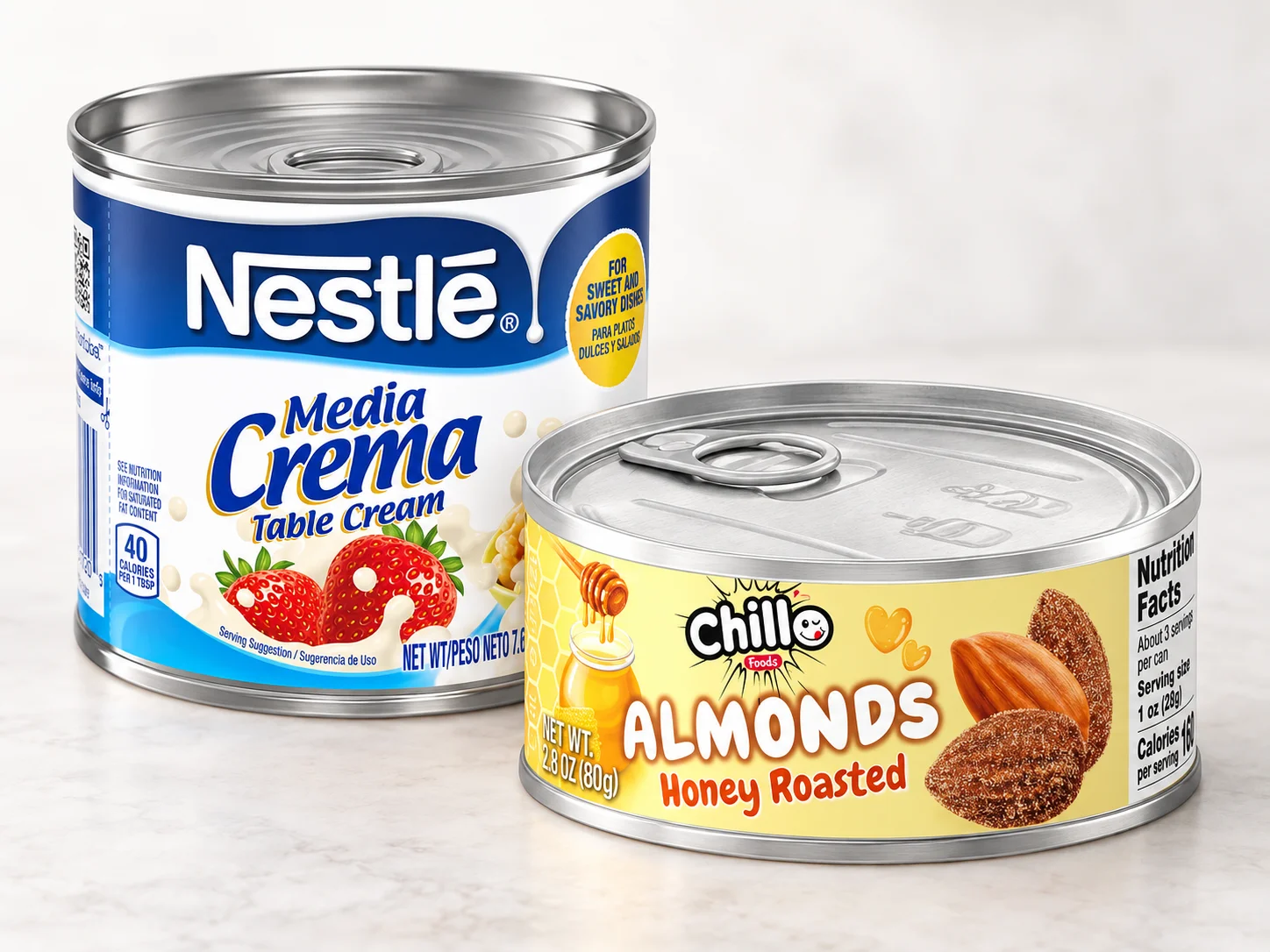
Most easy-open ends keep the same rigid metal perimeter and double seam as a standard end. The difference is in the center panel: a controlled score line and a pull tab allow the panel to fracture and open without a can opener. The opening feature is built into the end; it does not replace the perimeter seam.
For a retorted pudding or dessert, the EOE still needs to withstand the specified thermal process. For powders or nuts, the main concern may instead be long-term barrier performance.
So “easy open” should never be treated as the full specification. The opening design still has to match what happens to the can after it is closed.
2.3 Peel-Off Ends (POE)
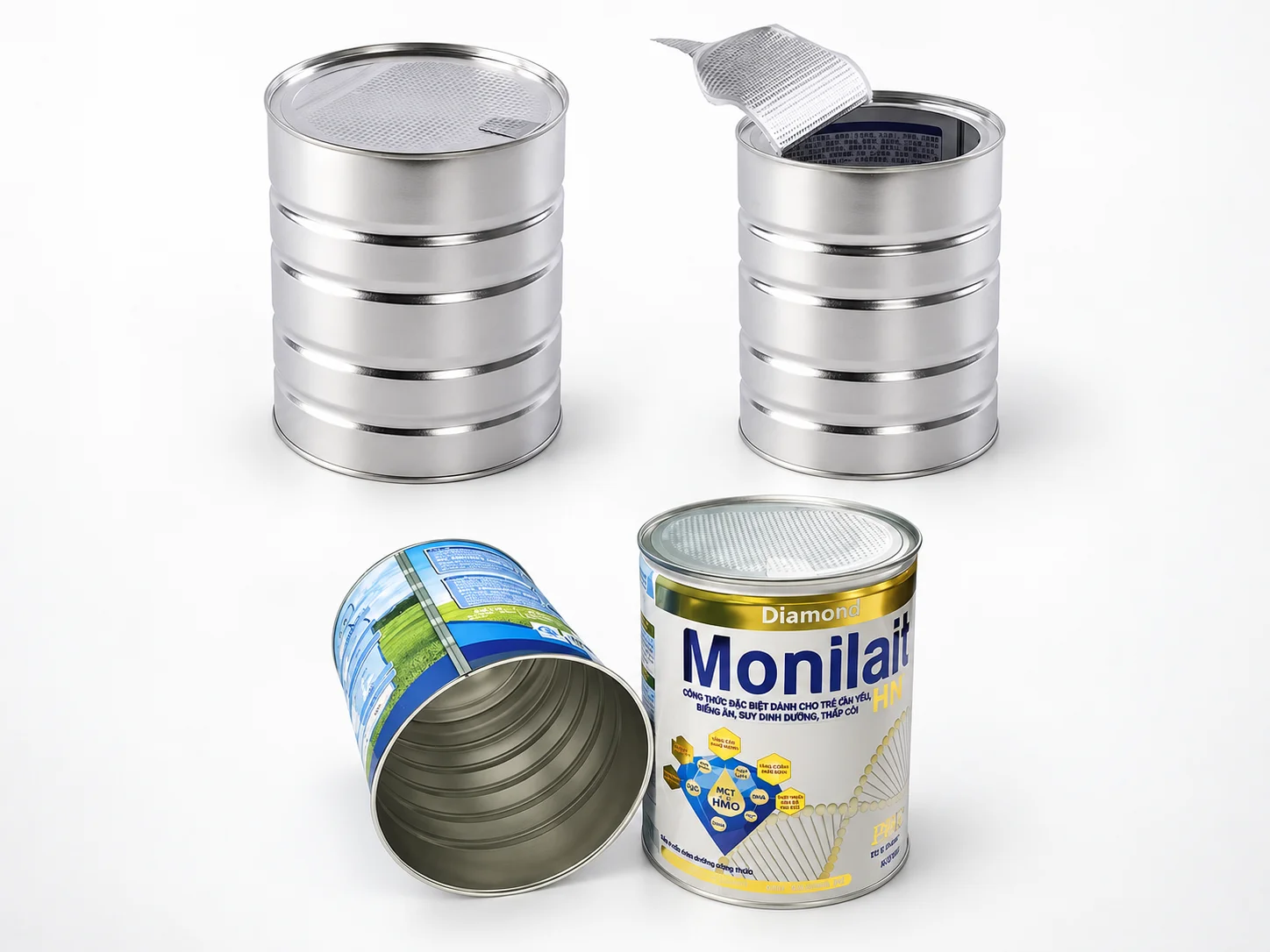
A typical peel-off end (POE) has a rigid steel or aluminum ring around the perimeter and a flexible aluminum-foil membrane across the center. The membrane is heat-sealed to the ring, while the ring’s outer edge retains the geometry required for conventional can seaming.
The ring is then double-seamed to the can body like a standard end. The foil itself is not seamed to the can: ring-to-body is a mechanical double seam; membrane-to-ring is a heat seal. Pulling the tab peels away the membrane while the rigid ring remains on the can.
POE performance therefore depends on both interfaces. The double seam must protect the can flange; the heat seal must stay tight through filling, storage and any specified thermal process, yet peel at a controlled force. Membrane structure, heat-seal coating, ring surface and sealing conditions all matter.
Peel-off ends are commonly used for dry foods such as milk powder, coffee, nuts and snacks, and are also found on processed foods including fish, ready meals and desserts. Their main purpose is to combine reliable barrier protection with easier, safer opening, allowing consumers to peel back the foil without a can opener while maintaining the performance expected from a sealed metal package.
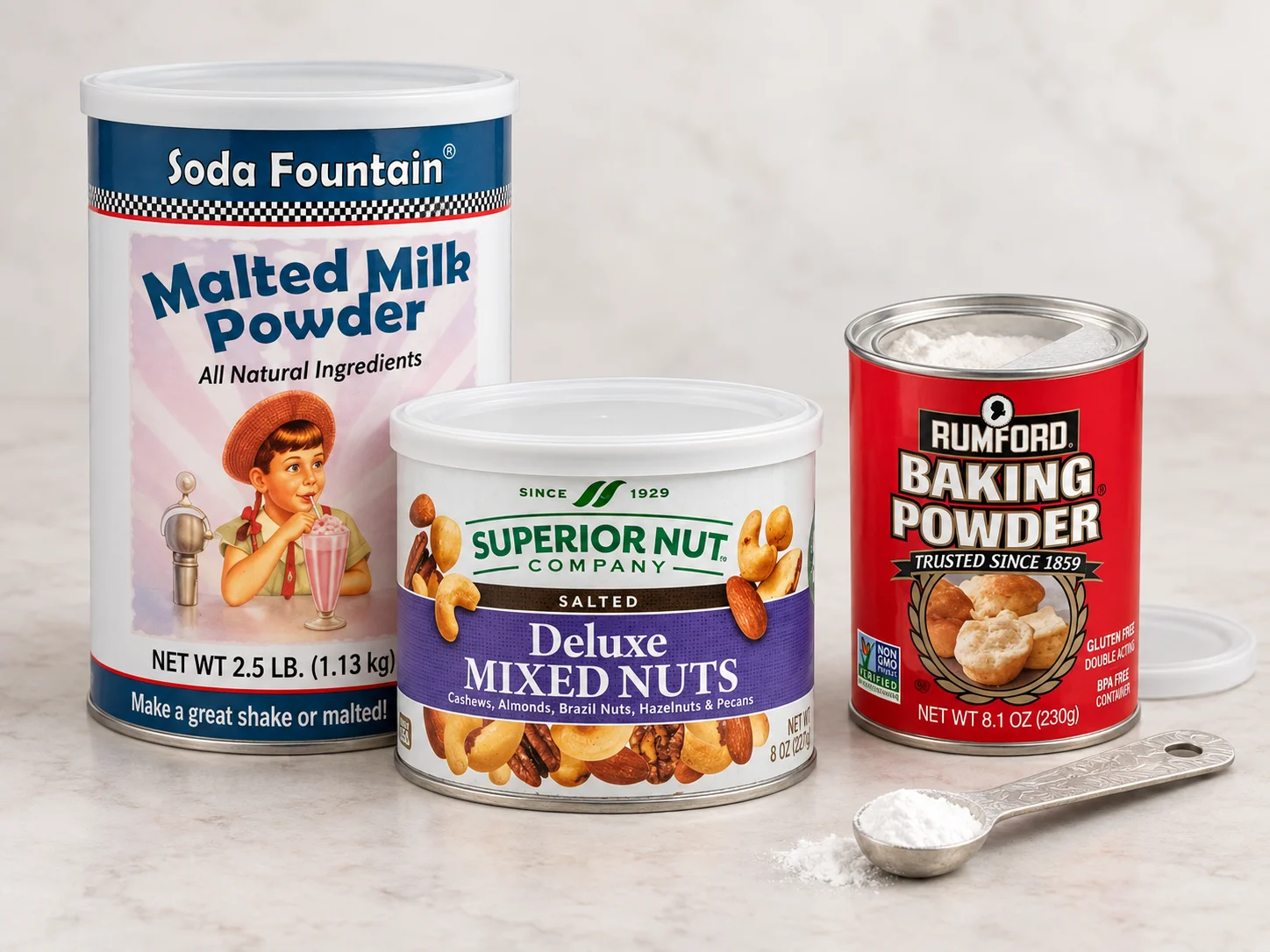
2.4 Reclosable Lids for Powders and Nuts
Milk powder, coffee and nuts are often consumed over several uses. In these cases, the package may need two separate closure functions.
The primary closure protects the product during distribution and storage before opening. A plastic overcap, plug lid or other secondary cover provides convenient reclosing afterward.
These are not the same function.
A reclosable lid does not necessarily recreate the original hermetic seal. Its purpose is mainly to make repeated use more practical.
2.5 Pouring Closures for Edible Oil
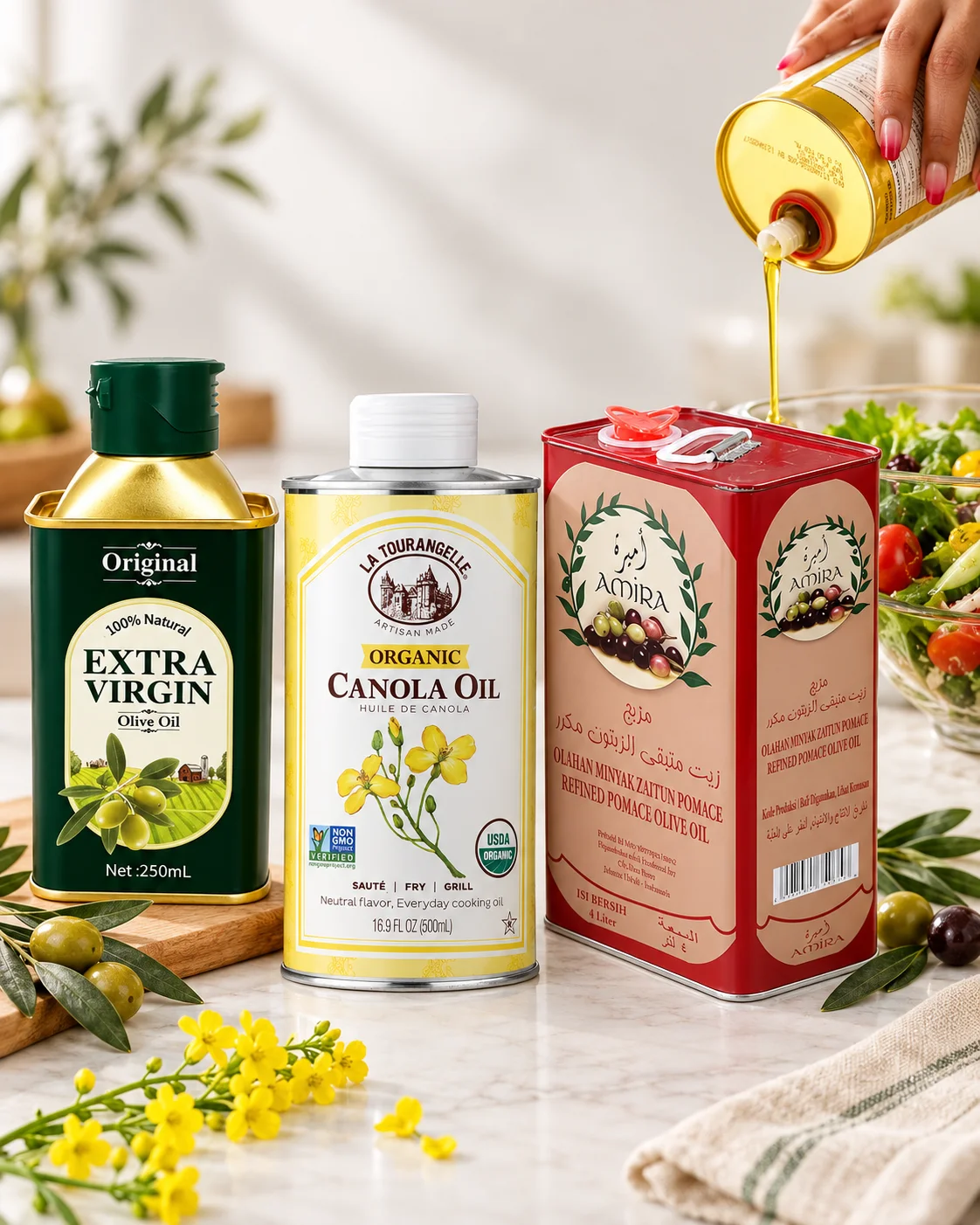
Oil cans need a different closure architecture because the product has to be poured.
Depending on the package design, this may mean using a pouring spout, plug closure or screw closure rather than relying only on a conventional permanent food-can end.
The closure therefore has to combine three functions: prevent leakage, support pouring and allow the package to be closed again.
The right closure is not simply the one with the strongest seal. It is the one that matches how the product is filled, processed and used.
3. Post-Sealing Heat Treatment Is an Important Divider
One of the fastest ways to narrow down the closure specification is to ask whether the filled can will be thermally processed.
If the product goes through retort or pasteurization after closing, the closure must remain stable throughout the full process. The selected end therefore has to match the established processing temperature, time and pressure conditions, because these conditions can affect both the double seam and, for peelable systems, the heat-sealed membrane.
Desserts, puddings, custards and evaporated milk may fall into this category.
Powders, nuts and edible oils are usually different. They generally depend more on long-term barrier performance after sealing. Moisture control, oxygen exposure, leakage and protection from recontamination become the main concerns.
This distinction should be made before discussing opening style.
4. How Should Buyers Choose a Can Closure?
Use the product category as the starting point and treat the rest as a compatibility reminder, not a separate specification exercise.
For retorted desserts, thermal-process compatibility remains the first filter. A standard seamed end, EOE or retort-capable POE must be suitable for the established retort cycle before opening convenience is considered.
For milk powder, coffee or cocoa powder, the primary concern is the unopened barrier. A POE can provide easy access, while a plastic overcap or other secondary lid can handle repeated use after the primary seal is removed.
For nuts, the same barrier-first logic applies. Hermetic performance and compatibility with any protective-atmosphere process matter more than the opening style; a secondary cover can be added when repeated use is expected.
For edible oil, the package concept should already account for pouring, leak resistance and reclosing. A spout, plug or screw closure is therefore part of the closure architecture from the beginning rather than an accessory added later.
In most projects, once the food category and existing production route are known, the practical closure family is already fairly clear. This checklist is mainly a reminder to catch exceptions—an unusual heat process, non-standard filling method, special reclosure need or atypical pouring format—that could change the choice.