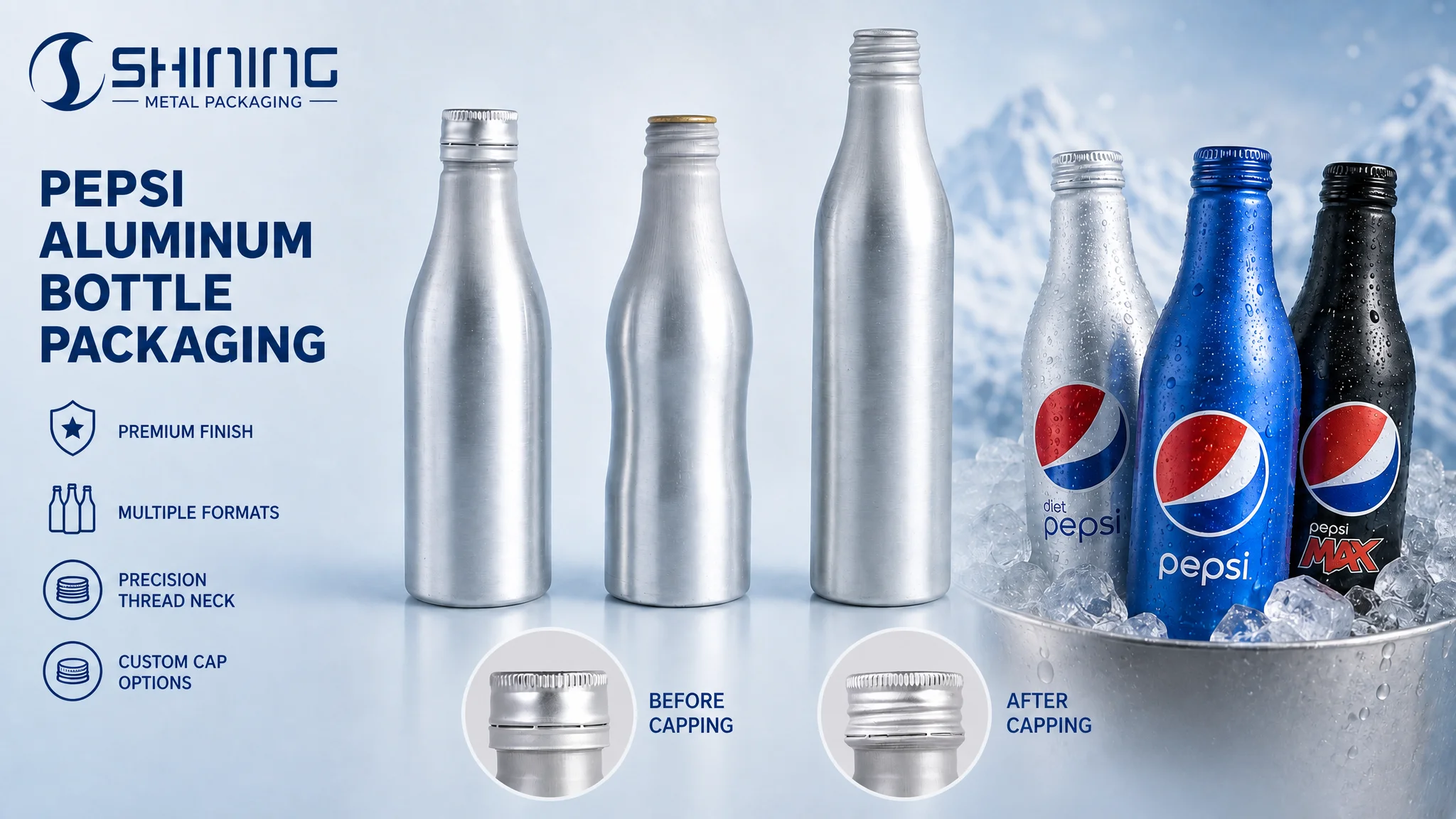
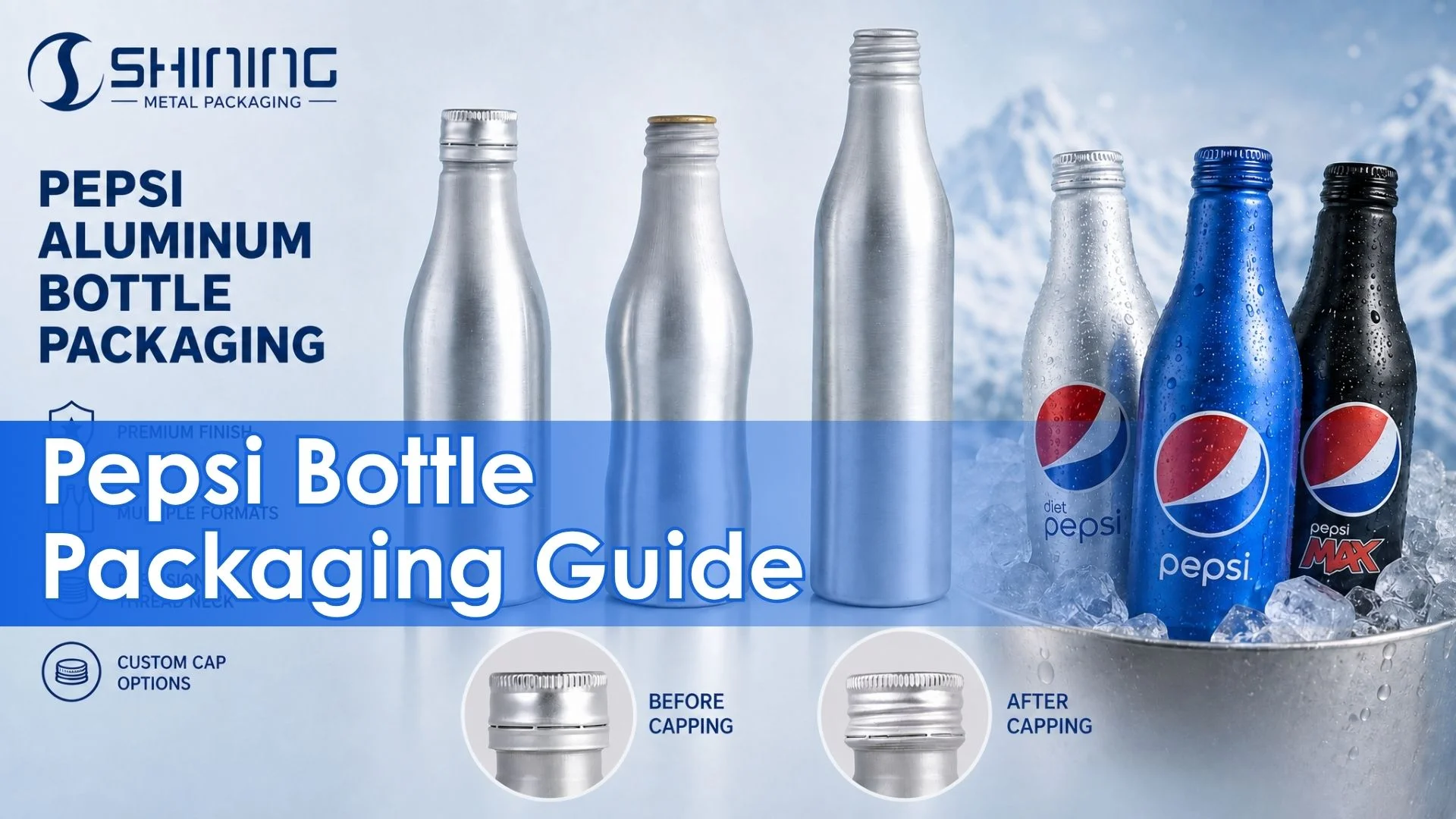
Pepsi does not need an aluminum bottle merely to prove that cola can be packaged in metal. It needs a format with a clearly defined occasion, visual role and engineering specification that its mainstream cans and PET bottles do not already fulfil.
1. An aluminum bottle for the Pepsi Pulse, not for every Pepsi occasion
“We design our brands to tell a compelling and holistic story.”
PepsiCo Chief Design Officer Mauro Porcini used that statement to describe the thinking behind the brand’s global redesign. The updated system reunites the Pepsi globe and wordmark, introduces electric blue and black, and expresses movement through the signature Pepsi Pulse. These are unusually suitable assets for a Pepsi botella de aluminio because metallic reflection, matte surfaces and controlled gloss can make the pulse appear to move as the package is handled. PepsiCo’s official redesign case study describes the identity as a bridge between the cola brand’s heritage and a bolder physical and digital future.
The commercial role, however, must remain selective. Pepsi’s current U.S. product page lists regular sizes from 7.5 fl oz through 2 litres, but it does not present an aluminum bottle as a standard package. The historic 8.5 fl oz Pepsi Premium Aluminium Bottle was instead created as a special Super Bowl format with a matte finish, four colour versions and a deliberately “masstige” character. It functioned as an event object rather than a permanent replacement for the brand’s volume packages.
That distinction remains useful in 2026. PepsiCo describes the single-serve cold vault as a portfolio in which different sizes perform different jobs: the 20 oz PET bottle protects the full experience, while a new 13 oz format creates a more accessible entry point. An aluminum bottle would therefore need its own role—such as a numbered sports edition, music collaboration, destination-exclusive package or resealable venue format—rather than becoming another size with no specific reason to exist.
2. Engineering the Pepsi aluminum bottle around acid, pressure and resealing
Pepsi is a technically demanding content rather than a neutral liquid. Its official ingredient list includes carbonated water, caramel colour, phosphoric acid, caffeine and citric acid, with sugar and high-fructose corn syrup in the standard U.S. formula. One published survey measured Pepsi at pH 2.39, placing the tested product among the most acidic commercial beverages in the study. That result should not be treated as a production specification for every market, but it shows why bare aluminum contact is not acceptable and why the actual formula must be tested against a continuous internal coating.
| Packaging variable | Decision value for Pepsi | Required validation |
|---|---|---|
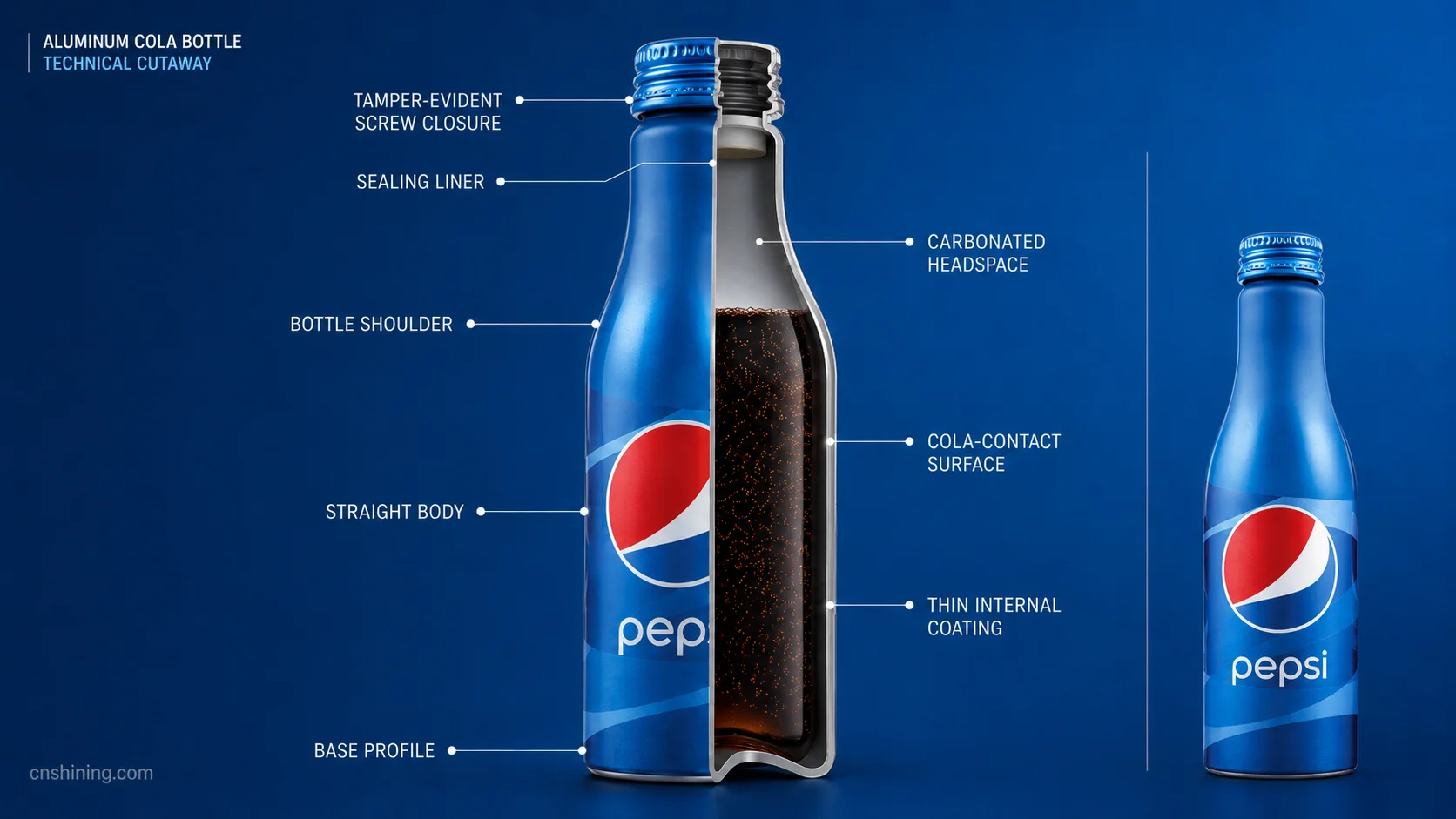
| Recubrimiento interno | Forms the functional barrier between the acidic cola and the aluminum body. | Current-formula pH, acid profile, flavour system, sweetener or preservative system, storage duration, migration, corrosion, sensory change and coating continuity. |
| Bottle body and shoulder | Creates the visual separation from a can and determines how much uninterrupted space remains for the Pepsi globe, pulse and legal copy. | Sidewall and base strength, dent resistance, conveyor handling, shoulder distortion and pressure performance under expected temperature exposure. |
| Neck and closure | Controls tamper evidence, opening behaviour and whether resealing delivers a useful advantage in stadium, destination or on-the-move consumption. | Neck tolerances, cap and liner compatibility, opening torque, controlled pressure venting, bridge break, leakage and repeated short-term resealing. |
| Carbonation and filling | Preserves the expected cola bite while controlling foam and package pressure. | Counter-pressure filling conditions, beverage temperature, headspace, dissolved and package oxygen, CO₂ retention, thermal cycling and target shelf life. |
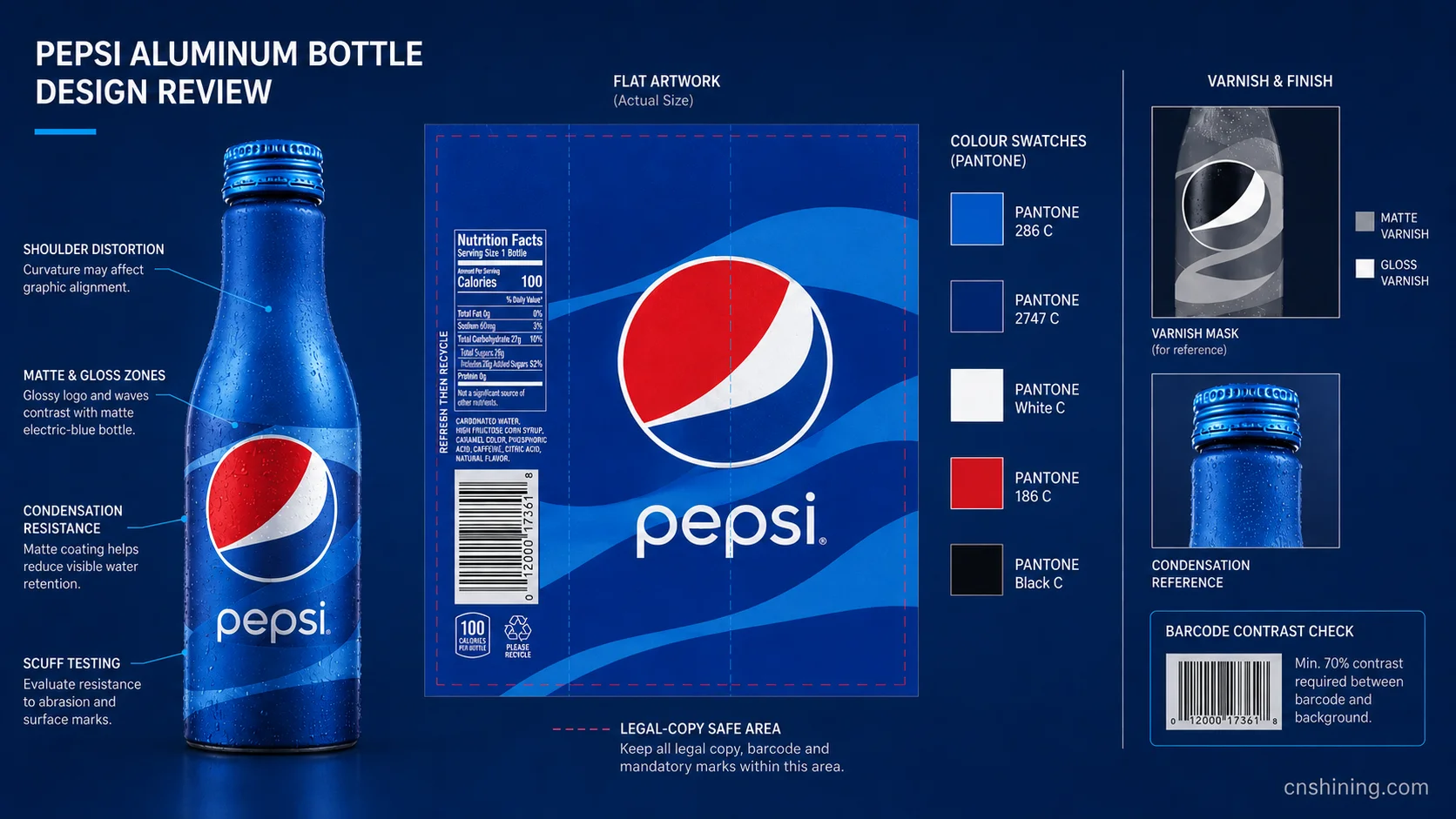
| Printing and varnish | Translates electric blue, black, red and white onto an opaque curved surface without losing the force of the redesigned identity. | Colour control, matte and gloss registration, condensation resistance, scuffing, barcode contrast, artwork distortion and legal-panel readability. |
A tamper-evident screw closure can add a meaningful difference from an easy-open can, particularly when the drink may be carried between viewing areas or consumed in stages. It should not be described as maintaining carbonation indefinitely after opening. Its practical purpose is controlled opening, spill reduction and short-term resealing, all of which depend on the neck finish, liner, application settings and opening torque being validated as one system.
3. Designing a package that survives the venue as well as the shelf
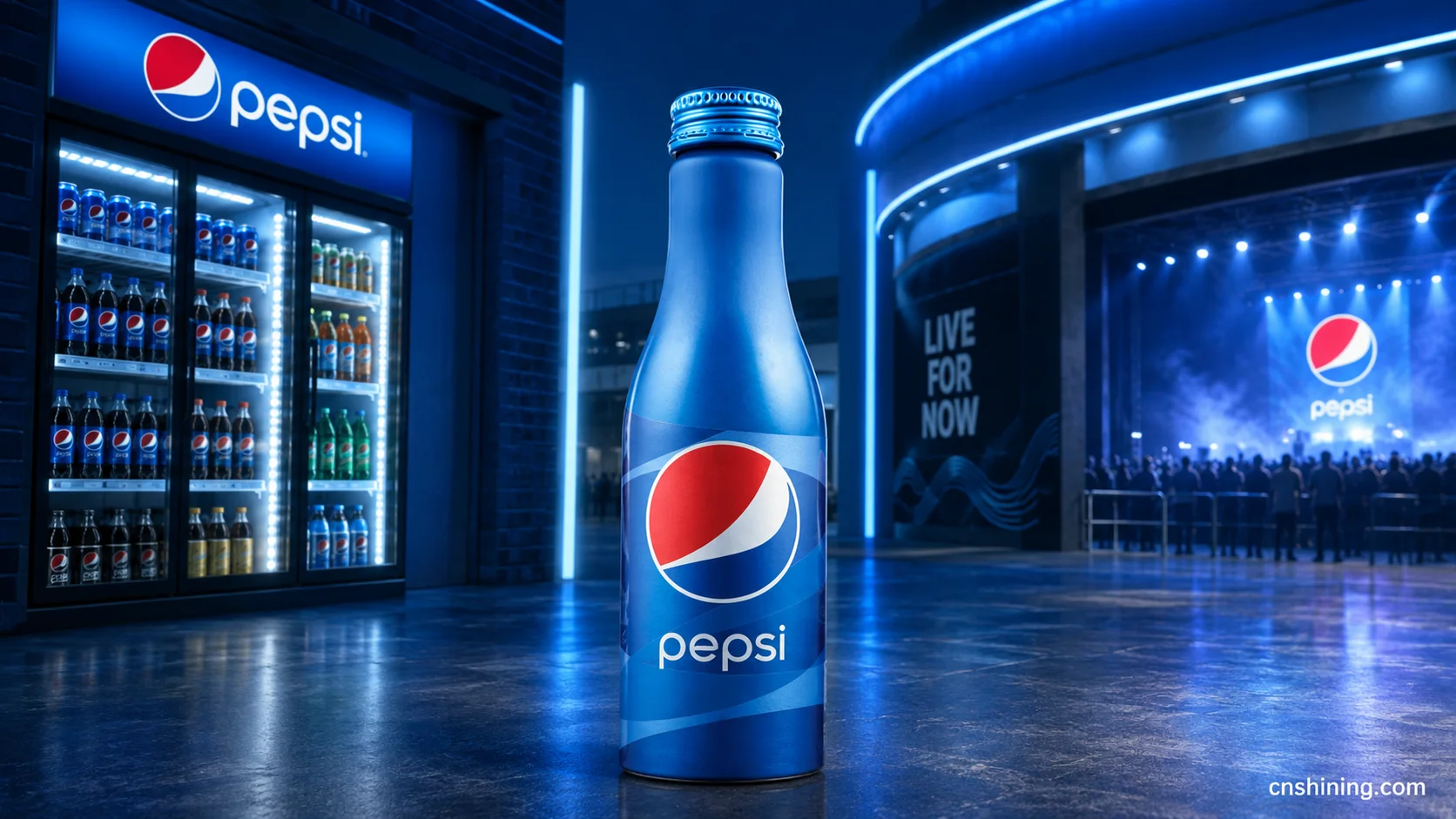
For Pepsi, a strong use case begins where consumption is mobile but brand visibility remains unusually high: stadium concourses, concerts, theme parks, tourism destinations, foodservice collaborations and limited online gift releases. A 250 mL commemorative bottle can emphasise scarcity and graphic collectability, while a larger resealable format can prioritise handling and interrupted consumption. These are separate briefs; combining both into one bottle risks producing a package that is too costly for routine use and too ordinary for collection.
The redesigned Pepsi system offers a disciplined decoration hierarchy. Electric blue can carry the primary brand field, black can provide depth and connect naturally with Pepsi Zero Sugar, and exposed aluminum can create a controlled cold-metal accent. The Pepsi globe and wordmark should remain the first recognition layer. Pulse lines, event graphics, serial numbering, local references or interactive finishes belong to a secondary layer so that the bottle remains recognisably Pepsi when viewed quickly, partially held or covered with condensation.
Compliance must shape this hierarchy early. In the United States, bottle coatings, liners, inks and other packaging components fall within the FDA framework for food-contact substances, while the nutrition panel, ingredients, net quantity and other required information need an undistorted and durable presentation area. The curved shoulder that makes a bottle distinctive can therefore reduce the most valuable legal-copy space. FDA food-contact guidance confirms that packaging coatings, adhesives, colourants and related components may be regulated as food-contact substances.
For European distribution, coating selection has become a more immediate development issue. The European Commission’s BPA prohibition expressly covers coatings on metal cans and includes transition periods for most products. Regulation (EU) 2025/40 on packaging and packaging waste applies from 12 August 2026, so recyclability, components, documentation and market-specific sorting information should be reviewed with the bottle design rather than added after artwork approval.
Sustainability language should remain specific. An aluminum-bodied package can be described in relation to local recycling access and design choices, but claims such as “zero plastic,” “fully circular” or “universally recyclable” require evidence for the complete package, including the cap liner, tamper band, coating, ink and any label. In the U.S., the FTC advises qualification when suitable recycling facilities are not available to at least 60 percent of the relevant consumers or communities.
4. Cola aluminum bottle comparison: a compact format needs more than novelty
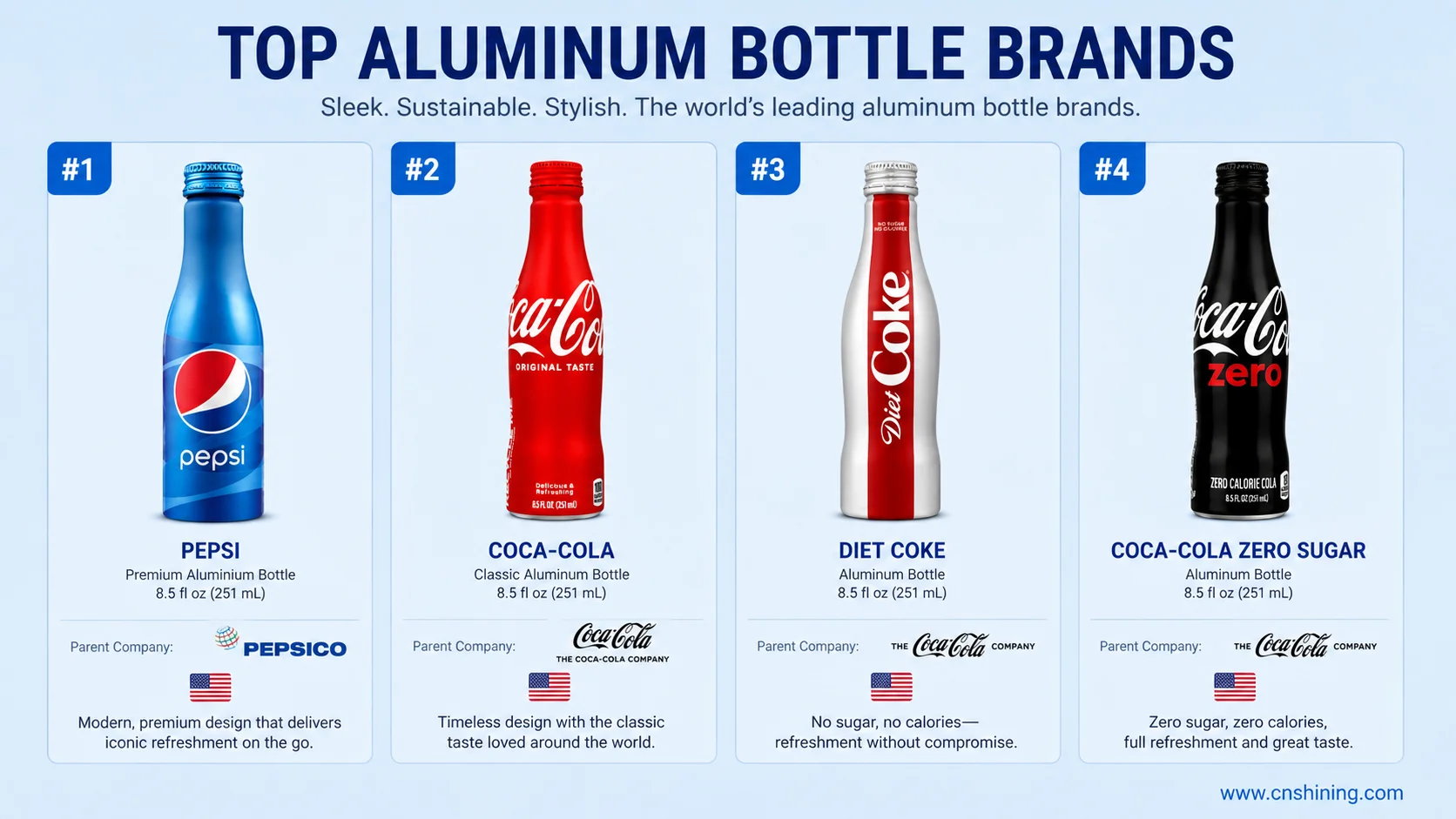
The comparison below is deliberately narrow. Only finished cola products with publicly verifiable aluminum-bottle evidence were retained. Citrus soda, root beer, water and conventional cans were excluded rather than used to force the table to five entries. Prices are public single-bottle listings or the stated single-unit value; availability can vary by retailer and location.
| Marca / Producto | País | Empresa matriz | Capacidad | Single-unit retail price | Core selling point |
|---|---|---|---|---|---|
|
Pepsi Premium Aluminium Bottle |
Estados Unidos | PepsiCo | 8.5 fl oz / approximately 251 mL | Four matte colour treatments turned a compact cola bottle into a recognisable event and collection object. | |
| Coca-Cola Classic Aluminum Bottle | Estados Unidos | The Coca-Cola Company | 8.5 fl oz / approximately 251 mL | US$1.36 starting price | Uses one of the category’s strongest visual identities in a compact, resealable and portion-controlled format. |
| Diet Coke Aluminum Bottle | Estados Unidos | The Coca-Cola Company | 8.5 fl oz / approximately 251 mL | US$1.48 | Combines zero-sugar positioning with a small bottle that feels more deliberate than a conventional mini can. |
| Coca-Cola Zero Sugar Aluminum Bottle | Estados Unidos | The Coca-Cola Company | 8.5 fl oz / approximately 251 mL | US$1.69 | Extends the compact aluminum bottle into a high-contrast zero-sugar identity without changing the consumption volume. |
The table shows that the 8.5 fl oz aluminum bottle is already an established cola format rather than a proprietary Pepsi invention. Coca-Cola can rely on its script and red field, Diet Coke on its silver diet identity, and Coca-Cola Zero Sugar on black-and-red contrast. Pepsi’s opportunity is therefore not the bottle size itself. It is the ability of the redesigned globe, wordmark and pulse to create movement across the curved metal body.
The Pepsi aluminum bottle also carries a different strategic burden. Its historical Super Bowl positioning makes it credible as a cultural or event package, but that history raises expectations. A permanent bottle with standard artwork would lose the scarcity that justified the original format. A stronger route is a controlled series in which each edition has an identifiable venue, partner, graphic system or numbered release, while the underlying geometry and legal-copy architecture remain stable.
5. Conclusion: use the bottle to create a brand peak, not another base package
The most defensible Pepsi aluminum bottle is a limited or channel-specific package whose visual and functional advantages are both easy to explain. A compact commemorative edition can turn the Pepsi Pulse into a collectible surface. A larger resealable bottle can serve venues where consumers move, pause and resume drinking. Those two directions should be developed independently because they solve different commercial and engineering problems.
The project sequence should begin with the actual formula and channel brief, followed by coating compatibility, pressure and filling conditions, bottle geometry, closure behaviour and legal-copy space. Decoration should be frozen only after those interfaces have survived compatibility, leakage, torque, thermal-cycle, dent, scuff and condensation testing. This prevents the most visible part of the project from advancing faster than the package that must support it.
Shining Packaging can align bottle geometry, ROPP closure fit, liner compatibility and print trials with the confirmed cola formula and filling brief before pilot production.
The resulting package should not argue that aluminum is automatically more premium, more sustainable or more innovative. Its value is narrower and more useful: it can give Pepsi a physical object for moments when culture, venue and handling matter enough to justify a package outside the everyday portfolio.