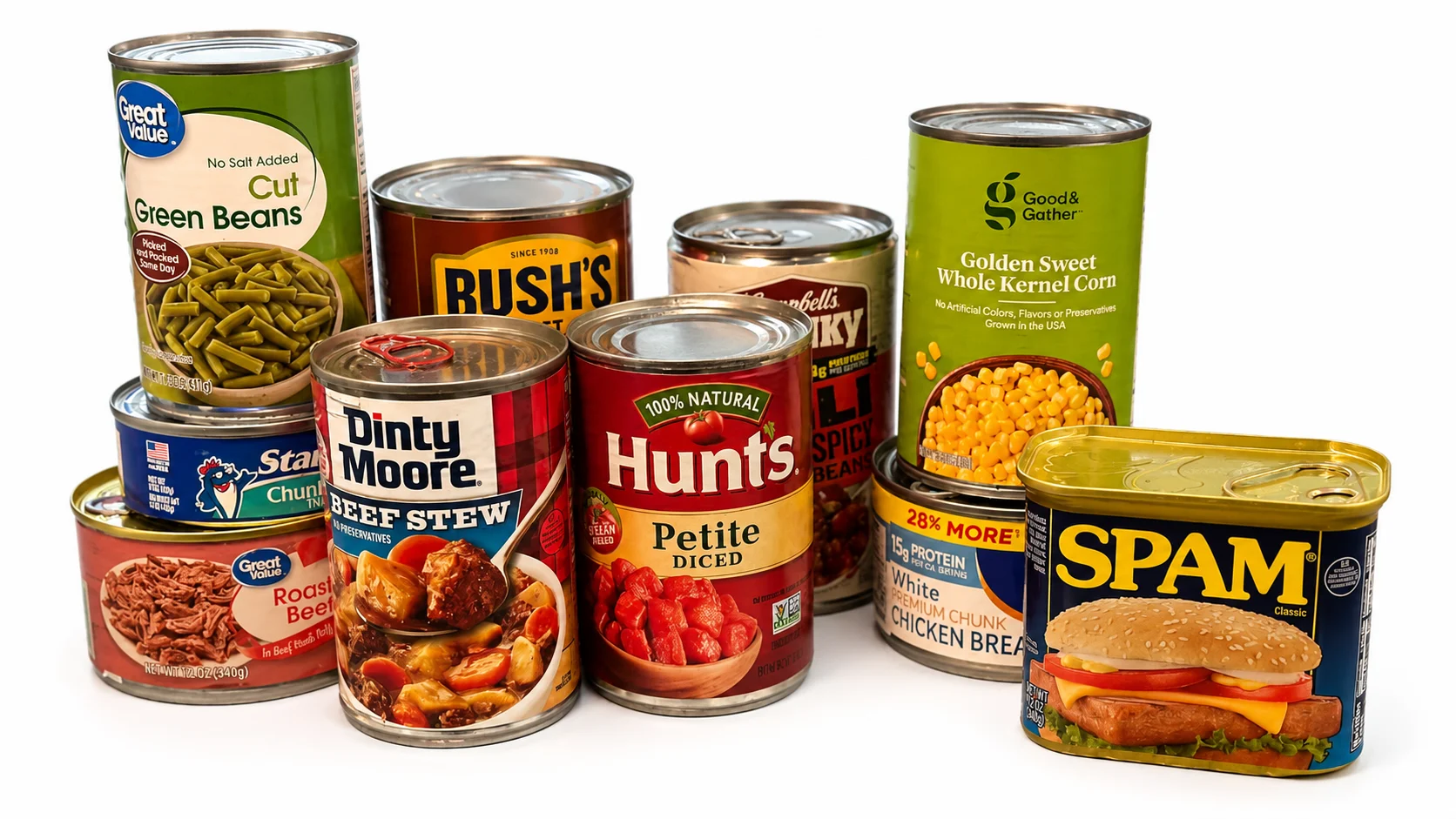

A modern food can looks simple: a metal container, a sealed end, and a food product that can remain stable for months or years.
Getting to that point took more than a century of changes in food preservation, metalworking, sealing, heat processing, and factory production.
Canning did not begin with the metal can. It began with a much more basic problem: how do you stop food from spoiling when refrigeration does not exist?
1. Food Preservation Before Canning
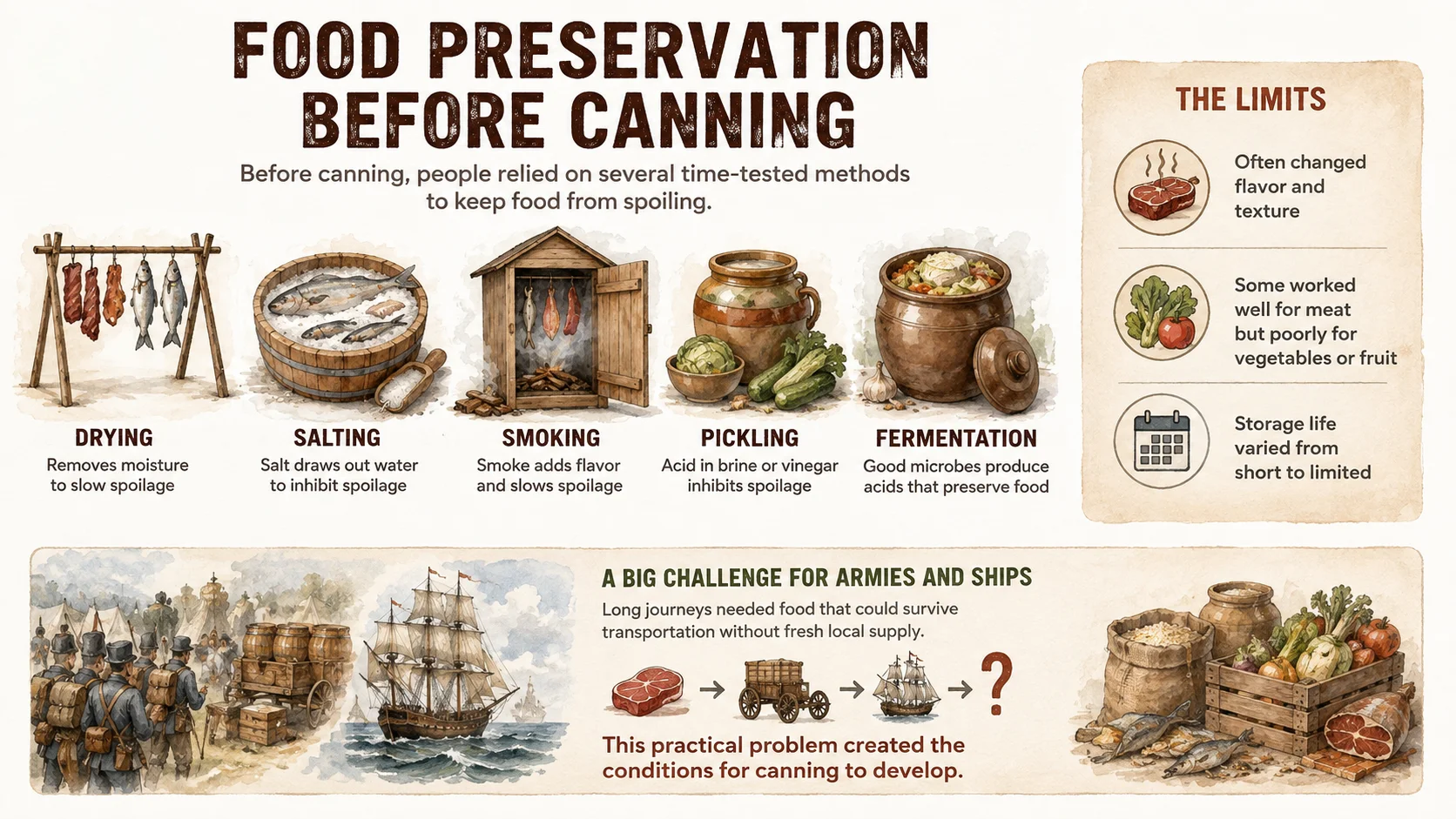
Before canning, people relied on methods such as drying, salting, smoking, pickling, and fermentation. These methods worked, but they came with limits.
They often changed the flavor and texture of the food. Some methods worked well for meat but poorly for vegetables or fruit. Storage life could also vary.
This was especially difficult for armies and ships. Long journeys required food that could survive transportation without depending on a fresh local supply. That practical problem created the conditions for canning to develop.
2. From Glass Bottles to Tin Canisters
2.1 Nicolas Appert and the First Canning Process
In 1795, the French government offered a prize for a practical way to preserve food for soldiers and sailors.
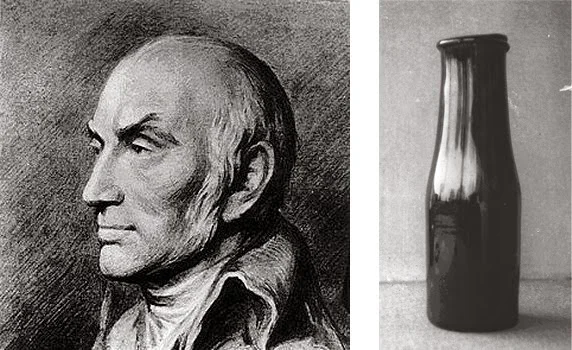
French food maker Nicolas Appert spent years experimenting with different methods. His eventual process was surprisingly close to the basic logic of canning used today.
He placed prepared food in glass bottles, sealed them with corks, and heated the bottles in hot or boiling water. The process extended the storage life of meat, vegetables, fruit, milk, and other foods.
Appert did not know about bacteria. Louis Pasteur’s work on microorganisms was still decades away. Appert believed that keeping air away from the food was the main reason the method worked.
His explanation was incomplete, but the process itself was sound: heat the food, close the container, and prevent it from being contaminated again.
By 1809, Appert’s experiments had proved successful. He received the French government prize and published his preservation method in 1810. (fuente)
2.2 Peter Durand Moves Canning into Metal
The next major change came in the same year.
In 1810, British merchant Peter Durand received a patent covering the preservation of food in containers made from glass, pottery, tin, or other suitable materials. His main contribution to canning history was the use of tinplate containers.
Tinplate was iron coated with a thin layer of tin. Compared with glass bottles, it offered some obvious advantages. It was harder to break, easier to transport, and better suited to military and maritime use.
So the distinction matters: Appert developed the preservation process. Durand helped move that process toward the metal package we now recognize as a food can.
Bryan Donkin and John Hall later used Durand’s patent and established an early commercial canning operation in England. By 1813, preserved foods packed in tinplate cans were being supplied to the British army and Royal Navy.
3. How Early Food Cans Were Made
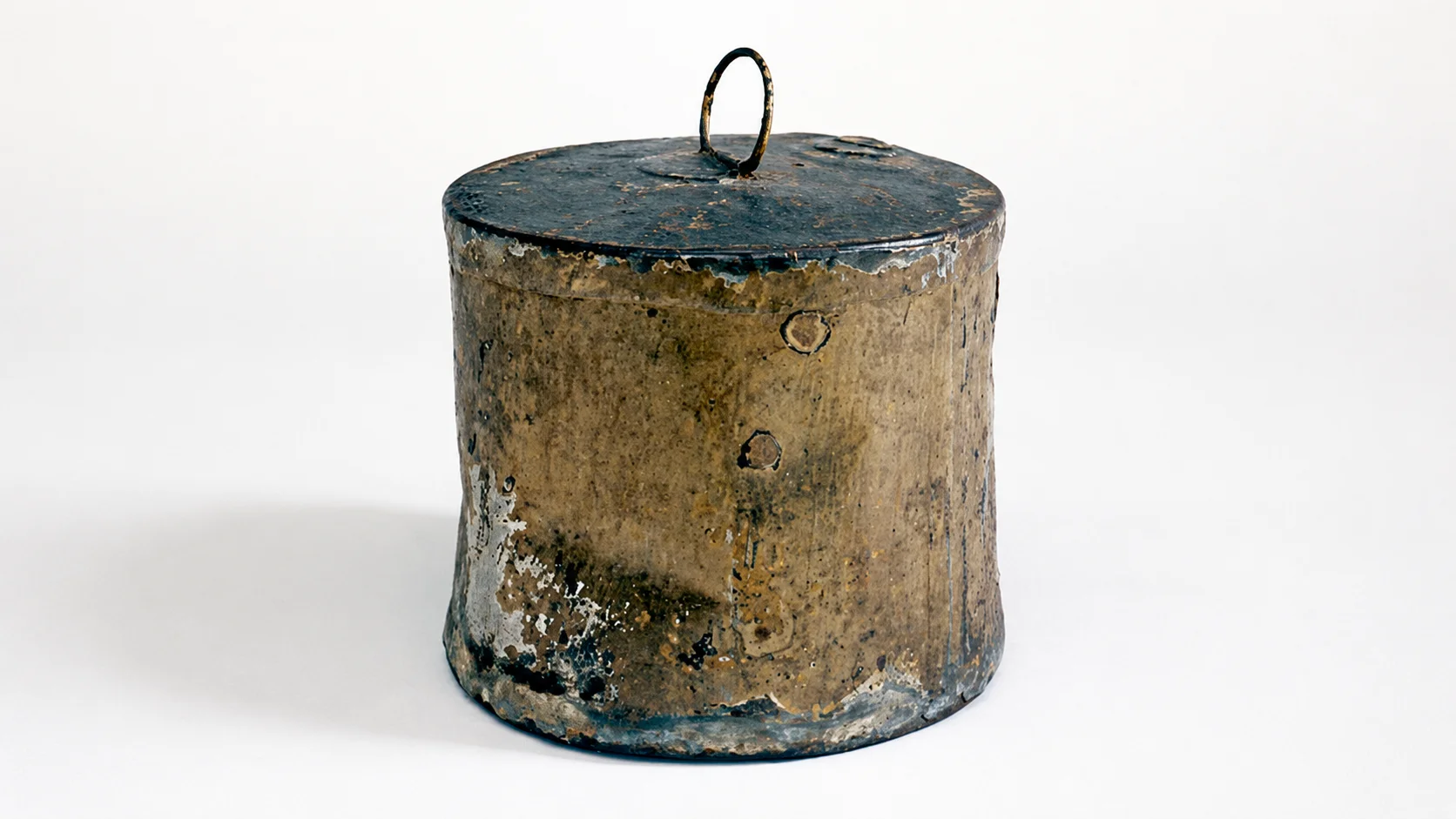
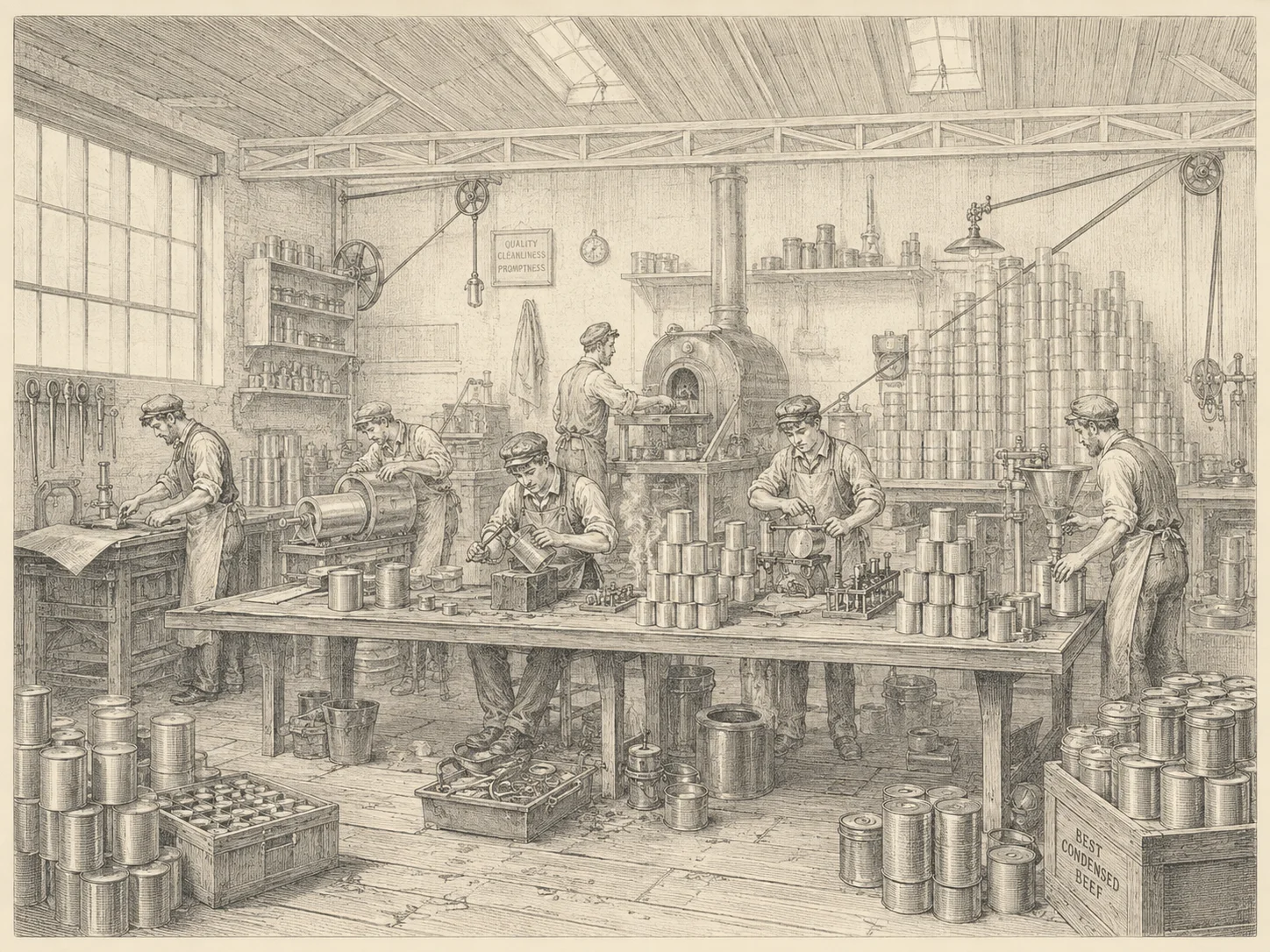
Early cans were nothing like the lightweight containers produced on modern lines.
Tinplate sheets were cut by hand. Workers bent rectangular pieces around cylindrical forms, soldered the side seams, and attached the ends. Food was often inserted through a small opening in the top. A separate metal cap was then soldered over the hole.
It was slow work.
Even a skilled tinsmith might make only about ten cans in a day. Soldering also introduced practical problems, including residues and inconsistent sealing quality.
The cans were also thick. Early users often opened them with knives, chisels, or other heavy tools. Dedicated can-opening tools appeared much later.
That gap says a lot about early canning. The first engineering problem was preserving the food. Consumer convenience came later. (fuente)
4. Canned Food Becomes an Industry
During the nineteenth century, canned food gradually moved beyond military and naval supply.
Commercial canning spread through Europe and the United States. Demand increased during long-distance exploration, westward expansion, and wars. Soldiers who became familiar with canned foods during military service often continued buying them after returning home.
But growing demand created another problem: cans could not remain handmade.
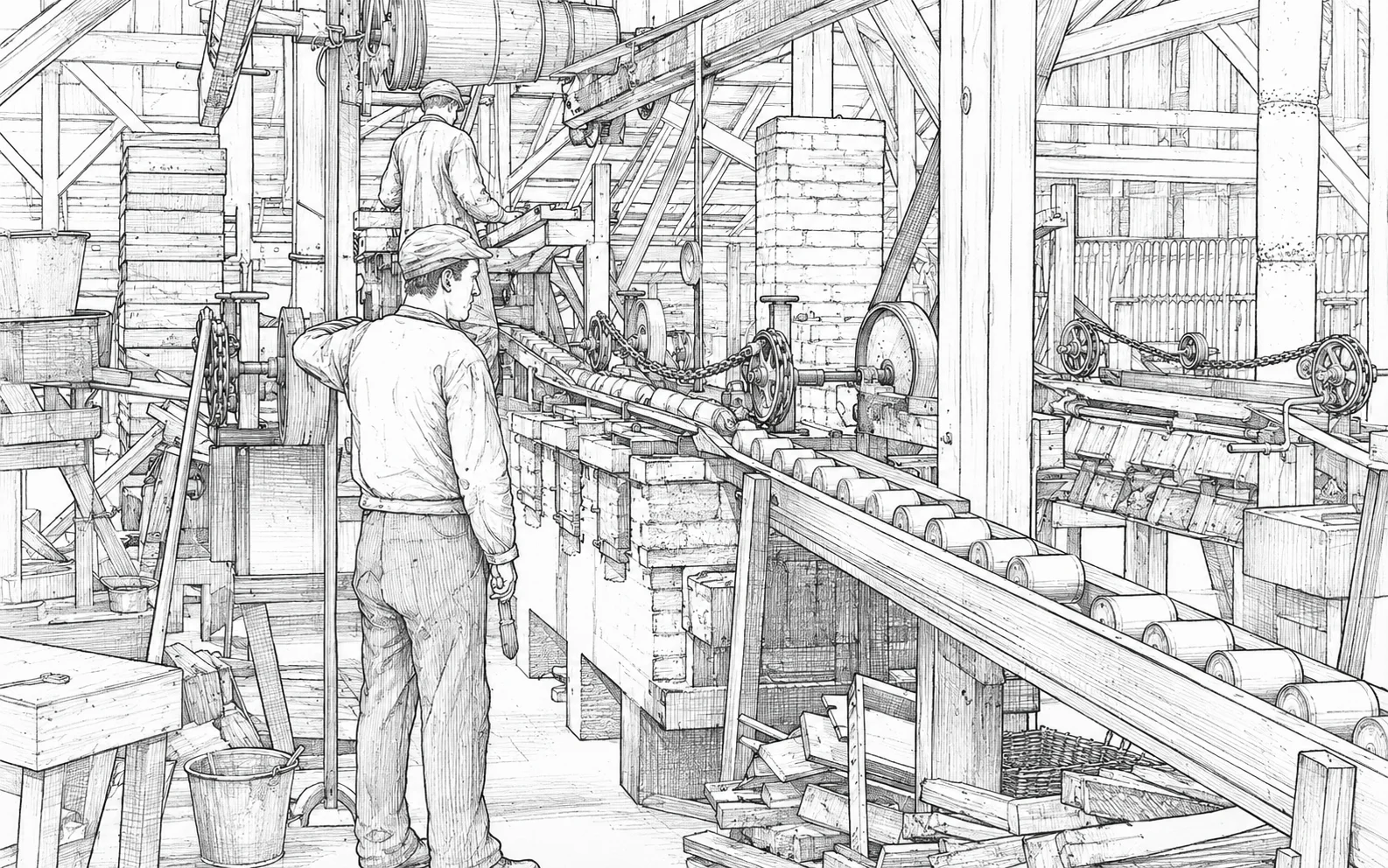
In 1883, Norton Brothers developed a semi-automatic can body machine that mechanically formed and soldered side seams. According to industry history, output increased from roughly ten handmade cans per worker per day to around 2,500 cans per hour on the new equipment. A decade later, machines could reach about 6,000 cans per hour.
This changed the economics of canned food.
Can making became a specialized manufacturing industry rather than simply another operation inside a cannery. At the same time, food factories introduced conveyors, fillers, washers, cutters, peelers, and other processing equipment.
The can and the food-processing line were developing together.
5. From Soldered Caps to Double Seams
One of the biggest changes in can construction came with the open-top, or “sanitary,” can.
Older hole-and-cap cans required soldering at several points. The side seam was soldered. The bottom was soldered. After filling, the opening at the top also had to be closed with solder.
The open-top design changed the filling process. Food could be loaded through the full diameter of the can. The end was then mechanically attached.
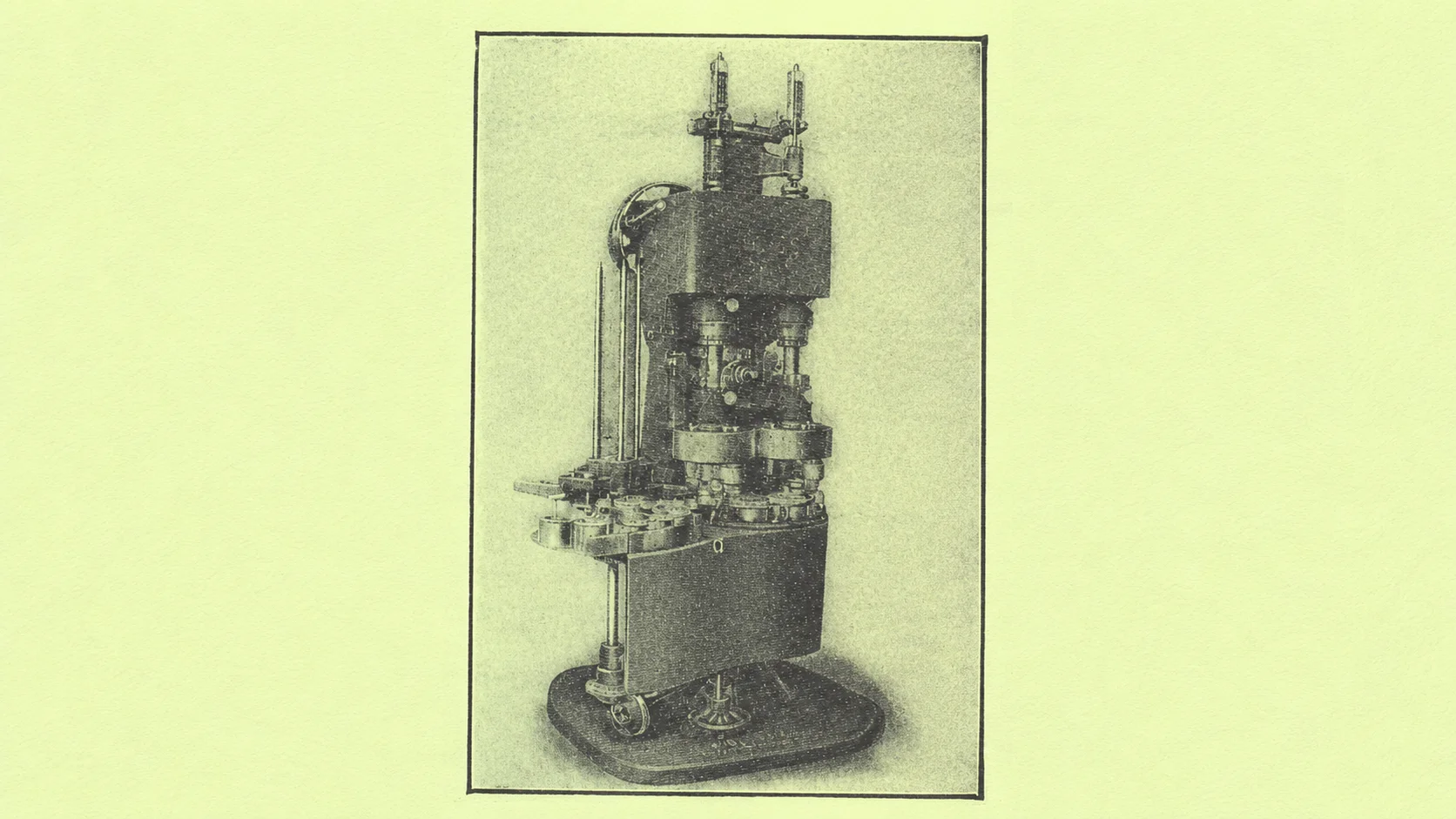
By the late 1890s, improvements in sealing compounds and double-seaming equipment made this type of can commercially practical. The double seam mechanically folds the can body flange and the curled edge of the can end together to form a tight multi-layer joint.
The process was faster, more consistent, and better suited to automated production. By the 1920s, the old hole-and-cap design had largely disappeared from mainstream can manufacturing.
6. When Science Caught Up with the Process
Appert discovered canning through experimentation. The scientific explanation came later.
Pasteur’s work in the nineteenth century showed that microorganisms were responsible for food spoilage. This changed the understanding of canning. The objective was not simply to remove air. The process had to apply enough heat, maintain a reliable seal, and prevent recontamination.
Pressure processing also became increasingly practical for commercial canneries. Earlier pressure sterilization concepts appeared in the mid-nineteenth century, while later industrial retorts gave processors better control over temperature and pressure. This was especially relevant for low-acid foods, where boiling-water temperatures alone are not always enough for safe processing.
Food safety standards became more systematic in the early twentieth century. Botulism outbreaks linked to commercially canned foods in 1919 and 1920 pushed the industry toward scientifically established time-and-temperature processes rather than relying mainly on experience.
At that point, canning was no longer just a preservation technique. It had become a controlled thermal process. (fuente)
7. The Modern Metal Food Can Takes Shape
The twentieth-century food can evolved through many smaller engineering changes rather than one single invention.
Tinplate became thinner and more uniform as steel rolling and coating technology improved. Protective internal coatings made it possible to package foods that could otherwise react with or corrode the metal. This expanded the range of products that could be safely packed in metal containers.
Can construction also changed. In many three-piece cans, electric resistance welding gradually replaced traditional soldered side seams. Two-piece cans developed alongside three-piece designs, using a body and bottom formed from a single piece of metal. Neither structure completely replaced the other; they continue to suit different products and container dimensions.
Easy-open ends addressed another problem that had existed since the first heavy tinplate containers: opening the package itself. By then, the basic engineering sequence was complete.
The history of canned food started with a glass bottle and a preservation experiment. The metal can came later. Then came mechanized body making, double seams, controlled thermal processing, protective coatings, welded seams, and easier opening systems.
The familiar food can on a supermarket shelf is the result of those changes accumulating over more than two centuries.