
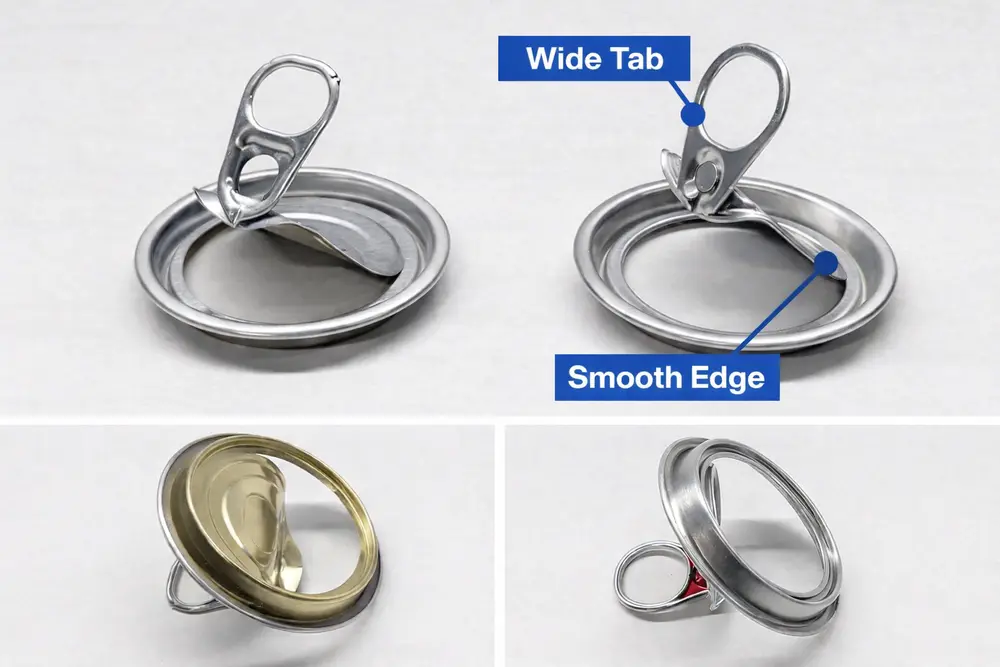
Full-aperture (FA) ends are an innovative type of aluminum beverage can lid that can be completely removed, allowing the can to double as a cup. While this may seem novel, the concept itself is not new—it has long been used in tinplate food cans, much like the ones you open with a fully detachable lid. However, bringing this design to aluminum beverage cans introduces new challenges. What appears to be a simple material shift involves dealing with internal carbonation pressure, as well as real safety concerns such as exposed sharp edges when consumers drink directly from the can. New-generation FA ends address these issues through design improvements such as wider pull tabs and smoothed, rounded edges, making them significantly safer and more user-friendly.
Design and Operation
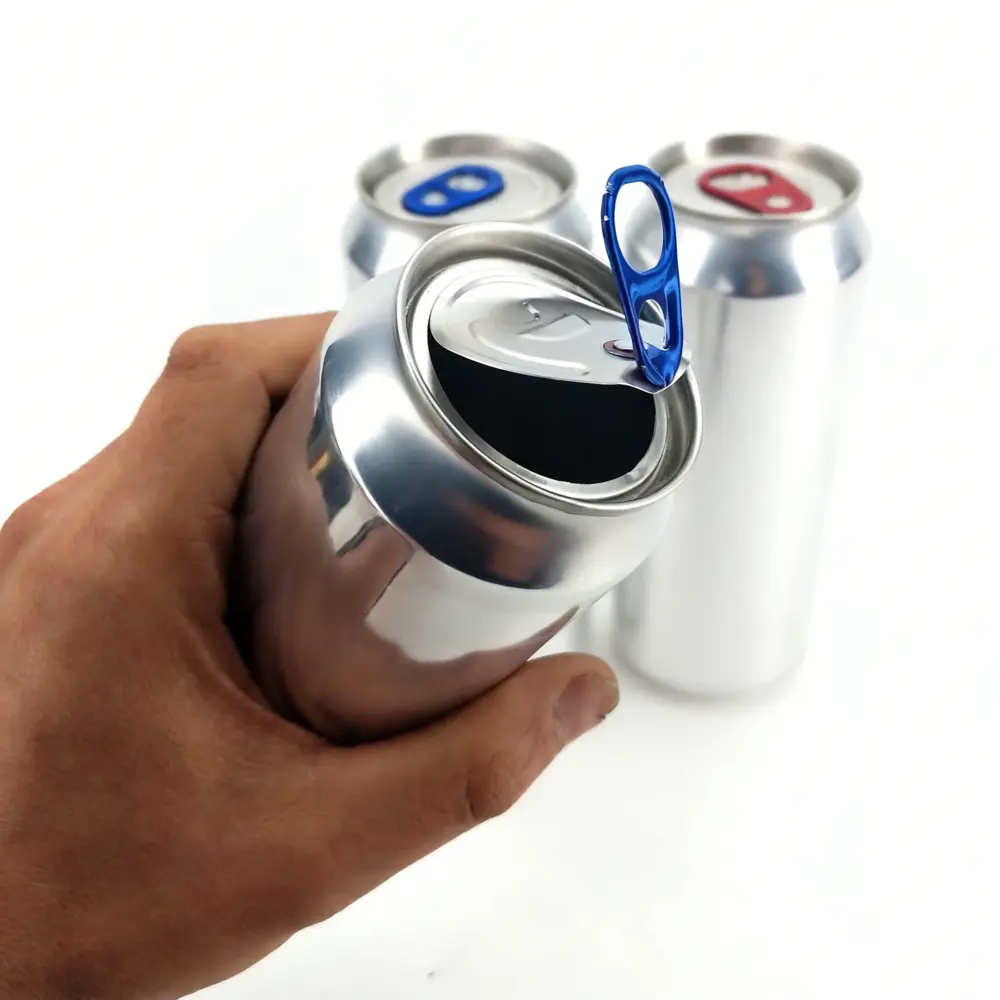
A full-aperture easy-open end is essentially an aluminum lid with a circular scored panel. When the consumer lifts the tab, the entire panel cleanly detaches from the can.
The design has been specifically optimized for beverage use: the opened rim is flared or rounded for a smoother drinking experience, the score line at the end of the opening path is refined for a cleaner break, and the tab is made wider and stronger for better grip and leverage. Some lids also feature a flow channel near the opening, allowing liquid to pour more smoothly and helping create a finer foam.
Today, consumers can drink directly from the can comfortably and safely, with the risk of cuts—common with older pull-tab designs—significantly reduced. At the same time, the lid still withstands normal internal pressure while remaining easy and smooth to open.
Key Advantages
Enhanced Drinking Experience
Unlike standard pull-tabs, FA ends let consumers drink straight from the can’s full aperture as if sipping from a glass. This creates a more natural and satisfying drinking experience. Craft beer enthusiasts particularly appreciate this effect, because the open lid mimics a draught pour and allows the beer’s full flavor, aroma and head to develop.
Fruit-Friendly Access
FA lids are ideal for beverages with solid inclusions. Fruit-infused beers, tropical cocktails, sodas with pulp, and bubble teas often contain chunks that a regular tab would block. A wide opening lets drinkers easily access and enjoy these additions.
Lightweight & Sustainable
The FA end is made of aluminum, retaining all the benefits of a standard can lid. Aluminum is lightweight, infinitely recyclable, and provides a complete barrier to light and oxygen.
Easy to Open & Safe
These lids are engineered for easy, tool-free opening. The wider pull ring and scored panel require relatively low force to detach, so virtually anyone can open the can quickly. At the same time, FA ends maintain a strong seal until opening – they are designed to resist internal pressure during filling and handling, preventing leaks and preserving carbonation.
Premium Appeal & Market Trend / Outdoor & On-the-Go Convenience
FA ends have become a trendy feature in premium beverages. By offering a novel way to drink, FA lids signal quality and uniqueness. Since the lid fully detaches, FA cans eliminate the need for extra cups or glassware – especially useful at outdoor events.
Typical Applications
Craft & Draught-Style Beers
Crown Holdings markets its 360 End® as the world’s first full-aperture can lid. By allowing the entire lid to be removed, it closely mimics the experience of drinking from a glass – letting beer aficionados enjoy the beverage’s full aroma and carbonation just like on tap.
Fruit, Juice & Cocktail Drinks
FA ends are also popular for drinks with mix-ins. Tropical fruit cocktails, craft sodas, and even bubble teas can be packaged in FA cans so that whole fruit slices, berries, or tapioca pearls remain intact and accessible.
Outdoor & Event Drinks / Food & Specialty Canning
At festivals and stadiums, FA cans provide added convenience. Beyond beverages, FA ends can package certain foods such as nuts, coffee powder, milk powder or canned goods (e.g. olives, mushrooms).
Conclusion
Although full-aperture beverage can ends are becoming more common, they are still a niche packaging format. We also believe they are not suitable for every product—for example, mass-market beverages produced in high volumes, or products where the removed lid cannot be conveniently placed, are unlikely to prioritize this design. Given the added process complexity and higher production costs, full-aperture ends are typically reserved for specialty or premium beverages.
However, in the right applications, full-aperture ends offer a compelling combination of novelty and convenience. They effectively transform a can into a “ready-to-drink cup,” significantly enhancing the user experience for products that place a premium on consumption experience. At the same time, they retain all the inherent advantages of aluminum cans, including safety, light protection, and recyclability. When used appropriately, full-aperture ends can serve as a powerful additional tool for brands to communicate convenience and a sense of innovation to consumers.
FAQ
A: The industry reference is the 202 360 FA end. Engineers must confirm exact 202 diameter (approximately 52 mm) compatibility with existing can-body seaming equipment to prevent retooling expenses during procurement.
A: The design balances normal carbonation pressure resistance with low opening force through optimized scoring depth and reinforced tab geometry. Acceptance testing should include burst pressure validation >6 bar per supplier specification.
A: Yes – modern FA ends incorporate flared and rounded edges to eliminate sharp edges. Procurement teams should request edge-radius measurement reports and perform finger-swipe safety audits during incoming inspection.
A: Generally yes for seaming stations, but the wider tab and scoring require verification of chuck alignment and pull-force consistency. Recommend pilot runs to quantify any increase in reject rate before full-volume commitment.
A: Yes – the full-aperture removal eliminates the obstruction of standard stay-on tabs. Confirm minimum aperture diameter against largest expected inclusion size during package validation to prevent consumer complaints.
A: Require supplier data on pull force, burst pressure (>6 bar), material thickness tolerance, and edge-radius measurement. Non-conformance on any of these directly impacts line efficiency and consumer safety.
A: Increased complexity and cost versus standard ends; the added scoring and tab reinforcement can raise reject rates if not tightly controlled. Engineers should perform full FMEA focusing on scoring consistency before committing to large orders.