

Aluminum beverage cans are highly favored for their ability to preserve product quality while offering a combination of durability and portability. According to market research data from Grand View Research, the global beverage can market was estimated at $45.44 billion in 2025 and is projected to reach $67.44 billion by 2033, exhibiting a compound annual growth rate (CAGR) of 5.0% from 2026 to 2033. The steady global increase in the consumption of beverages—such as carbonated soft drinks, beer, and energy drinks—coupled with the growing demand within the food and beverage industry for recyclable and lightweight packaging, are the primary factors driving the sector’s expansion.(Source)
In North America and Western Europe, consumer preferences for eco-friendly packaging and a strong emphasis on minimizing environmental impact continue to serve as powerful drivers for the growing demand for aluminum cans. The Asia-Pacific region—particularly China and India—is expected to experience rapid growth, driven primarily by factors such as urbanization, rising disposable incomes, and the increasing popularity of ready-to-drink beverages.(Source)
Key Market Trends for Aluminum Beverage Cans
Lightweight Aluminum Cans
Driven by sustainability goals and cost-efficiency imperatives, manufacturers are placing greater emphasis on reducing raw material consumption and transportation-related emissions. The design of lightweight aluminum cans is emerging as a major trend within the beverage packaging industry—exemplified by the rise of CDL can ends—a trend that gained significant momentum around 2021 and is expected to continue.
Slim and Sleek Aluminum Cans
Since 2020, with the growing popularity of energy drinks, functional beverages, and premium alcoholic spirits, beverage manufacturers have begun seeking unique packaging formats. Thanks to their stylish, avant-garde aesthetics and strong potential for brand differentiation, slim and sleek aluminum cans are rapidly gaining traction within specific health-conscious, trendy, and premium market segments. Industry reports project that this trend will persist until at least 2030.
Digitally Printed Aluminum Cans
Digitally printed aluminum cans began to gain prominence around 2019, as beverage brands started adopting small-batch production strategies to launch seasonal novelties and limited-edition products. With their suitability for small-scale runs and highly flexible customization capabilities, digitally printed aluminum cans have become a practical and effective complement to traditional can decoration techniques. As digital printing technology for aluminum cans continues to mature rapidly, this trend is set to undergo further expansion.
High Demand for Ready-to-Drink (RTD) Beverages
Continuous population growth, rising disposable income, and evolving lifestyles have collectively driven a shift in consumer behavior. Due to fast-paced lifestyles and long working hours, consumers are increasingly gravitating toward ready-to-drink (RTD) beverages. Canned drinks—such as tea, coffee, wine, and water—are particularly favored for their convenient single-serving sizes and portability.
Refillable Aluminum Cans
Around 2022, as beverage companies began exploring circular packaging models to minimize packaging waste, refillable and reusable aluminum beverage packaging systems started to garner significant attention. With governments and brands alike prioritizing closed-loop packaging systems, industry reports project that this trend will see further expansion by 2032.
Product Type Analysis
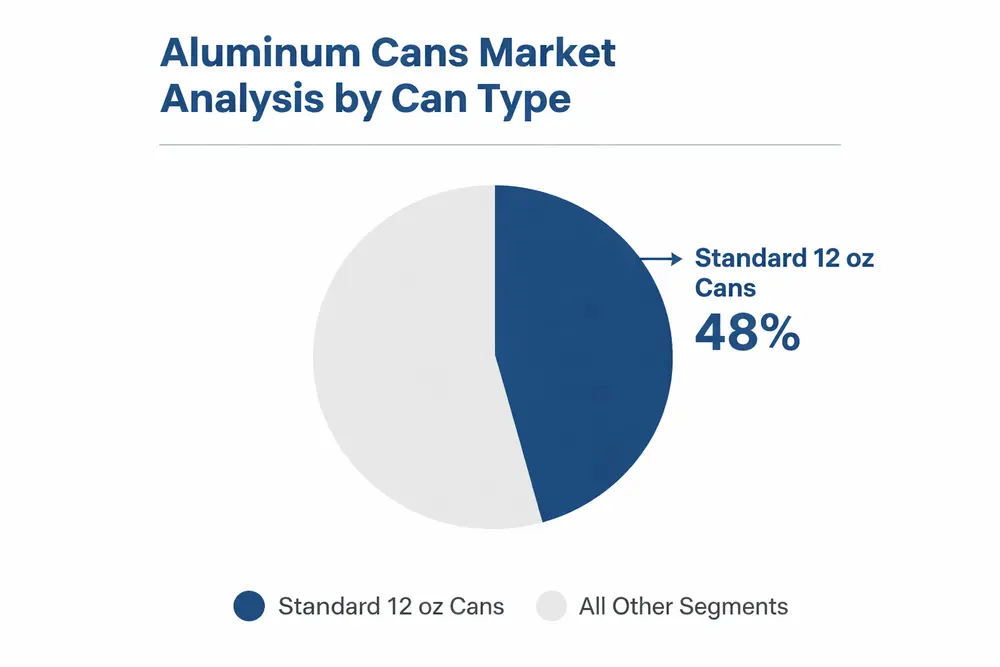
Aluminum beverage cans primarily consist of two-piece cans; categorized by shape, they mainly include standard cans, sleek cans, slim cans, and specialty cans. According to a report by Future Market Insights, the 12 oz standard can commands the largest market share—accounting for approximately 48% of the total market—a dominance stemming from its widespread application in the packaging of soft drinks and beer. The 12 oz standard can enjoys immense popularity due to its optimal serving size, efficient surface area for cooling, balanced material utilization, and broad compatibility with various filling processes, establishing it as the most ubiquitous can type in daily consumer consumption.
Conversely, sleek cans and slim cans are seeing increasing adoption in specific regions and market segments. For instance, the sleek can has emerged as one of the preferred packaging choices for hard seltzers, energy drinks, and premium beverages. The slim can is relatively common in Europe and parts of Asia (such as the 250 ml energy drink cans frequently found in Thailand) but remains quite rare in North America.
Looking ahead, standard cans are expected to retain their dominant position within the aluminum beverage can market; however, sleek cans and slim cans are projected to become increasingly prevalent in specific geographic regions and market sectors.
Application Analysis
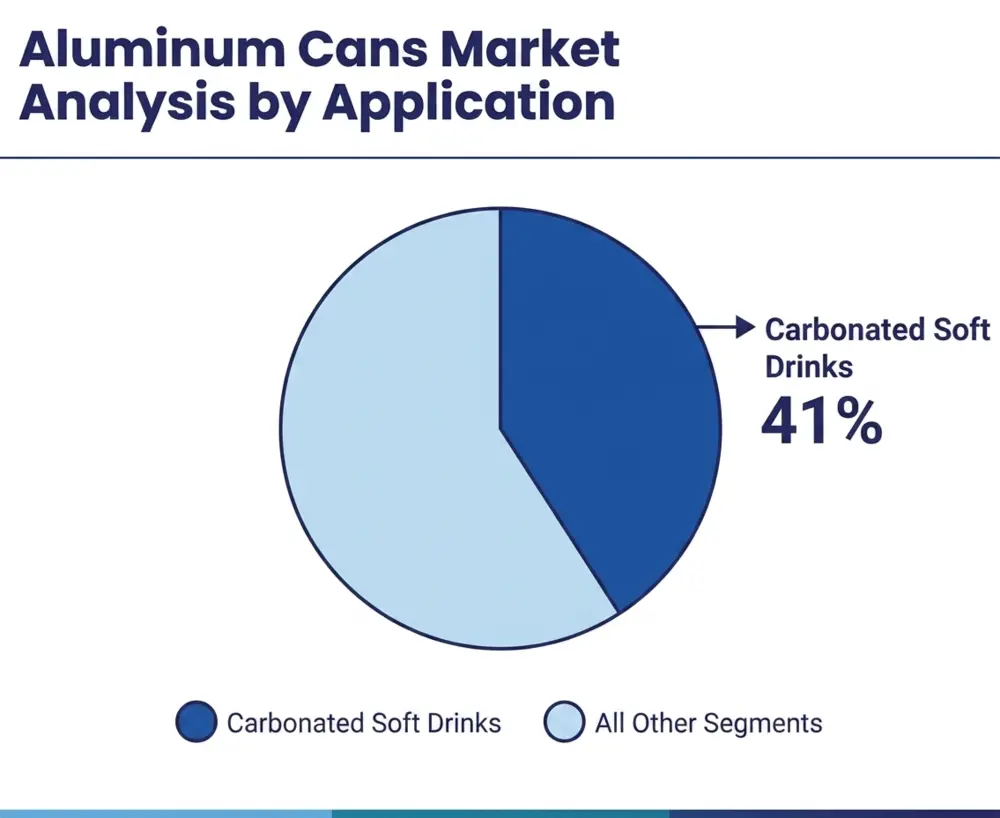
Based on application, the global beverage can market can be segmented into carbonated soft drinks, alcoholic beverages, fruit and vegetable juices, and other beverages. Among these, carbonated soft drinks and alcoholic beverages constitute the primary market segments. While data from various business publications may vary slightly, it is generally accepted that carbonated soft drinks represent the largest single application market for aluminum cans, accounting for approximately 40% of the market share; alcoholic beverages constitute the second-largest application sector, holding a market share of over 30%.(Source)
Carbonated soft drinks dominate the global market, driven by steadily increasing worldwide demand for soft drinks. The introduction of new flavors—such as fruit blends—has appealed to the younger generation of consumers, thereby further boosting the demand for carbonated soft drinks. Rising disposable incomes and evolving lifestyles are the primary factors fueling the robust demand for alcoholic beverages. Furthermore, a surge in the youth population and growing societal acceptance of alcoholic beverages have also contributed to the market’s expansion.
Regional Analysis
North America
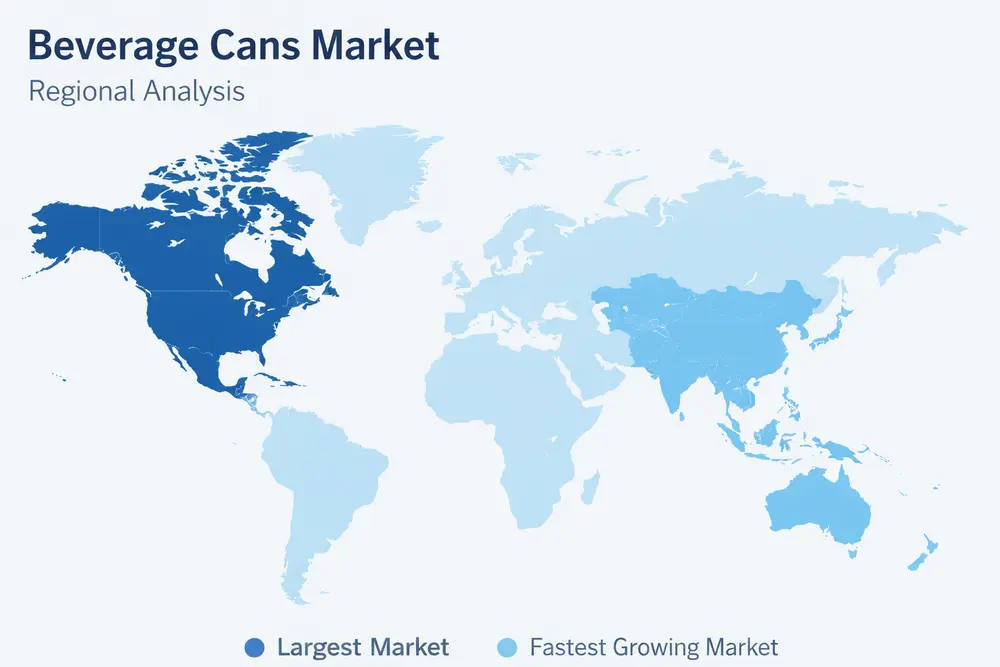
According to various sources—including Straits Research, Global Market Insights, and Grand View Research—the North American beverage can market is widely expected to hold the largest global market share by 2025, exceeding 30.0%. This market dominance is primarily attributed to the growing consumption of processed and packaged beverages within the region. Heightened health consciousness among North American consumers has driven increased demand for healthy and nutritious beverages, thereby boosting the demand for beverage cans.
Europe
Europe also stands as a major global market for beverage cans; according to data from Grand View Research, the region is projected to account for over 24.0% of the market revenue share by 2025. Growing public concern regarding environmental pollution has prompted European beverage manufacturers to opt for sustainable packaging solutions. The high recyclability of aluminum cans makes them an ideal choice for sustainable packaging. Furthermore, initiatives undertaken by the European Union to achieve circular economy objectives are expected to further stimulate the demand for aluminum cans.
Asia-Pacific
The Asia-Pacific region represents the fastest-growing segment of the beverage can industry, with Grand View Research forecasting that the region will experience the most rapid expansion—at a Compound Annual Growth Rate (CAGR) of 6.8%—during the period from 2026 to 2033. In countries such as China, India, and across Southeast Asia, population growth (though China is currently in a phase of population decline) and ongoing urbanization have fueled a surge in beverage demand, thereby driving the growth of the beverage can market. Additionally, factors such as rising consumer purchasing power, evolving lifestyles, expanding domestic can manufacturing capabilities, and the increasing adoption of sustainable packaging solutions are all expected to exert a positive influence on market growth.
Analysis of Key Industry Players
According to research reports from sources such as Straits Research and Global Market Insights, companies including Ball Corporation, Crown Holdings Inc., Ardagh Group, and Can-Pack S.A. are the leading players in the global production of aluminum beverage cans, collectively holding a market share of approximately 60% to 70%. Furthermore, metal packaging companies such as Shining Packaging also constitute a significant force in the production of aluminum beverage cans.
Conclusion
Factors such as urbanization and population growth are the primary drivers behind the robust global demand for beverages. Rising disposable incomes in developing nations have fueled increased consumer spending on beverages. Brand preference has played a pivotal role in driving the surge in beverage demand within these developing economies, thereby propelling market expansion. For instance, brands such as Coca-Cola and PepsiCo exert significant influence over consumers in emerging markets. Furthermore, consumer preference for beverages featuring sustainable and recyclable packaging has boosted the demand for aluminum beverage cans. Concurrently, shifting lifestyles and heightened health consciousness have increased the demand for healthy and nutritious beverages, further stimulating the growth of the beverage market.
However, manufacturers’ growing preference for PET and glass bottles is currently constraining the expansion of the aluminum can market. PET bottles possess characteristics—such as reusability, durability, light weight, and oxygen barrier properties—that are comparable to those of aluminum cans; moreover, since the energy consumption required to produce PET bottles is significantly lower than that for beverage cans, they serve as a cost-effective packaging alternative for beverage manufacturers. Consequently, although the demand for aluminum cans is currently experiencing accelerated growth, PET bottles remain the most widely utilized form of beverage packaging.