
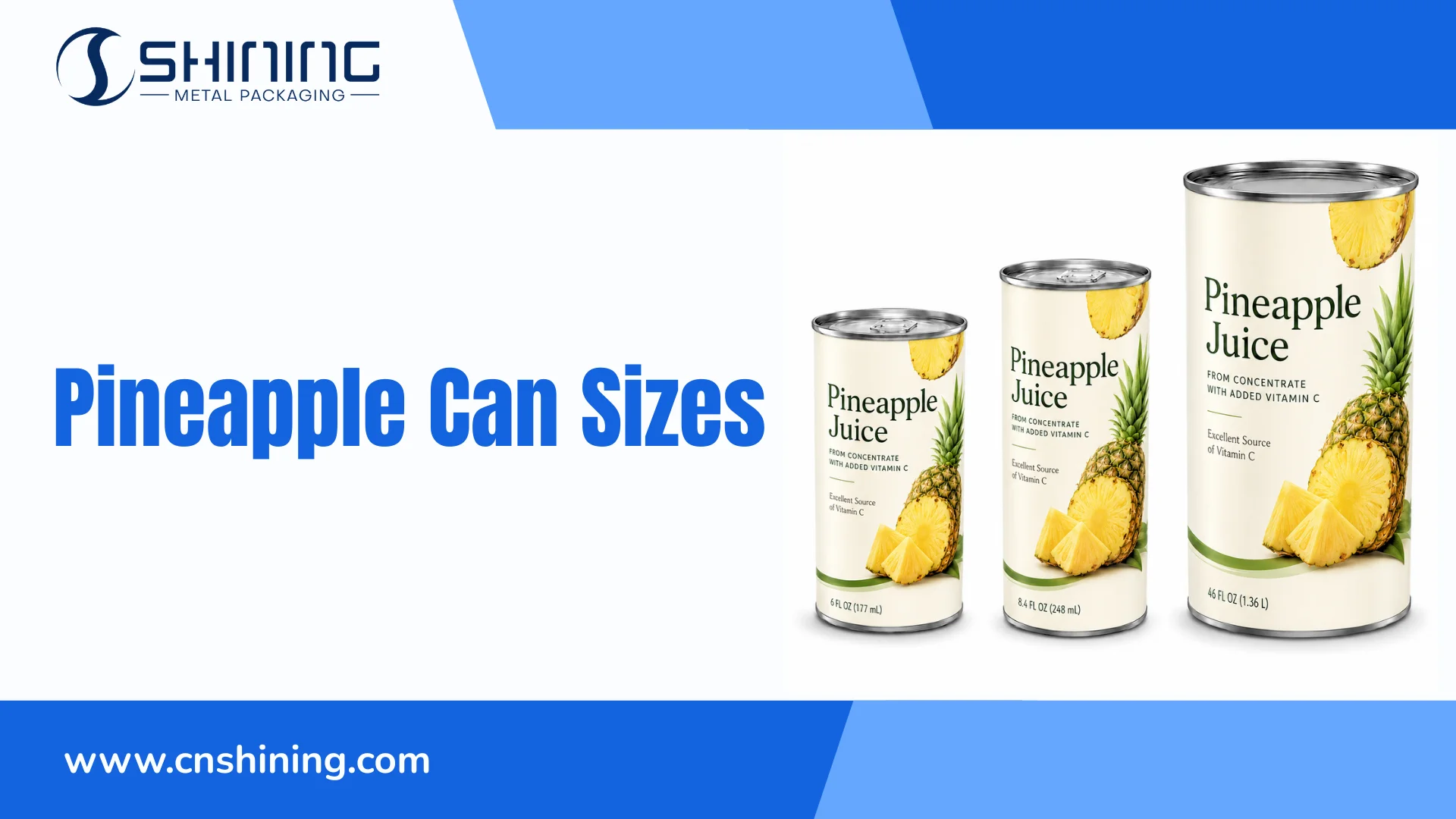
Pineapple can sizing starts with one distinction: label weight is not the same as can capacity.
Canned pineapple may be packed as crushed fruit, chunks, tidbits, slices, or juice. An 8 oz can, a 20 oz can, a 46 fl oz can, and a No. 10 can may refer to different measurements.
Before selecting a metal can, confirm:
- Net weight
- Drained weight
- Product volume
- Required headspace
The final size also depends on the pineapple cut, packing medium, density, and thermal process.
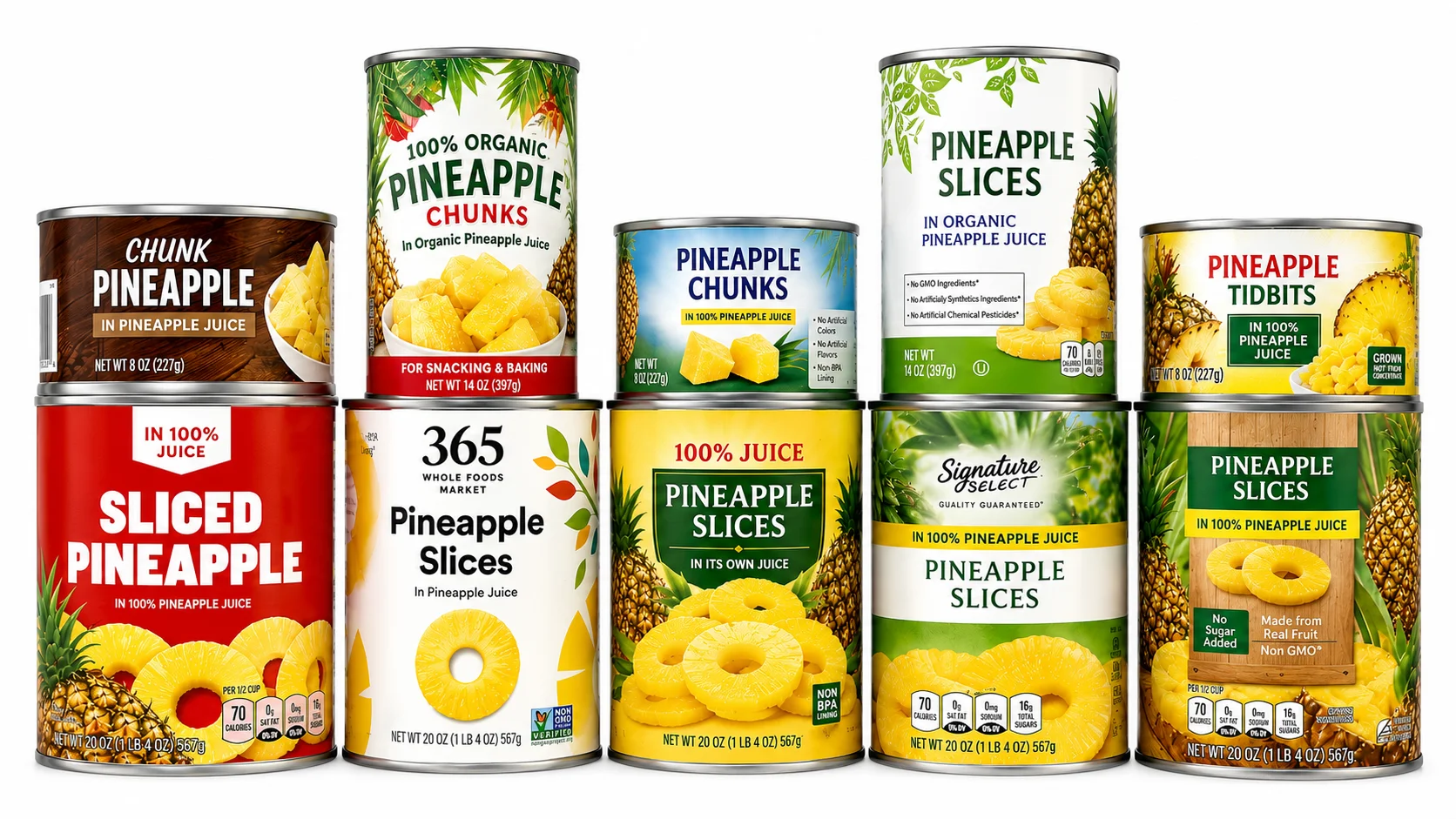
1. Quick Pineapple Can Size Chart
| Common can designation | Typical declared content | Approximate metric equivalent | Approximate volume | Common application |
|---|---|---|---|---|
| 6 oz can | 6 oz or 6 fl oz | About 170 g or 177 mL | Varies | Single-serve pineapple juice |
| 8 oz can | 8 oz | About 226 g | About 1 cup | Crushed pineapple or small pineapple chunks |
| No. 2 / 20 oz can | 20 oz or about 18 fl oz | About 567 g or 532 mL | About 2½ cups | Retail chunks, slices, tidbits, or crushed pineapple |
| 46 fl oz can | 46 fl oz | About 1.36 L | About 5¾ cups | Pineapple juice |
| No. 10 can | About 96–117 oz | About 2.72–3.32 kg | About 2.84–3.24 L | Foodservice pineapple products |
These are average reference values. Actual filling requirements vary by product.
2. What Does Pineapple Can Size Mean?
2.1 Net Weight
Net weight includes the fruit and the packing liquid.
A 20 oz can of pineapple contains about 567 grams of total product. However, crushed pineapple, chunks, and slices do not occupy the same volume at the same weight.
Net weight alone is not enough to select an empty can.
2.2 Drained Weight
Drained weight is the weight of the fruit after the juice, syrup, or water is removed.
This is especially relevant for slices, chunks, tidbits, and diced pineapple. Two products with the same net weight may have different drained weights and liquid ratios.
2.3 Fluid Ounces
Fluid ounces measure volume. Regular ounces usually measure weight.
A 46 oz pineapple juice can should normally be described as a 46 fl oz can. A 20 oz can of pineapple chunks usually refers to net weight, not fluid volume.
2.4 Nominal Can Dimensions
Metal cans may also use industry dimension codes such as:
- 307 × 410
- 603 × 304
- 603 × 700
The first number describes the nominal diameter. The second describes the height.
Traditional names such as No. 2 and No. 10 are useful references, but final purchasing specifications should include actual dimensions and capacity.
3. Common Pineapple Can Sizes
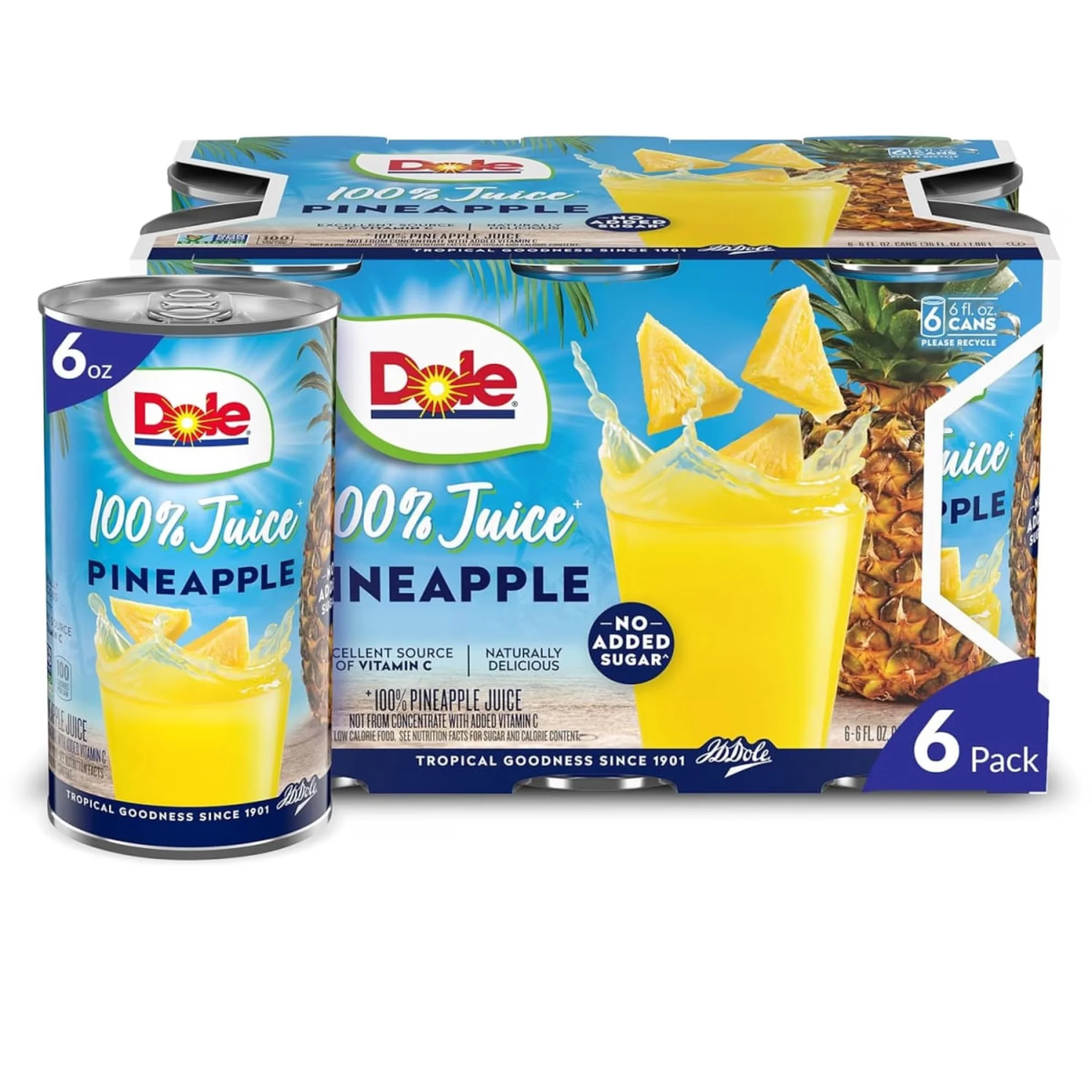
3.1 6 oz Pineapple Juice Cans
A 6 fl oz can holds approximately 177 mL of pineapple juice.
This format is mainly used for single-serve drinks, lunch packs, and retail multipacks. The smaller portion reduces waste when the entire can is intended to be consumed at once.
For a 6 oz pineapple juice project, check:
- Filling temperature
- Required headspace
- Internal coating compatibility
- Opening method
- Secondary packaging format
- Retort or pasteurization conditions
Pineapple juice is acidic. The internal coating must be selected and tested for direct contact with the specific juice formulation.
An easy-open end is common for consumer products. Opening force still needs to be controlled. An end that is too difficult to open creates a poor user experience. An end that opens too easily may not provide the required handling safety.
3.2 8 oz Pineapple Cans
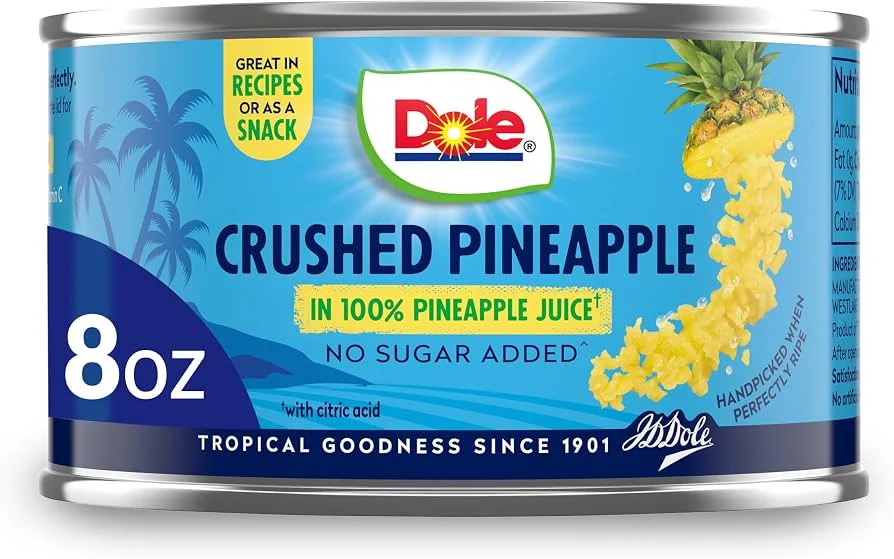
An 8 oz pineapple can contains approximately 226 grams of product. For general recipe planning, it is often treated as about one cup.
The usable fruit quantity will usually be lower after draining.
This size is commonly used for:
- Crushed pineapple
- Small pineapple chunks
- Recipe-size portions
- Small household servings
- Retail multipacks
The 8 oz crushed pineapple can is especially common in baking and home cooking. It provides enough product for a single recipe without leaving a large amount of unused fruit.
From a packaging perspective, the small size creates several design questions.
First, how dense is the product?
Crushed pineapple can settle tightly. Chunks leave more space between pieces. The same 226-gram net weight may require a different filling volume.
Second, what type of end will be used?
Small retail cans are often paired with an easy-open end. The end profile, score design, tab position, and opening force must match the selected can diameter.
Third, how will the cans be packed?
Compact can dimensions work well for multipacks, but the outer carton and pallet pattern should be checked early. A minor diameter change can affect the number of cans per case and per pallet.
The internal coating must also withstand the acidity of the fruit and packing liquid.
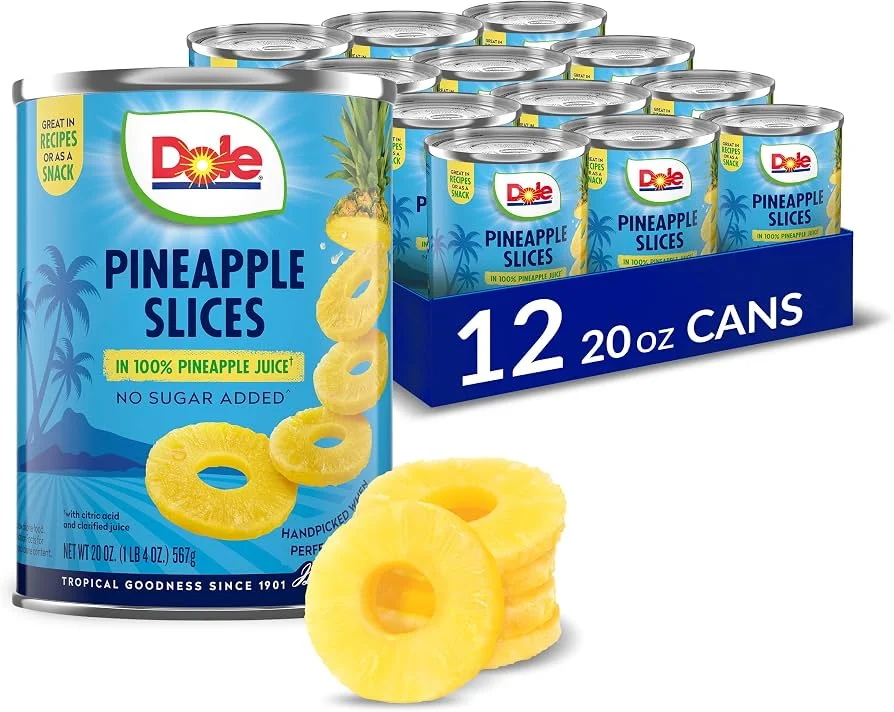
3.3 20 oz Pineapple Cans and No. 2 Cans
A traditional No. 2 can is commonly associated with approximately 20 oz by weight.
That equals about:
- 567 grams
- 2½ cups of total product
- About 532 mL as an average volume reference
The exact amount of usable pineapple after draining depends on the fruit cut and the packing medium.
The 20 oz format is widely used for household and mainstream retail products. It can be used for:
- Crushed pineapple
- Pineapple chunks
- Pineapple tidbits
- Pineapple slices
The same can diameter may not work equally well for every style.
Pineapple slices need enough internal diameter to hold the rings without damaging or folding them. Capacity alone does not solve that problem. The relationship between the ring diameter and the can body diameter must be checked.
Chunks and tidbits create a different issue. Their irregular shapes affect packing density. The filling system must deliver the target fruit-to-liquid ratio while maintaining enough headspace.
Crushed pineapple behaves more like a dense particulate product. It may trap air during filling and can require different process settings.
3.4 46 fl oz Pineapple Juice Cans
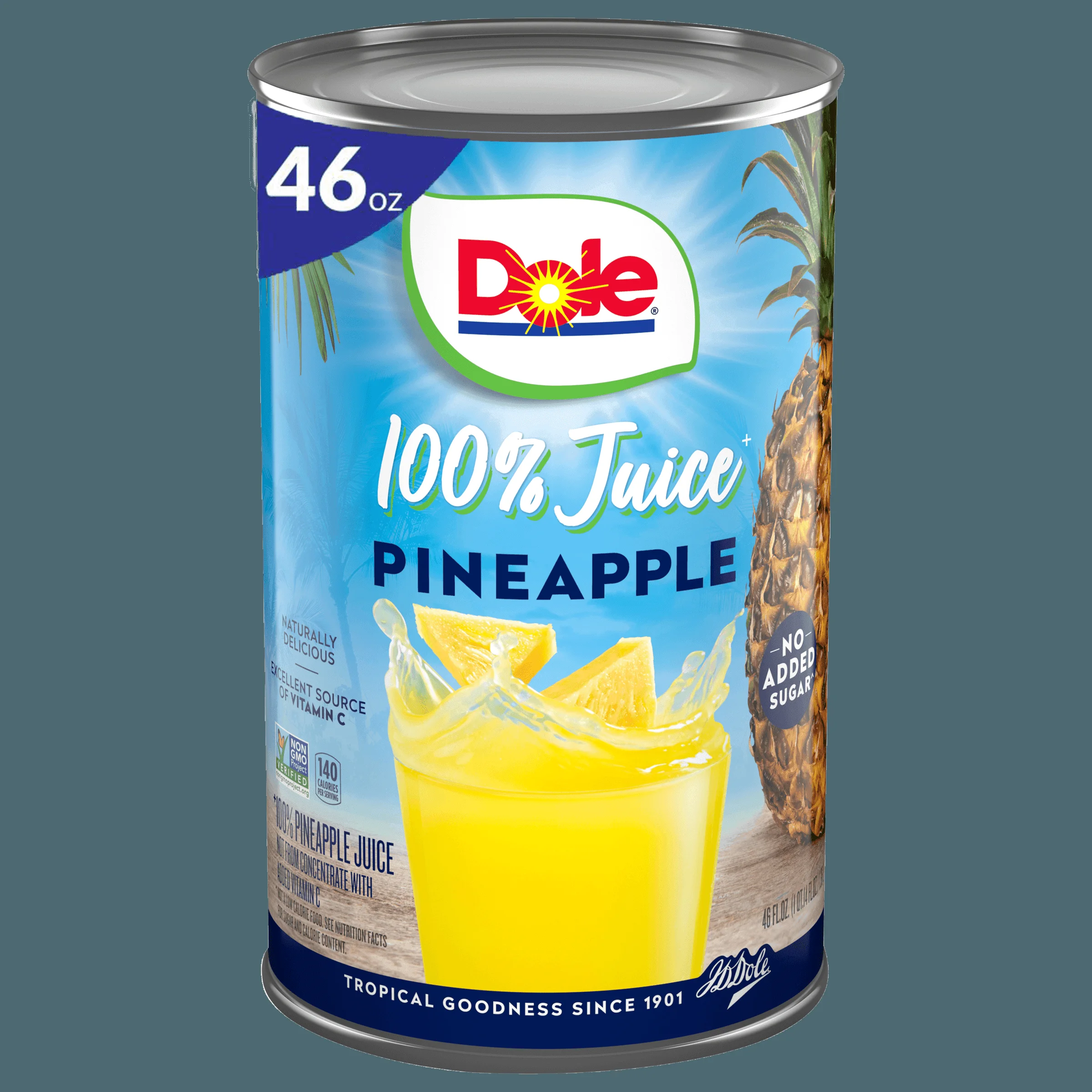
A 46 fl oz can contains approximately 1.36 liters, or about 5¾ US cups.
This is a traditional large format for pineapple juice. It can be used for retail family packs, restaurants, bakeries, beverage preparation, and other commercial applications.
Liquid products are normally specified by fluid volume rather than drained fruit weight. The can still needs more internal capacity than the declared liquid volume.
The additional space allows for:
- Filling variation
- Thermal expansion
- Vacuum development
- Product movement
- Seam protection during processing
The required headspace should be calculated from the filling temperature and thermal process. It should not be copied from another product without testing.
A three-piece can around 1,423 mL, such as a 603 × 304 format, may be a useful starting point for engineering evaluation. It should not be treated as an automatic match for every 46 fl oz juice product.
The actual result depends on the can’s brimful capacity, filling level, process temperature, and line tolerances.
For pineapple juice, verify:
- Internal coating resistance
- Side seam performance
- Double seam integrity
- Vacuum or pressure behavior
- Paneling resistance
- Shelf-life stability
Large liquid cans are often produced as three-piece cans because the construction offers more flexibility in diameter and height. The final structure should still be selected around the product, production volume, and filling line.
3.5 No. 10 Pineapple Cans
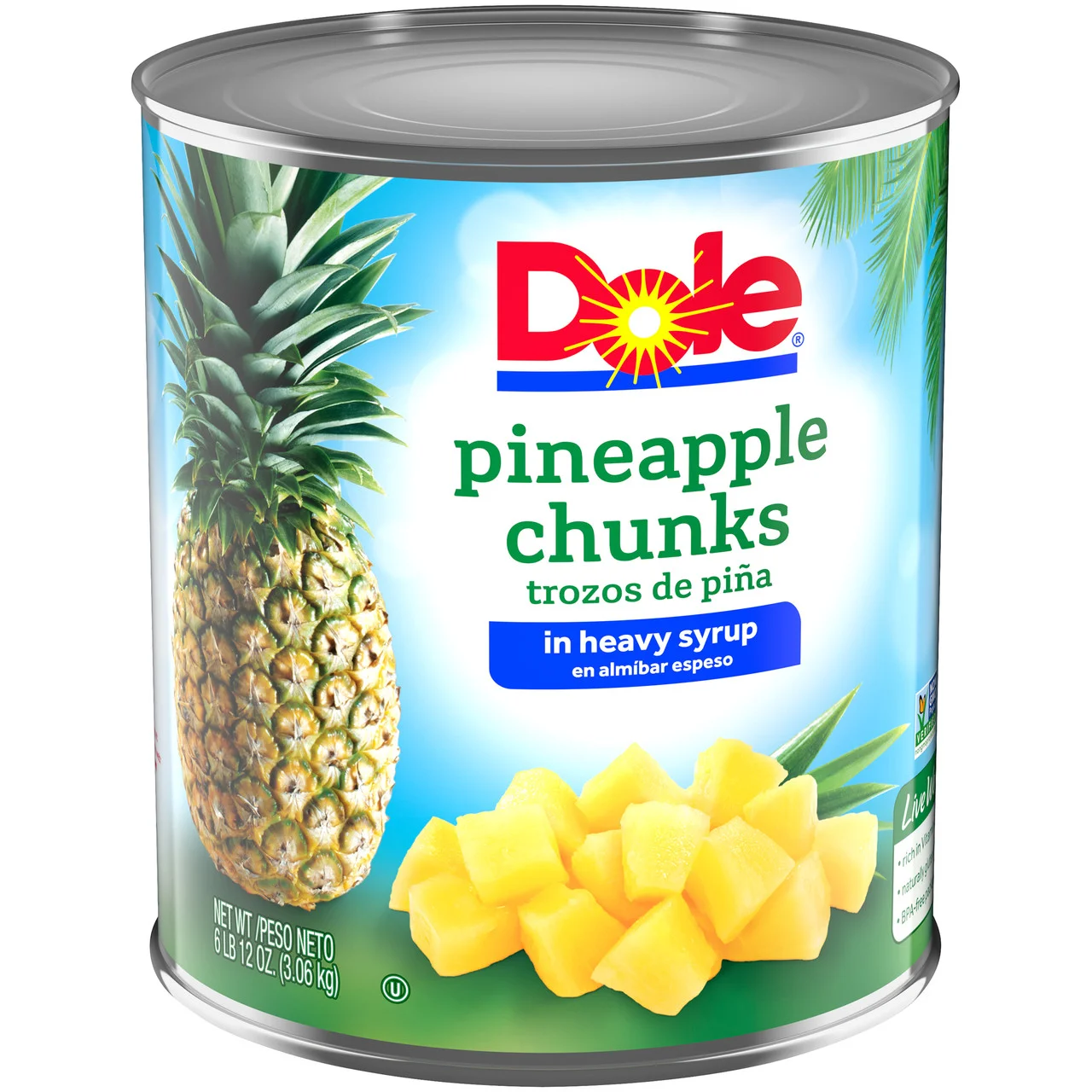
No. 10 cans are mainly used in foodservice.
Typical users include:
- Restaurants
- Hotels
- Bakeries
- Catering companies
- Institutional kitchens
- Central food preparation facilities
Depending on the product, a No. 10 can commonly holds about 96–117 oz. This is approximately 2.72–3.32 kg by weight or 2.84–3.24 liters by volume.
No. 10 cans can be used for pineapple chunks, slices, tidbits, and crushed pineapple.
The main benefit is operational. A commercial kitchen can open one large can instead of handling several small retail cans. This reduces packaging units and opening time.
The larger format also creates new handling requirements.
A full No. 10 can is heavy. Case strength, pallet configuration, stretch wrapping, and transport vibration should be reviewed. A can that performs well individually can still be damaged by poor pallet loading.
Large-diameter easy-open ends require careful evaluation. Opening force, tab strength, score control, and edge safety all need to be tested.
Three-piece construction is often practical for No. 10 capacities. It offers more freedom when adjusting body height and nominal volume.
A 603 × 700 three-piece can with a nominal capacity around 3,178 mL falls within the common No. 10 volume range. It may serve as an initial reference point. The final specification still needs to be confirmed through filling and process trials.
4. How to Match a Pineapple Product to a Can Size
4.1 Define the Product Style
Confirm whether the product is crushed, diced, sliced, chunked, or liquid.
Slices need enough diameter. Chunks need controlled solid-to-liquid ratios. Juice needs accurate volume and headspace.
4.2 Confirm Net and Drained Weight
Record both values where applicable.
Do not assume that two products with the same net weight require the same can volume.
4.3 Define the Packing Medium
Common options include juice, syrup, and water.
The packing medium affects density, corrosion behavior, and heat transfer.
4.4 Calculate Volume and Headspace
Measure the actual product density and calculate the filling volume.
Do not use brimful capacity as the normal filling level. Space is still needed for processing and vacuum control.
4.5 Select Can Diameter and Height
Capacity can often be achieved with more than one diameter-and-height combination.
The right geometry depends on the product, filling equipment, end size, seaming machine, and case packing system.
4.6 Choose the Can Construction
Two-piece cans are often used for smaller formats.
Three-piece cans offer more flexibility for larger diameters and capacities, including many juice and foodservice applications.
4.7 Confirm Coating and End Type
Pineapple is acidic. The internal coating must resist corrosion, staining, and flavor changes.
The end may be standard or easy-open, depending on the market and application.
4.8 Run Production Tests
The selected can should be tested through:
- Filling
- Seaming
- Thermal processing
- Cooling
- Leak testing
- Transport testing
- Shelf-life testing
The correct can is not defined by a common name alone. It must match the product volume, fruit cut, packing liquid, headspace, end type, and production process.
5. Conclusion
An 8 oz can is usually about 226 grams. A 20 oz or No. 2 can is about 567 grams. A 46 fl oz can holds about 1.36 liters. A No. 10 can commonly falls between 2.84 and 3.24 liters.
Those figures are reference points, not final engineering specifications.
The correct metal can must match the pineapple cut, drained weight, packing liquid, filling density, required headspace, end type, and thermal process.
The right can is the one that fills consistently, closes within seam limits, survives processing and transport, and delivers the declared product quantity throughout its shelf life.