
How are aluminum cans made?

Aluminum can manufacturing production line showing formed can bodies with headline “How are aluminum cans made?”

Aluminum Can Body Manufacturing Process

The aluminum can body is produced through a highly automated, high-speed two-piece can manufacturing line. According to the standard aluminum beverage can production process, the can body is formed and finished through the following steps:

Step 1: Aluminum Coil Loading

Production begins with aluminum alloy coils of suitable grade and thickness. The coils are mounted onto a decoiler, which automatically unwinds the aluminum sheet and feeds it into the production line under controlled tension.
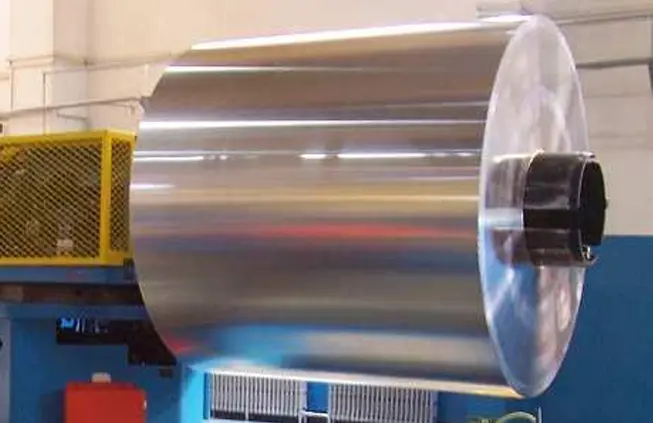
Large aluminum alloy coil mounted on decoiler for two-piece aluminum beverage can manufacturing process
Aluminum alloy coil mounted on a decoiler at the beginning of the aluminum can manufacturing line
For procurement: Ensure coil specifications match alloy grade to avoid production downtime.

Step 2: Lubrication

A thin layer of lubricant is applied to the surface of the aluminum sheet. This lubrication reduces friction during forming, protects the tooling, and prevents tearing or surface defects during the drawing and ironing processes.
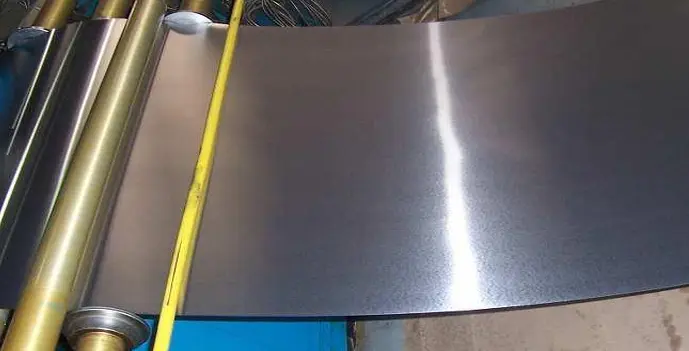
Aluminum sheet unwinding from coil during high-speed two-piece aluminum beverage can manufacturing process
Aluminum sheet being unwound from a large coil and fed into the press line for can body production
Engineering tip: Monitor lubricant thickness to prevent defects in downstream ironing.

Step 3: Blanking and Cup Drawing

The lubricated aluminum sheet enters a high-speed press where circular blanks are punched out. Each blank is immediately drawn into a shallow cup using forming dies. At this stage, the material begins its transformation from flat sheet to three-dimensional shape.
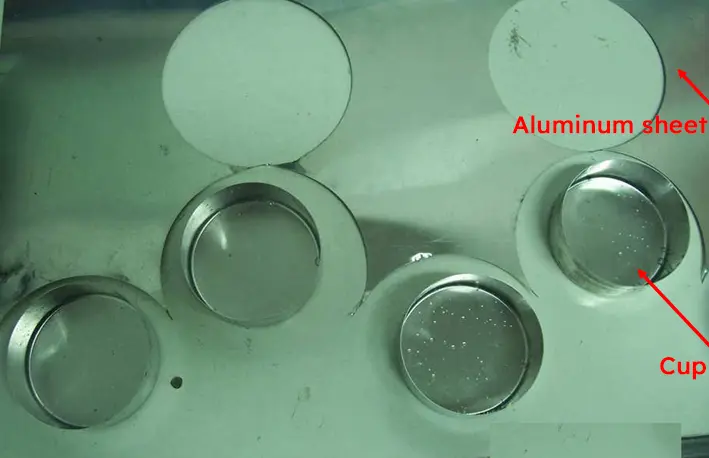
Aluminum sheet blanks and shallow cups during blanking and initial cup drawing process in beverage can manufacturing
Circular aluminum blanks and shallow cups formed during the first drawing stage of two-piece can manufacturing
Procurement note: Select dies with precise tolerances for uniform blank sizes.

Step 4: Redraw, Ironing, and Bottom Forming

The cups are transferred via a conveyor to a redraw and ironing press. In this critical step:
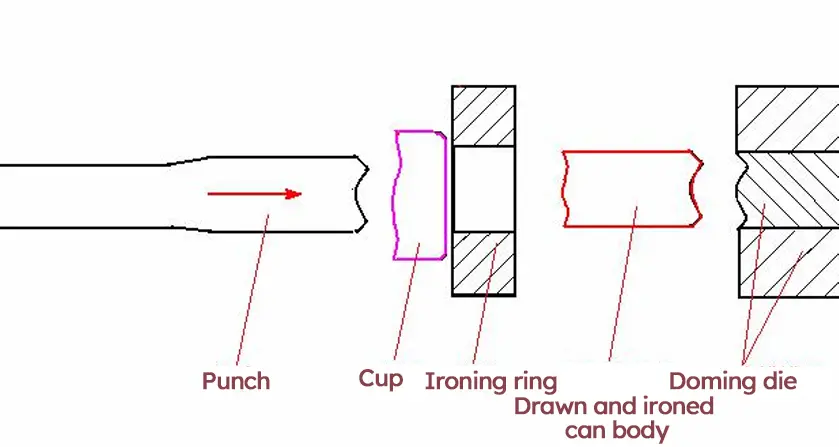
Redraw and ironing ring schematic showing punch, ironing ring, and doming die in aluminum can body manufacturing process
Schematic of punch, ironing rings, and doming die used to thin sidewalls and form the bottom dome in a D&I can body line
  • The cup is redrawn and forced through a series of ironing rings, which significantly thin the sidewalls while increasing the height of the can.
  • At the same time, the bottom of the can is shaped into a domed (concave) profile, improving resistance to internal pressure and mechanical loads.

This step gives the can body its near-final dimensions and characteristic strength-to-weight efficiency.
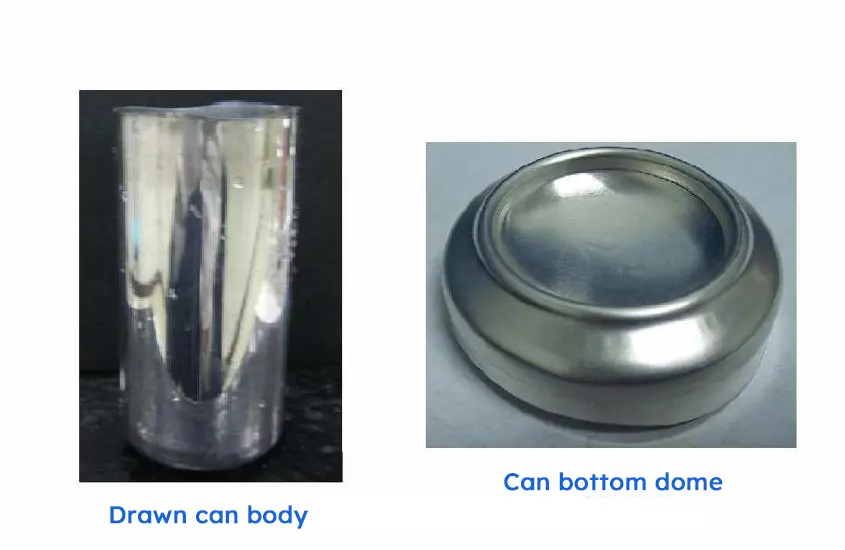
Drawn aluminum can body and domed bottom profile formed during redraw and ironing process in two-piece beverage can manufacturing
Drawn and ironed aluminum can body alongside its domed bottom design for enhanced internal pressure resistance
Engineering perspective: Verify ironing ring alignment to maintain sidewall uniformity and avoid buckling risks.

Step 5: Trimming

After ironing, the top edge of the can body is uneven due to material flow. A trimming machine cuts off the excess metal (“ears”) to ensure uniform height and a flat, smooth rim, which is essential for later necking and seaming.
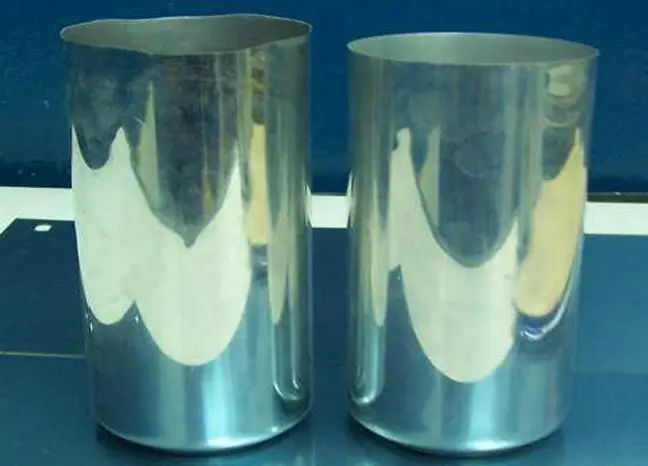
Aluminum can bodies before trimming showing uneven rim ears formed after ironing process in two-piece can manufacturing
Drawn and ironed aluminum can bodies displaying ear formation prior to trimming operation
Procurement tip: Source trimming blades with high durability for consistent height control.

Step 6: Washing and Drying

The trimmed can bodies undergo a multi-stage cleaning process:

1. Degreasing and cleaning to remove residual lubricants, aluminum fines, and contaminants from forming.
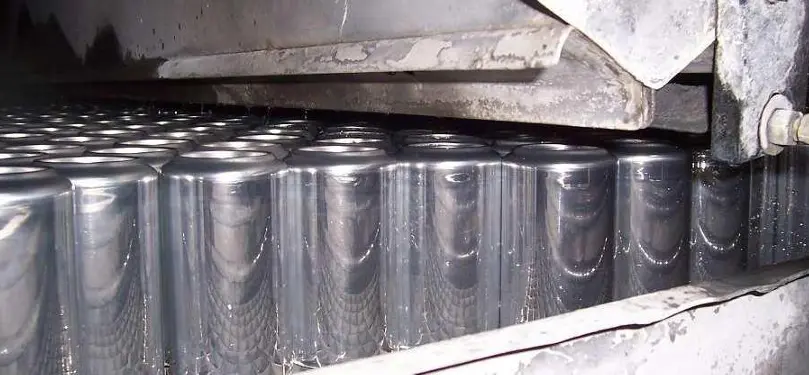
Aluminum can bodies passing through industrial washing and degreasing tunnel in two-piece beverage can manufacturing process
Trimmed aluminum can bodies entering the multi-stage washing and degreasing system

2. Chemical treatment to create a thin organic conversion film on the aluminum surface, which improves corrosion resistance and provides a proper base for coatings.
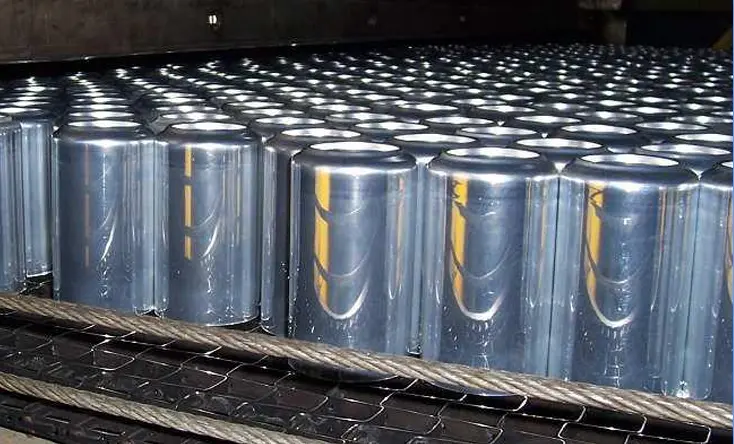
Aluminum can bodies arranged on conveyor exiting washing system before oven drying stage
Cleaned aluminum can bodies aligned on conveyor prior to oven drying
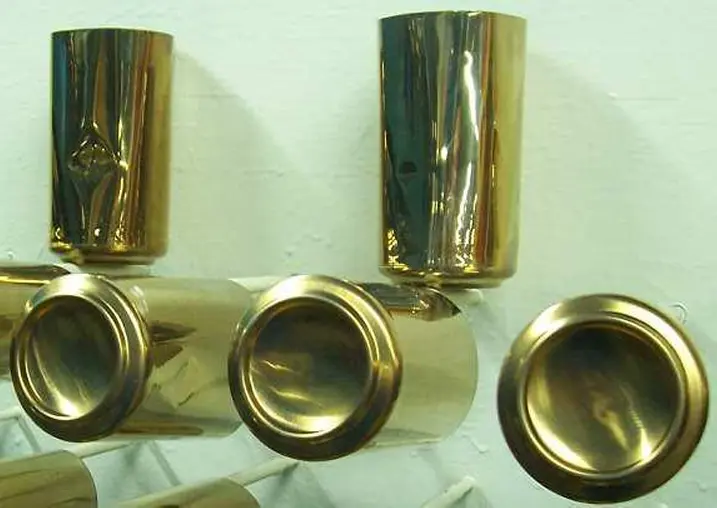
Gold-colored internal lacquer coated aluminum can bodies for beverage corrosion protection
Aluminum can bodies with applied internal food-grade lacquer for corrosion protection

3. Drying in an oven to remove moisture and prepare the can for decoration and coating.
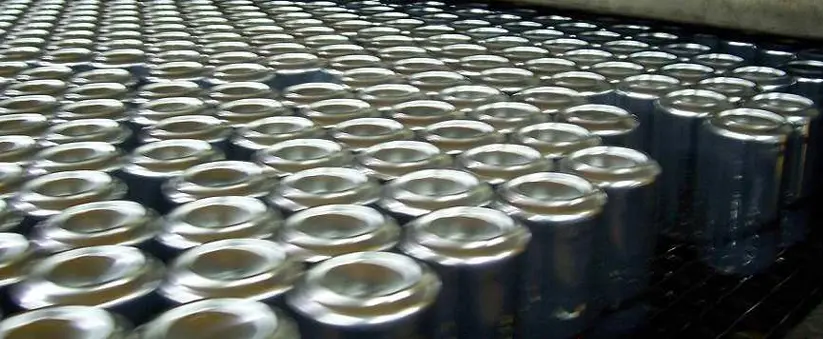
Aluminum can bodies moving along high-speed conveyor for inspection in beverage can production line
Rows of aluminum can bodies advancing through automated inspection on production conveyor
Engineering note: Ensure chemical treatment compatibility to enhance coating adhesion and corrosion protection.

Step 7: External Printing and Coating

The exterior decoration of the can body is completed in several sub-steps:
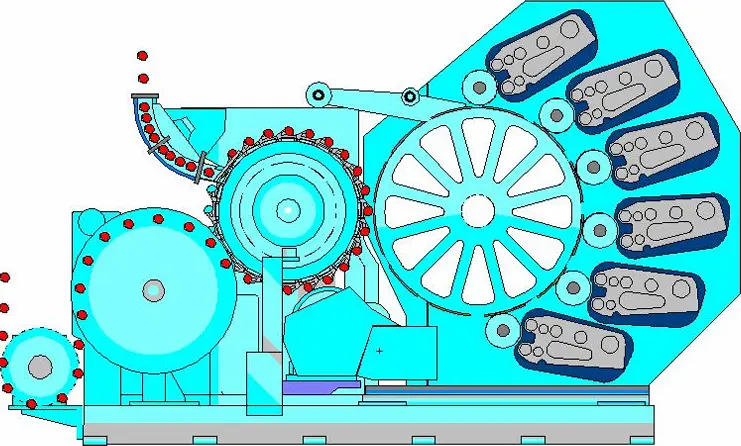
High-speed aluminum can blanking and cup transfer mechanism in two-piece can manufacturing line
Mechanical transfer system feeding drawn cups into the next forming stage

1. White base coat application and curing.
Aluminum drawn cups after initial forming before ironing process
Shallow aluminum cups formed after blanking and drawing

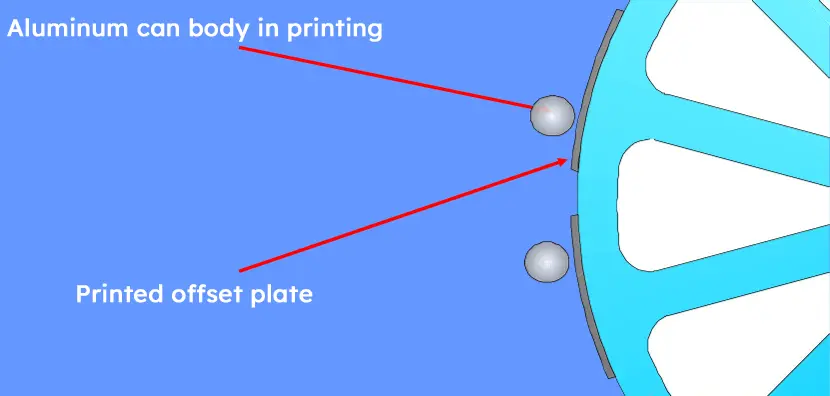
2. Color printing, where graphics and logos are transferred via offset printing blankets.
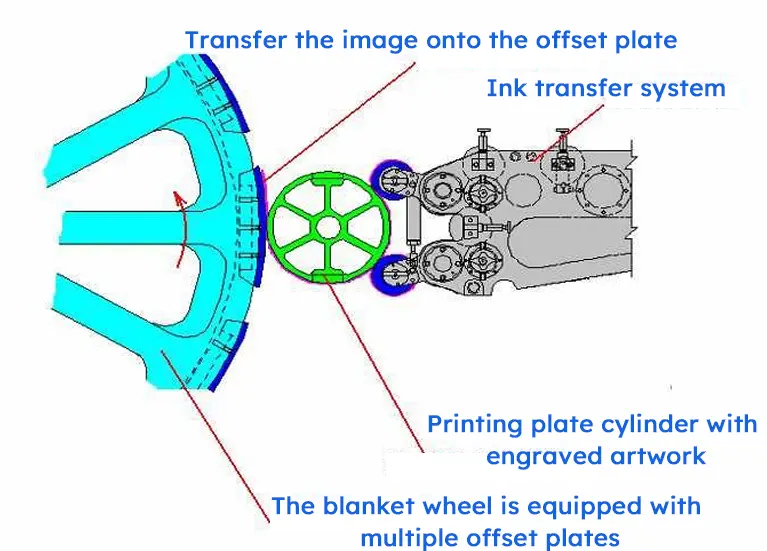
Aluminum can offset printing system with ink transfer rollers and blanket wheel
Technical diagram of the offset printing mechanism in can body decoration
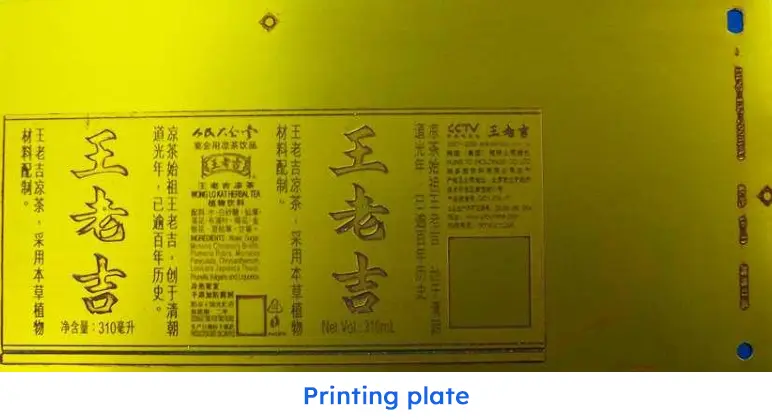
Engraved aluminum printing plate used for offset decoration of beverage cans
Metal printing plate used to transfer brand artwork during can decoration
Aluminum can body rotating on mandrel during offset printing process
Can body mounted on mandrel receiving printed graphics

3. Over-varnishing, applying a clear protective layer over the printed design.
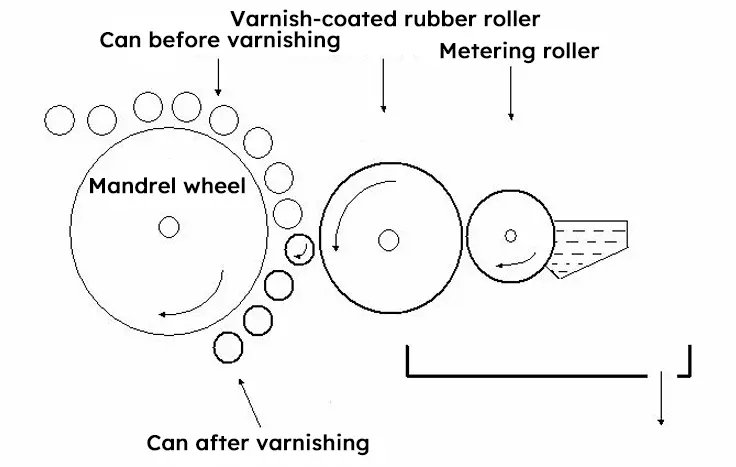
Aluminum can varnishing system with rubber roller and metering roller
Diagram of protective varnish application using metering and rubber rollers
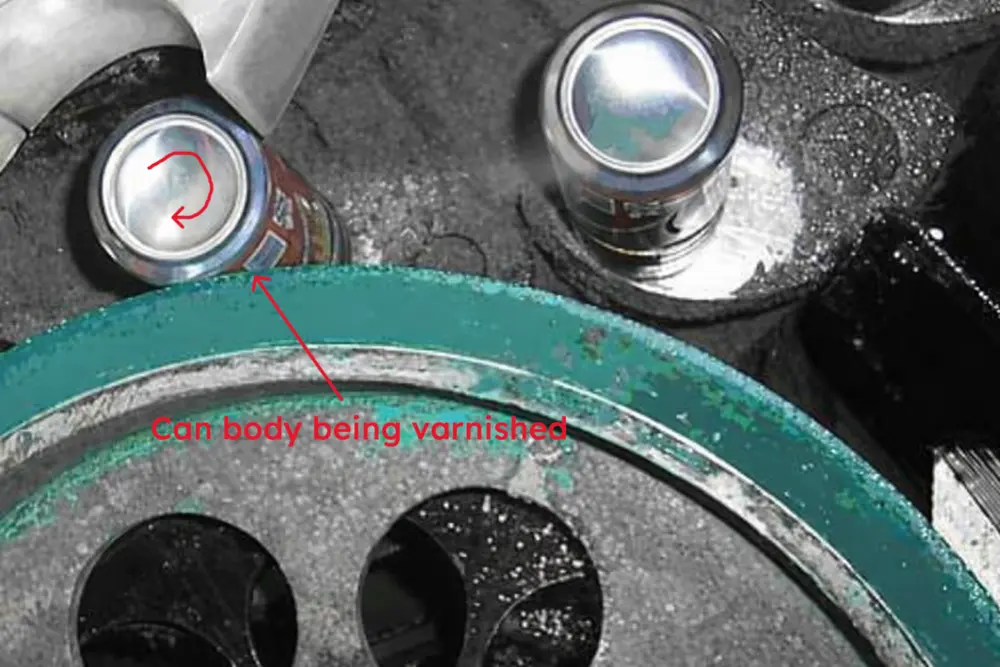
Aluminum beverage can body being coated with protective varnish on production line
Printed can bodies receiving final protective coating

4. Bottom rim coating, protecting the sharp lower edge of the can.
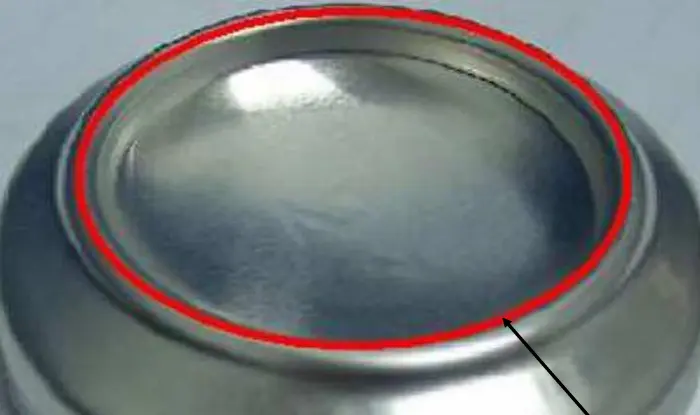
Close-up of domed aluminum can bottom for pressure resistance
Concave bottom profile designed for internal pressure strength

5. Final curing, ensuring all inks and coatings are fully hardened.
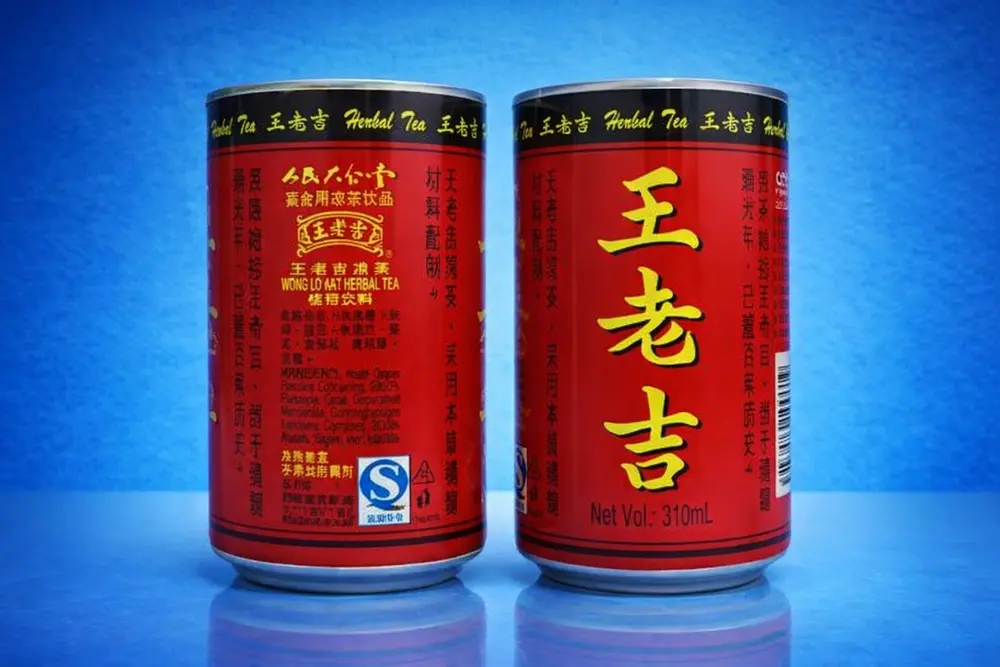
Printed aluminum beverage cans with offset graphics and cured exterior coating
Finished aluminum cans with multi-color offset printing and protective varnish
Procurement perspective: Evaluate ink suppliers for UV resistance to maintain print quality in storage.

Step 8: Internal Coating and Bottom Spray

A food-grade, transparent internal lacquer is sprayed onto the inside wall and bottom of the can. This coating prevents direct contact between the beverage and aluminum, ensuring product safety, taste stability, and corrosion resistance. The coating is then oven-cured.
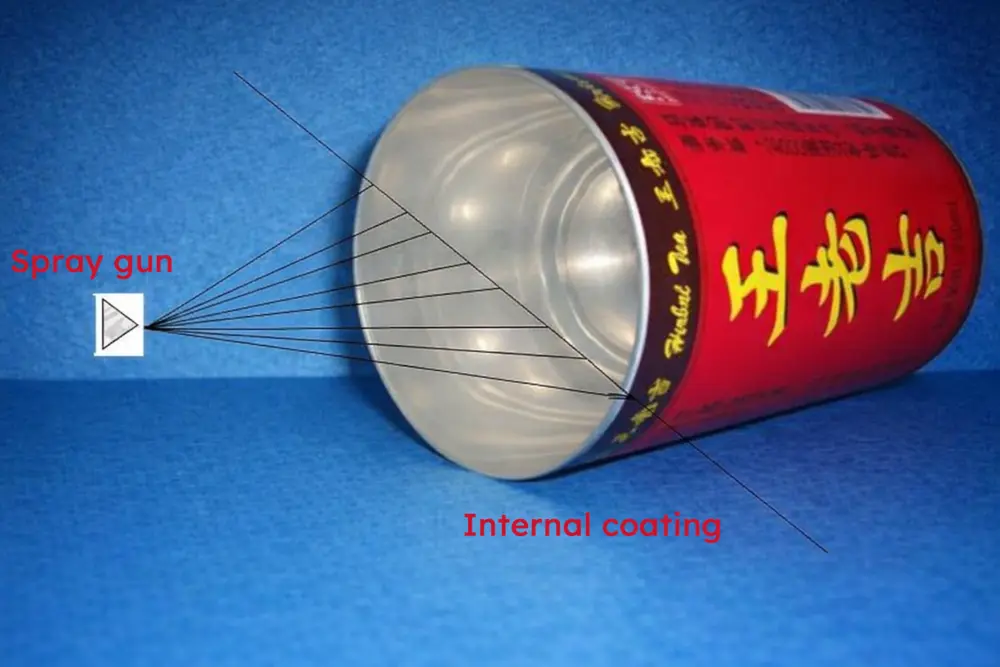
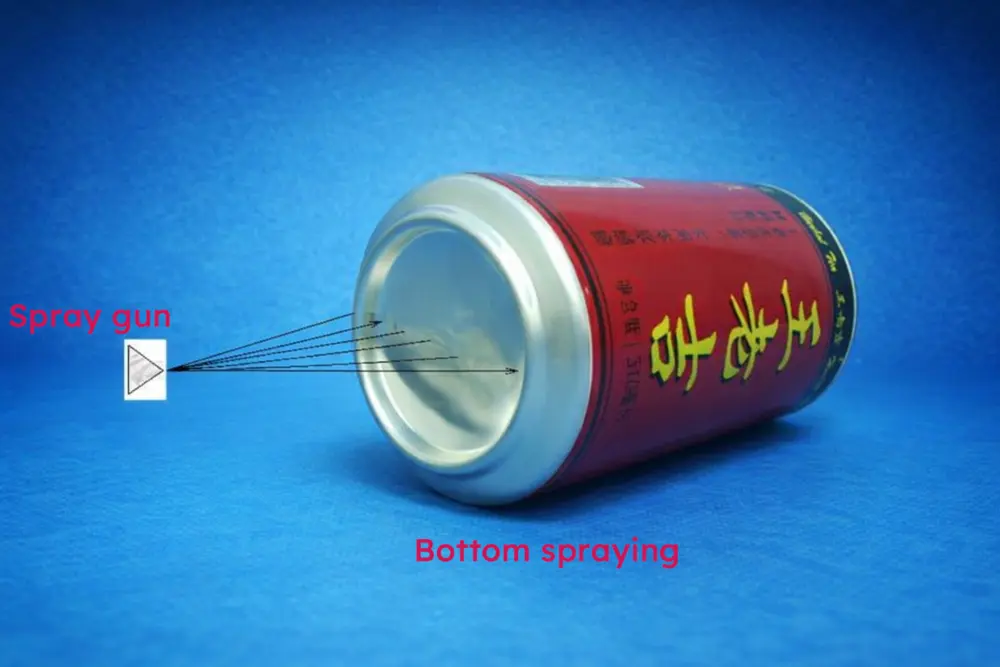
Internal lacquer spray gun applying food-grade coating to aluminum can body sidewall
Spray gun applying food-grade internal lacquer to the inner wall of an aluminum can body
Bottom spray application of internal coating on aluminum can body for corrosion protection
Focused spray application to coat the domed bottom area of the can body
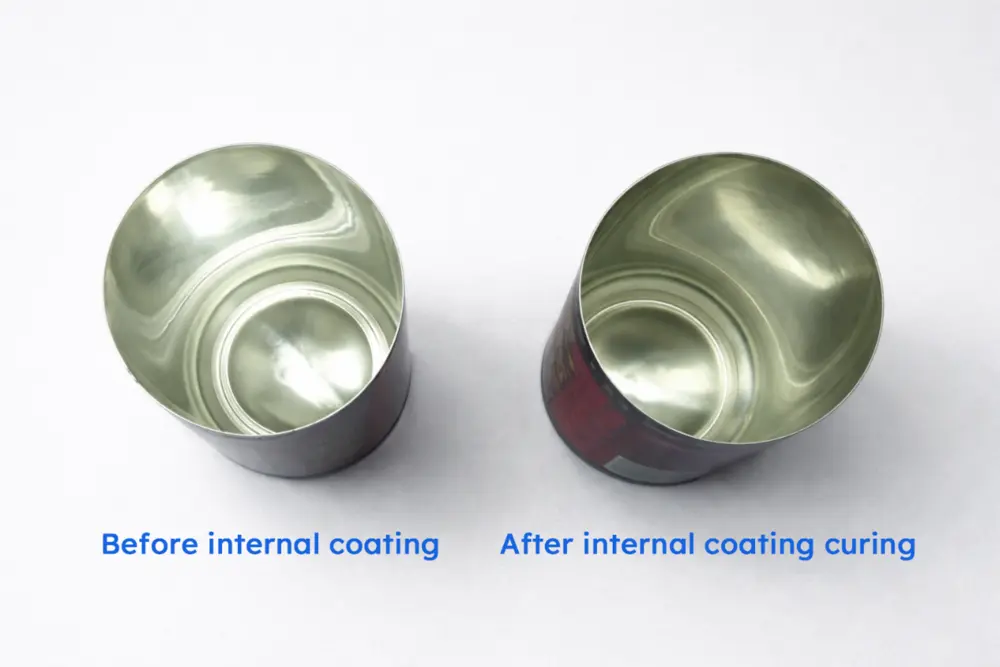
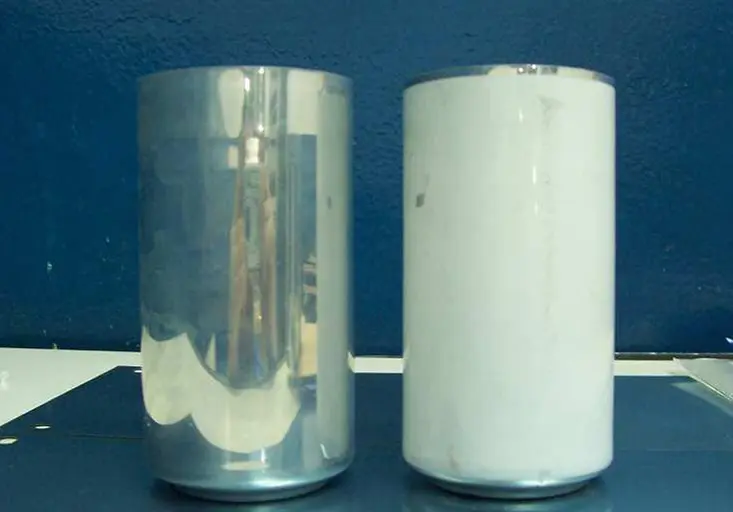
Comparison of aluminum can interior before and after internal lacquer curing
Left: raw aluminum interior before coating. Right: cured food-grade lacquer after oven baking
Engineering tip: Inspect coating thickness uniformity to mitigate corrosion risks in beverage applications.

Step 9: Necking

Using precision tooling, the open end of the can body is gradually reduced in diameter. This necking process allows the use of a smaller lid, reducing material consumption while maintaining sealing performance.
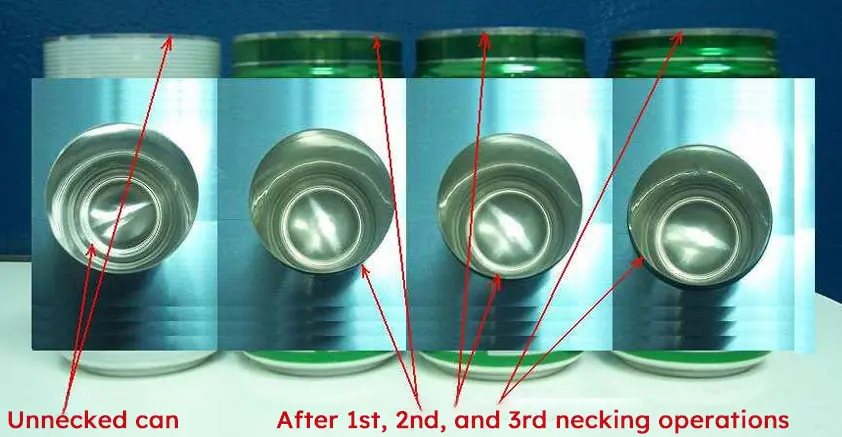
Aluminum can necking process showing unnecked can and progressive 1st, 2nd, and 3rd necking diameter reduction stages
Comparison of an unnecked aluminum can body and sequential necking stages reducing the top diameter
Procurement note: Choose tooling with tight tolerances to ensure consistent neck dimensions for seaming.

Step 10: Flanging

After necking, the can rim is flanged outward to form a uniform curl. This flange is critical for the later double-seaming operation, where the can end will be mechanically locked to the filled can.
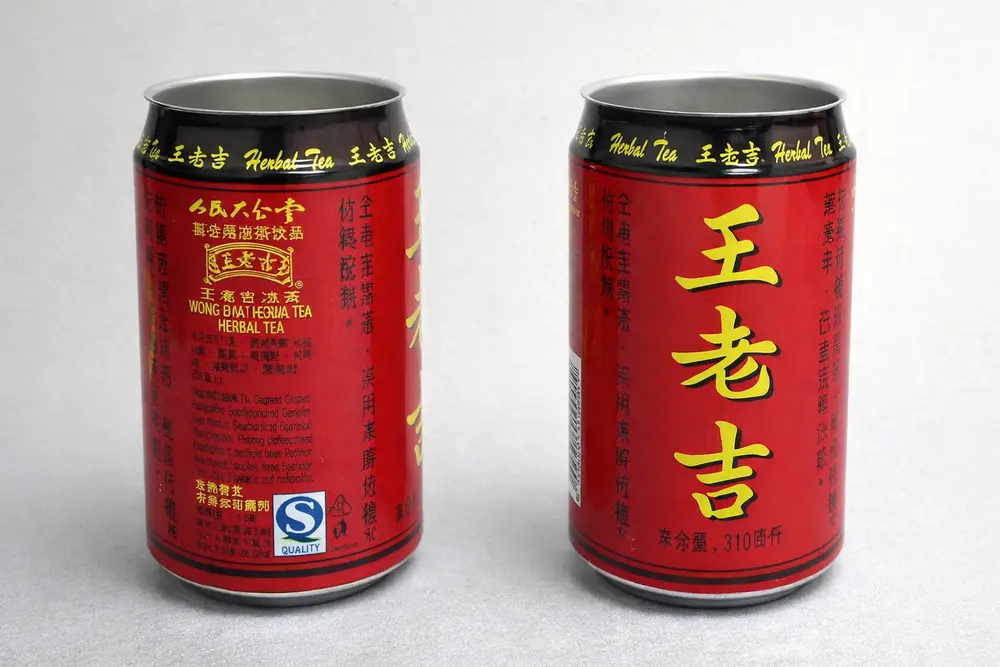
Printed and necked two-piece aluminum beverage can body with reduced top diameter for standard end seaming
Decorated two-piece aluminum can body after printing, necking, and preparation for lid seaming
Engineering perspective: Verify flange curl dimensions to avoid leaks in final assembly.

Step 11: Inspection and Internal Imaging

Every can body is inspected automatically:

  • Light inspection checks the exterior for cracks, pinholes, or dimensional defects.
  • Internal camera inspection examines the inner surface and coating quality.

Defective cans are automatically rejected from the production line.
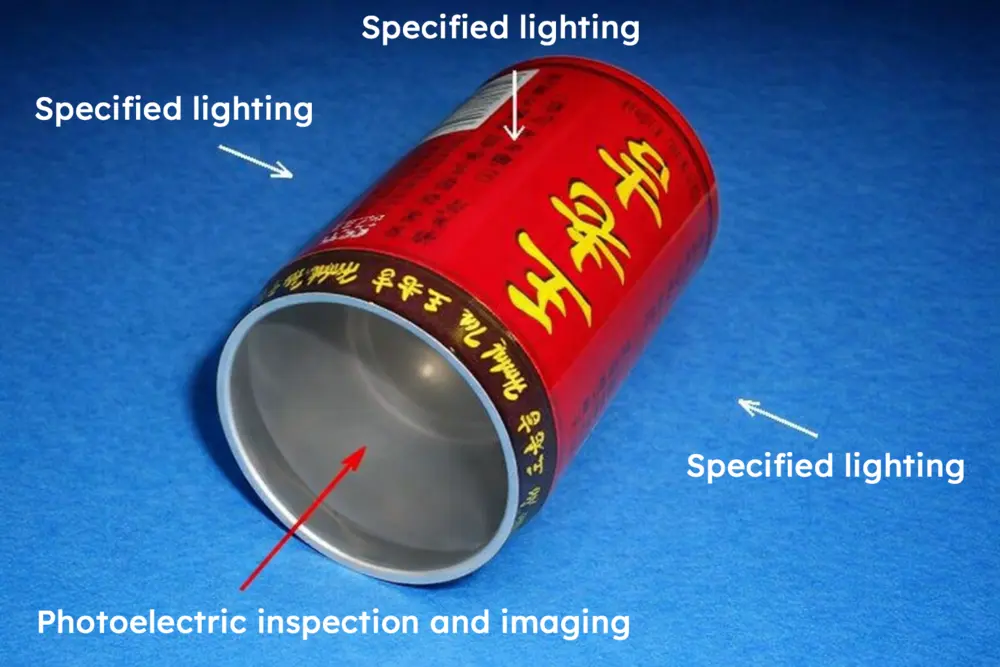
Photoelectric inspection system using specified lighting to detect surface and internal defects in aluminum can body
Specified lighting and imaging system used for automatic inspection of aluminum can body surface and interior
Procurement tip: Integrate inspection systems with high rejection accuracy to minimize waste.

Step 12: Palletizing and Packaging

Qualified can bodies are stacked, strapped, wrapped with protective film, labeled, and prepared for shipment to beverage filling plants.
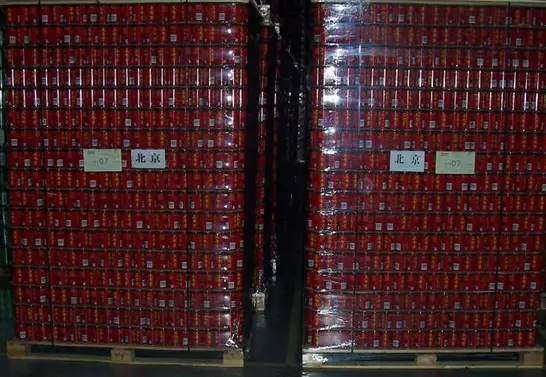
Palletized aluminum can bodies wrapped in protective film and prepared for shipment
Finished aluminum can bodies stacked on pallets, strapped and shrink-wrapped for safe transportation to beverage filling plants
Engineering note: Optimize palletizing for transport stability to prevent deformation en route.

FAQ

A: Post-ironing, the sidewall thickness is typically reduced to 0.1-0.15 mm with heights varying by can size, such as 115-180 mm for common beverage cans. Engineers should verify against specifications to ensure compatibility with filling equipment.

A: The concave dome enhances structural integrity, allowing the can to withstand internal pressures up to 6 bar without deformation. Procurement teams should prioritize this feature for carbonated beverage applications to minimize failure risks.

A: Necking reduces diameter to about 52-57 mm with tolerances of ±0.1 mm to ensure lid fit. Inconsistent tolerances can lead to sealing issues, so inspect tooling wear regularly during production.

A: Use internal imaging and holiday detection tests to check for pinholes or uneven coverage in the lacquer. For procurement, require suppliers to provide certification of food-grade compliance and corrosion test results.

A: Uneven rims can cause seaming failures, leading to leaks or structural weakness. Engineers should implement height checks post-trimming, while procurement focuses on machine precision specs to avoid rework costs.

A: Alloys like 3004 or 3104 are standard, but mismatches can affect formability and strength. Test coil samples for elongation and tensile properties before full procurement to ensure process compatibility.

A: The outward curl must be uniform at 1.5-2 mm to form a tight seal. Dimensional defects here increase leak risks; conduct pull tests on samples during acceptance to validate performance.

A: Water quality and chemical concentration must be controlled to avoid residue that impairs coatings. For procurement, select eco-friendly chemicals that meet regulatory standards without compromising corrosion resistance.


Social Share:

Contact us

Just fill the contact form with your requirements and we’ll get back to you within 24hrs.