
Aluminum bottles, due to their lightweight design, corrosion resistance, and high recyclability are widely used in packaging for beverages, alcoholic beverages, cosmetics, essential oils, pharmaceuticals, and industrial products. The cap, as the core sealing component, not only determines product sealing performance, shelf life, and safety but also directly affects user experience.
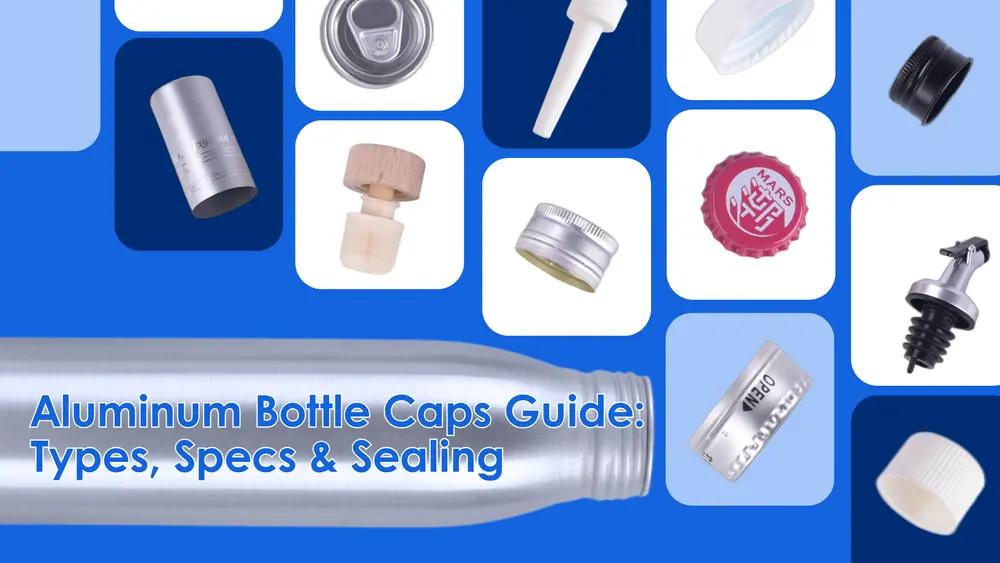
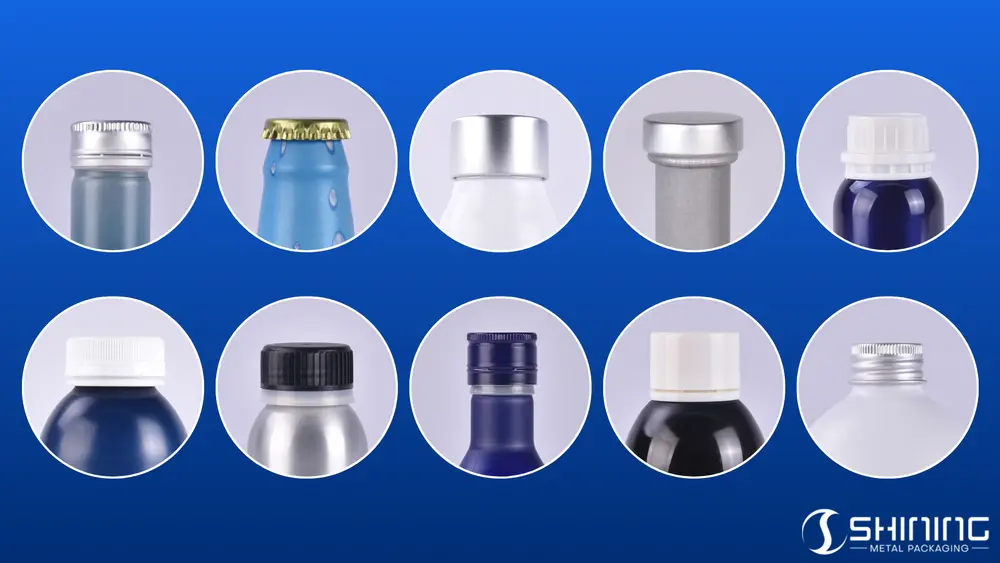
Aluminum bottle caps come in many varieties. Classified by function and structure, they include screw caps, aluminum tamper-evident caps (ROPP Cap), plastic tamper-evident caps, essential oil dedicated caps, cork stoppers, crown caps, pull-ring caps, child-resistant press-and-turn caps (CRC Cap), and Snap-on Lids, among others. This article, drawing on professional packaging knowledge and industry standards, analyzes the characteristics, specifications, sealing principles, application scenarios, and advantages of each type in detail to help you quickly understand the complete landscape of aluminum bottle packaging.
1. Screw Cap
The most conventional and universal aluminum bottle cap type. Materials include pure aluminum, PP plastic, or aluminum-plastic composite. Specifications are primarily based on thread correspondence, with common sizes of 18mm, 20mm, 22mm, 24mm, 28mm, 38mm, etc.
Sealing principle: The internal thread precisely engages with the external thread on the bottle neck to form an airtight seal, often paired with EPE, PE, or silicone inner liners to enhance leak prevention.
- Advantages include convenient capping, repeatable opening and resealing, simple operation suitable for both machine and manual use.
- Disadvantage is that it cannot indicate whether the cap has been opened; tamper evidence can only be added via heat shrink or a tamper-evident adhesive label at the connection between cap and bottle.
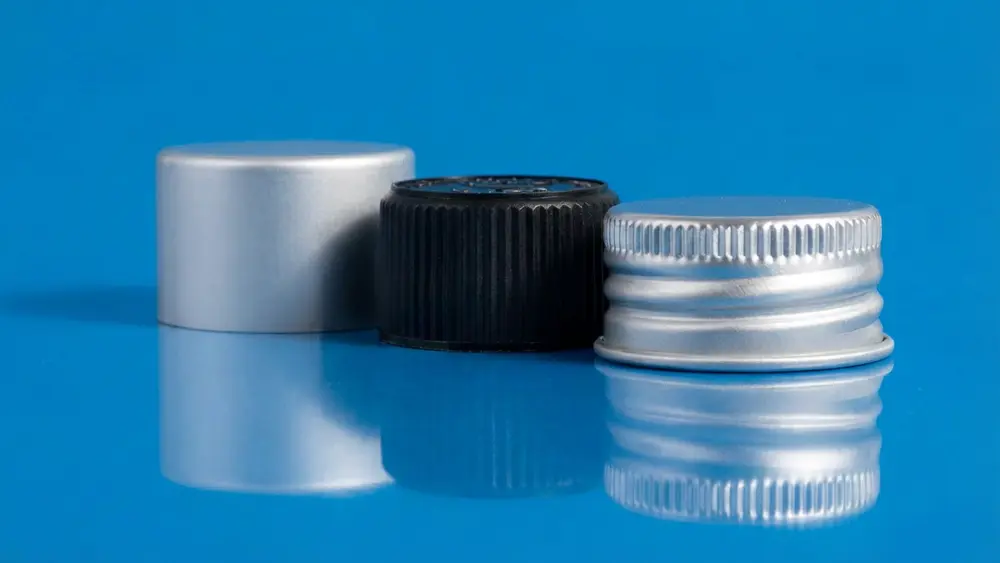
Aluminum Screw Caps
Formed by stretching aluminum sheet followed by thread rolling. Wall thickness is generally 0.21mm, 0.23mm, or 0.25mm. Environmentally friendly and fully recyclable. Standard color is natural aluminum; other colors require customization with typical MOQ of 30,000–50,000 pieces. Available in rolled-edge and non-rolled-edge versions; the rolled edge increases cap strength and reduces deformation risk. However, aluminum threads are not as deep as plastic threads, and the softer material can lead to stripping under high torque.
Plastic Screw Caps
Formed by single-step injection molding. Colors can be fully customized; standard options are black and white.
Aluminum-Plastic Composite Caps
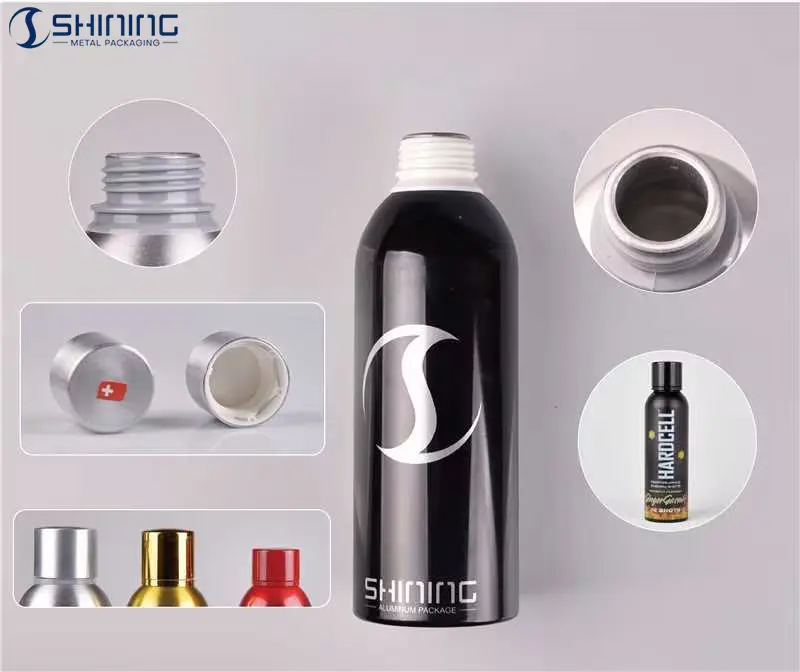
Typically feature a plastic inner core with an aluminum outer shell. This combines the clear, deep threading of plastic with the decorative finish of aluminum, while keeping threads unexposed for a more coordinated appearance with aluminum bottles.
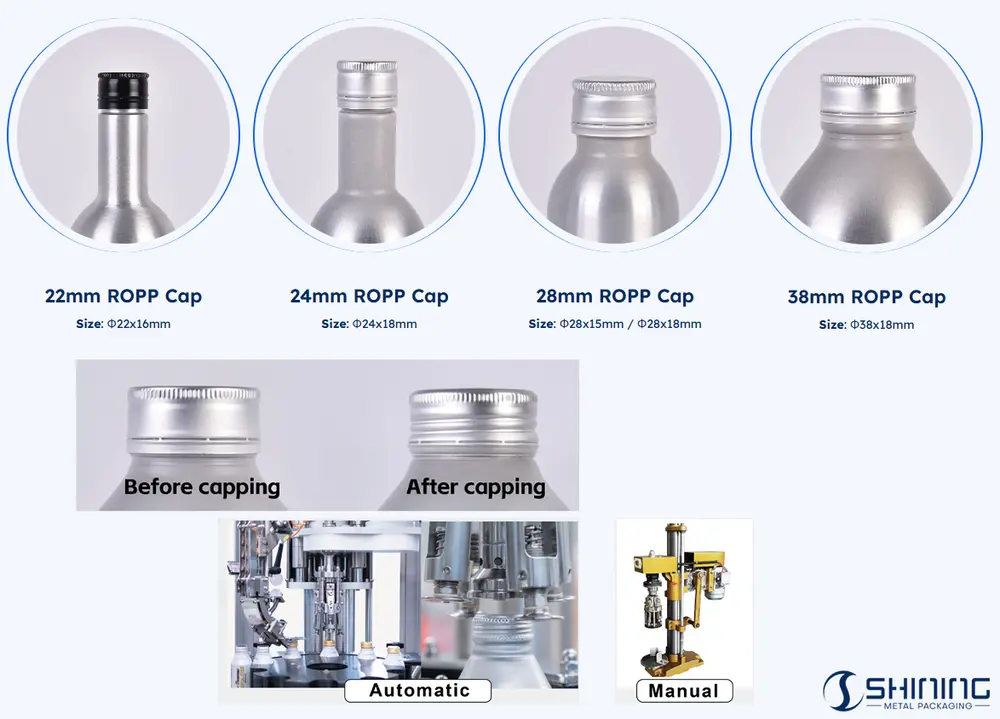
2. Aluminum Pilfer-Proof Cap (ROPP Cap / Roll-On Pilfer Proof Cap)
Built on the screw cap base with an added tamper-evident band at the bottom. During capping, a specialized roll-on machine rolls the cap edge into threads while simultaneously locking the band into the bottle neck. Upon opening, the band breaks and remains on the bottle neck, creating a permanent visible indication to prevent secondary filling.
Aluminum thickness is typically 0.21–0.23mm, with mainstream specifications of 24mm, 28mm, 30mm, and 38mm. The aluminum ROPP cap is the most widely used type for aluminum bottles in beverages, beer, wine, spirits, and juice, and fully complies with food safety standards.
- Advantages: Irreversible tamper-proof design significantly enhances product safety and consumer trust; extremely strong sealing that blocks oxygen and moisture; with suitable liners, it can withstand 5–6 bar pressure; cost-effective and surface-printable. The term “ROPP” has become the global standard for alcohol packaging, with many premium vodkas and whiskeys adopting this cap.
- Disadvantage: Requires a dedicated roll-on capping machine, so professional filling facilities.
3. Plastic Pilfer-Proof Cap
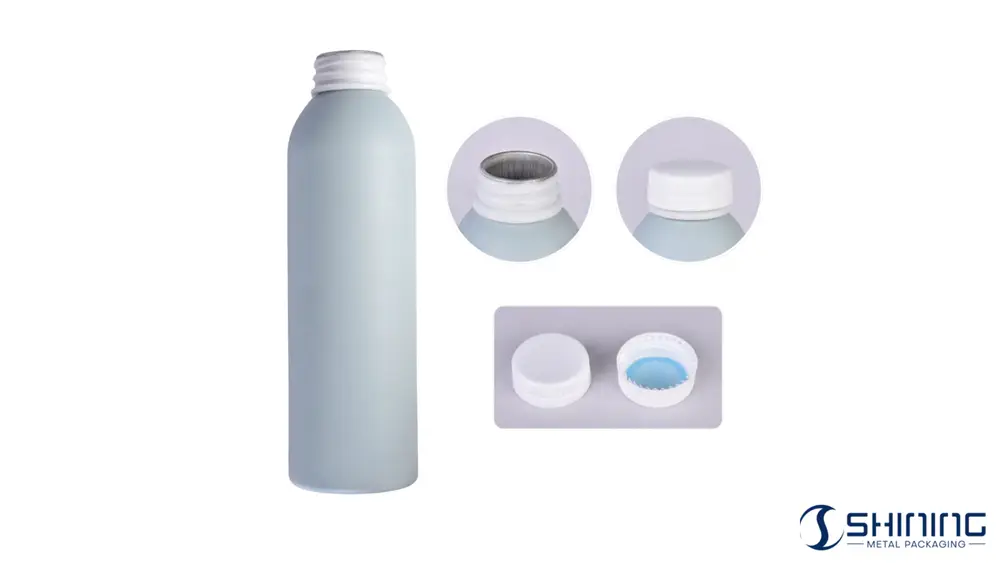
Aluminum bottle threads are less pronounced than those on plastic or glass bottles, so a standard plastic cap’s tamper-evident band may lift without breaking. To address this for clients using existing plastic capping lines, a plastic thread seat ring is added to the aluminum bottle neck. The base snaps tightly onto the neck and is secured by the aluminum curl. When the upper cap is opened, the ring breaks and remains permanently on the base, providing clear tamper evidence.
Material is primarily PP for lightness and impact resistance. Commonly used in beverages and daily liquid packaging.
- Advantages: No need to modify existing production lines; suitable for refill applications because aluminum ROPP caps have limited durability for repeated use.
- Disadvantages: Higher overall cost due to the extra base and installation step; aluminum bottle recycling is less convenient as the plastic component must be separated.
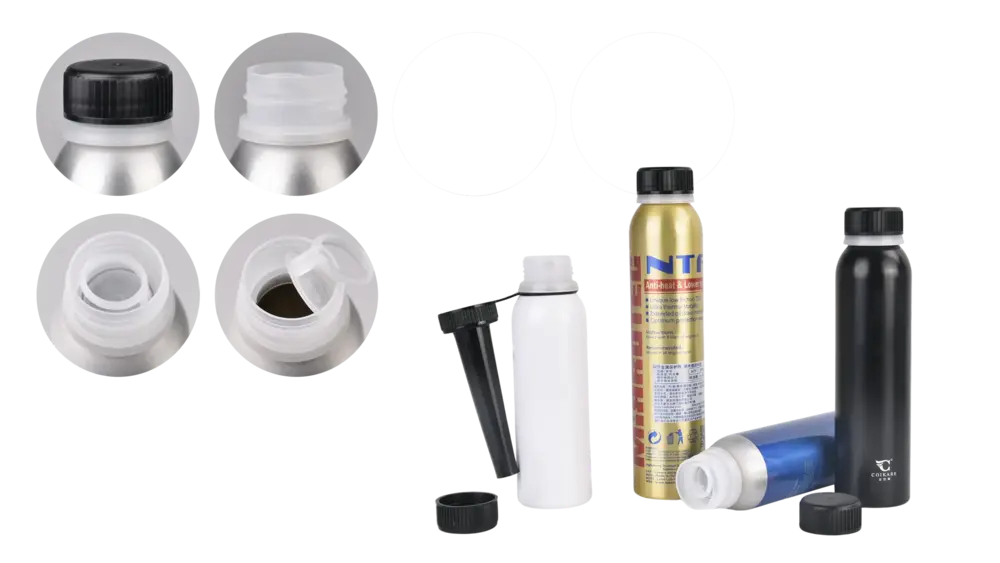
4. Essential Oil Dedicated Cap
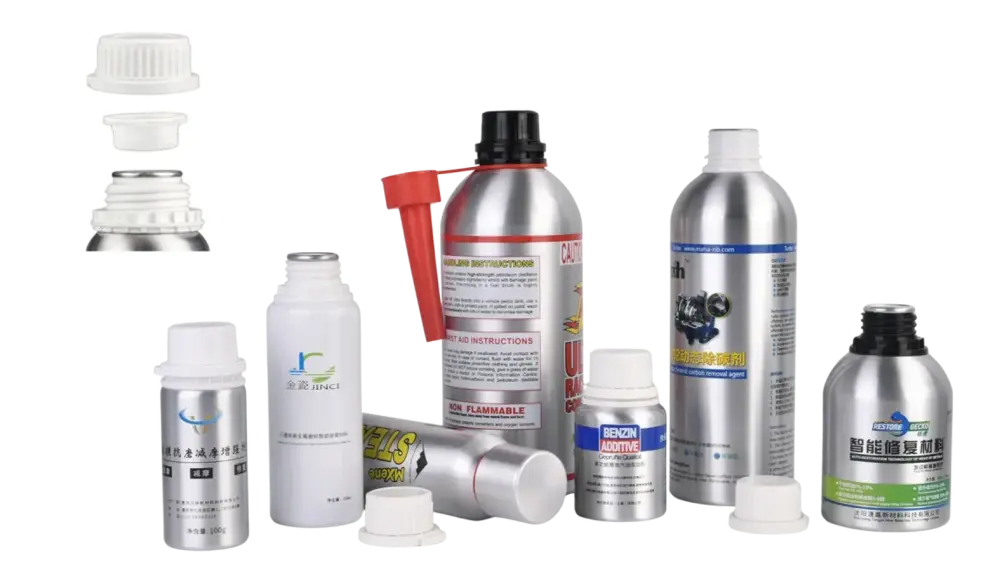
Structurally identical to the plastic pilfer-proof cap but specifically designed for light-sensitive premium liquids such as essential oils and reagents. It consists of a plastic base ring, upper cap with tamper-evident ring, and a pull-ring inner stopper. The base fits over the aluminum bottle; the inner stopper provides double sealing to prevent volatilization or leakage. Plastic cap sizes are mainly 32mm, 45mm, and 65mm depending on bottle diameter. Usage involves first pulling the outer anti-theft ring, unscrewing the cap, then extracting the inner stopper.
- Advantages: Double tamper-proof protection plus inner stopper effectively blocks volatile or highly permeable contents. Widely used in pharmaceuticals, aromatherapy, and cosmetics. An optional plastic funnel can be threaded onto the neck for controlled pouring.
- Disadvantages mirror those of standard plastic pilfer-proof caps: higher cost and less convenient recycling.
5. Cork Stopper (Oil Bottle Cap)
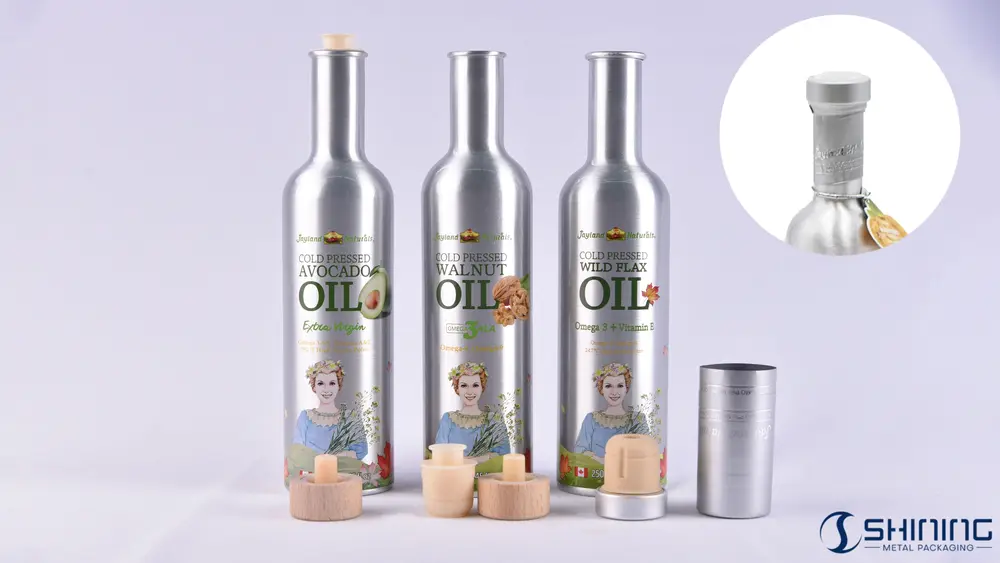
The traditional preferred closure for alcoholic beverages (natural, synthetic cork, or high-polymer material). Cork is soft and elastic, achieving a perfect fit with the bottle neck while allowing slight micro-permeability that lets wine “breathe” slowly during aging, enhancing aroma and smoothness. Primarily used for wine and whiskey maturation; also applied to edible oils with a two-piece structure (inner stopper controls pour volume, outer provides sealing).
- Advantages: Natural material with no off-odors, excellent sealing combined with controlled micro-oxidation.
- Disadvantages: Requires external heat-shrink sleeve for security.
6. Crown Cap
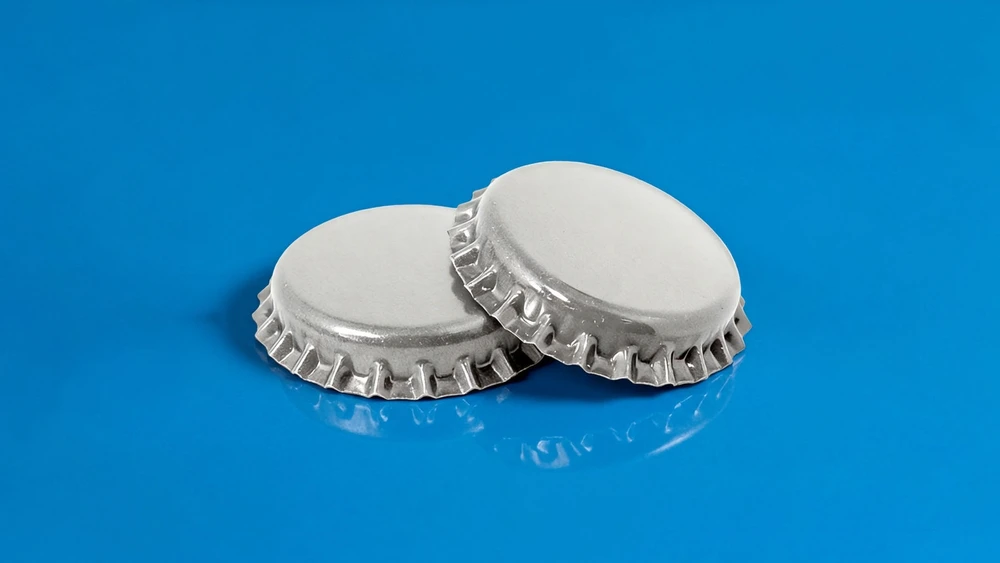
The classic standard for beer bottles, with a standardized dimension of 26.6mm (bottle neck outer diameter), commonly called “Crown.” Material is primarily tinplate/iron with 21 tooth-like pleats along the edge to ensure secure crimping and rust resistance. Capping requires a dedicated crown capping machine to press the cap tightly onto the neck.
- Advantages: Extremely fast sealing, low cost, ideal for high-speed beer production lines; classic appearance that supports easy brand printing.
- Disadvantage: Opening requires a separate tool (bottle opener).
7. Pull Ring Cap (Tear-Off Cap)
Generally aluminum, an upgraded version of the crown cap that requires no tool for opening. Same 26.6mm dimension. The cap surface features a pre-cut tear strip or pull ring; pulling upward tears open the central sealing panel for destructive opening.
Mainly used for beverages, juices, and some alcoholic products.
- Advantages: Highly convenient one-pull opening, complete tamper-proofing (non-restorable); lightweight aluminum suitable for on-the-go consumption. Professionally termed “Tear-Off Aluminum Cap,” often paired with an EPE liner. Commonly seen in beer and energy drinks, combining crown aesthetics with easy-open convenience.
- Disadvantage: Higher cost than standard crown caps.
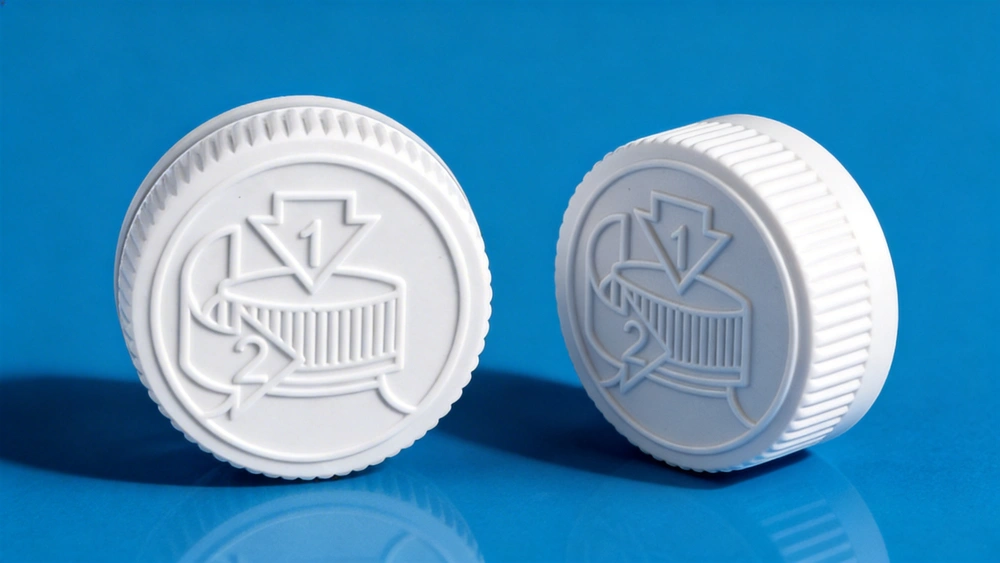
8. Press-and-Turn Cap / Child-Resistant Cap (CRC Cap)
Double-layer PP construction with integrated child-protection lock. Opening requires simultaneous downward pressure and rotation (push-and-turn) to prevent accidental access by children under five years old.
Widely applied to medicine bottles, reagent bottles, e-liquid bottles, essential oil bottles, and chemical products. Fully compliant with US CPSC (PPPA standard) and ISO 8317 testing: child opening rate <15% within 5 minutes, adult success rate 90%.
- Advantages: Prioritizes safety while retaining full screw-reseal functionality; can integrate a tamper-evident ring. This is the standard choice for premium pharmaceutical and e-liquid packaging on aluminum bottles.
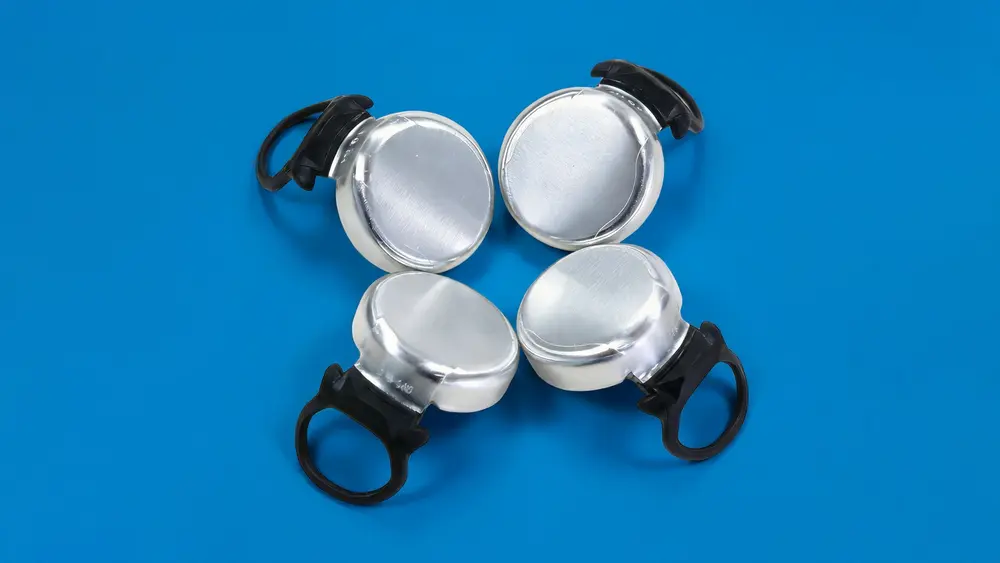
9. Snap-on Lid (Bayonet-Type Aerosol Can Cap)
Specifically engineered to overcome the limitation of threaded connections on aerosol cans. The bottom uses a bayonet design that precisely snaps into the standard 25.4mm (1-inch) curl mouth of aerosol cans. The upper section incorporates threading and a pull ring for tamper evidence and enhanced sealing; the thread allows attachment of additional caps or funnels. Commonly used for gasoline additives, industrial sprays, and lubricants. Ideal companion for both aluminum and tinplate aerosol cans.
Common Neck Finish Specifications Reference
| Cap Type | Common Diameters (mm) | Primary Applications |
|---|---|---|
| Screw Cap | 18, 20, 22, 24, 28, 38 | Cosmetics, personal care, daily chemicals |
| ROPP Cap | 24, 28, 30, 38 | Beverages, beer, wine, spirits, juice |
| Crown / Pull-Ring Cap | 26.6 | Beer, energy drinks |
| CRC Cap | 24, 28, 38 | Pharmaceuticals, e-liquids, reagents |
| Snap-on Lid | 25.4 (curl) | Fuel Additive, industrial sprays, lubricants |
Although aluminum bottle caps appear to be minor components, they represent the final and critical line of defense for packaging safety. Selecting the correct type not only extends shelf life and improves user satisfaction but also supports brand differentiation. If you are currently selecting caps for your aluminum bottle project, we recommend performing full compatibility validation based on content viscosity, target market, and capping equipment conditions to ensure zero leakage.
This technical guide aims to equip you with comprehensive knowledge of aluminum bottle caps. For detailed specification parameters, custom samples, please provide additional product details for further discussion.
Frequently Asked Questions
A: Aluminum bottles and caps offer nearly 100% recyclability without any loss in material quality. Global aluminum packaging recycling rates frequently exceed 60%, and using recycled aluminum saves more than 95% of the energy required for virgin production, making it one of the most sustainable packaging choices available.
A: ROPP caps deliver irreversible tamper-evident protection, superior oxygen and moisture barrier properties, and pressure resistance up to 5–6 bar. They have become the global industry standard for alcoholic beverages, significantly boosting consumer confidence and product integrity.
A: Aluminum screw caps are fully recyclable, offer a premium metallic finish, and are produced by sheet stretching and rolling, but their softer material and shallower threads can strip under high torque. Plastic caps provide deeper threads and easier color customization but are less environmentally friendly and require separation during recycling.
A: Yes, especially for products that could be hazardous if ingested. CRC caps meet strict US CPSC (PPPA) and ISO 8317 standards (child opening rate <15% in 5 minutes), while still allowing adult resealing and optional tamper-evident integration.