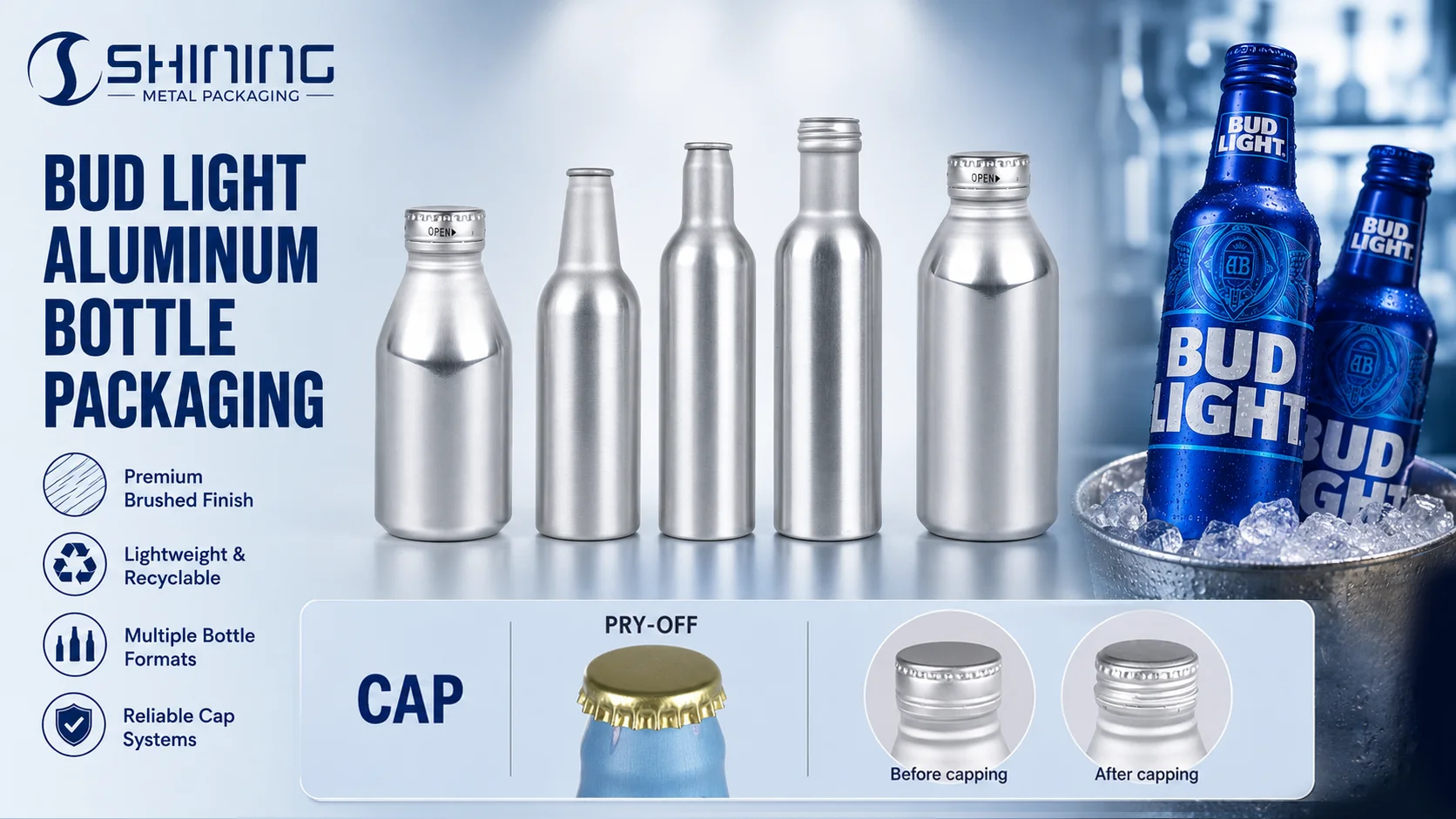
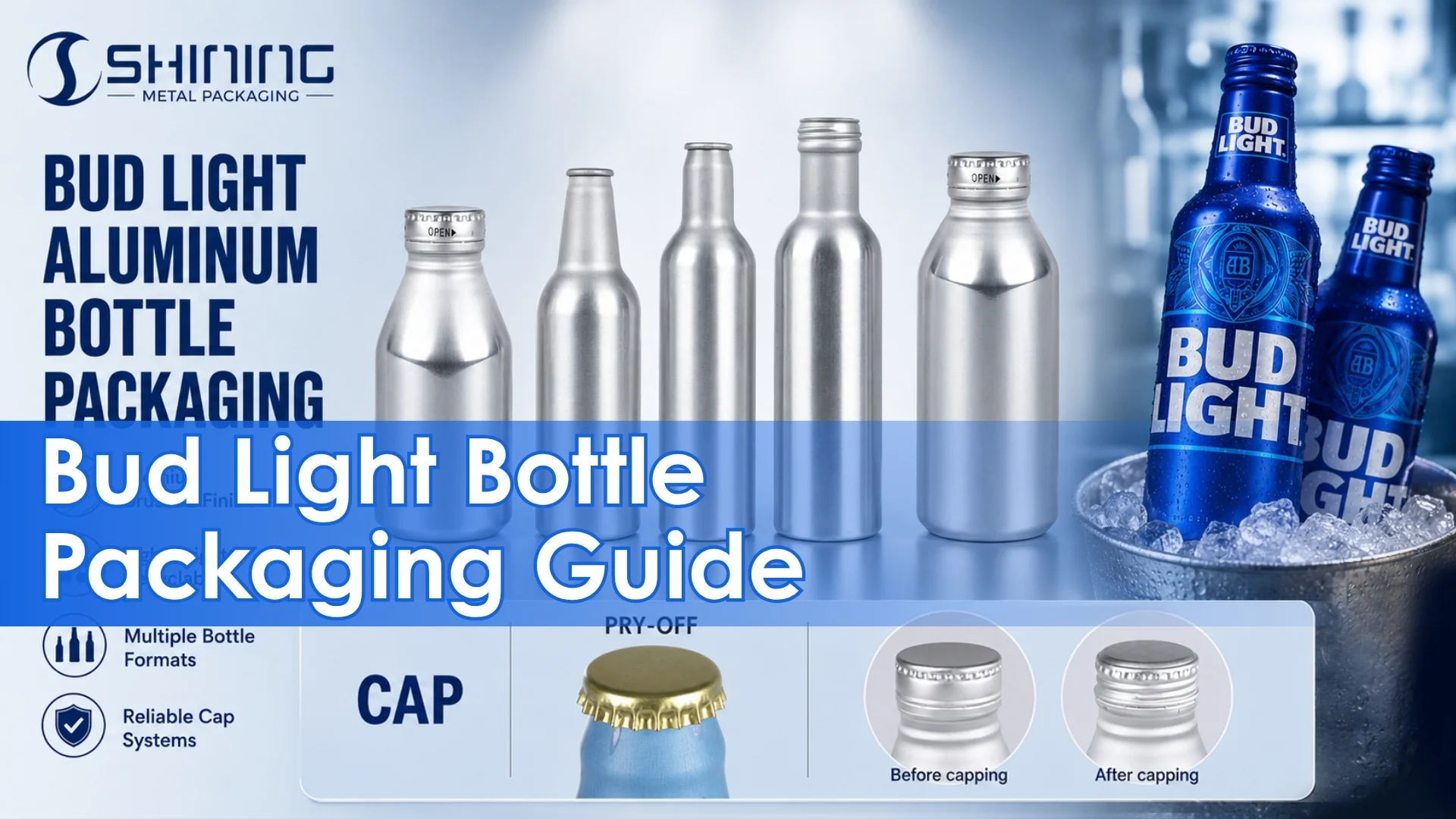
The 16 fl oz Bud Light aluminum bottle is most useful when it is treated as a distinct consumption format—not simply a metal substitute for glass or a more expensive version of the standard beer can.
1. An Easy-Drinking Brand Needs an Easy-to-Handle Package
“Easy to drink, easy to enjoy.”
That statement on the official Bud Light product page is unusually relevant to packaging. Bud Light is a 4.2% ABV American light lager built around a four-ingredient recipe, with 110 calories and 6.6 grams of carbohydrates per 12 fl oz serving. Its proposition is familiarity, low decision effort and repeatable refreshment rather than brewing complexity.
The Bud Light aluminum bottle translates that proposition into a physical action. The currently listed 16 fl oz format retains the recognisable act of drinking from a bottle while using a twist-off aluminum package that can be opened without a tool and closed again during a short interruption. That behavior matters at a tailgate, in a stadium-adjacent setting, beside a grill or while moving between social spaces.
Three product-specific facts establish the packaging logic. The bottle is larger than the standard 12 fl oz serving, it uses Bud Light’s high-recognition blue graphic system across a tall metal surface, and it adds a closure action that an ordinary pull-tab can does not provide. Together, those decisions position the package as a mobile version of mainstream bottled beer rather than an attempt to turn Bud Light into a luxury product.
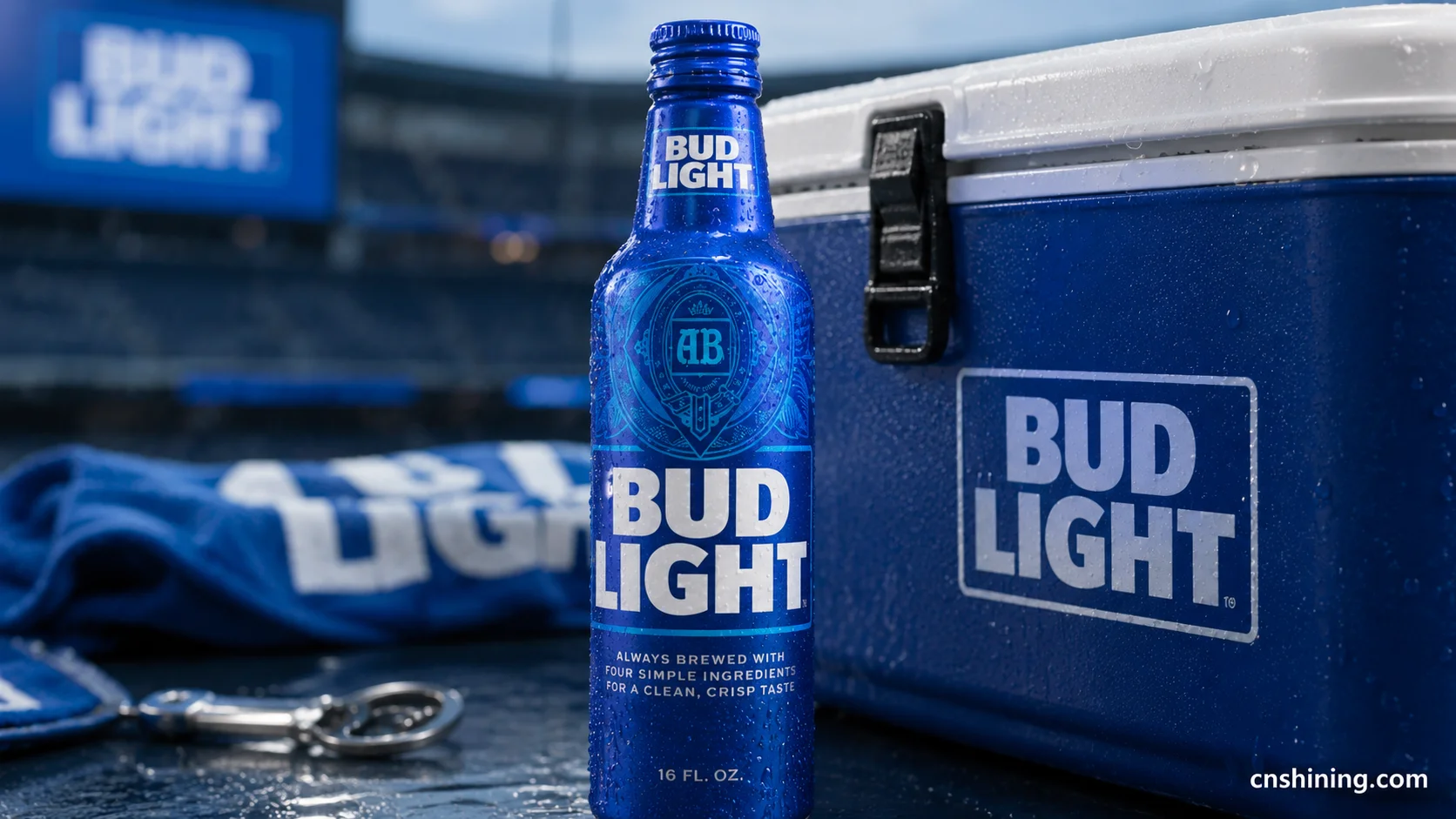
2. Why the Bud Light Aluminum Bottle Is Not Just Another Can
Bud Light already has a highly efficient can system, so the aluminum bottle does not need to win an abstract material contest. Its role is narrower: preserve the bottle ritual, improve suitability for places where glass is inconvenient, create a larger tactile and graphic object, and allow the drinker to interrupt consumption with less spill exposure than an open can.
That distinction is visible in retail language. A current 20-pack aluminum-bottle listing connects Bud Light with beach days, watching a game and backyard barbecues. Those settings share a packaging tension: the beer should feel familiar and informal, but the container must tolerate movement, crowded coolers and temporary pauses better than an open glass bottle or can.
The metal surface also makes cold immediately legible to the hand. For Bud Light, that tactile cue supports the product’s crisp, uncomplicated identity without requiring elaborate decoration or a heavy premium narrative. The tall bottle silhouette supplies the upgrade; the brand’s bold blue field and large wordmark should remain visually direct.
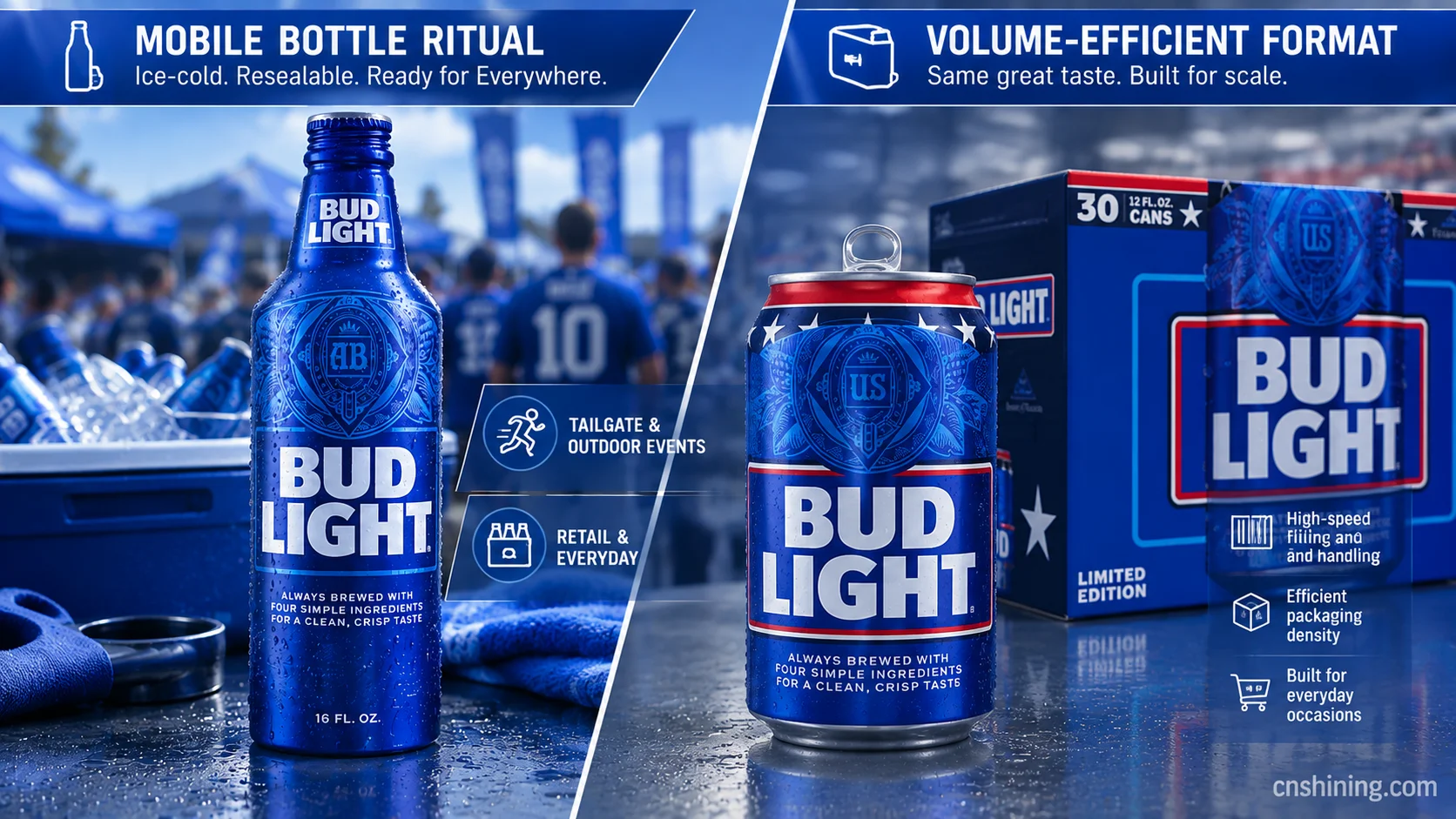
This is also where restraint matters. The aluminum bottle should not be presented as the universal replacement for Bud Light cans. Standard cans remain better suited to the lowest packaging cost, high-speed volume production, compact palletisation and broad multipack distribution. The bottle earns its place when mobility, resealing, event access and display presence are worth more than maximum line and freight efficiency.
3. The Package Is Defined by Its Interfaces, Not Its Silhouette
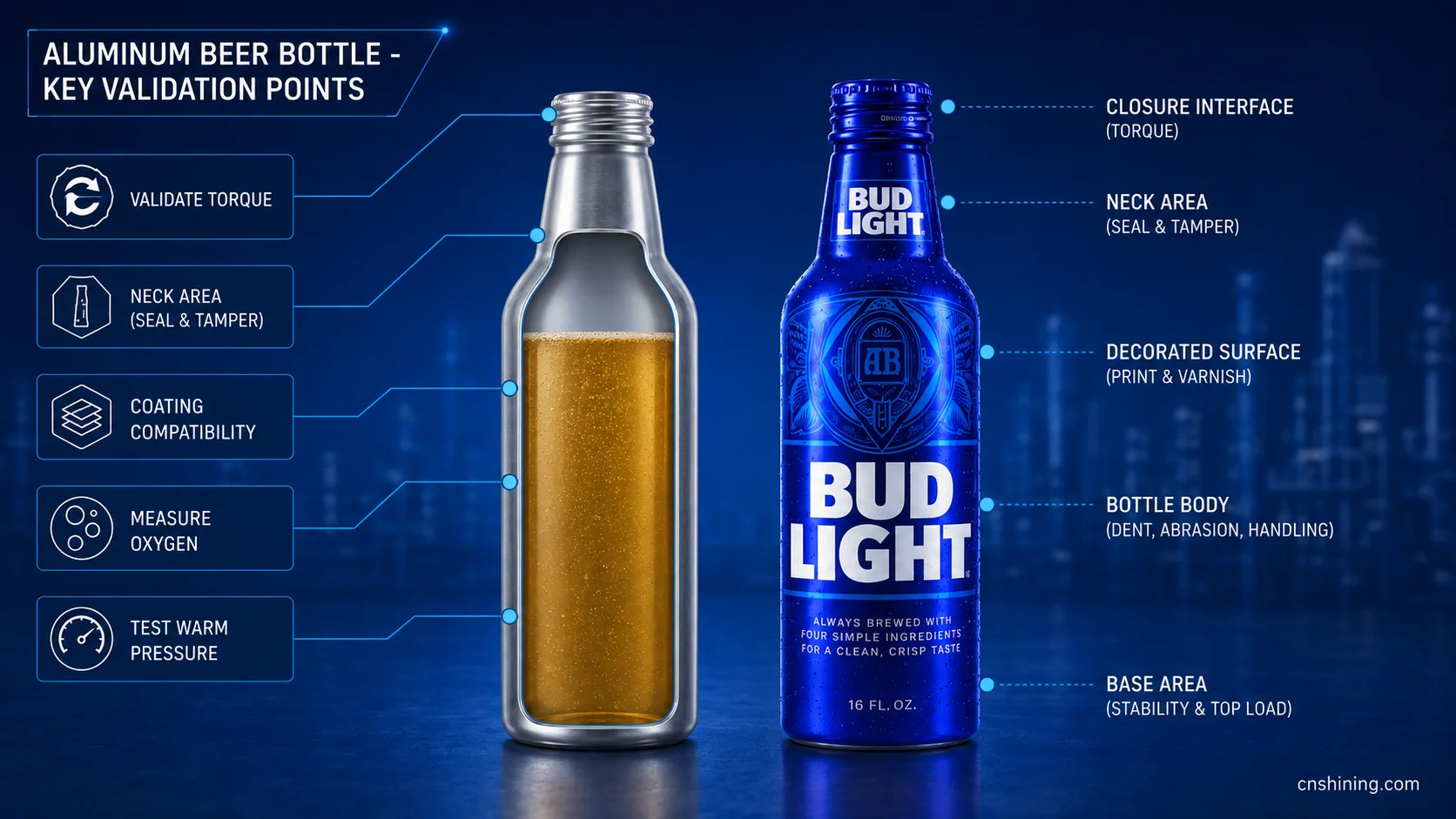
A recognisable bottle shape may attract attention, but the technically decisive components are hidden or easy to overlook. Carbonated beer places simultaneous demands on the body, internal coating, headspace, neck, cap liner and sealing interface. A development sample that looks correct can still fail through flavor change, pressure loss, cap-torque variation, liner incompatibility or decoration damage.
| Package element | Function for Bud Light | Development evidence required |
|---|---|---|
| 16 fl oz aluminum bottle body | Provides a familiar bottle grip, tall branded surface and non-glass event format. | Dent tolerance, base stability, top-load performance, drop exposure and transport abrasion. |
| Twist-off, reclosable interface | Supports tool-free opening and short pauses during mobile consumption. | Application torque, opening torque, liner compression, tamper evidence, reclosing leakage and short-term carbonation retention. |
| Internal coating and cap liner | Separate the beer from direct metal contact and protect sensory stability. | Real-product storage, accelerated compatibility, corrosion inspection, migration documentation and sensory assessment. |
| Pressure and oxygen control | Maintain carbonation and limit flavor deterioration during the intended shelf life. | CO₂ retention, dissolved oxygen, total package oxygen, warm-storage pressure and temperature-abuse testing. |
| Blue decorated surface | Maintains instant Bud Light recognition and supports seasonal or sports-led graphic variants. | Color tolerance, varnish adhesion, scuff resistance, condensation exposure and batch-code readability. |
Regulatory planning should happen before artwork is finalised. U.S. malt beverage labels must accommodate mandatory information including the brand name, class or type, net contents and responsible company details under the TTB malt beverage labeling requirements. A 16 fl oz container also falls within the 2 mm minimum type-size tier for the federal alcohol health warning statement.
Food-contact compliance must be equally use-specific. Coatings, liners, colorants and other packaging components fall within the FDA’s framework for substances that contact food. A general statement that a coating is “food grade” is not a substitute for confirming its suitability for the actual beer, alcohol level, filling process, storage temperature and shelf-life programme.
4. Competitive Set: 16 fl oz Aluminum-Bottled American Lagers
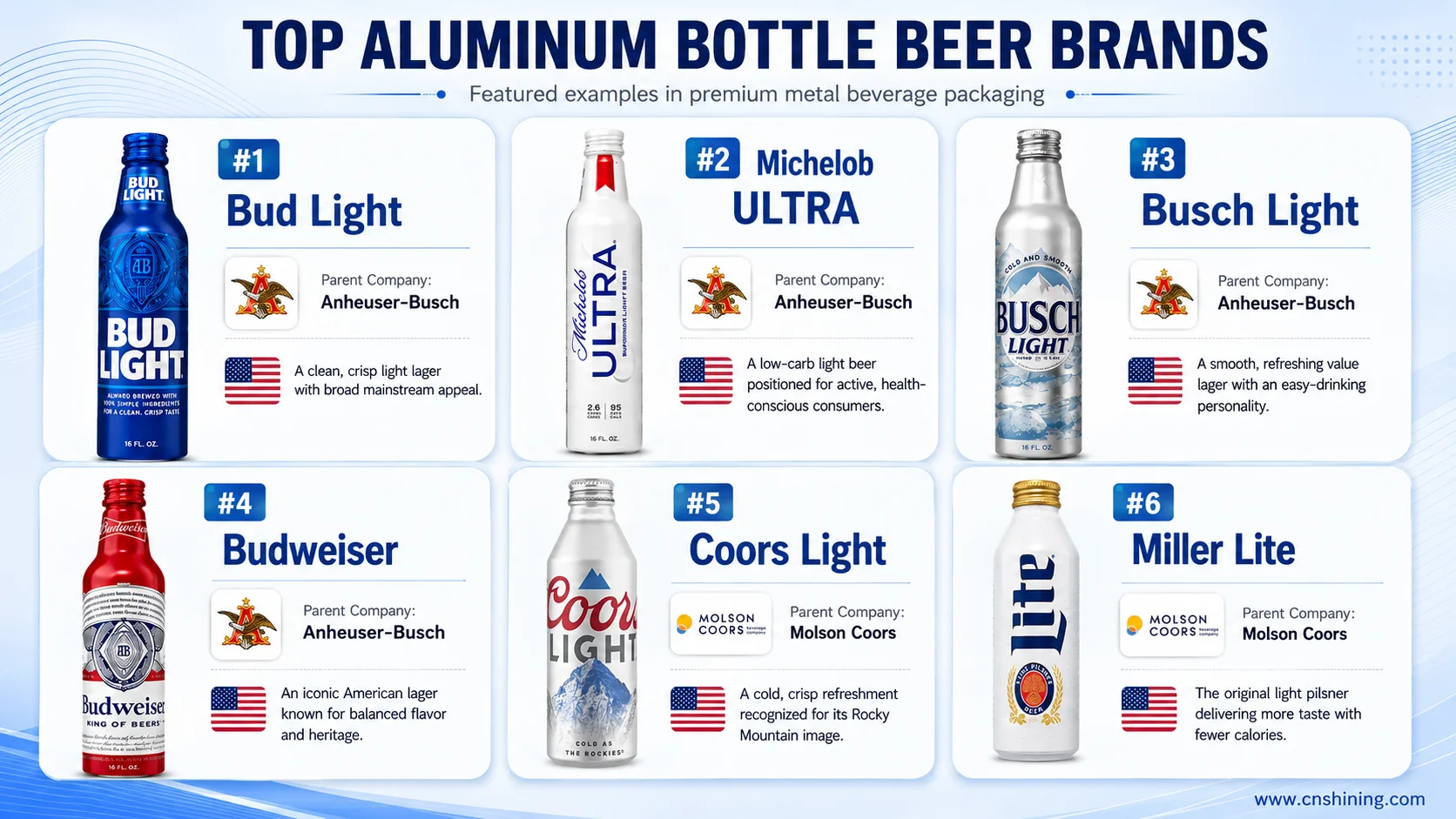
Aluminum bottles are already established across mainstream U.S. lager brands, so Bud Light cannot rely on the material alone as a differentiator. The comparison below focuses on current 16 fl oz finished-beer products with publicly visible retail listings. Per-bottle prices are calculated from the listed multipack totals rather than presenting a case price as a single-unit price.
| Brand | Country | Parent company | Capacity | Observed retail price | Core selling point |
|---|---|---|---|---|---|
| Bud Light | United States | Anheuser-Busch InBev | 16 fl oz | Approx. US$1.25 per bottle | Easy-drinking light lager tied to tailgates, games, grilling and broad social occasions. |
| Coors Light | United States | Molson Coors Beverage Company | 16 fl oz | Approx. US$1.12 per bottle | Cold-refreshment language, low bitterness and highly visible silver packaging cues. |
| Miller Lite | United States | Molson Coors Beverage Company | 16 fl oz | Approx. US$1.12 per bottle | 96-calorie light lager with a more explicit hop-forward and low-carbohydrate message. |
| Michelob ULTRA | United States | Anheuser-Busch InBev | 16 fl oz | Approx. US$1.36 per bottle | Active-lifestyle positioning supported by 95 calories and 2.6 grams of carbohydrates. |
| Busch Light | United States | Anheuser-Busch InBev | 16 fl oz | Approx. US$0.92 per bottle | Value-oriented outdoor and group-occasion positioning with a “cold and smooth” message. |
| Budweiser | United States | Anheuser-Busch InBev | 16 fl oz | Approx. US$1.28 per bottle | Classic 5% ABV American lager built around heritage, gatherings and a fuller beer identity. |
The price pattern clarifies Bud Light’s competitive position. It sits above the most value-led aluminum-bottle offer, close to the large mainstream lager set and below the lifestyle premium visible in Michelob ULTRA’s snapshot. Its strongest distinction is therefore not calorie leadership, heritage or the lowest unit price.
Bud Light’s defensible territory is the combination of an uncomplicated light lager, a highly recognisable blue bottle and a consumption occasion centred on games, tailgating, grilling and mobile socialising. Coors Light owns a colder visual code, Miller Lite places more weight on taste credentials, Michelob ULTRA connects packaging to an active identity, Busch Light competes through value and outdoor culture, and Budweiser uses the same format to reinforce tradition. Bud Light is most coherent when it makes the bottle feel like the easiest package for the occasion.
5. A Scene-Specific Bottle, Not a Total Packaging Replacement
The strongest conclusion is not that Bud Light should migrate all beer into aluminum bottles. The brand benefits from a divided packaging system: standard cans should continue to handle high-volume, price-sensitive and operationally efficient distribution, while the 16 fl oz aluminum bottle should be used where bottle-style drinking, non-glass access, visual presence and temporary reclosure have measurable value.
This approach also gives the bottle a clearer development brief. Its success should be judged by opening consistency, leak resistance, short-cycle reclosure, carbonation retention, flavor stability, dent control and surface durability—not by how many generic aluminum benefits can be placed in the marketing copy. Seasonal graphics and sports programmes can change, but the bottle geometry, closure behavior and Bud Light blue recognition system should remain stable enough to build familiarity.
For pilot development, Shining Packaging can coordinate inner-coating compatibility, thread and closure matching, decoration durability and pre-production validation around the selected beer and filling process.
The useful strategic insight is that the Bud Light aluminum bottle does not need to make the beer feel rare. It needs to make a familiar beer work better in the moments that already belong to the brand. When the package is engineered around that narrow promise, the resealable bottle becomes a recognisable game-day tool rather than a decorative packaging experiment.