
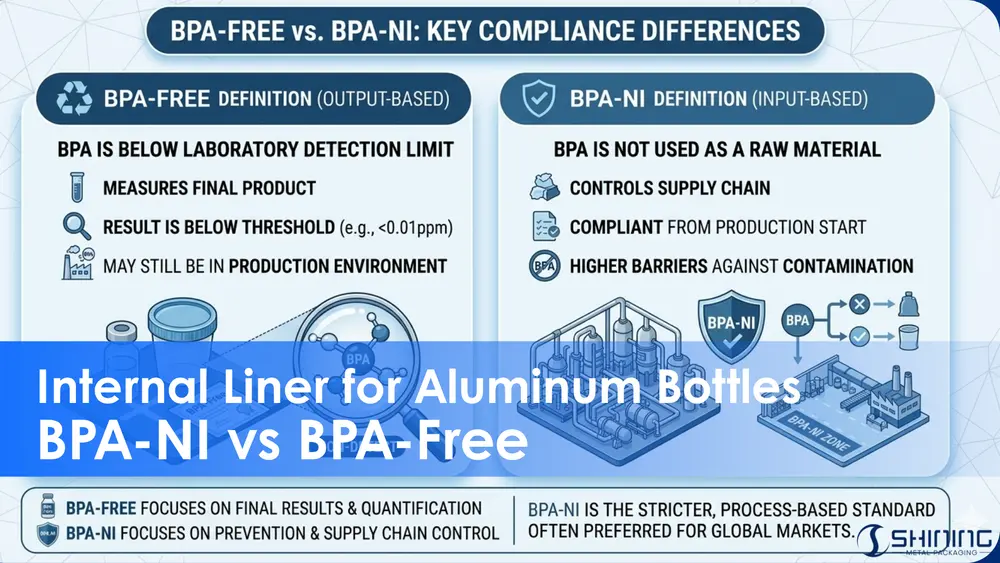
1. Introduction — The “Safety Shield” of Food Packaging
In the premium beverage and food industry, aluminum bottles offer an unparalleled barrier against light and oxygen. However, to prevent chemical interaction between the metal and the contents—especially acidic (juices), alcoholic (wine/beer), or fatty liquids—a high-performance Internal Coating is essential. This liner acts as an inert barrier, ensuring the contents remain untainted and safe for consumption.
2. Deep Dive — Why the Global “War” on BPA?
Bisphenol A (BPA) has been a cornerstone of epoxy-phenolic resins for decades. However, its molecular structure is recognized as an Endocrine Disruptor, leading to a global shift in packaging safety standards.
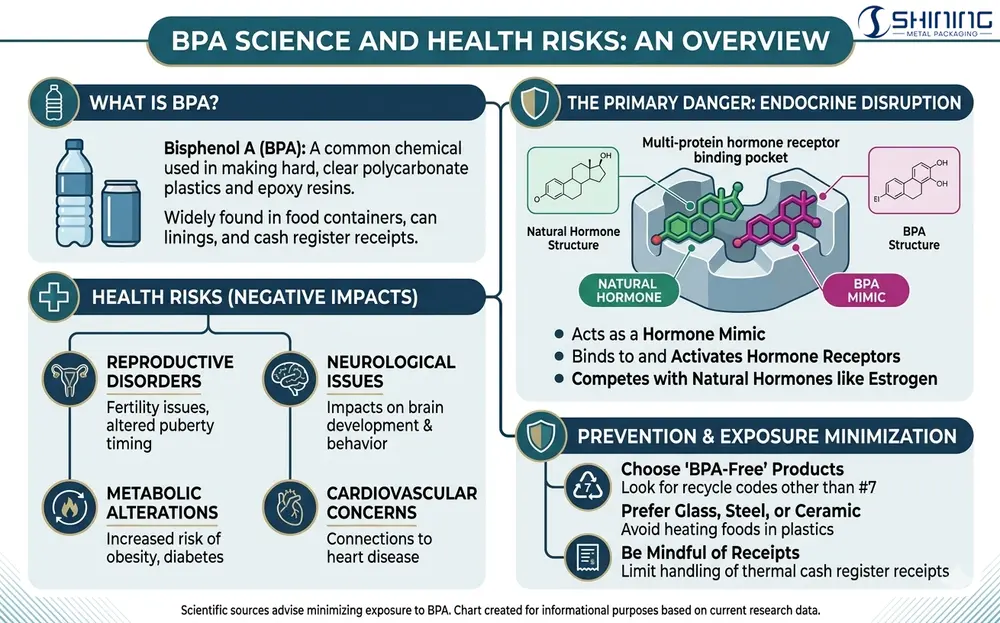
Critical Health Risks:
- Hormonal Mimicry: BPA interferes with the endocrine system by mimicking estrogen, affecting metabolic health.
- Neurological Development: Exposure in early childhood is linked to behavioral shifts and attention deficit disorders (ADD).
- Strict Prevention: Leading health authorities now mandate a “Precautionary Principle,” especially for products consumed by infants and pregnant women.
3. Refined Regulatory Compliance Landscape
1. European Union: The Evolution of (EC) No
The framework regulation (EC) No 1935/2004 ensures that materials are sufficiently inert. However, Regulation (EU) 2018/213 introduced much stricter limits specifically for BPA in varnishes and coatings:
- SML Reduction: The Specific Migration Limit (SML) for BPA was slashed from 0.6 mg/kg to 0.05 mg/kg.
- Infant Ban: Since September 6, 2018, BPA is strictly prohibited in coatings for packaging specifically intended for infants and young children (0-3 years).
Under EU Regulation (EU) 2024/3190, the use of BPA in food-contact materials has been banned, including coatings used inside beverage cans. The regulation officially took effect in January 2025, with a transition period extending until July 2026 for most products. (source)
2. Germany: LFGB & Sensory Purity
Beyond EU laws, the German LFGB (Food and Feed Code) mandates that internal liners must pass rigorous Sensory Evaluation (DIN 10955). This ensures the coating does not impart any “metallic” or “chemical” off-flavor to sensitive products like mineral water or wine.
3. USA: California Proposition 65 (Prop 65)
BPA was added to the Prop 65 list in 2015. Under OEHHA guidelines, if the exposure level exceeds the Maximum Allowable Dose Level (MADL) of 3 micrograms per day (dermal exposure from solid materials), a “Clear and Reasonable Warning” must be provided to consumers. Choosing BPA-NI coatings helps brands avoid these costly labeling requirements.
4. Technical Selection — BPA-NI vs. BPA-Free
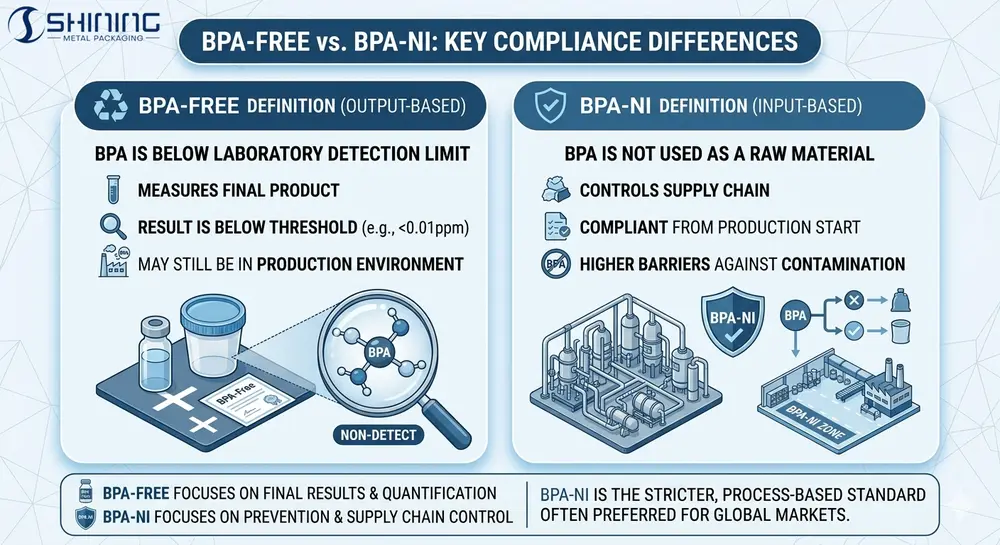
Understanding the technical nuance is key to selecting the right liner for your market:
| Criteria | BPA-Free | BPA-NI (Not Intentional) |
|---|---|---|
| Definition | A “Result-Based” claim. BPA is below lab detection limits. | A “Process-Based” claim. BPA is not used as a raw material input. |
| Technical Rigor | BPA might be present in the manufacturing environment. | Eliminates intentional addition throughout the entire supply chain. |
| Best For | Standard consumer retail products. | High-end global brands and infant-safe packaging. |
| Recommended Model | Valspar 13S93AA | PPG2845 (Polyester-Amino System) |
5. Engineering Excellence — The Curing Process
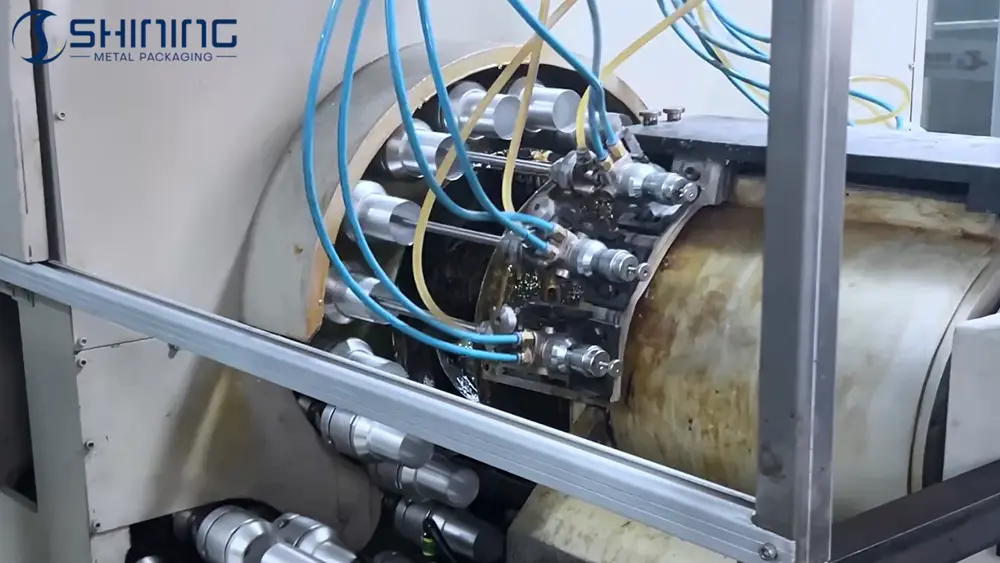
The safety of a liner is determined by its Cross-Linking Density. At Shining Packaging, we utilize a precision-monitored process:
- High-Speed Atomization: The internal spray system ensures 360° coverage, including the critical base areas.
- Thermal Polymerization: Bottles are cured at 220°C – 260°C. This high-temperature phase ensures the coating becomes a fully inert, solid-state “Clear Armor” that will not migrate into the food.
6. FAQ — Technical & Regulatory Support
A: BPA-NI is a stricter industrial standard. While “BPA-Free” only looks at the final result (which can be influenced by varying lab sensitivities), BPA-NI ensures that no Bisphenol A is ever introduced into the formula. This “Clean-from-the-Start” approach is preferred by international retail giants for risk mitigation.
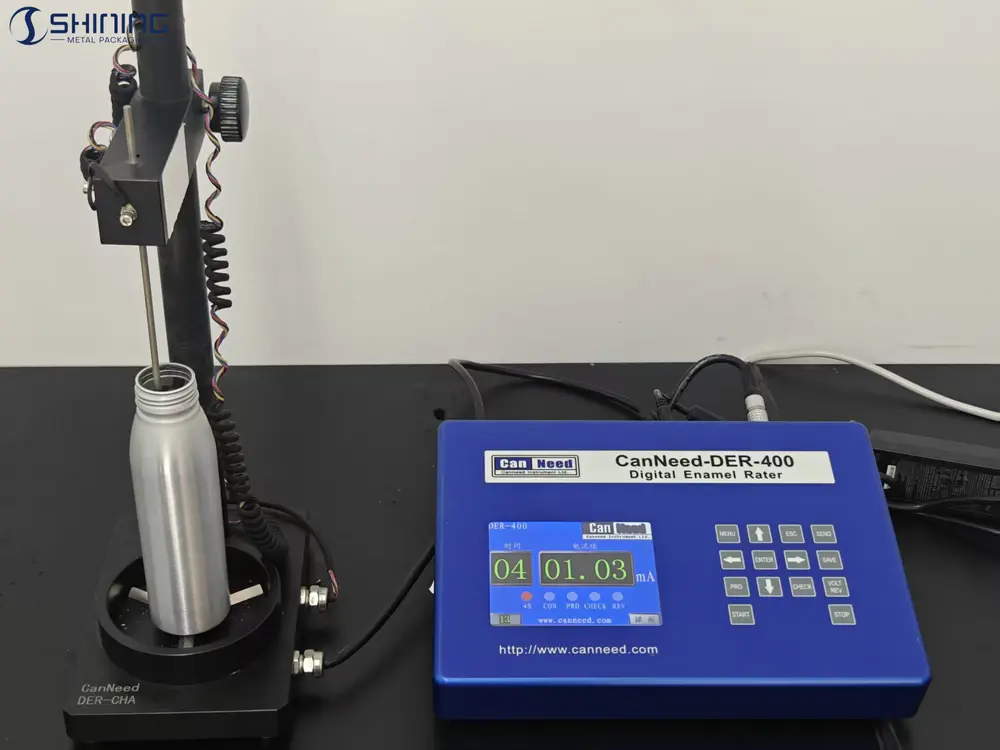
A: This is a critical quality check. We use an electrolyte solution to measure electrical current (mA). For food bottles, we maintain a standard below 50mA (even after the mechanical stress of neck threading), ensuring the integrity of the barrier is absolute.
A: Quite the opposite. High-temperature curing is essential to ensure the coating is fully cross-linked and chemically inert. Once cured, it will not migrate into your beverage.
A: Our PPG2845 DoC confirms suitability for aqueous, acidic, and alcoholic foods based on migration stimulants (e.g., 3% Acetic Acid, 50% Ethanol). We provide specific guidance based on your product’s pH value.