
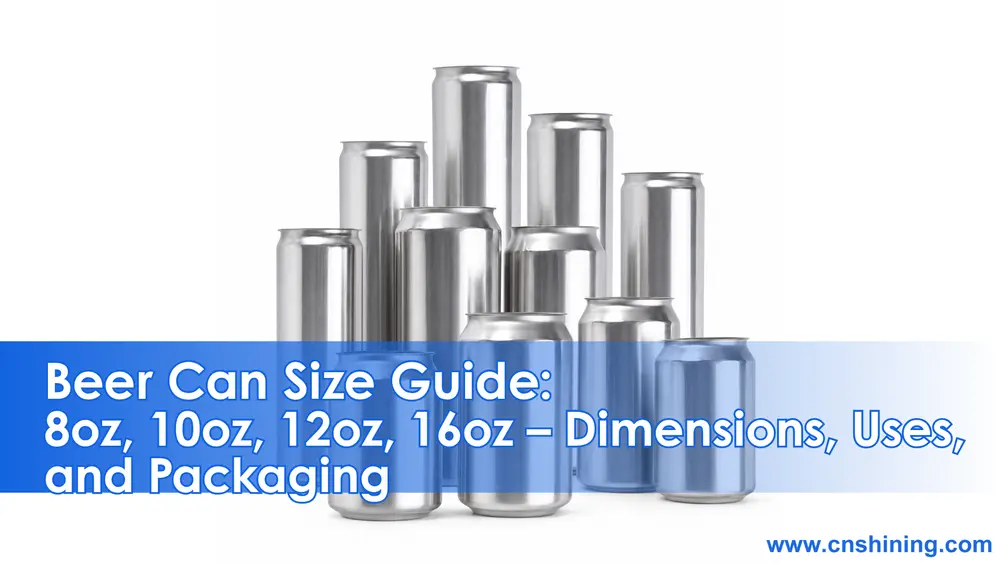
The canned beer market is currently evolving from “mainstream standardization” toward “segmented specifications.” Globally, 12 oz remains the most representative core size, particularly in North America and most export markets, where it continues to dominate due to its mature filling compatibility, high consumer recognition, and broad compatibility across retail, foodservice, and warehouse channels. At the same time, market segmentation is becoming much more clear. The 16-ounce size is quickly becoming the second-fastest-growing format because it looks better on shelves, tastes like a pint, and fits in with craft beer and premium positioning. The 8-ounce and 10-ounce sizes, on the other hand, are mostly used for low-alcohol drinks, sample-sized tastings, limited-edition collaborations, and multi-pack offers. They are still mostly used as extras and for strategic purposes.
Overall, a clear tiered structure has emerged in the capacity landscape, with a pattern of “12oz dominance, 16oz growth, and 8oz/10oz niche segments.” For brands, choosing beer can packaging capacity is no longer a simple decision based on volume alone; it is now a systematic configuration that balances unit cost, production line efficiency, channel compatibility, consumption scenarios, and brand positioning.
Below is a practical guide to 8oz, 10oz, 12oz, and 16oz beer cans, covering dimensions, typical uses, pros and cons, common pack sizes, and key can-end options.
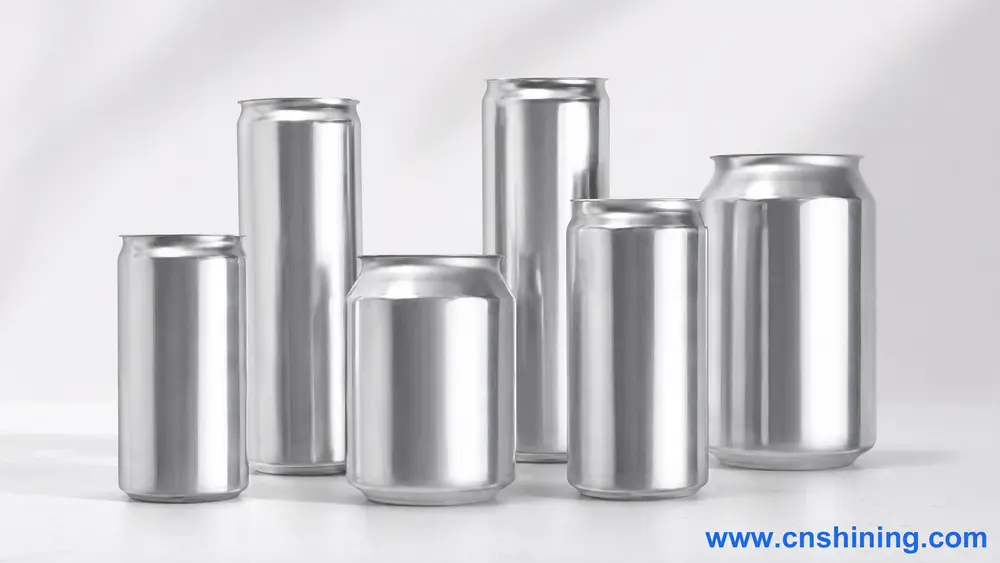
8oz Beer Can
| Attribute | Details |
| Capacity | 8 fl oz ≈ 237 ml |
| Typical Dimensions | ~202/211/3.62 inch |
| Can Type | Standard, Sleek, Slim |
| Common Uses | Low-alcohol / non-alcoholic beer, high-ABV craft “tasting” portion, trial packs, variety packs, airline/cruise/event servings, RTD cocktails |
| Pros | – Compact and lightweight, easy to carry – Low entry barrier for new consumers – Reduces waste, ideal for strong-flavored or high-ABV beers |
| Cons | – Higher unit-volume cost – Lower profit per can – Limited in mainstream retail; often trial or limited editions |
| Typical Pack Sizes | 4-pack, 6-pack, 8-pack; often mixed with 12oz or 16oz in variety packs |
8oz cans are usually part of variety packs or tasting sets, rarely sold as standalone mass-market SKUs.
10oz Beer Can
| Attribute | Details |
| Capacity | 10 fl oz ≈ 296 ml |
| Typical Dimensions | ~202/204/5.46 inch |
| Can Type | Mostly Sleek |
| Common Uses | High-ABV craft (Imperial IPA, Imperial Stout), seasonal/limited/colab releases, premium “tasting” series |
| Pros | – Balances portability and drinking experience – Controls alcohol intake per can while keeping flavor intensity – Appeals to craft drinkers who prefer small, high-quality portions |
| Cons | – Not a global standard; filling lines need separate calibration – Slightly higher unit cost than 12oz at scale – Lower brand recognition in some markets |
| Typical Pack Sizes | 4-pack, 6-pack; often sold as limited or seasonal SKUs |
10oz cans are mainly used by craft breweries targeting niche, quality-focused consumers.
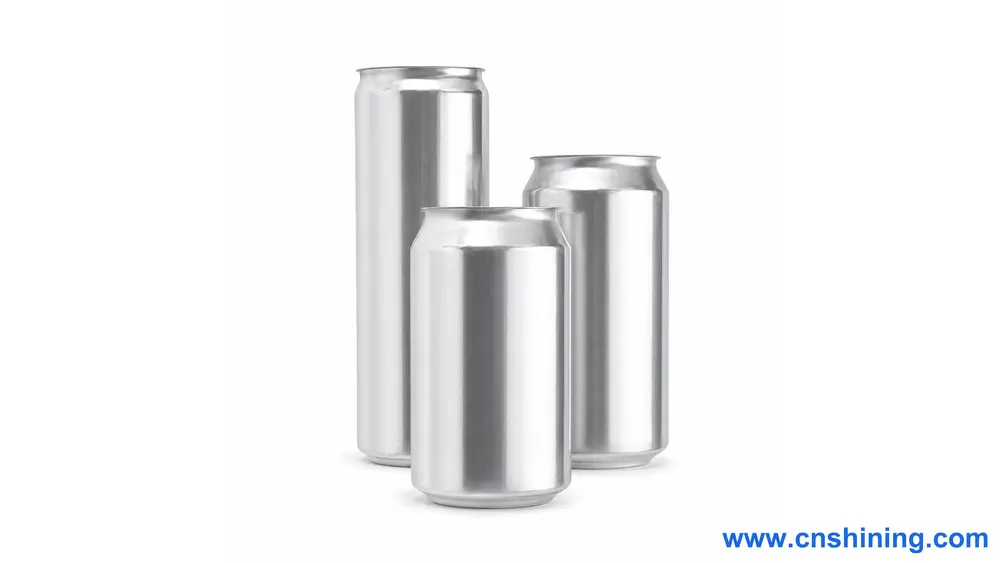
12oz Beer Can
| Attribute | Details |
| Capacity | 12 fl oz ≈ 355 ml (global standard) |
| Typical Dimensions | – Standard: ~202/211/4.81 inch – Sleek: ~202/204/6.13 inch |
| Can Type | Standard, Sleek |
| Common Uses | Mainstream daily beers, supermarket/convenience/bar/restaurant core SKUs, lagers, ales, pale ales, export (especially to North America) |
| Pros | – Highest consumer recognition; no education needed – Best compatibility with filling lines – Wide range of pack sizes (6, 12, 15, 18, 24, 30 cans) |
| Cons | – Highly competitive; differentiation relies on brand, taste, and design – Hard for craft brands to feel “premium” with 12oz alone |
| Typical Pack Sizes | – 6-pack (classic retail) – 12-pack (family size) – 15/18/24-pack (case) – 30-pack (warehouse clubs) |
The 12oz can is the industry standard in North America and many export markets. The 6-pack is the most common retail format for mainstream brands like Budweiser, Heineken, and Blue Moon.
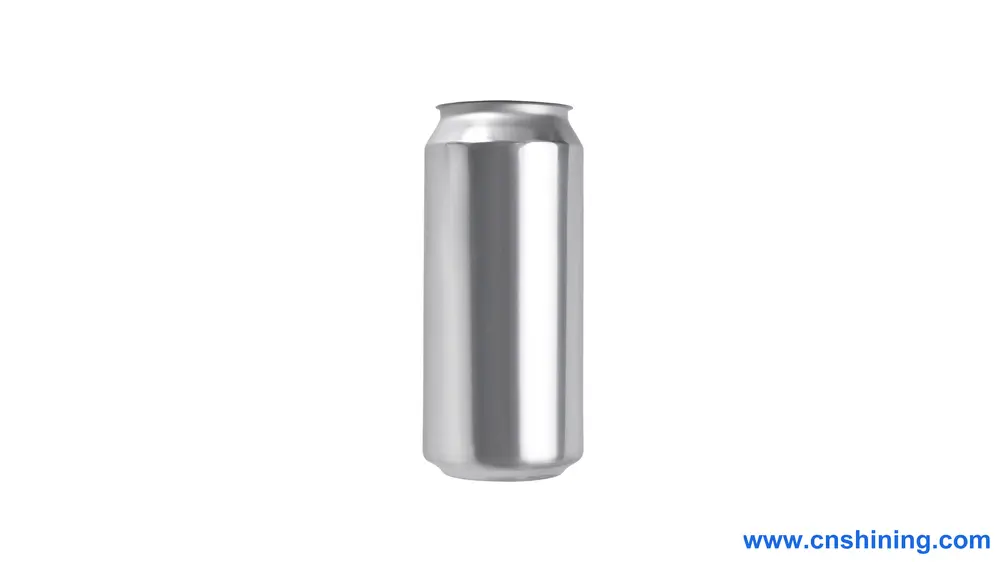
16oz Beer Can (Tall Boy)
| Attribute | Details |
| Capacity | 16 fl oz ≈ 473 ml (1 pint) |
| Typical Dimensions | – Standard: ~202/211/6.19 inch – Specialty: ~202/2.5 inch/6.61 inch |
| Can Type | Standard, Specialty |
| Common Uses | Craft beer flagship SKU, “session” or “satisfying” lagers, wheat beers, IPAs, party/family packs, variety packs |
| Pros | – Strong visual impact; larger label area for branding – One-can = one-pint serving, close to a glass pour – Popular as the premium “standard” in craft breweries |
| Cons | – Larger shipping and storage footprint – Higher logistics cost per volume than 12oz – Higher sealing pressure and can strength requirements |
| Typical Pack Sizes | 4-pack, 6-pack; less common in 12/24-pack cases; often mixed with 12oz in variety packs |
The 16oz can is often called a Tall Boy and is a flagship size in the craft beer segment.
Can Type Comparison: Standard vs. Sleek vs. Slim
| Feature | Standard Can | Sleek Can | Slim Can |
| Diameter | 211 (~66 mm) | 204 (~58 mm) | 202 (~53 mm) |
| Appearance | Classic, stable | Tall and slender, modern | Ultra-slim, lightweight |
| Best For | Mass-market lagers, high-reliability lines | Premium craft, high-end series | Low-alcohol, functional drinks, smaller formats |
| Shelf Impact | Reliable, familiar | Stands out, more “premium” | Unique, lightweight feel |
Different can types require slightly different parameters on filling and seaming equipment. New or upgraded lines should confirm compatibility in advance.
Can Ends Overview: 202, 200, B64, CDL, Full Aperture
We supply food-grade aluminum can ends compatible with major filling lines (Krones, Moon, Wild Goose), meeting FDA/SGS/ISO standards.
- 202 End (53.4 mm): Widely used on Standard and some Sleek 12oz/16oz beer cans; mature, highly compatible.
- 200 End (50.8 mm): Common on Slim cans and some Sleek 330ml cans; ~10% lighter than 202, suitable for lightweighting.
- B64 End: Traditional double seam, stable sealing, slightly heavier; ideal for existing B64-heavy production lines.
- CDL End: ~10–15% lighter than B64, reverse countersink seam, better for new/upgraded lines focused on cost and weight reduction.
- Full Aperture (FA) End (202 360 FA): Entire top opens, turning the can into a cup-like container. Ideal for fruit beers, cocktails, and beverages with pulp. Offers a glass-like pour experience and enhanced aroma. Available with RPT or SOT tabs.
Common Multi-Pack Formats
| Pack Size | Typical Use | Common for Which Sizes |
| 4-pack | Craft, imported, 16oz Tall Boy | 12oz, 16oz, 10oz |
| 6-pack (six-pack) | Classic retail format | Mostly 12oz; also 16oz craft |
| 8-pack / 10-pack | Craft, promotion, variety packs | 8oz, 10oz, 12oz, 16oz |
| 12-pack / 15-pack / 18-pack | Family size, weekend gatherings | Mostly 12oz |
| 24-pack (case) | Wholesale, bulk purchase | Mostly 12oz; ~20 lbs / ~9 kg |
| 30-pack | Warehouse clubs (Costco, Sam’s Club) | Mostly 12oz mass-market brands |
General trends:
- 8oz / 10oz: mostly 4–8 pack
- 12oz: 6–30 pack, most flexible
- 16oz: mostly 4–6 pack, less in 24-pack cases
Choosing the Right Beer Can Size
When selecting a beer can, consider:
- Market habits: 12oz/16oz dominate in North America; 8oz/10oz more common in parts of Asia and Europe
- Product type: mass-market, craft, low-alcohol, limited/colab editions
- Filling and seaming equipment: compatibility with Standard/Sleek/Slim and 202/200/B64/CDL ends
- Brand positioning & shelf impact: Sleek/16oz for premium; Standard/12oz for mass
- Logistics & warehouse: 16oz and larger packs increase shipping volume
- Pack size strategy: 6-pack, 12-pack, 24-pack, or variety packs
Whether you’re launching a new craft beer, expanding into low-alcohol beverages, or optimizing packaging for export, the right combination of capacity (8oz/10oz/12oz/16oz), can type (Standard/Sleek/Slim), and can end (202/200/B64/CDL/FA) will help balance cost, efficiency, and brand performance.