
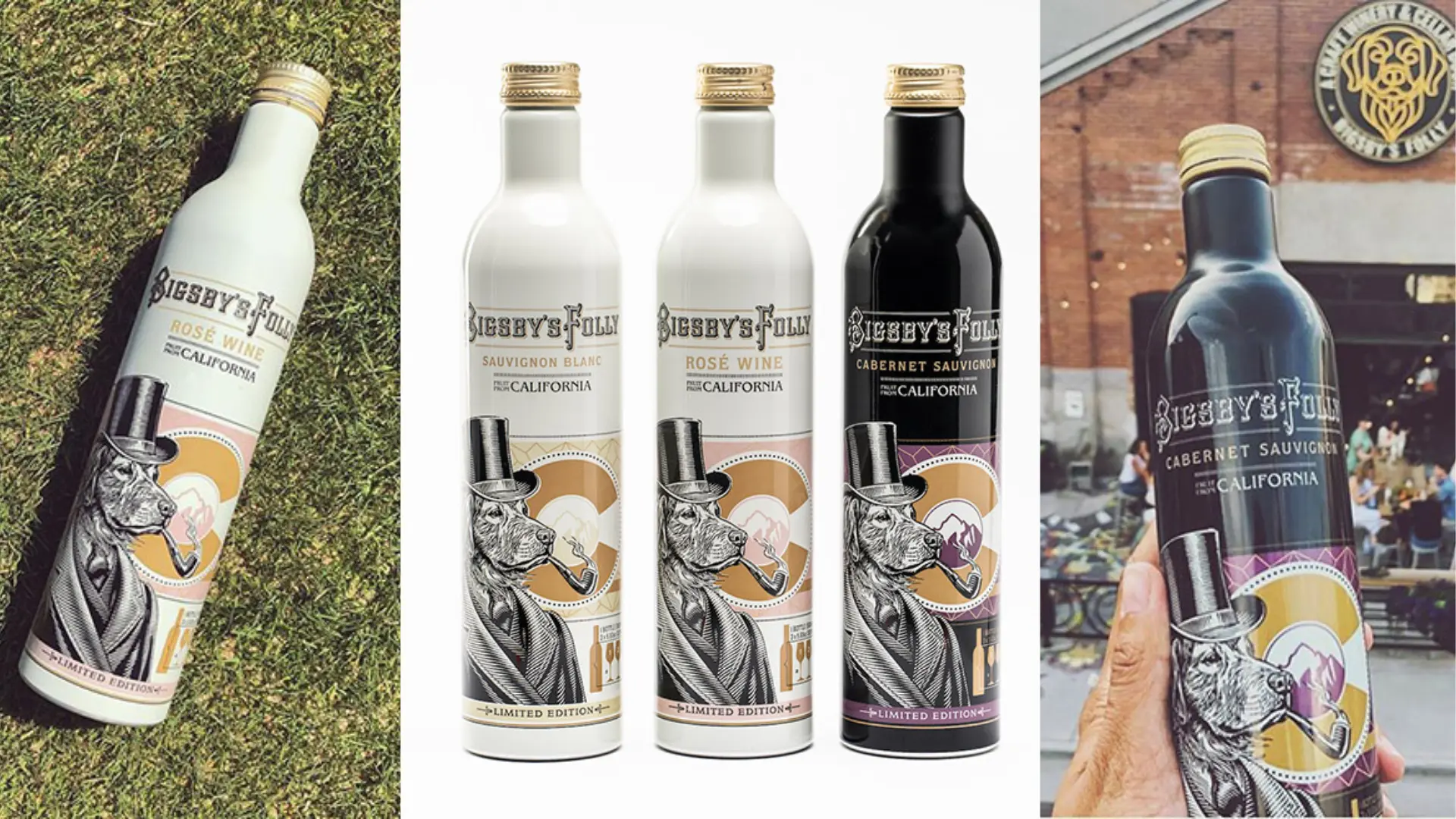
Bigsby’s Folly emerges as a distinctive wine brand, drawing inspiration from whimsical narratives and premium craftsmanship. The choice of Bigsby‘s Folly aluminum bottle reflects a commitment to modern packaging solutions that align with consumer demands for convenience and quality. Founded on principles of creativity, the brand integrates historical motifs with contemporary needs.
Interviews with designers reveal that selecting aluminum stemmed from its versatility and durability. This material supports the brand’s ethos of blending tradition with innovation, ensuring wines like Sauvignon Blanc and Rosé maintain freshness. Such decisions highlight how aluminum bottle for wine enhances market appeal without compromising on heritage.
Innovation in Wine Packaging
The adoption of aluminum by Bigsby’s Folly represents a shift towards sustainable practices in the wine industry. With features like infinite recyclability and lighter weight, these bottles reduce transportation emissions significantly. Data from industry reports show a 30% decrease in carbon footprint compared to glass, promoting eco-friendly trends.
Founders emphasize that Bigsby’s Folly aluminum bottle for wine addresses environmental concerns while preserving taste integrity. This innovation caters to active lifestyles, offering shatterproof designs ideal for outdoor events. As per recent studies, such packaging appeals to millennials seeking sustainable aluminum wine packaging.
Design Aesthetics and Craftsmanship
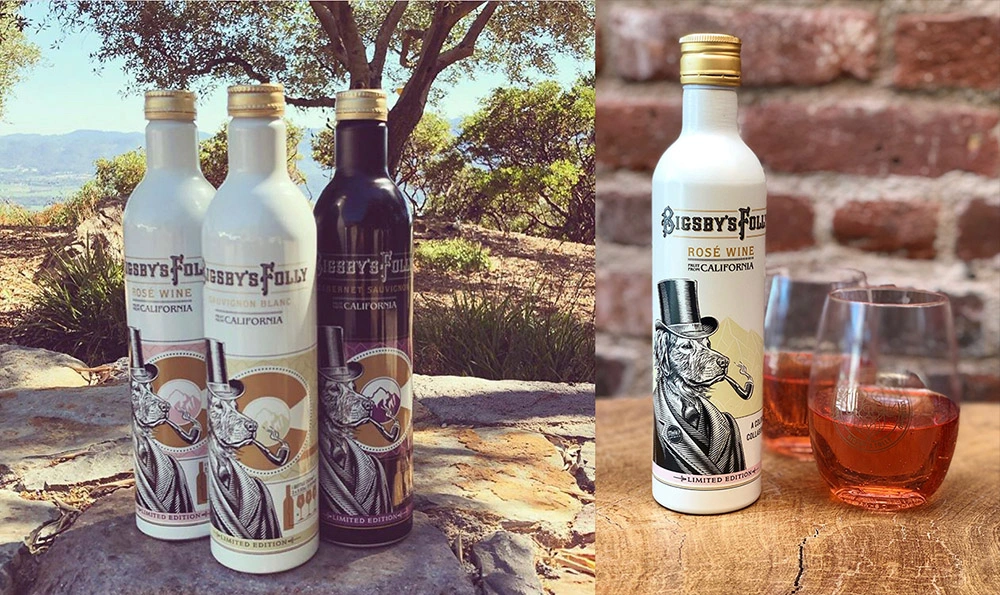
The visual appeal of Bigsby’s Folly bottles lies in their intricate illustrations, featuring anthropomorphic dogs in Victorian attire. Heat transfer printing allows for vibrant colors on the aluminum surface, creating a premium look. This design elevates the product, turning it into a collectible item that stands out on shelves.
Exploring the aesthetics, the bottles’ shapes mimic traditional wine forms but with modern twists like crown caps for easy resealing. Such elements enhance user experience, blending art with functionality. Incorporating recyclable wine bottles, the brand showcases how design can drive consumer engagement.
Environmental and Practical Benefits
Aluminum’s properties make Bigsby’s Folly a leader in green packaging. Being 80% lighter than glass, it facilitates efficient shipping and reduces breakage risks. Industry trends indicate growing adoption of lightweight aluminum bottles, with projections of 20% market growth by 2030.
The material’s rapid chilling capability adds practicality for consumers. Bigsby’s Folly leverages this for its limited-edition series, ensuring wines remain optimal. This aligns with broader demands for eco-friendly wine containers, as evidenced by increasing search volumes for sustainable options.
Market Positioning and Consumer Appeal
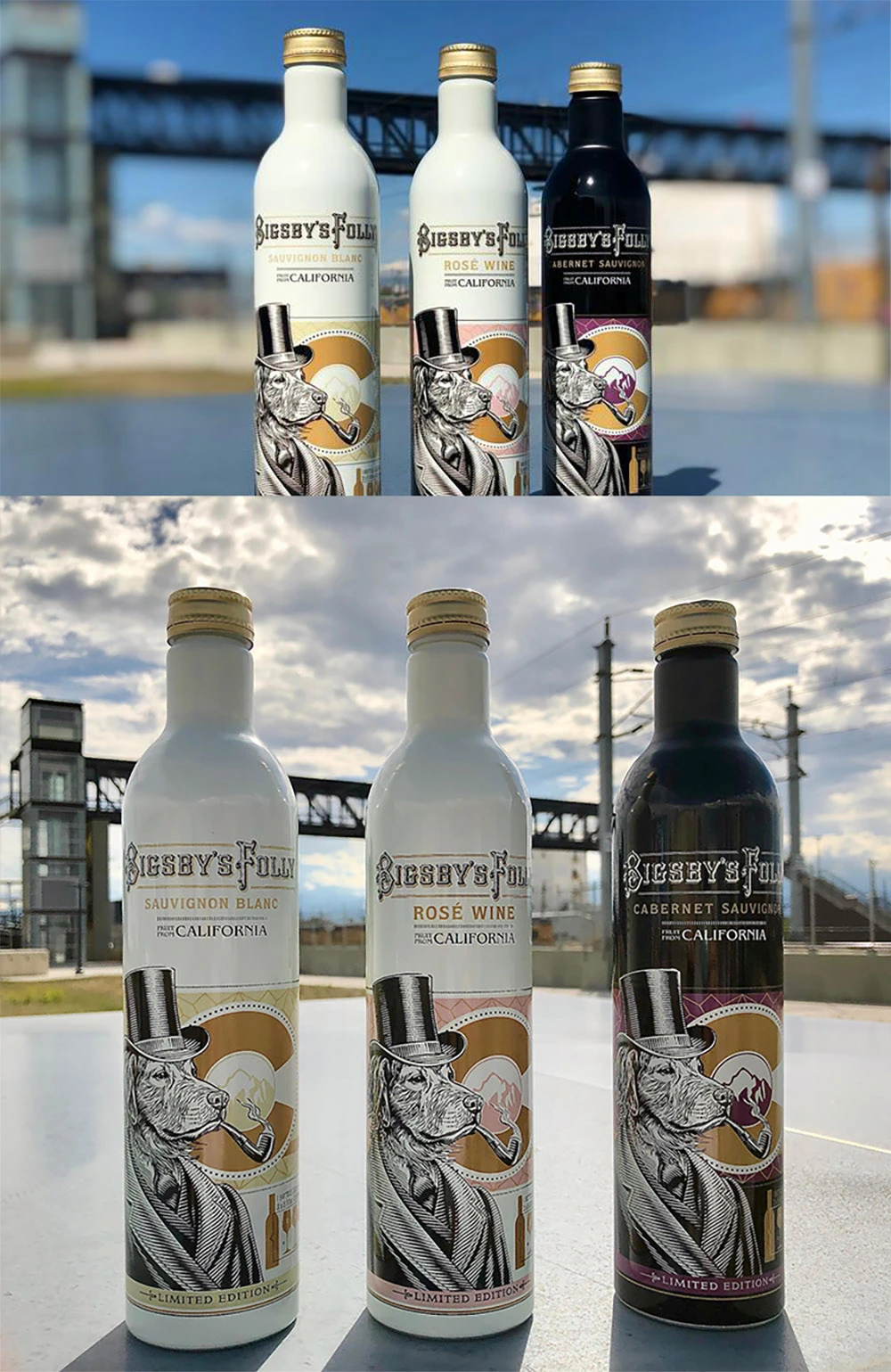
Positioned as a premium yet accessible brand, Bigsby’s Folly uses aluminum to differentiate in a competitive market. The 500ml capacity suits individual consumption, appealing to urban dwellers. Consumer feedback highlights appreciation for the portable design, boosting sales in retail channels.
Incorporating unique graphics, the bottles foster brand loyalty. This strategy taps into shatterproof wine packaging trends, where durability meets style. Long-tail searches like “benefits of aluminum packaging for wine” reflect rising interest in such innovations.
Technical Aspects of Production
Production involves advanced heat transfer printing on aluminum, ensuring labels withstand handling. The crown cap accessory provides secure sealing, maintaining wine quality. This process underscores the reliability of Bigsby’s Folly aluminum bottle in preserving flavors.
Suppliers note that aluminum’s malleability allows custom shapes, enhancing brand identity. For Bigsby’s Folly, this means tailored designs for varietals like Cabernet Sauvignon. Such technical prowess supports portable wine bottles, ideal for diverse occasions.
Future Trends in Aluminum Wine Bottles
Looking ahead, aluminum packaging is poised to dominate due to regulatory pushes for sustainability. Bigsby’s Folly exemplifies this by prioritizing recyclable materials. Analysts predict a surge in premium aluminum wine bottles, driven by environmental awareness.
The brand’s approach could inspire others, with innovations like enhanced surface treatments. This evolution addresses queries on “innovative wine bottle designs in aluminum,” positioning aluminum as a staple in the industry.
As a leading manufacturer and supplier in the aluminum packaging sector, we at Shining Packaging recognize the transformative potential of products like the Bigsby’s Folly aluminum bottle. Our expertise enables brands to adopt similar eco-friendly solutions, fostering innovation and sustainability. Looking forward, we anticipate greater integration of aluminum in wine packaging, encouraging collaborations for a greener future.