
A food can is a sealed metal container used to protect food through filling, closing, sterilization, storage, and transport.
Most food cans are used for products such as vegetables, fruit, meat, fish, soups, sauces, milk products, pet food, nuts, powders, and edible oil. The can has a simple job: keep the product isolated from air, moisture, microorganisms, light, and physical damage.
The basic idea is not complicated. The engineering behind it is.
A food can must survive forming, welding or drawing, coating, filling, retort sterilization, shipping, stacking, and opening. If the material, coating, flange, weld, or double seam is unstable, the package may fail even if it looks normal from the outside.
1. What Are Food Cans Made Of?
Food cans are mainly made from tinplate, tin-free steel, and aluminum.
For processed food cans, tinplate is still the most common material for can bodies, especially three-piece cans. It is not pure tin. It is low-carbon steel with a thin tin coating and usually an internal food-grade lacquer.
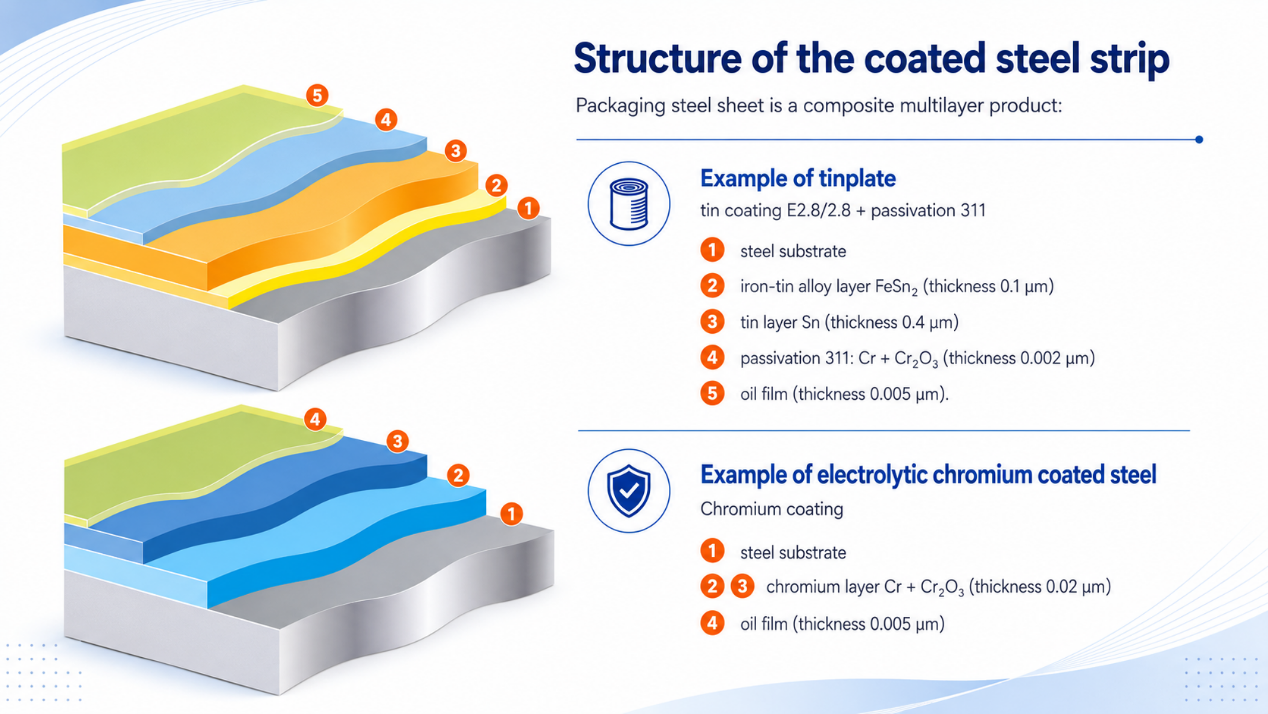
A typical tinplate structure includes:
| Layer | Typical Function |
|---|---|
| Low-carbon steel substrate | Provides strength, rigidity, and formability |
| Iron-tin alloy layer | Helps bond the tin coating to the steel |
| Tin layer | Improves corrosion resistance and supports welding/forming |
| Passivation layer | Stabilizes the surface |
| Oil film | Reduces scratches and friction during handling |
According to packaging steel catalogue data, an example tinplate coating may include an iron-tin alloy layer of about 0.1 μm, a tin layer of about 0.4 μm, passivation around 0.002 μm, and an oil film around 0.005 μm.
Tin coating weight is often specified in g/m². For example, E2.8/2.8 means 2.8 g/m² of tin on each side. Differential coating is also common, such as 2.8/8.4, when one side needs heavier protection.
1.1 Tinplate
Tinplate is tin-coated low-carbon steel. It is strong, formable, weldable, and suitable for retort food cans. That is why it is widely used for three-piece food can bodies.
Typical packaging steel thickness ranges are roughly 0.12-0.49 mm, depending on the can type, forming process, and strength requirement. Higher-strength DR grades are often used when the can maker wants thinner steel without losing body performance.
1.2 Tin-Free Steel / ECCS / TFS
Tin-free steel is also called ECCS, or electrolytic chromium coated steel. Instead of tin, it uses a chromium/chromium oxide surface layer. One catalogue example gives the chromium coating thickness as about 0.02 μm, with an oil film around 0.005 μm.
TFS has good lacquer adhesion, but it must be lacquered before use. It is not suitable for normal welding or soldering. It is also not the first choice for acidic foods below pH 4 because it does not have the same corrosion behavior as tinplate.
That is why TFS is often used for ends, lids, and easy-open ends rather than welded three-piece can bodies.(source)
1.3 Aluminum
Aluminum is lighter than steel and is common in beverage cans and some drawn food containers. It does not need side seam welding in the same way as a three-piece steel can. The body is usually formed by drawing or drawing and ironing.
For many shelf-stable foods, steel still has an advantage in rigidity, retort resistance, and large-format strength.
2. Types of Food Cans
Food cans are usually discussed by structure and forming route. The main split is simple: two-piece cans and three-piece cans.
2.1 Two-Piece Food Cans
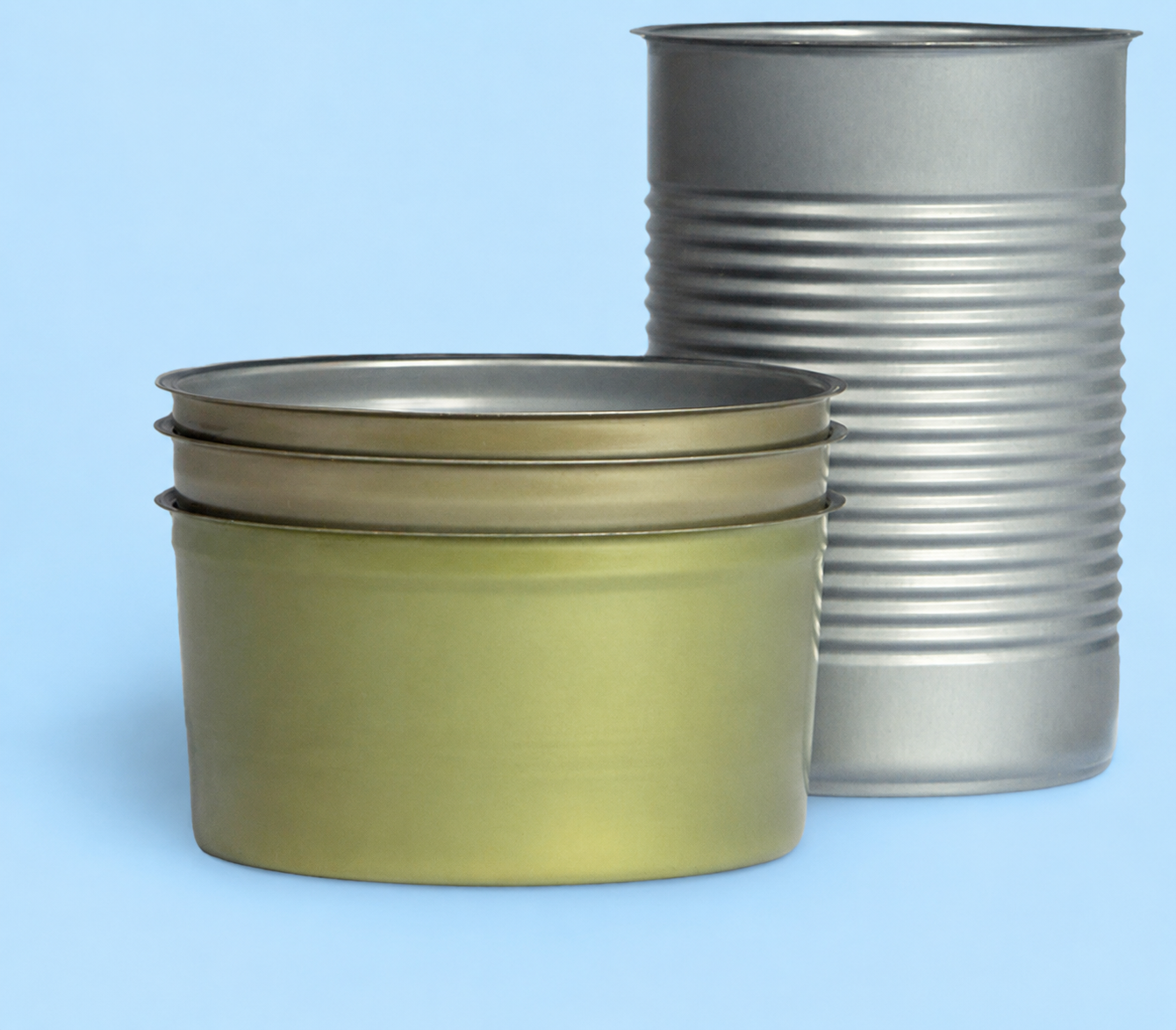
A two-piece can has one formed body and one separate end. The body includes the side wall and the bottom. There is no welded side seam.
This removes one possible leakage point, but it also means the body must be formed from a single metal blank. The forming route matters.
Common two-piece food can processes include:
- DR cans: drawn cans, including shallow drawn and draw-redraw cans.
- DRD cans: draw and redraw cans for deeper bodies.
- DWI cans: drawn and wall-ironed cans, where the wall is thinned through ironing rings.
For DWI food cans, typical tinplate strip data may be around 0.20-0.35 mm thickness, about 1,200 mm width, and temper around TH390 or similar. The process usually requires tight thickness tolerance, low earing, good surface quality, and good coating adhesion.
The usual DWI sequence is:
- Stamping or cupping
- Drawing and trimming
- Cleaning and outside protection
- Flanging and beading
- Inside lacquering
- Baking
- Inspection and packing
Two-piece cans are useful when the design benefits from a seamless body. The tradeoff is that forming stability becomes more demanding.
2.2 Three-Piece Food Cans
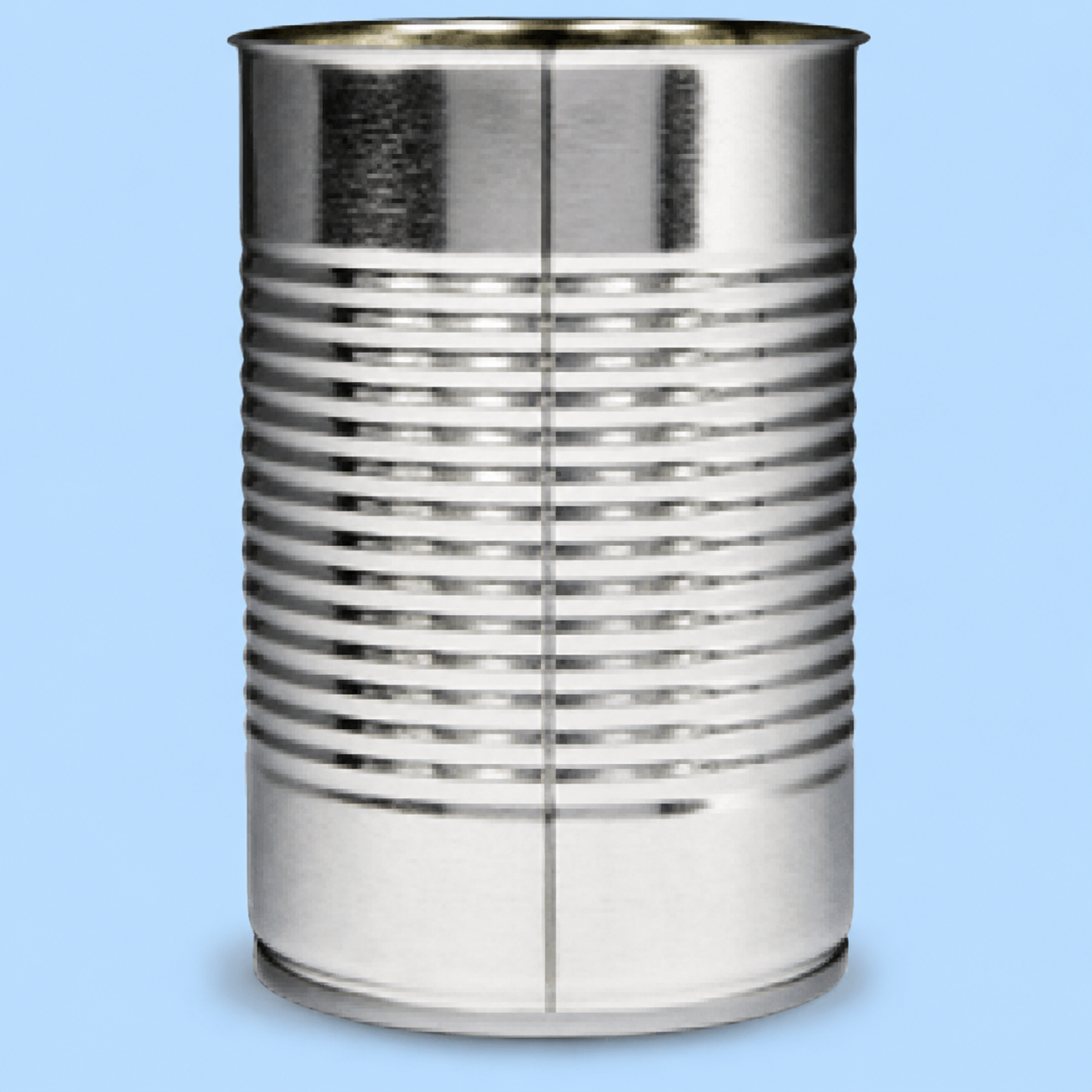
A three-piece can has three parts: body, top end, and bottom end.
The body starts as a flat rectangular blank. It is rounded into a cylinder, welded along the side seam, protected with seam coating, then flanged and beaded. One end is usually seamed at the can factory. The other end is attached after filling.
The basic process is:
- Sheet or coil preparation
- Cutting and slitting
- Body blank feeding
- Rounding
- Side seam welding
- Weld seam coating
- Curing
- Flanging
- Bottom end seaming
- Beading
- Leak testing and inspection
- Packing
The side seam is the key difference. It must be strong, tight, and protected from corrosion. Tinplate works well here because it supports resistance welding. TFS does not.
Three-piece cans are common for vegetables, fruit, meat, seafood, sauces, soups, pet food, and many retort products.
3. Advantages and Disadvantages of Canned Food Can
3.1 Advantages of Food Cans
Food cans are used because they solve several practical problems at once.
They protect food from oxygen, water vapor, microorganisms, light, and mechanical damage. They also tolerate heat sterilization, which allows many foods to be stored at room temperature for long periods.
The metal body is strong enough for transport and stacking. Steel cans are also magnetic, which makes sorting easier during recycling.
For producers, food cans are predictable. The dimensions, seams, coatings, and mechanical properties can be measured and controlled. That matters more than it may seem.
3.2 Disadvantages of Food Cans
Food cans are not perfect.
Metal packaging can cost more than flexible packaging. Poor handling can cause dents or seam damage. If the coating system is not matched to the food, corrosion or staining can occur. Acidic foods, sulfur-rich foods, dairy products, oils, and sauces all place different demands on the internal lacquer.
Some consumers also worry about internal coatings.(source) That is why coating selection, migration testing, and process control are part of food can design, not afterthoughts.
Recycling also requires collection, sorting, and energy. The material is recyclable, but the system still has to work.
4. What Foods Are Canned?
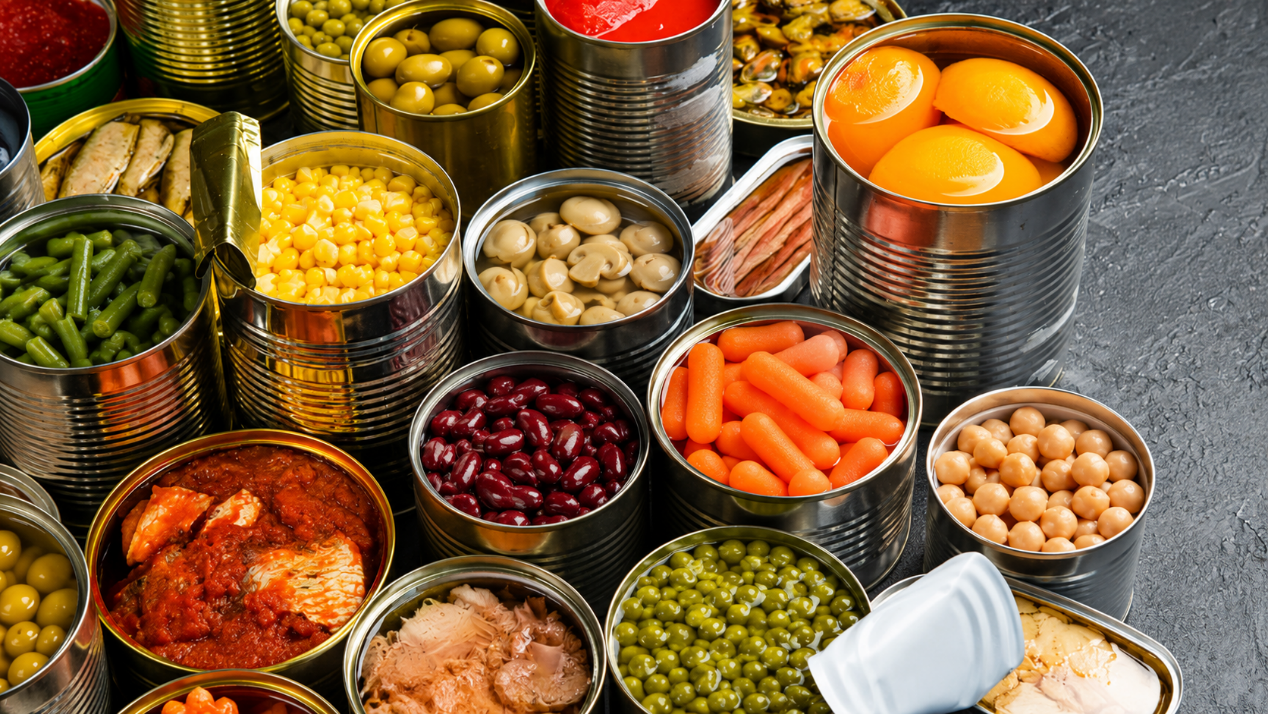
Steel food cans are used for many shelf-stable foods, including:
- Vegetables: corn, beans, peas, tomatoes
- Fruits: peaches, pineapple, fruit cocktail
- Meat: luncheon meat, beef, poultry products
- Seafood: tuna, sardines, mackerel, salmon
- Sauces and soups: tomato sauce, curry sauce, gravy, ready meals
- Dairy products: evaporated milk, condensed milk, coconut milk
- Dry foods: milk powder, coffee, nuts
- Oils: edible oil and cooking oil
- Pet food: wet pet food with easy-open ends
The can design depends on the product. Acidic foods need stronger corrosion protection. Powder products need moisture control. Oil products need good sealing and coating compatibility. Retort foods need a body and seam that can handle heat and pressure.
5. Conclusion
A food can is not just a metal box.
It is a controlled package made from thin steel or aluminum, with coatings, seams, forming geometry, and inspection steps all working together. For most processed foods, tinplate remains the practical choice because it combines strength, weldability, corrosion protection, and retort performance.
The right can depends on the food, the process, and the failure mode you are trying to avoid. That is usually the best starting question: what could go wrong inside this package?