
Introduction to Aerosol Valve Terminology and Industry Resources
In the world of aerosol valve manufacturing, having a clear understanding of essential terminology and available resources can make a huge difference. Aerosol valves are complex systems, used across industries from cosmetics to food to automotive, and require precise engineering to meet both regulatory standards and consumer expectations. This guide serves as a comprehensive reference for manufacturers and suppliers alike, detailing key terms and resources to empower professionals in selecting, designing, and optimizing aerosol valves for their products.
Why Understanding Aerosol Valve Terms Matters for Manufacturers
Understanding the specific components and functionalities of aerosol valves is crucial in production. Knowing these terms helps manufacturers ensure quality, functionality, and safety in their products. This glossary covers terms from actuator types to propellant systems, giving both seasoned and new manufacturers an edge in quality control and innovation.
Glossary of Key Terms in Aerosol Valves
1. Actuator
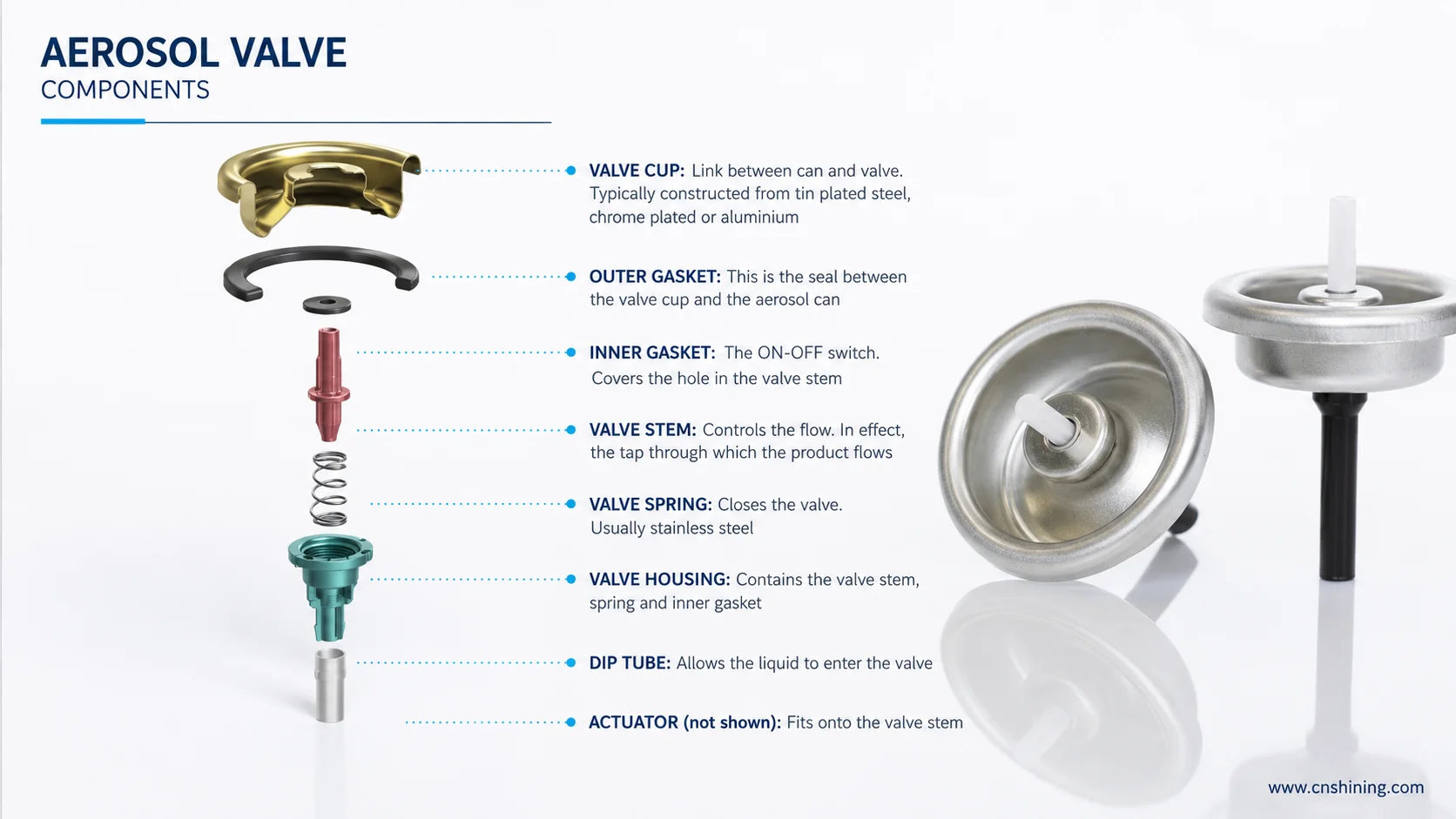
The actuator is the part of the valve pressed by the user to release the product. Actuators come in various designs, each influencing spray rate, pattern, and flow. In mechanical-break-up (MBU) and non-mechanical break-up (non-MBU) versions, actuators are tailored for applications ranging from fine mists to targeted sprays. Different actuator designs can directly affect product performance, especially in applications like deodorants and insecticides where consistent spray patterns are vital.
2. Propellant
Propellants are gases, often liquefied or compressed, that create pressure in aerosol cans. Common types include hydrocarbons, nitrogen, and carbon dioxide. The choice of propellant affects the valve design and application. For instance, hydrocarbons offer high pressure but come with environmental considerations, whereas nitrogen is a non-flammable, environmentally friendly option.
3. Dip Tube
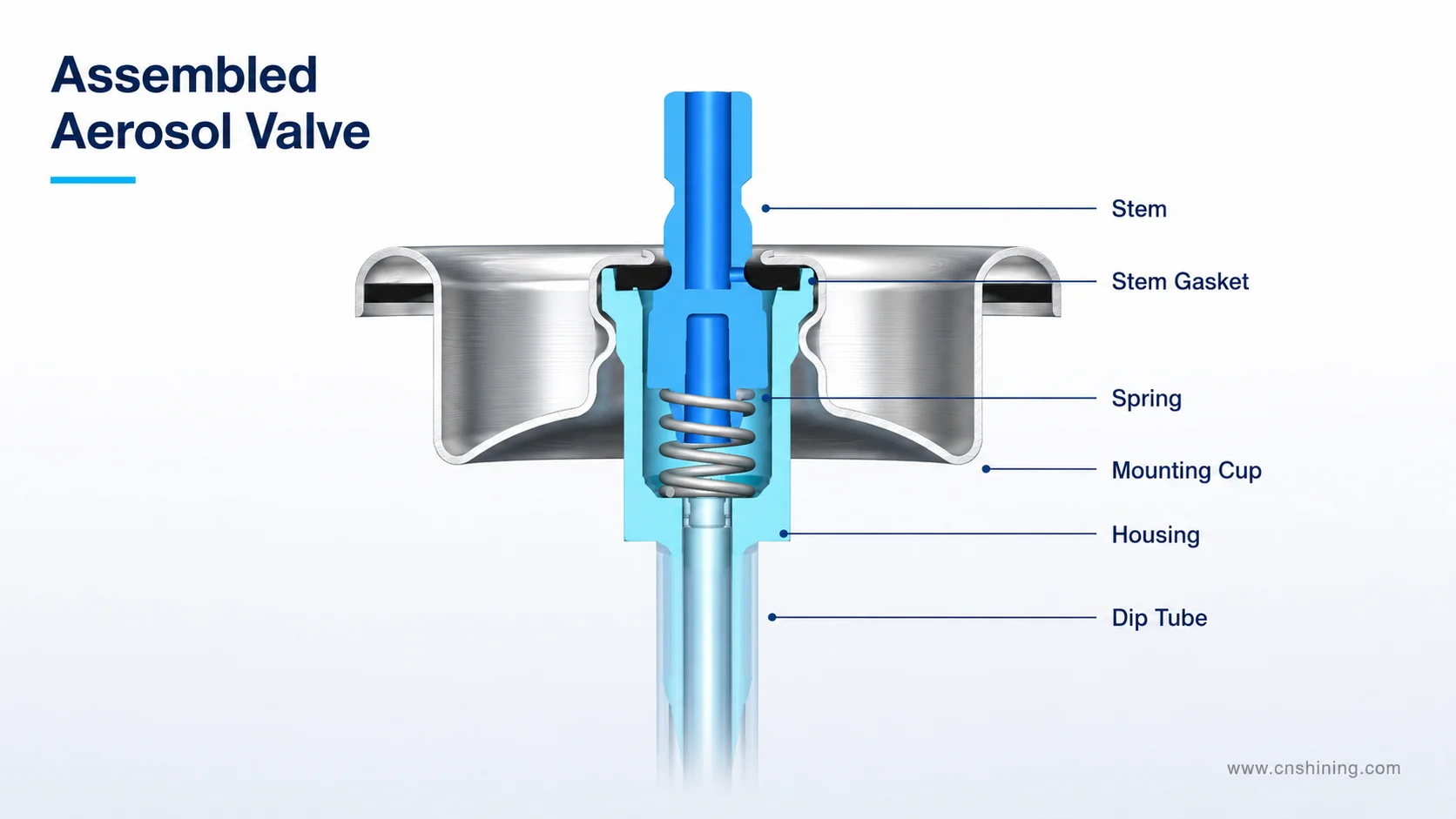
A dip tube extends from the valve into the product, allowing liquid to be drawn up and sprayed. Proper dip tube length and material are crucial for consistent spray quality, especially in high-viscosity or foaming products. Most dip tubes are designed to maximize product evacuation without clogging.
4. Valve Cup
The valve cup secures the valve to the can and provides the connection point for the actuator. Different materials (tin-plated steel, aluminum) are chosen based on product compatibility, as the valve cup must withstand internal pressures without compromising product integrity.
5. Crimping
Crimping is the process of attaching the valve to the can, ensuring a tight seal to prevent leaks. This is a precision procedure, often requiring specialized equipment and strict quality controls to ensure reliable sealing. Misaligned or improper crimping can lead to valve failure and product leakage.
6. Stem
The stem channels the product from the dip tube to the actuator, controlling the flow rate. Made typically from plastic, stems come with varied orifice sizes to control flow and spray characteristics, particularly important for specialized applications like food-grade or industrial aerosols.
7. Sealing Gasket
The sealing gasket is the component ensuring the valve’s airtight seal when not in use. Different formulations like neoprene or butyl rubber are used based on the chemical composition of the aerosol product, preventing leaks while ensuring product stability over time.
8. Pressure Filling
Pressure filling is a method where the product is filled under pressure to ensure complete can filling. This method is commonly used in applications that require rapid product release and high output, as seen in cleaning sprays and air fresheners.
9. Bag-on-Valve (BOV) System
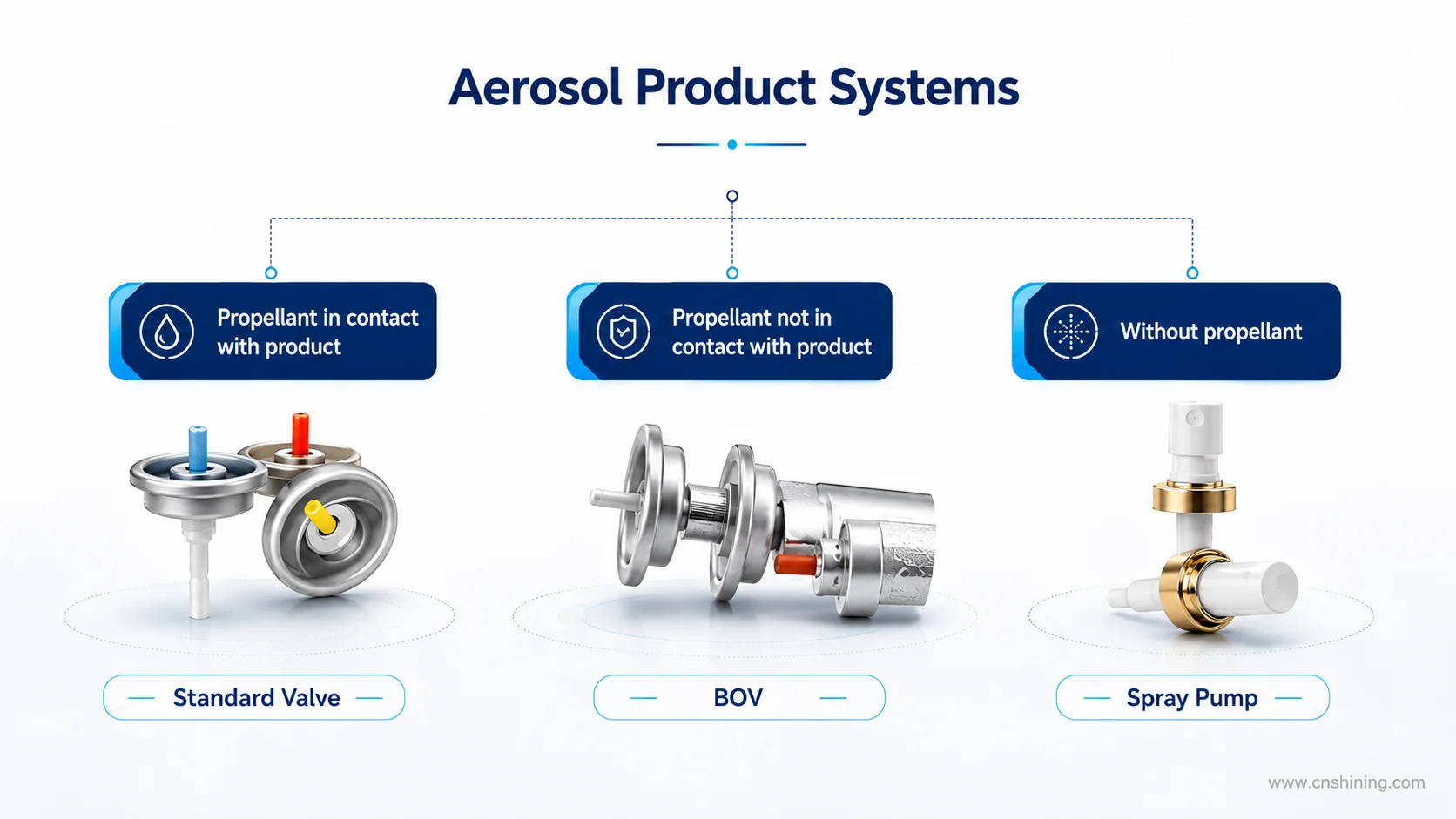
In a bag-on-valve system, the product is stored in a bag within the can, separated from the propellant. This ensures no contact between the propellant and product, ideal for sensitive formulations like cosmetics or pharmaceuticals.
10. Spray Pattern
The spray pattern is the shape and consistency of the product as it is dispensed. Patterns can range from narrow streams to broad mists, each suited to specific applications like body sprays or industrial lubricants. Adjusting the actuator or orifice can optimize the pattern for different uses.
Key Industry Resources for Aerosol Valve Manufacturers
For manufacturers, staying informed on the latest standards and guidelines is essential. Here are some vital resources and organizations:
- Consumer Specialty Products Association (CSPA): Provides industry standards and technical resources, particularly for environmental and safety compliance. CSPA website.
- European Aerosol Federation (FEA): Sets European standards for aerosol manufacturing, crucial for suppliers operating internationally. FEA website.
- National Aerosol Association (NAA): U.S.-based organization offering guidelines, industry news, and technical support for aerosol manufacturers. NAA website.
- Occupational Safety and Health Administration (OSHA): Ensures safe working conditions and offers guidelines on handling propellants and hazardous substances. OSHA website.
FAQs: Aerosol Valves
To assist manufacturers and suppliers, here are answers to some frequently asked questions:
- What’s the best propellant for environmentally-friendly applications? Compressed gases like nitrogen and carbon dioxide are good choices for eco-friendly products.
- How can I ensure a consistent spray pattern? Use actuators with MBU technology to achieve fine, consistent sprays.
- What’s the importance of crimping? Proper crimping ensures a tight seal, preventing leaks and maintaining product quality.
- How do I select the correct dip tube length? The dip tube should reach the can’s bottom to ensure full product evacuation.
- Can I use the same valve for different product viscosities? No, select valves and stems suited to the specific viscosity for optimal flow control.
- What’s the role of a sealing gasket? Gaskets prevent leaks and ensure product stability by maintaining an airtight seal.
- Are there regulatory requirements for aerosol valves? Yes, compliance with standards from bodies like OSHA and FEA is essential.
- What’s a Bag-on-Valve system used for? BOV systems are ideal for sensitive formulations requiring separation from the propellant.
- How can I control the spray rate? Adjust stem orifice sizes or use actuator modifications to control spray rates.
- Where can I find more resources on aerosol valve technology? Organizations like CSPA, FEA, and NAA provide valuable technical resources.
Conclusion
Having a deep understanding of aerosol valve terminology and resources equips manufacturers with the knowledge to create safer, high-quality products. For more information, contact us directly or visit our aerosol valve page for the latest product offerings and updates. Let’s work together to elevate your aerosol solutions!
Related Articles
- Uncovering Part 1: What Are Aerosol Valves and Why Are They Essential?
- Exploring Part 2: A Brief History of Aerosol Valves – From Invention to Modern Technology
- Detailed Look Part 3: How Do Aerosol Valves Work? A Breakdown of Their Mechanics
- Highlight Part 4: Top Benefits of Aerosol Systems Across Various Industries
- In-Depth Part 5: A Closer Look at Key Components of Aerosol Valves
- Analysis Part 6: Types of Propellants in Aerosol Valves and Choosing the Right Fit
- Discovery Part 7: Exploring Different Types of Aerosol Valves and Their Applications
- Step-by-Step Part 8: Understanding Aerosol Valve Operations in Detail
- Insight Part 9: Actuators in Aerosol Valves – Types, Functions, and Design
- Key Focus Part 10: The Importance of Crimping in Aerosol Valve Assembly
- Efficiency Part 11: Aerosol Valve Filling Techniques – Methods and Benefits
- Selection Guide Part 12: Choosing the Right Aerosol Valve for Your Product
- Troubleshooting Part 13: Common Issues with Aerosol Valves and How to Solve Them
- Future Trends Part 14: Innovations in Aerosol Valve Technology and Sustainability
- Case Study Part 15: Success Stories in Aerosol Valve Applications Across Industries
- Resource Part 16: Glossary of Key Aerosol Valve Terms and Industry Resources