
Double seaming is the standard method for sealing metal cans. A double seam mechanically interlocks the can body and lid to form a leak-tight closure. In practice, the lid’s curled edge (cover hook) is rolled around the body’s flange (body hook) so that three layers of the lid and two of the body are locked together. This five-layer double seam joint creates a hermetic (airtight) seal, keeping canned food and beverages safe from microbes and air.
In short, double seam canning replaces solder or glue, ensuring cans stay sealed under shipping, storage, and even heat sterilization.
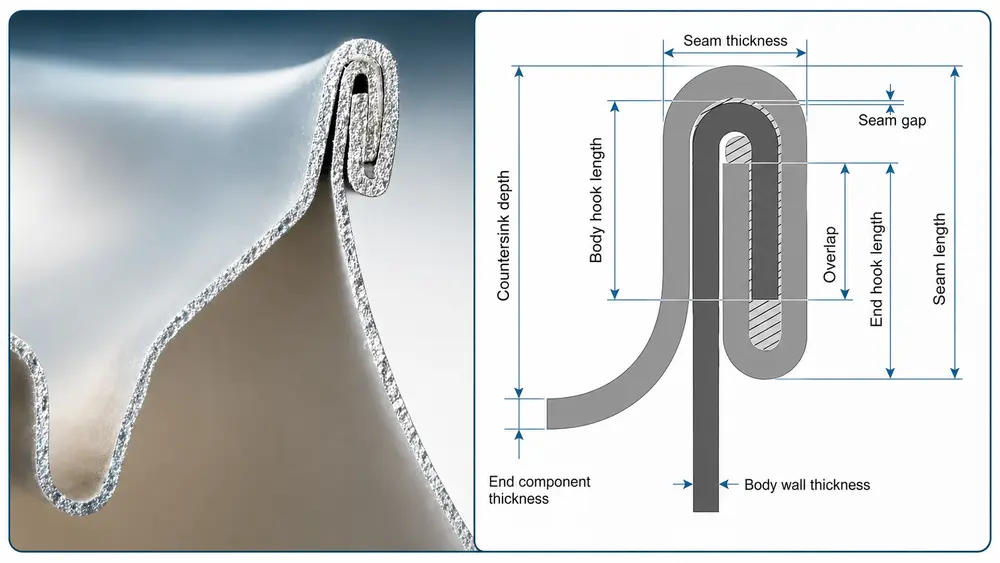
The Double Seaming Operations
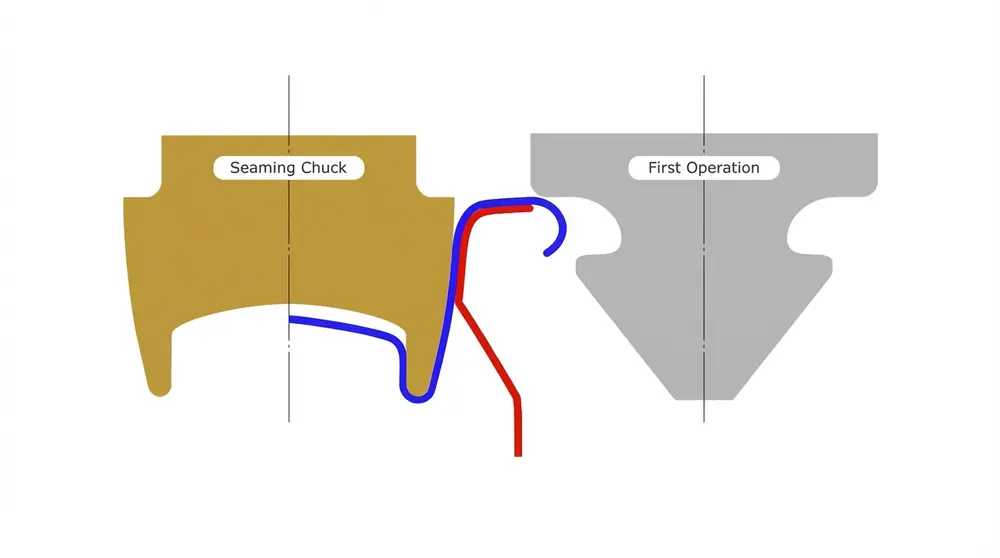
The double-seaming process on the canning line happens in stages. First the can and lid are clamped together (compression) to align them. Then two rolling steps complete the seam:
First Operation
A C-shaped seaming roll engages the lid. It hooks and folds the lid’s curled edge (cover hook) under the body flange (body hook). As the can body turns (or the roll moves), this interlocks the cover and body hooks. At this point the hooks are engaged but the seam is still somewhat loose.
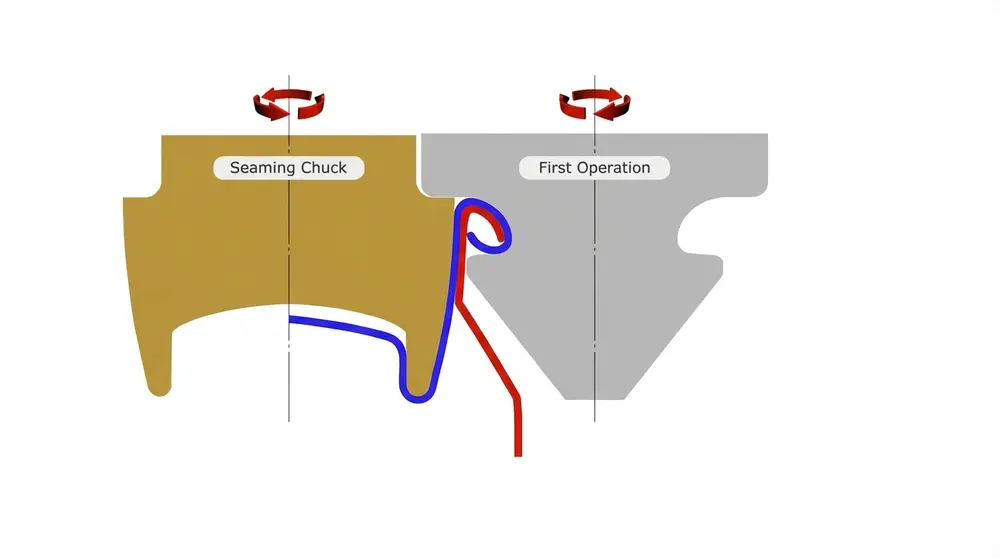
Second Operation
A flatter, low-profile roll then slides over the newly formed seam to compress it. This final roll irons the five-layer seam flat against the can body. The pressure forces the metal hooks tightly together and squeezes the sealing compound into any gaps. After the second operation the double seam is fully interlocked and hermetically sealed.
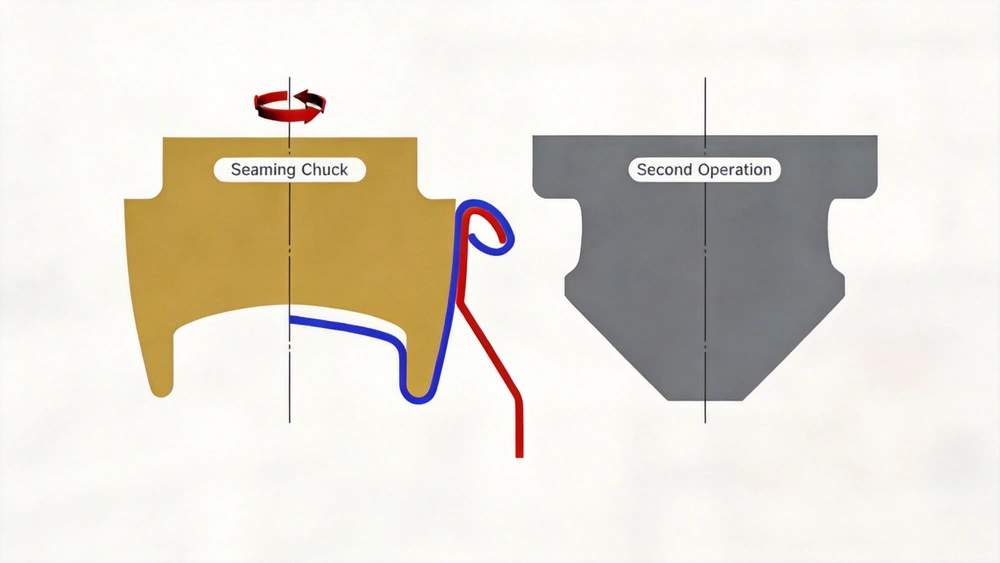
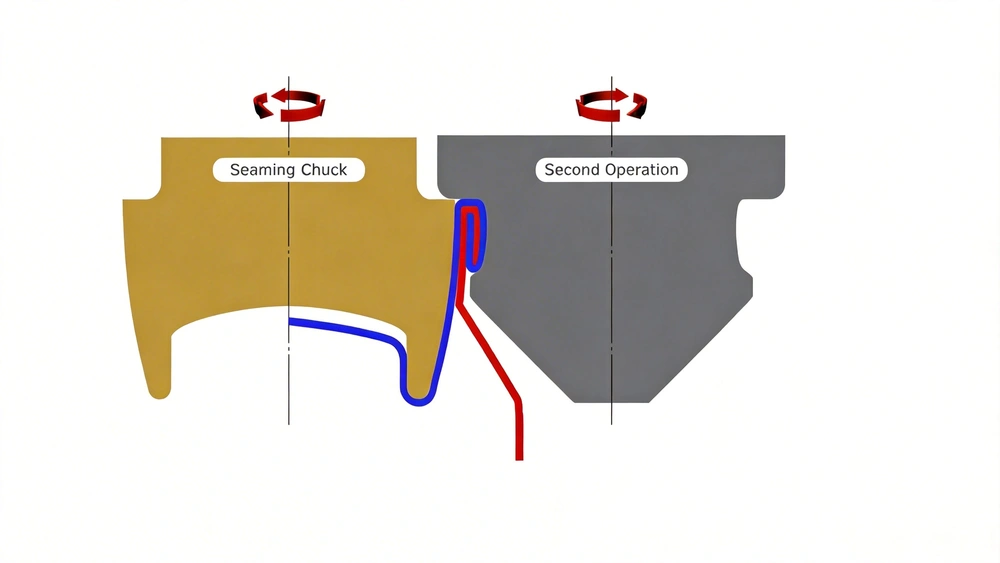
As one industry guide notes, “the second operation is the conversion of the loose mechanical interlock into a solid, hermetic unit”.
Double Seamer Machines and Tooling
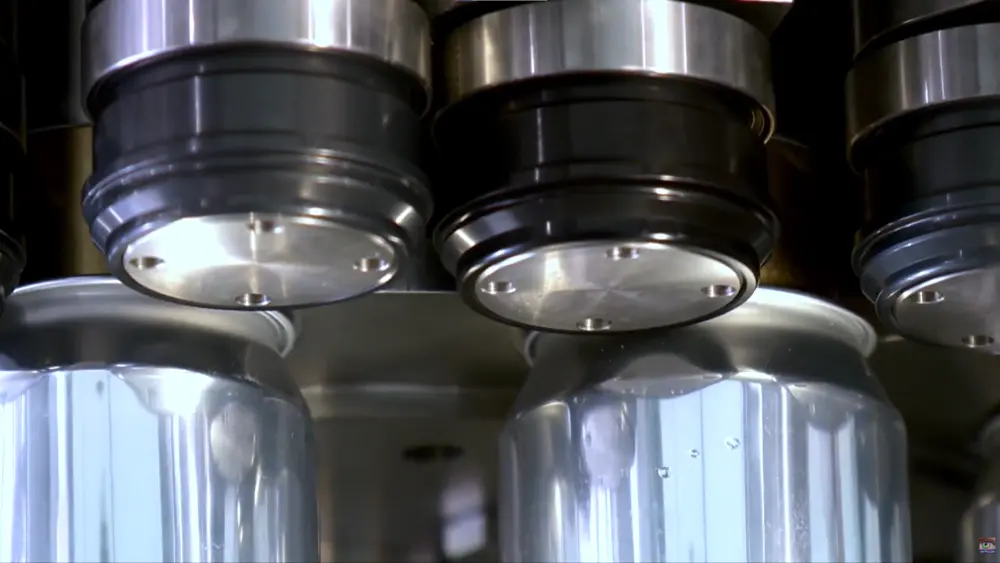
Canning lines use specialized double seamer machines. Modern rotary seamers have a bank of multiple seaming heads on a spinning turret, allowing thousands of cans to be sealed per minute.
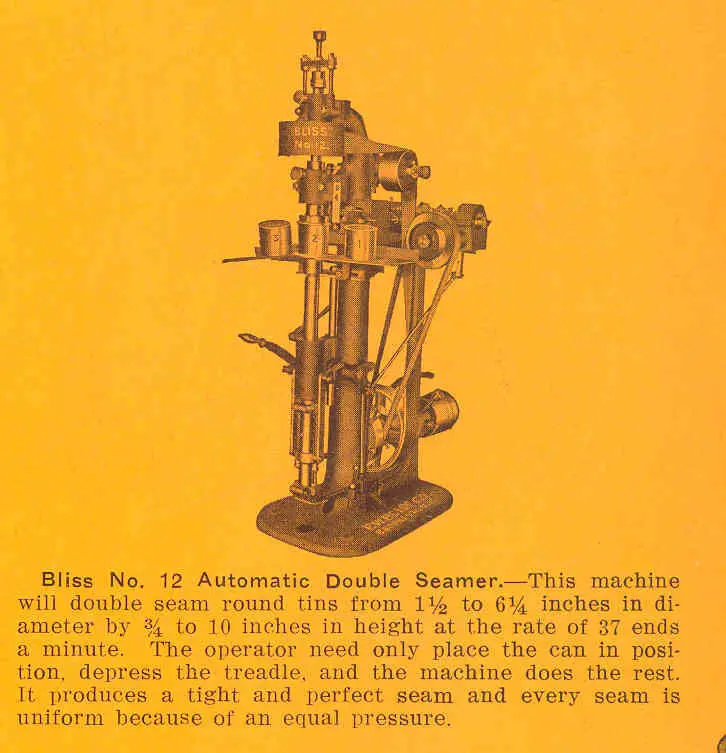
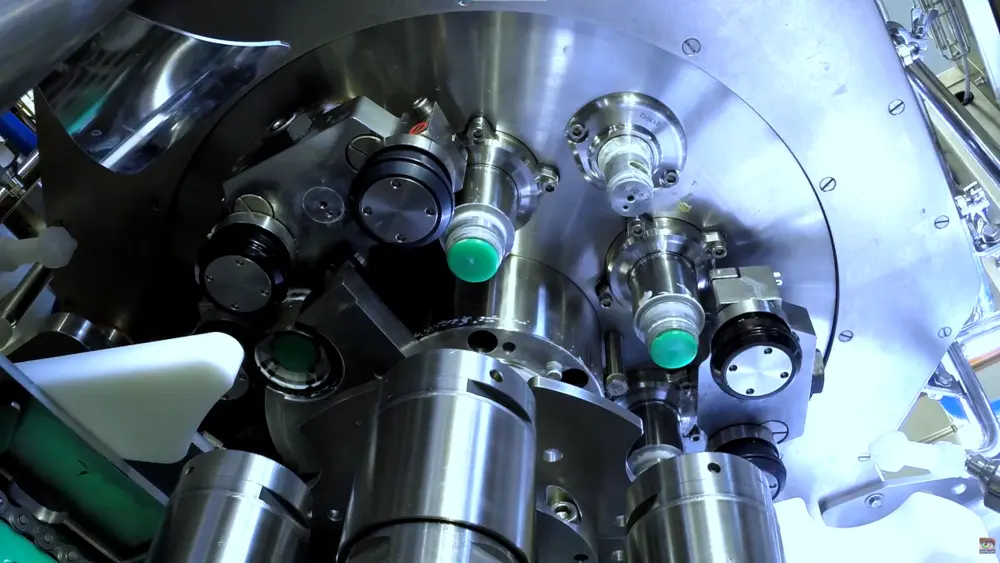
Each seaming head contains the key tooling: a powered seaming chuck, first operation roll, and second operation roll. Precise alignment and rigidity of these components are essential for consistent seam quality.
Benefits of Double Seaming
- High Reliability: Mechanically strong interlocked joint resists pressure and vacuum; durable metal-to-metal seal.
- Fast, High Throughput: Modern rotary seamers process thousands of cans per minute.
- Retort and Thermal Compatibility: Cold mechanical seal tolerates 121°C steam sterilization without degradation.
For more details on quality control, check our guide: Double Seam Inspection in Aluminum Beverage Cans
Learn how to identify common issues with our detailed reference: Aluminum Can Double Seam Defects Identification Guide
FAQ – Double Seaming Technical Questions
A: Industry standard typically requires ≥ 45–50% overlap depending on can specification. Below 40% usually fails hermetic integrity during pressure or vacuum testing.
A: Use a calibrated seam micrometer or projection microscope on a cut cross-section. Free space should generally be 8–15% of total seam thickness to allow compound flow without excessive tightness.
A: Yes – properly formed seams routinely handle vacuum-packed vegetables (~0.4–0.7 bar vacuum) and carbonated beverages (up to ~6–7 bar internal pressure) when within specification.
A: Usually due to worn or misaligned first operation roll, excessive roll pressure, or incorrect chuck fit. These defects compromise the compound seal and increase leakage risk.
A: Yes – steel (tinplate/ECCS) and aluminum cans both use double seaming, but tooling (roll profiles, chuck) must be matched to material thickness and temper to avoid cracking or loose seams.
A: At minimum every 8–12 hours of production or after every tool change. Check for wear grooves, burrs, or diameter changes beyond 0.05 mm tolerance.
A: Require supplier seam teardown data: body hook ≥1.5 mm, cover hook ≥1.8 mm, overlap ≥50%, seam gap ≤0.12 mm, seam thickness within ±0.05 mm of target.