
Standard Overview
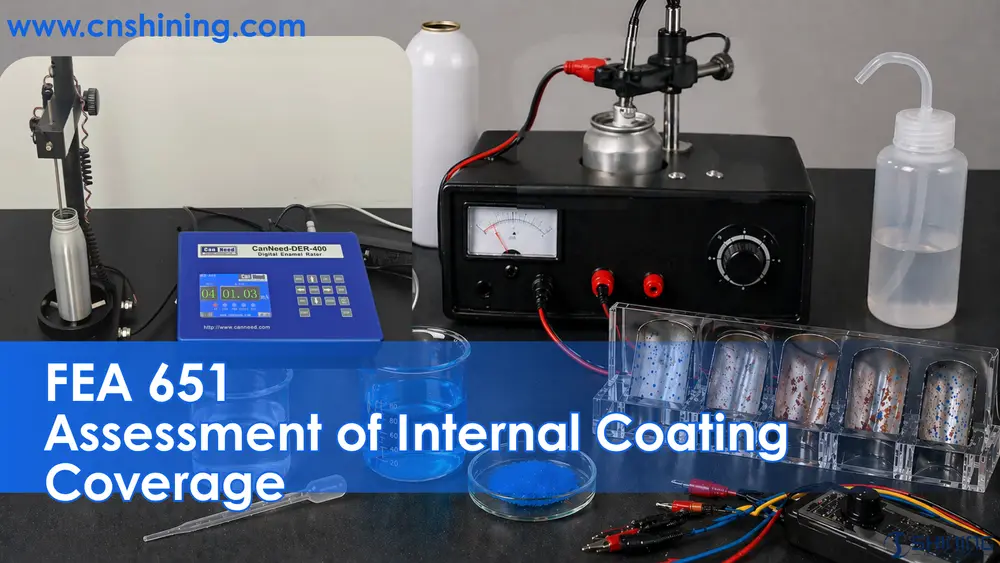
FEA 651 is an industry test method issued by the European Aerosol Federation (FEA) for evaluating the integrity and continuity of internal protective coatings applied to metal aerosol containers and valve mounting cups.
Internal coatings are essential to protect the metal substrate from corrosion and unwanted chemical interaction with the formulation. FEA 651 provides two complementary assessment methods:
- A chemical interaction test to visually reveal coating discontinuities
- An electrical conductivity test to quantify exposed metal areas
Scope and Applicability
FEA 651 applies to:
- Steel and tinplate aerosol containers
- Aluminium aerosol containers
- Valve mounting cups
With suitable adaptation, the chemical method can also be used to evaluate external container coatings.
Method 1 – Chemical Interaction Test
Principle of the Test
This method relies on a controlled chemical reaction between a copper-based reagent and any exposed metal surface.
Where the internal coating is discontinuous, the reagent reacts with the metal substrate, producing reddish-brown copper deposits that are visible to the naked eye.
Test Solution (Typical Composition)
| Component | Typical Content (% w/w) | Function |
|---|---|---|
| Copper sulphate (CuSO₄·5H₂O) | 20.0 | Indicator of exposed metal |
| Concentrated hydrochloric acid (≈35%) | 9.0 | Reaction activation |
| Demineralised water | Balance | Solvent |
Procedure Summary
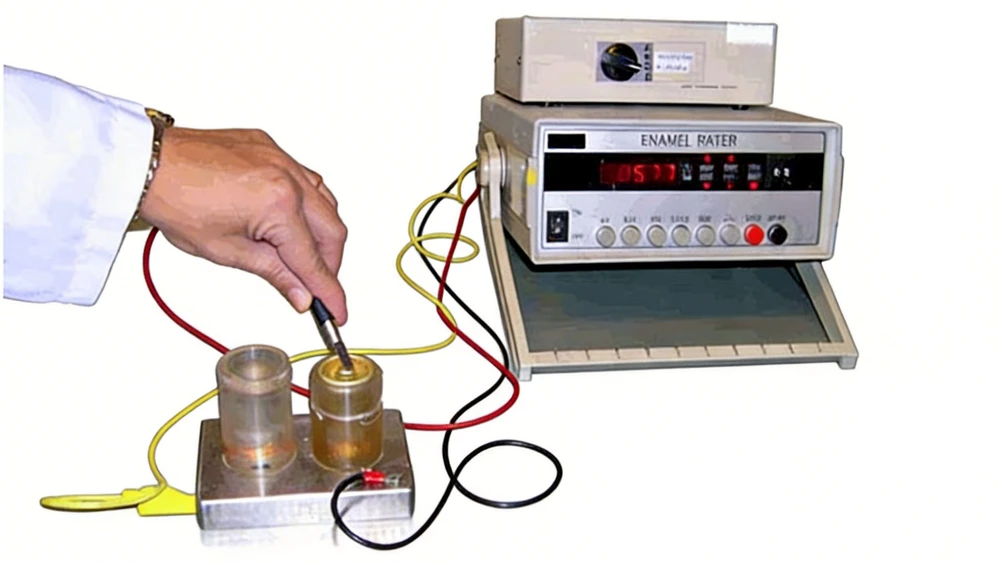
- Fill the empty container with test solution
- Allow to stand for approximately 2 minutes at ambient temperature
- Empty immediately and rinse thoroughly with demineralised water
- Open the container and inspect internal surfaces
Coating discontinuities appear as reddish-brown stains on or beneath the lacquer.
Reporting
Results are reported as a comparative, subjective assessment, ideally referenced against a known control sample.
It is normal for commercially acceptable containers to show a small number of imperfections without causing field issues.
Method 2 – Electrical Conductivity Test
Principle of the Test
This method detects exposed metal by measuring the electrical current flowing through an electrolyte in contact with the container interior.
The magnitude of the current is proportional to the area of uncoated metal exposed to the electrolyte.
Electrolyte Solutions
| Substrate | Typical Electrolyte Composition |
|---|---|
| Aluminium | 1.0% NaCl in demineralised water |
| Steel / Tinplate | 0.7% potassium ferrocyanide + 0.54% NaCl |
Measurement Procedure (Quantitative)
- Fill container with electrolyte to 1 mm below the curl
- Ensure full wetting of internal surfaces
- Apply 6.3 V DC for a fixed time (typically 4 seconds)
- Measure and record current flow in mA
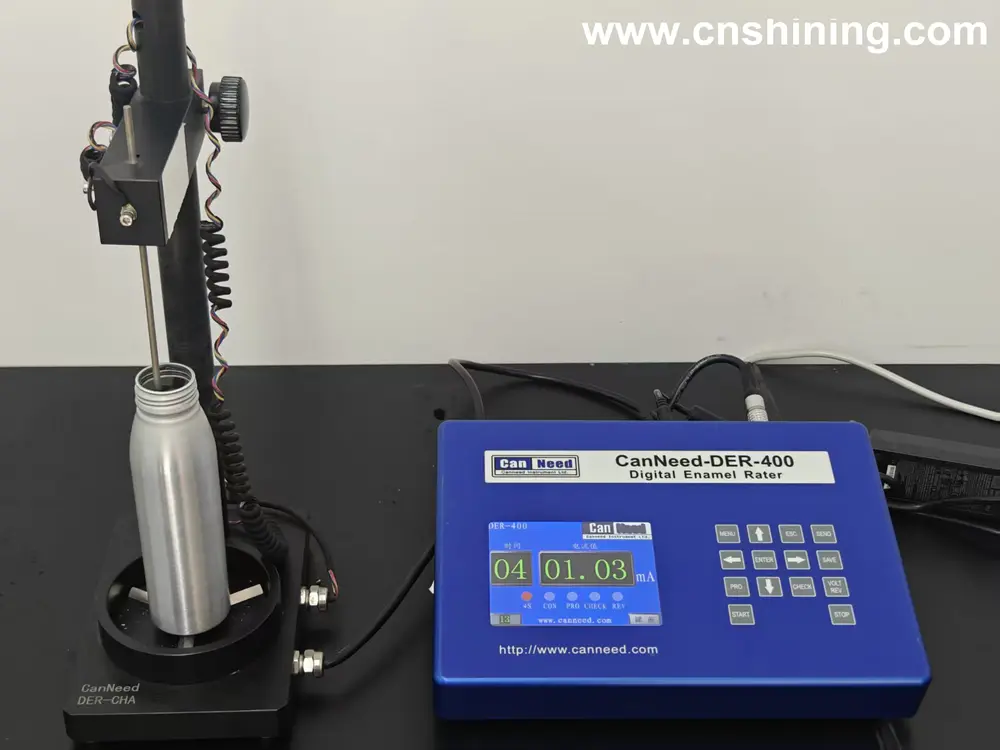
Regular calibration of the enamel rater (at least weekly) is essential for repeatable results.
Pore Location Method (Steel / Tinplate Only)
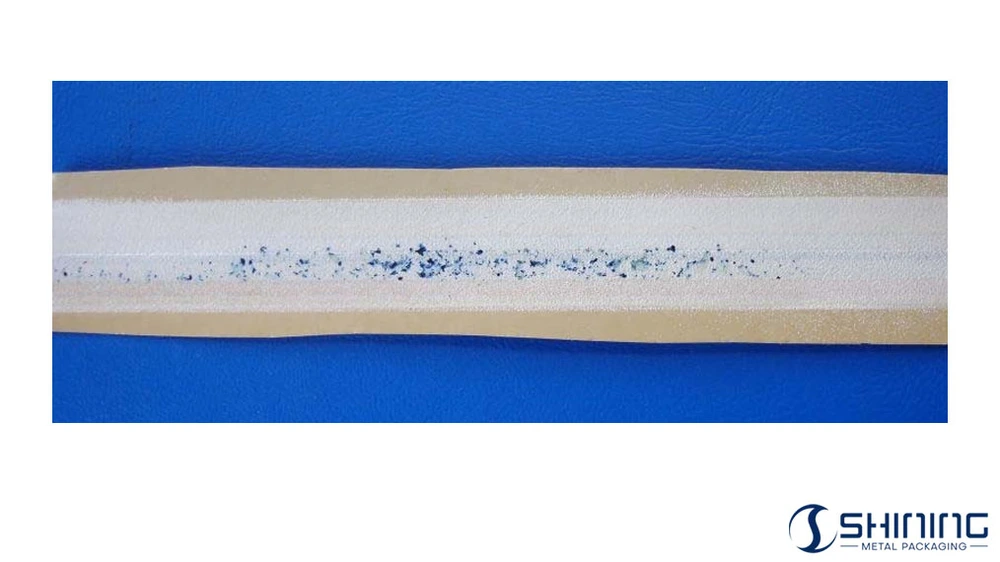
By extending the test duration to approximately 20–30 seconds, individual coating pores can be revealed as blue spots on the internal surface.
Test Equipment Examples
Engineering Interpretation
FEA 651 should be understood as a quality control and comparative evaluation tool.
Higher current values or increased pore counts indicate reduced coating continuity, but acceptable limits must be defined by product risk, formulation aggressiveness, and experience.
Download the Standard PDF
FEA 651 standard describing methods for assessing the integrity and coverage of internal coatings in metal aerosol containers and valve mounting cups. It outlines chemical interaction and electrical conductivity tests to detect coating defects, exposed metal areas, and pores that may lead to corrosion.
FAQ – Engineering, QA & Procurement
No. It only evaluates coating coverage at the time of testing. Long-term compatibility requires separate formulation studies.
No. Many manufacturers rely primarily on the electrical method for routine control. The chemical test is often used for investigations.
Yes, but different electrolytes and interpretations are required. Steel allows pore visualisation; aluminium generally does not.
Yes. Minor imperfections are normal and do not necessarily lead to product failure. Acceptance depends on formulation sensitivity.
Yes. Containers and valves tested according to FEA 651 cannot be reused.