
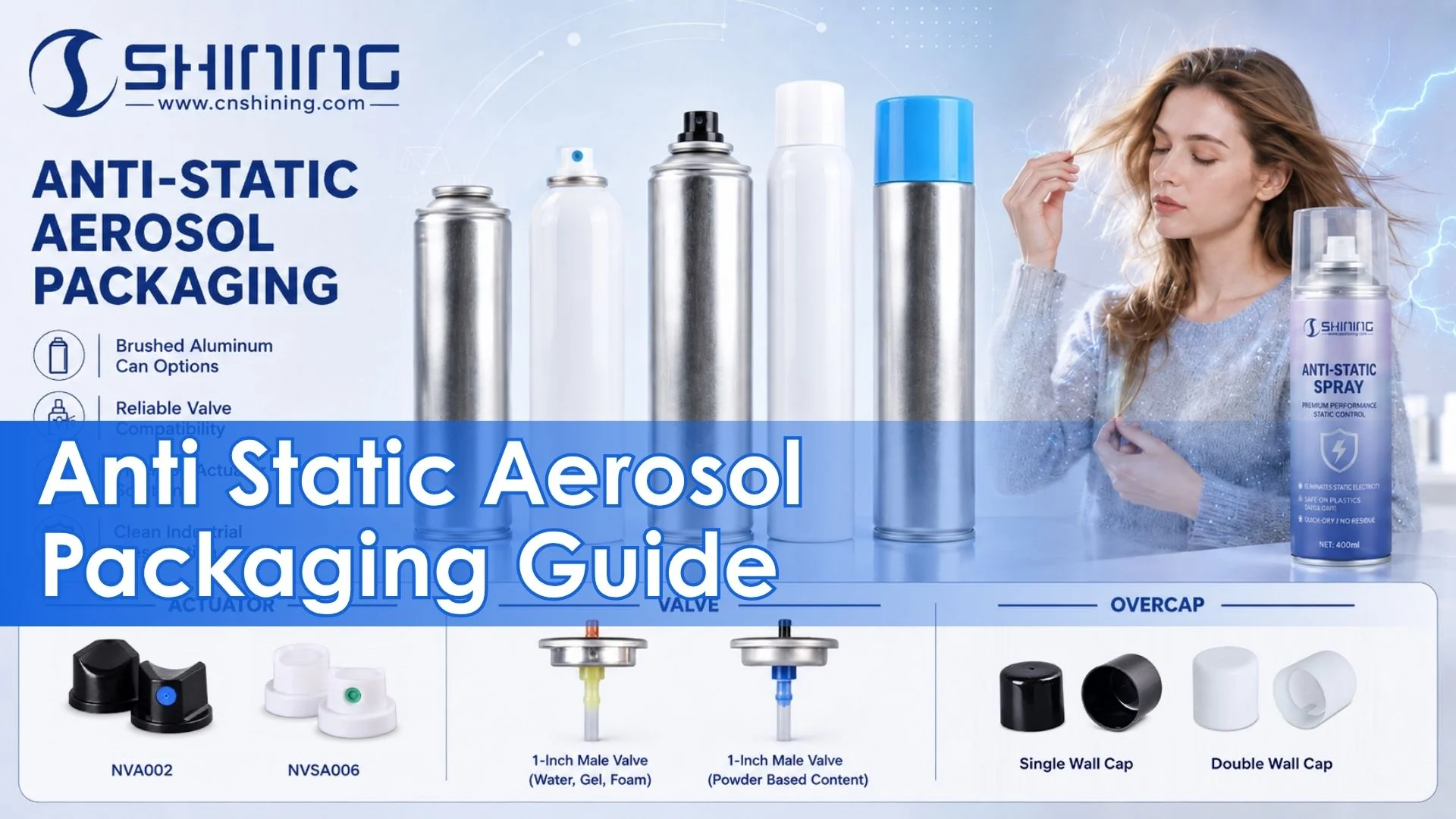
ESD spray, anti-static aerosol coating, static-control spray, and antistatic surface treatment all point to the same practical question: how fast can a treated surface release charge, and how stable is that effect after spraying?
Anti Static aerosol Spray is normally used to deposit antistatic active materials onto textiles, plastics, glass, external equipment surfaces, furniture, automotive interiors, workwear, or light industrial work surfaces. The goal is simple: reduce charge build-up, lower dust or hair attraction, and reduce nuisance electrostatic discharge. It is useful because it is fast, portable, and easy to apply. It is not a full replacement for ionizers, grounding systems, ESD packaging, or permanent antistatic materials in controlled electronics manufacturing.
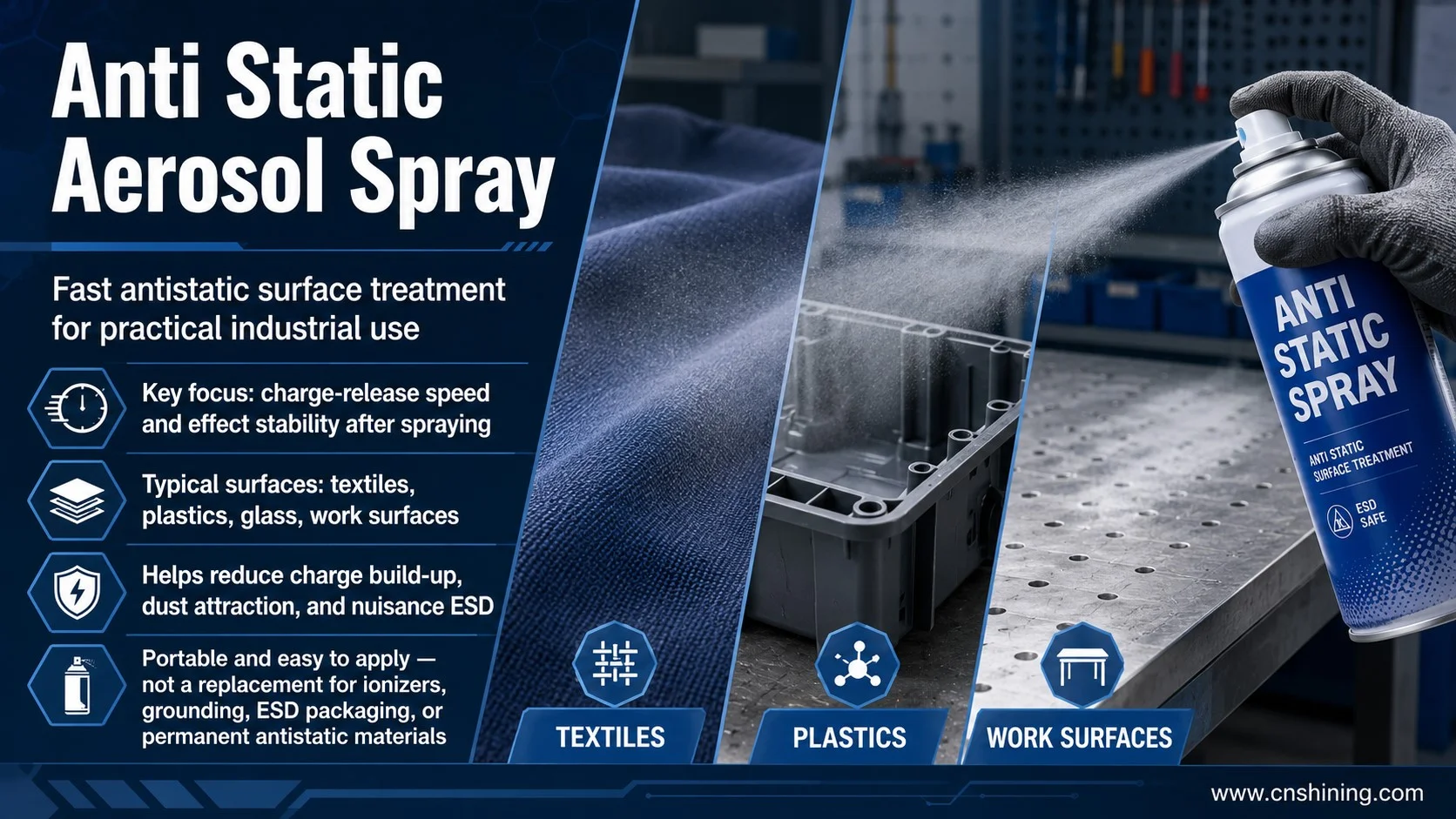
1. Definition and Working Principle
Anti-static sprays can be grouped into three practical types. The first is consumer fabric, hair, and home-care spray used for static cling, flyaway hair, pet hair attraction, and light static sparks. The second is office or equipment surface spray used on monitors, plastic housings, desks, and similar surfaces. The third is industrial or ESD-type surface treatment used on workwear, packaging, plastic parts, or working surfaces where measurable static dissipation is expected.
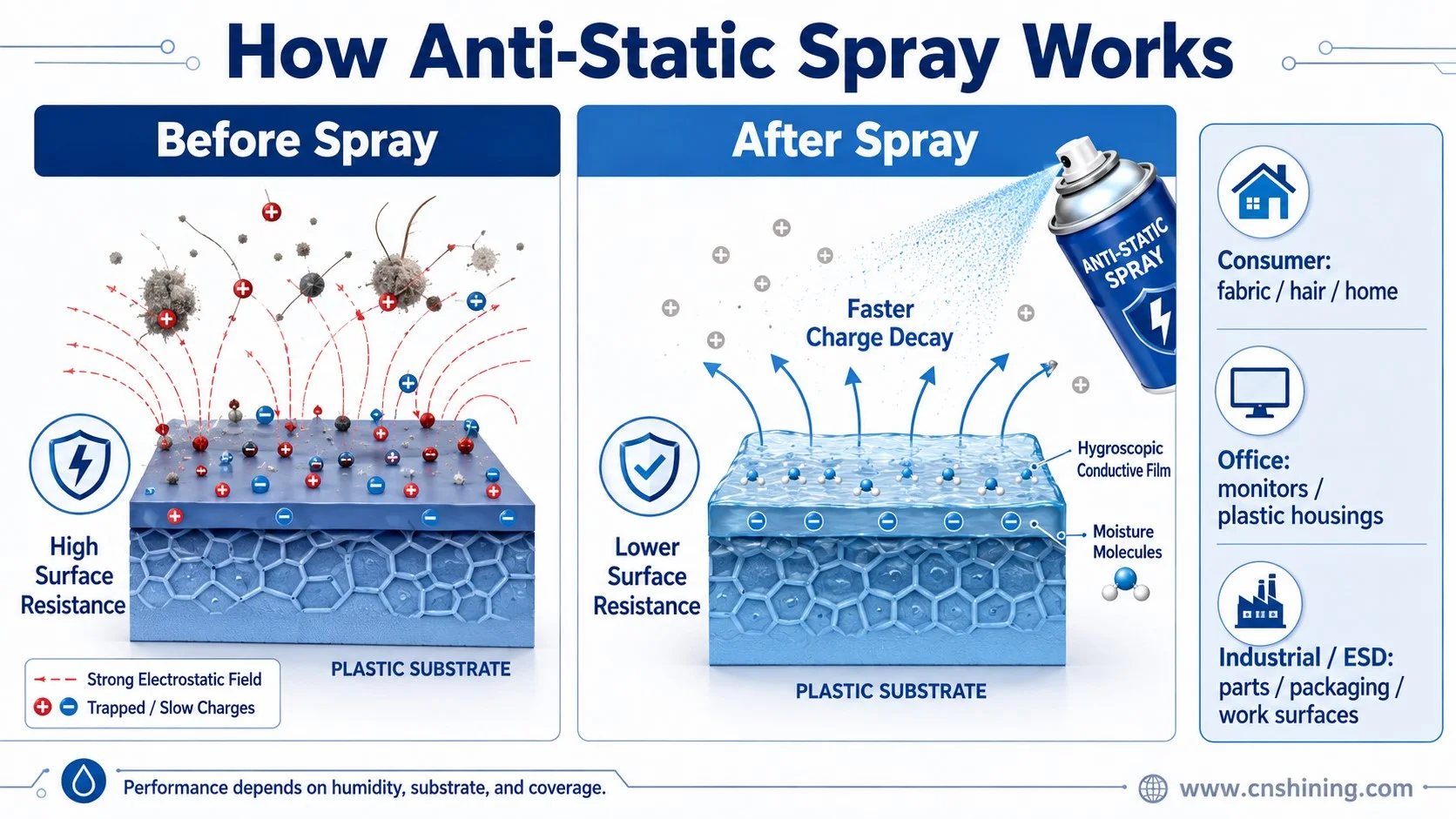
The most common mechanism is the hygroscopic conductive film route. Antistatic agents can form a thin moisture-bearing film or improve surface conductivity, which shortens charge decay time and reduces surface resistance. Many systems use quaternary ammonium salts, heterocyclic salts, or surfactant-based antistatic agents. See the technical overview on antistatic agent mechanisms.
A classic consumer-type formulation route is shown in US4129505A anti-static spray patent: a volatile alcohol carrier, a quaternary ammonium softener, and ammonium acetate as a hygroscopic or conductive salt. The alcohol flashes off. The remaining surface film helps the treated textile dissipate charge.
Industrial products often move toward a more durable film. Some use conductive organic liquids in isopropanol. Others use acrylic ESD coatings with low-conductivity pigments. These are closer to surface coatings than temporary clothing sprays.
Humidity matters. Research on ESD protective materials at low relative humidity shows that surface resistivity and charge decay can shift strongly under dry conditions. Below roughly 20%–30% RH, materials that behave acceptably at normal humidity may act more like insulators.
2. Market Size and Regional Trend
| Region | Market Signal | Technical Interpretation |
|---|---|---|
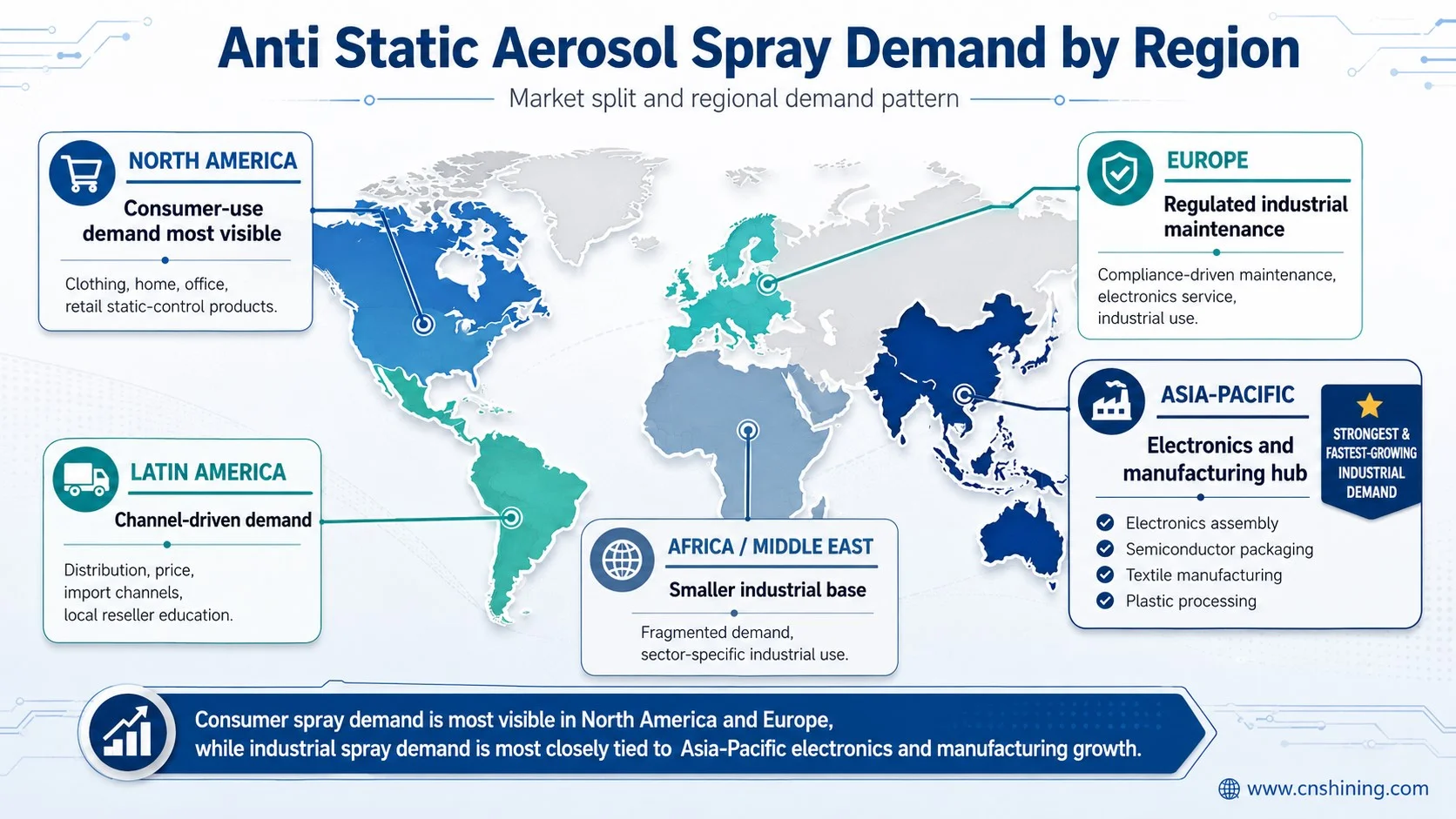
| North America | Strong visibility in direct consumer spray data; some public pages place it near 35% share. | More weighted toward clothing, home, office, and retail static-control products. |
| Europe | Mature market, often shown near 19%–20% in public spray pages. | Industrial maintenance, electronics service, and regulatory compliance shape product design. |
| Asia-Pacific | Largest and fastest in many upstream antistatic agent views; one source gives 35.9% revenue share in 2023. | Electronics assembly, semiconductor packaging, textile manufacturing, and plastic processing support industrial demand. |
| Latin America | Smaller base, roughly 6%–8% in several public spray views. | Distribution, price, and import channel education matter more than advanced formulation claims. |
| Africa / Middle East | Often grouped together in public data, around 4%–7%. | Demand is fragmented and tied to specific industrial sectors. |
consumer spray demand is more visible in North America and Europe; industrial spray demand is more likely to follow Asia-Pacific electronics and manufacturing growth. Latin America and Africa depend more on channels, price, and local distribution reliability.
3. Product Alternatives and Top Brand Landscape
Anti Static aerosol Spray is not the strongest static-control method in every situation. It is strong in speed, portability, and low deployment cost. It fits “solve it today” conditions. It does not create a fully auditable ESD control system by itself.
3.1 Comparison With Adjacent Static-Control Options
| Option | Performance | Cost Profile | Suitable Use | Main Limitation |
|---|---|---|---|---|
| Anti Static aerosol Spray | Fast coverage, immediate surface treatment, portable. | Low unit purchase; consumable over time. | Clothing, furniture, office plastics, automotive interiors, light industrial surfaces. | Needs repeat application; affected by humidity, substrate, spray amount, and odor. |
| Anti-static liquid / pump spray | Can be travel friendly and avoids aerosol dangerous-goods pressure. | Often lower packaging complexity than high-spec aerosol. | Travel, commuting, office, light fabric care. | Users may compare mist uniformity against aerosol cans. |
| Anti-static cloth / dryer sheet | Simple and low cost. | Very low single-use cost. | Emergency clothing use and laundry workflow. | Poor fit for electronics, precision surfaces, or controlled work areas. |
| Ionizer | System-level charge neutralization. | Higher initial investment. | Electronics assembly, cleanroom, stable workstations. | Not portable; requires power, layout, and maintenance. |
| Permanent antistatic additive or coating | Longer-life control built into material or surface. | Higher development and qualification cost. | Plastic parts, packaging, work surfaces, electronics, automotive components. | Not suitable for quick consumer after-treatment. |
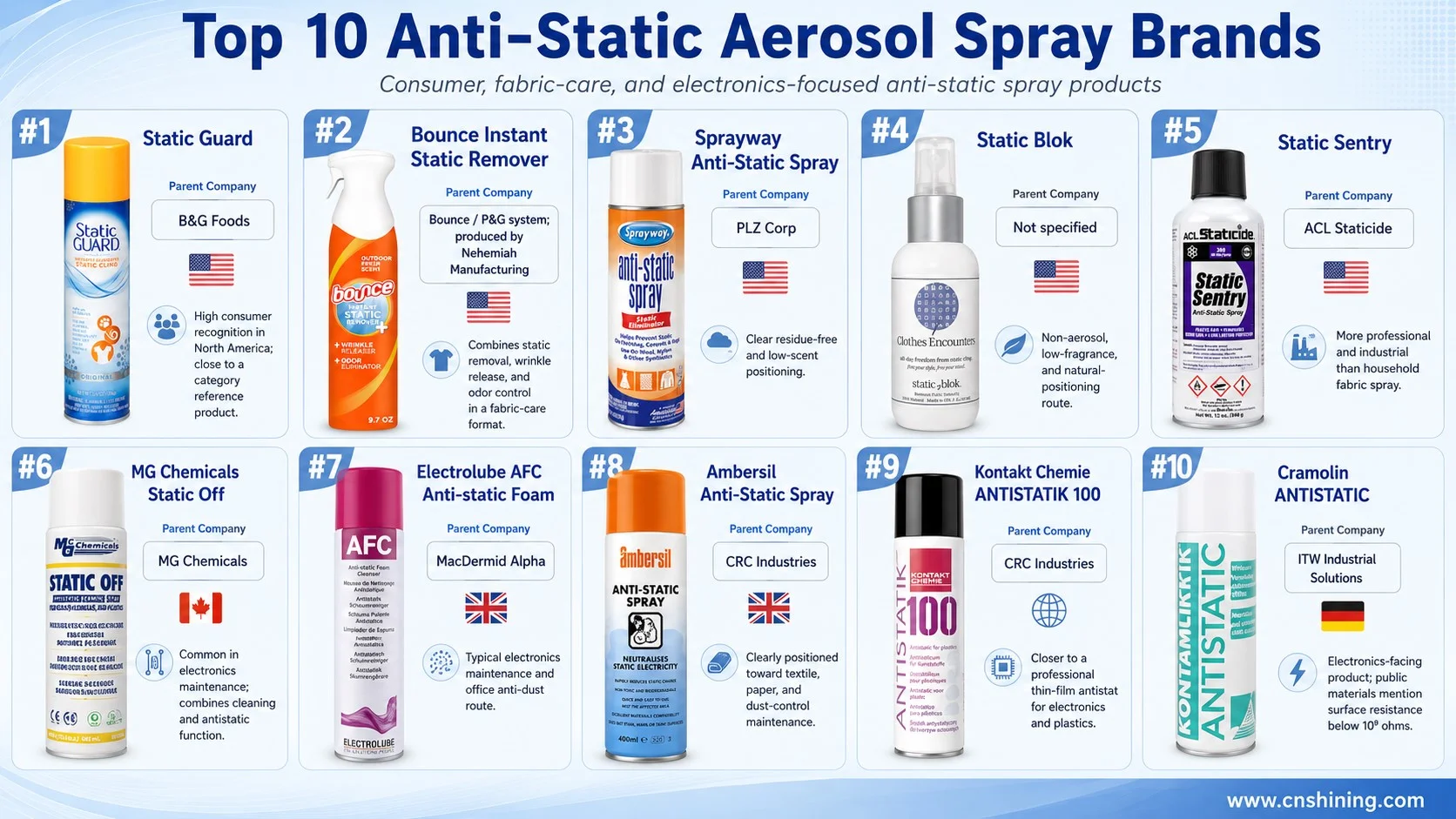
3.2 Public Channel Top 10 Brand Landscape
| Brand | Country | Parent / Owner | Common Size | Visible Price Range | Technical Comment |
|---|---|---|---|---|---|
| Static Guard | USA | B&G Foods | 1.4 oz, 5.5 oz | about 5–15$ | High consumer recognition in North America; close to a category reference product. |
| Bounce Instant Static Remover | USA | Bounce | 3 oz pump, 9.7 oz aerosol | about 5.7–9.6$ | Combines static removal, wrinkle release, and odor control in a fabric-care format. |
| Sprayway | USA | PLZ Corp | 6 oz | about 10$ | Clear residue-free and low-scent positioning. |
| Static Blok | USA | Static Blok / Donna Baum | 2 oz, 8 oz | about 10–18$ | Non-aerosol, low-fragrance, and natural-positioning route. |
| ACL Staticide Static Sentry | USA | ACL Staticide | 12 oz | about 54.8$ | More professional and industrial than household fabric spray. |
| MG Chemicals Static Off | Canada | MG Chemicals | 450 g / 465 mL | about 9–16$ | Common in electronics maintenance; combines cleaning and antistatic function. |
| Electrolube ASA | UK | MacDermid Alpha | 250 mL, 25 L | about 18.4$ | Typical electronics maintenance and office anti-dust route. |
| Ambersil Anti-Static Spray | UK | CRC Industries | 400 mL | about 13.4–14.1$ | Clearly positioned toward textile, paper, and dust-control maintenance. |
| Kontakt Chemie ANTISTATIK 100 | Belgium / EU | CRC Industries | 200 mL | about 28$ | Closer to a professional thin-film antistat for electronics and plastics. |
| Cramolin ANTISTATIC | Germany | ITW Industrial Solutions | 200 mL, 400 mL | about 10.9–16.8$ | Electronics-facing product; public materials mention surface resistance below 109 Ω. |
4. Formulation Routes, Terms, and Technology Direction
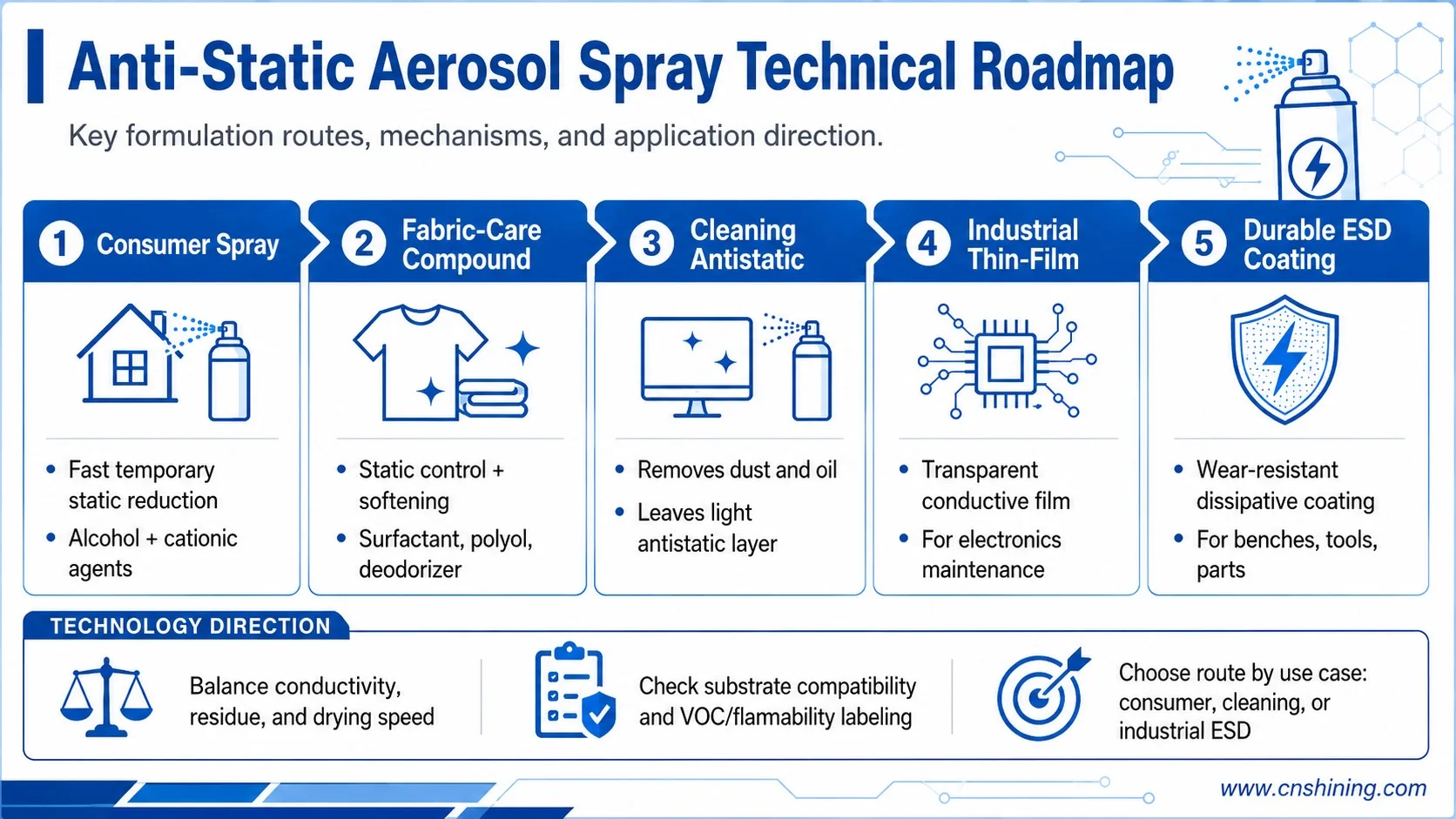
Most antistatic sprays follow one of three formulation routes: temporary consumer static removal, cleaning plus antistatic function, or durable industrial ESD surface treatment. Public SDS data is uneven. Some brands disclose categories rather than full ratios, so the safer reading is by chemistry family and mechanism, not by assumed full formula.
4.1 Common Formulation Routes
| Type | Typical Ingredients | Mechanism | Public Example | Safety / Toxicology Notes |
|---|---|---|---|---|
| Consumer fabric, hair, and home spray | Quaternary ammonium compound, cationic softener, ethanol or isopropanol, water, hygroscopic salt, fragrance, propellant. | Forms a moisture-attracting cationic film that reduces charge accumulation and speeds charge leakage. | Classic alcohol + quat softener + ammonium acetate route. | Alcohol and propellant affect flammability and inhalation labeling. Quats carry environmental and sensitivity discussion. |
| Modern fabric-care compound spray | Cationic surfactant, softener, nonionic surfactant, polyol, deodorizer, fragrance, dye-transfer inhibitor, water. | Static reduction plus fabric softening and limited odor or care effect. | CN113930977A gives 0.5–3.0% cationic surfactant, 0.5–5.0% softener, 1.0–5.0% antistatic agent, and 1.0–10.0% polyol. | More functions mean more residue, fragrance, compatibility, and labeling checks. |
| Cleaning antistatic spray | Alcohol, water, small quantity of quat or surfactant, cleaning aids, propellant. | Removes oil or dust, then leaves a light antistatic layer to reduce re-attraction. | Common in electronics maintenance and office surface sprays. | Plastic, acrylic, coated screen, and optical surface compatibility need testing. |
| Industrial thin-film antistat | Conductive organic liquid, isopropanol or alcohol carrier, film-forming surface-active system. | Leaves a transparent or near-transparent conductive film. | Kontakt Chemie ANTISTATIK 100 type route. | Higher VOC and flammability pressure; check appearance and long-term residue. |
| Durable ESD coating spray | Acrylic resin, low-conductivity pigment or filler, solvent, propellant. | Builds a more wear-resistant static-dissipative coating. | ESD spray paint route for work surfaces or parts. | Needs surface resistance, adhesion, abrasion, and material compatibility tests. |
4.2 Terminology Used in This Category
| Term | Technical Meaning | Commercial Meaning |
|---|---|---|
| ESD | Electrostatic discharge. | Determines whether the product can enter electronics, cleanroom, or precision manufacturing use. |
| Tribogeneration | Charge generated by friction. | Useful when the product reduces charging at the source, not only after the event. |
| Surface resistance / resistivity | Electrical resistance measured along a surface. | Required if industrial users expect measurable dissipative performance. |
| Charge decay | Time needed for charge to fall after treatment. | Useful for proving whether the product works quickly enough. |
| Static dissipative | Between insulating and conductive behavior. | More precise than “anti-static” for packaging and ESD users. |
| VOC | Volatile organic compound. | Influences state regulations, solvent choices, and sustainability claims. |
| GWP | Global warming potential. | Drives propellant selection as HFC pressure increases. |
| UN1950 | Dangerous goods transport classification for aerosols. | Affects storage, e-commerce, cross-border shipping, and limited quantity options. |
| BOV | Bag-on-Valve system. | Separates product and propellant, supports 360° dispensing, and can reduce leakage concerns. |
4.3 Technology Direction
The practical direction is clear: lower odor, lower VOC pressure, lower GWP propellants, more durable antistatic films for industrial users, and packaging that controls mist quality and leakage. The first two are likely to land fastest because they answer both user complaints and regulatory pressure.
The EPA AIM Act HFC framework and California consumer product VOC regulations are good examples of why aerosol formulation and propellant choices cannot be separated from packaging decisions.
5. Regulatory and Compliance Framework
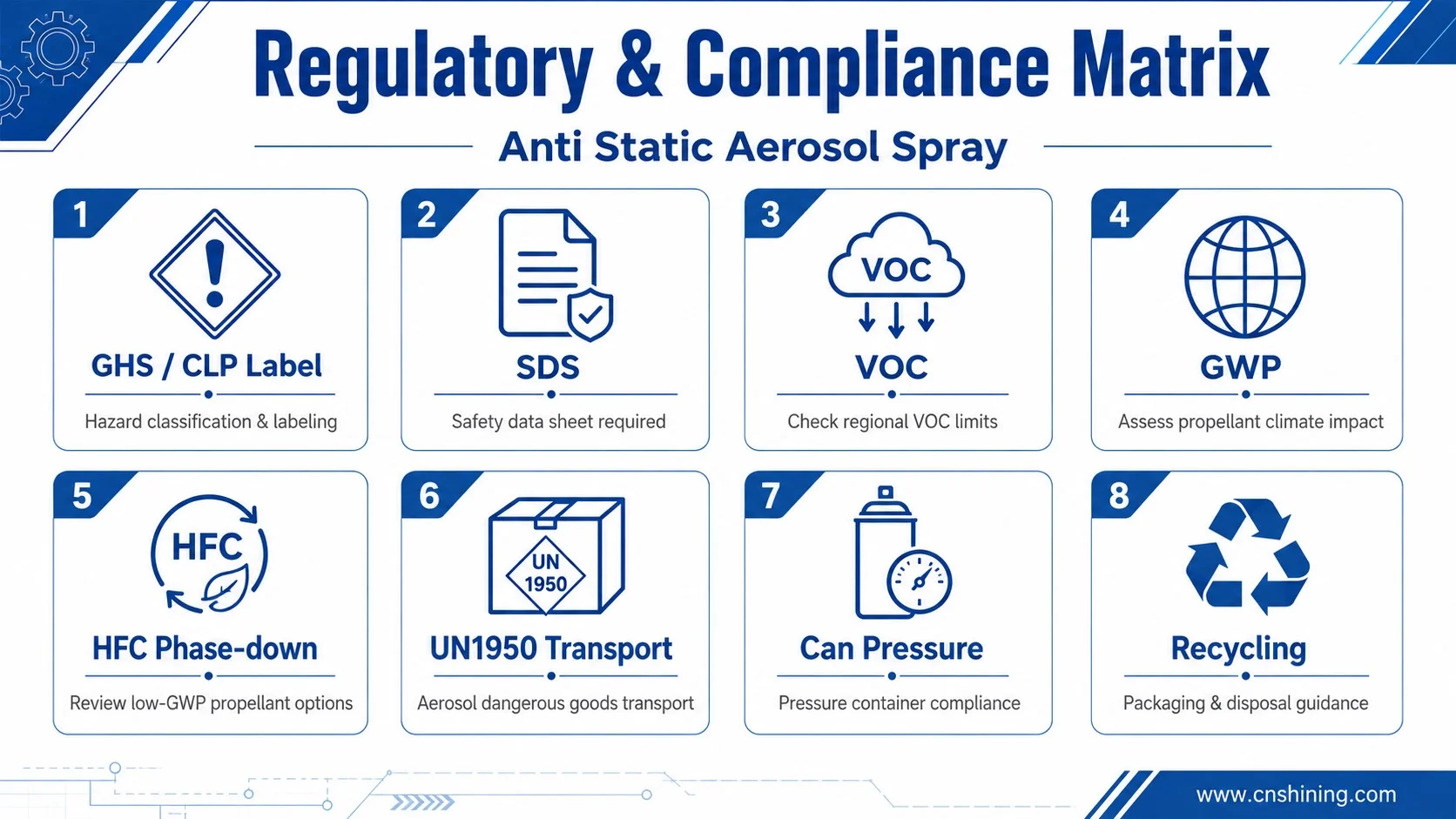
Compliance is not one anti-static spray law. It is a stack of chemical classification, labeling, formula restrictions, VOC and GWP rules, dangerous goods transport, container requirements, and disposal obligations. The final route depends on whether the product is sold to consumers, industrial users, or ESD-controlled electronics facilities.
| Market | Main System | Practical Meaning for Anti Static aerosol Spray |
|---|---|---|
| European Union | CLP, REACH, Aerosol Dispensers framework, ADR / IMDG / IATA. | Check GHS/CLP classification, labels, SDS, mixture restrictions, and future PFAS-related risk in both formula and packaging auxiliaries. |
| United States | OSHA HazCom, EPA AIM Act, state VOC/GWP rules, DOT/PHMSA transport. | Workplace communication, propellant choice, VOC limits, and state-level requirements must be checked together. |
| Canada | WHMIS / HPR, CCCR, TDG. | Workplace and consumer chemical rules both matter; pressure container and aerosol labels need local review. |
| Japan | NITE GHS and NITE-Gmiccs. | Label and SDS consistency with local classification data is a major check point. |
| Brazil | ABNT NBR 14725:2023; dangerous goods transport by ANTT. | Latin America’s key market has an active GHS update window; SDS and label updates should not be delayed. |
| South Africa | Hazardous Chemical Agents Regulations 2021. | Often used as a reference point for African chemical compliance, but local import rules still need project-level review. |
| Global Transport | UN1950 aerosols, IMDG, ADR, IATA / ICAO. | IMDG dangerous goods rules affect sea shipment, while air and road transport may require separate packaging and documentation checks. |
Transport is a frequent cost trap. Aerosol sprays commonly fall under UN1950. Under Canadian transport rules, aerosol classification can depend on flammable component ratio and heat of combustion; see the Canadian TDG aerosol classification rule. In practice, classification affects e-commerce acceptance, warehouse separation, dangerous goods training, and whether small packs can use limited quantity routes.
6. User Pain Points and Packaging Solutions
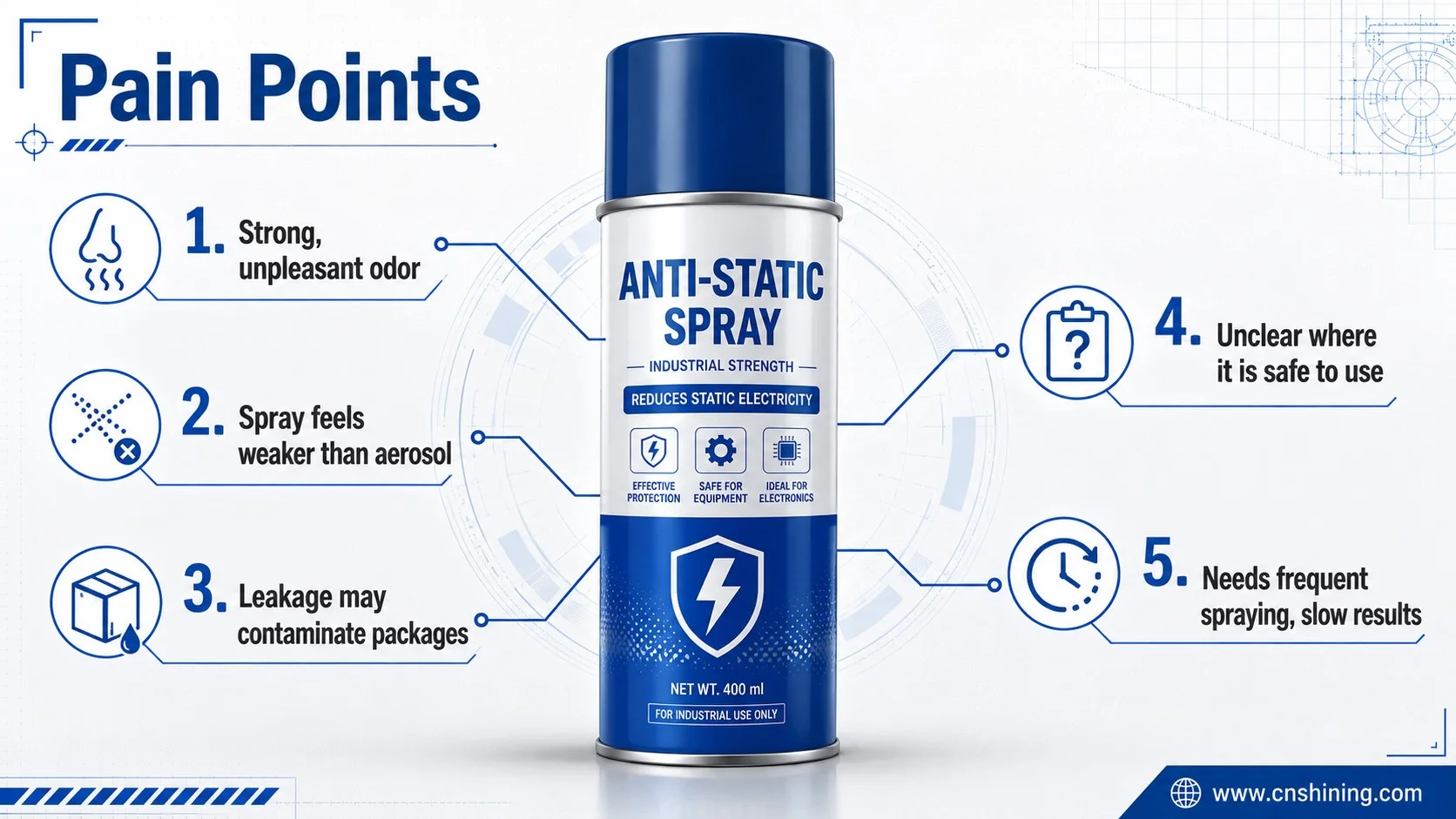
Public user feedback points to a practical conclusion: the main complaints are not always “the chemistry does not work.” They are more often odor, leakage, uneven mist, repeated application, waiting time, travel inconvenience, and price perception. Packaging can fix part of that without changing the active chemistry.
6.1 Visible Pain Points
| Channel / Scenario | Pain Point | Packaging Reading |
|---|---|---|
| Consumer reviews | Odor is unpleasant or too strong. | Control shot weight, mist size, and wet spot formation. Low-scent chemistry helps, but the actuator also matters. |
| Travel format | Pump spray may feel weaker than aerosol. | Use a higher-grade fine-mist or continuous spray pump. A cheap trigger creates uneven coverage. |
| Travel and bags | Leakage risk and contamination of packed items. | Use locking caps, stronger valve sealing, or BOV design for higher-risk SKUs. |
| Work surface and electronics | Users are unsure where the product is safe. | Print compatible and prohibited surfaces clearly. Do not hide this in small back-label text. |
| Daily use | Users need to spray often and wait to judge effect. | Print spray distance, recommended amount, waiting time, and test-spray instruction. |
6.2 Packaging Improvement Priorities
| Component | Recommendation | Pain Point Solved | Feasibility | Cost Impact |
|---|---|---|---|---|
| Valve | Move from standard continuous valve to finer, more stable output; use 360° valve where furniture, car interiors, or odd angles matter. Valve suppliers such as Shining Packaging show continuous and specialty aerosol valve capabilities. | Odor burst, wet spots, poor coverage, awkward angle spraying. | High | Low to medium |
| Actuator | Use fine-mist or continuous spray actuators. For travel pump versions, avoid low-grade triggers. | Strong odor perception, large droplets, weak pump experience. | Very high | Low to medium |
| Can system | Use Bag-on-Valve technology for higher-end or high-complaint SKUs. | Leakage, propellant-product contact, 360° use, product evacuation. | Medium | Medium to high |
| Can material | Use aluminum aerosol cans or steel cans based on formula compatibility, pressure requirement, visual target, and recycling route. | Corrosion risk, appearance, sustainability expectation. | High | Medium |
| Internal coating | Test higher-grade internal coating for water, alcohol, and quat-containing systems. BPA-NI and PFAS-NI routes should be considered where relevant; see PPG BPA-NI coating information. | Can corrosion, odor pickup, extractables, long-term stability. | Medium | Medium |
| Printing | State spray distance, waiting time, test area, electronic surface limits, and travel storage instruction. | Misuse, perceived failure, surface damage complaints. | Very high | Low |
| SKU structure | Use home aerosol size, travel pump size, and refill where the formula allows. | High travel unit price, poor portability, home-use cost perception. | High | Low to medium |
My practical priority order is: make the spray finer, make the cap safer, make the label clearer, and make the odor lighter. BOV and advanced internal coating are good choices for higher-risk or higher-value SKUs, but they do not need to be the first upgrade on every product line.
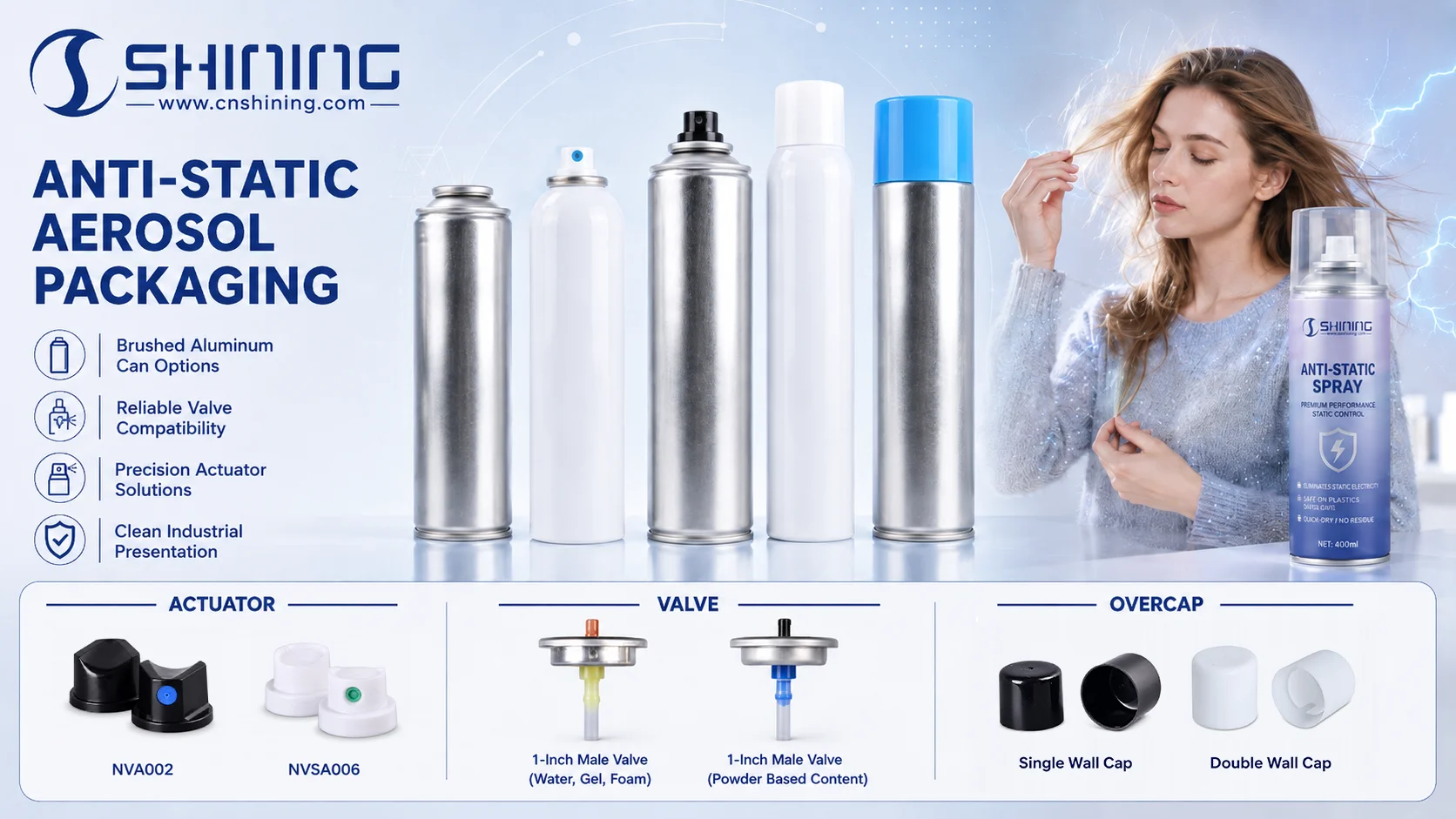
7. Product Fit: Shining Packaging Actuators, Cans and Valves
For this product category, packaging is part of the performance system. A good formula can still feel poor if the actuator produces large droplets, the valve output is unstable, the can lining is not compatible with alcohol or quat-containing formulas, or the cap leaks during travel.
In this context, Shining Packaging can be positioned around the parts that directly affect user experience: aerosol cans, valves, actuators, overcaps, and BOV systems. The useful discussion is not “which package looks better.” It is whether the package can control fine mist, protect the formula, resist corrosion, pass pressure requirements, and print clear use instructions.
Shining Packaging’s aerosol-related product information includes aluminum aerosol cans, aerosol valves, actuators and overcaps, and Bag-on-Valve systems. For Anti Static aerosol Spray, the first engineering check should be formula compatibility with the can coating, valve gasket, actuator output, and intended spray angle.
8. Final Technical Takeaways
Anti Static aerosol Spray works best when the target is fast, temporary surface treatment. The common mechanism is a thin antistatic film that improves charge dissipation, often helped by moisture. The weak points are predictable: dry air, wrong substrate, over-application, odor, leakage, unclear labels, and unrealistic expectations.
For packaging work, the highest-return improvements are not exotic. Start with fine mist control, valve stability, cap security, coating compatibility, and clear usage instructions. BOV, low-GWP propellants, PCR or recyclable cans, and higher-grade internal coatings are useful when the product brief, target market, and complaint profile justify the cost.
9. FAQ: Anti Static aerosol Spray
Most temporary anti-static sprays leave a very thin surface film after the carrier evaporates. That film often contains cationic surfactants, quaternary ammonium compounds, hygroscopic salts, or similar antistatic agents. The film attracts a small amount of moisture and improves surface conductivity, so charge leaks away faster instead of accumulating on fabric, plastic, glass, or work surfaces.
It can be used as a supplementary surface treatment, but it should not replace a controlled ESD system. Electronics production normally needs grounding, ionization, ESD-safe packaging, dissipative work surfaces, and verified procedures. A spray is harder to audit because performance depends on application amount, humidity, substrate condition, drying time, and repeat use.
Many temporary antistatic systems depend partly on moisture. The treated surface film conducts better when it can hold a small amount of water from the air. At low relative humidity, especially below about 20%–30% RH, surface resistance can increase and charge decay can slow down. That is why winter complaints are common.
Aerosol spray usually gives fast, even coverage with a continuous mist, but it brings pressure container, propellant, VOC, and dangerous goods transport issues. Pump spray avoids some aerosol logistics and is easier for travel formats, but cheap pumps may produce larger droplets or uneven coverage. The actuator or pump head quality strongly affects user perception.
Odor comes from fragrance, solvents, propellants, and local over-application. A heavy spray output can create wet spots where volatile materials concentrate before drying. Users then perceive the product as too strong even if the formula is not unusual. Fine-mist actuators, lower shot weight, low-fragrance formulas, and clearer spray distance instructions help reduce this issue.
The actuator, valve, gasket, dip tube, can coating, cap, and can material all matter. The actuator controls mist feel. The valve controls output consistency. Gaskets and internal coatings decide compatibility with alcohol, water, surfactants, and quats. The cap and valve system affect leakage during travel or storage. Packaging is part of the technical design.
Bag-on-Valve is useful when leakage risk, product-propellant separation, 360° spraying, or formula integrity is a clear requirement. It can improve evacuation and reduce direct propellant contact with the product. It costs more than a standard aerosol system, so it is usually better for higher-value SKUs, sensitive formulas, or products with strong travel complaints.
Test the real formula against the actual can coating, valve gasket, mounting cup, and storage conditions. Alcohol, water, cationic surfactants, fragrance, and conductive salts can interact with coatings or elastomers. Check corrosion, odor change, discoloration, pressure stability, spray pattern, residue, and extractables. Do not rely only on ingredient compatibility tables.
Different sources define the category differently. Some count only clothing and household static sprays. Some include electronics cleaning sprays, industrial ESD aerosols, antistatic coatings, or upstream antistatic agents. Those scopes produce very different revenue numbers. Market data is useful for trend direction, but investment or procurement work needs a fixed category boundary first.
Labels should state spray distance, drying or waiting time, recommended amount, surface compatibility, hidden-area test advice, storage temperature, flammability warnings, and limits for electronics or coated surfaces. Many user complaints come from unclear expectations. A clear label reduces over-spraying, surface damage risk, travel leakage problems, and claims that the product “does not work.”