
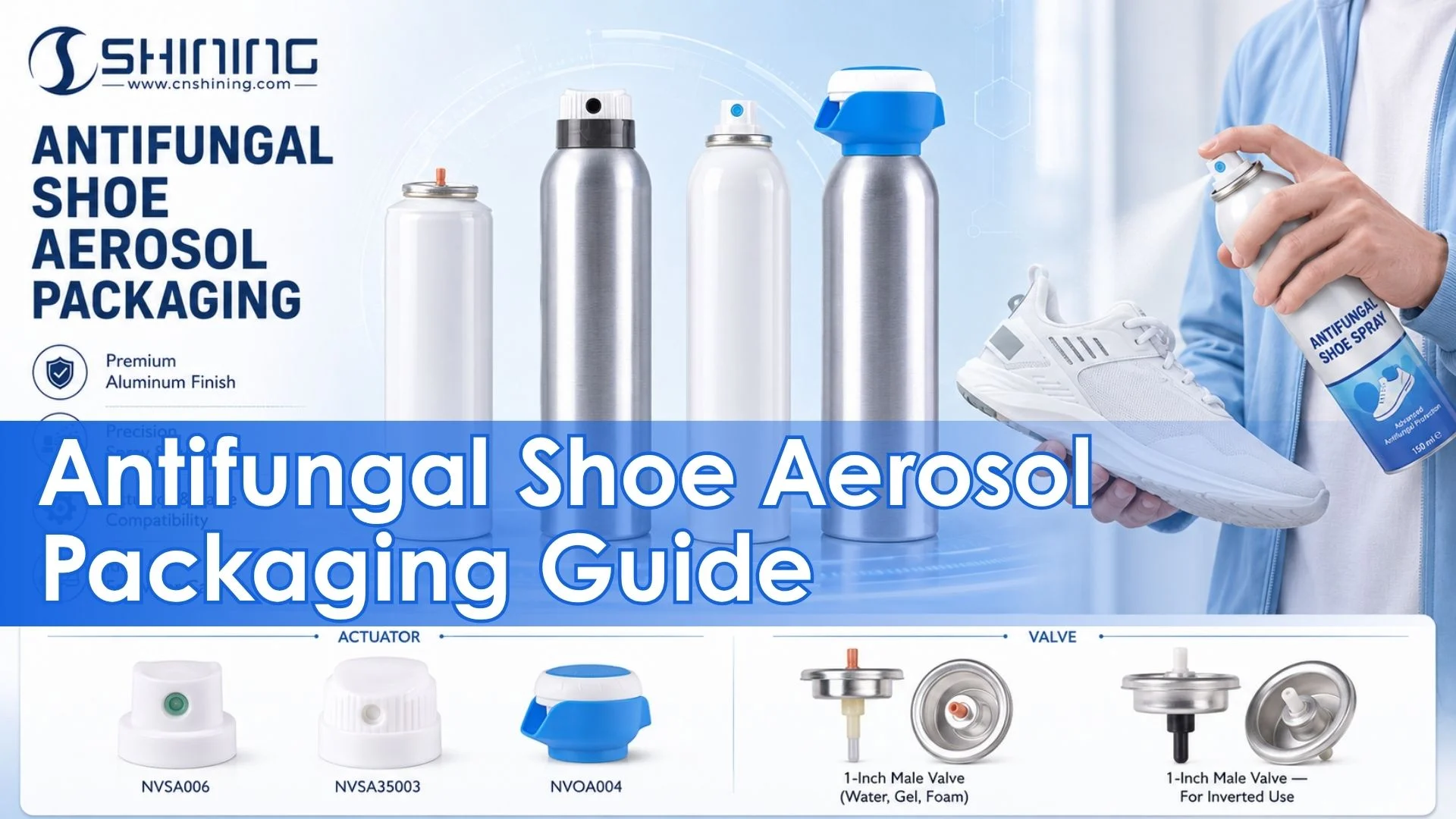
Antifungal shoe aerosol fails when formulation, spray geometry, and shoe materials are treated as separate problems. The category looks simple on shelf: a can, a valve, a spray button, and a claim about athlete’s foot, shoe odor, bacteria, fungus, or daily prevention. In practice, it sits across three different product logics.
The first is an OTC topical antifungal spray for skin and toe spaces. The second is a shoe-cavity disinfectant or sanitizer for insoles, socks, boots, skates, or sports equipment. The third is a daily deodorizing or sweat-control aerosol powder spray used to reduce odor and recurrence risk. These products may look similar, but the regulatory path, evidence standard, spray behavior, and user expectation are not the same.
The useful engineering conclusion is direct: do not develop this as “drug spray plus ordinary aerosol can.” Treat it as a shoe-cavity environment management system. Formula, atomization, residue, shoe material compatibility, drying time, label boundary, actuator behavior, valve cleanliness, and recyclability need to be designed together.
1. Definition and Mechanism: What an Antifungal Shoe Aerosol Actually Does
An antifungal shoe aerosol uses an aerosol valve, propellant system, or equivalent pressurized spray system to deliver antifungal, antibacterial, deodorizing, moisture-absorbing, or recurrence-prevention ingredients into the shoe cavity, onto the insole or midsole surface, onto foot skin, or across both zones.
Commercially, the category divides into three boundaries:
| Product boundary | Main target | Typical active direction | Regulatory implication |
|---|---|---|---|
| Skin treatment spray | Foot skin and toe spaces | Miconazole nitrate, tolnaftate, terbinafine HCl | Usually OTC drug logic when claiming athlete’s foot treatment |
| Shoe-cavity sanitizing spray | Insoles, shoe cavity, socks, equipment surfaces | Biocidal or antimicrobial systems | May move into disinfectant, biocide, or pesticide frameworks |
| Daily prevention and deodorizing aerosol | Sweat, odor, moisture load, recurrence support | Powders, odor-control agents, absorbents, mild antimicrobial systems | Usually safer only when treatment and kill claims are controlled |
From fungal biology, the core target remains the ergosterol pathway in the fungal cell membrane. Azoles inhibit lanosterol 14α-demethylase, which reduces ergosterol synthesis and affects membrane function. Allylamines, represented by terbinafine, inhibit squalene epoxidase and often behave closer to a fungicidal treatment against dermatophytes. Tolnaftate remains commercially durable because it is stable, inexpensive, familiar in OTC formats, and compatible with powder spray systems.
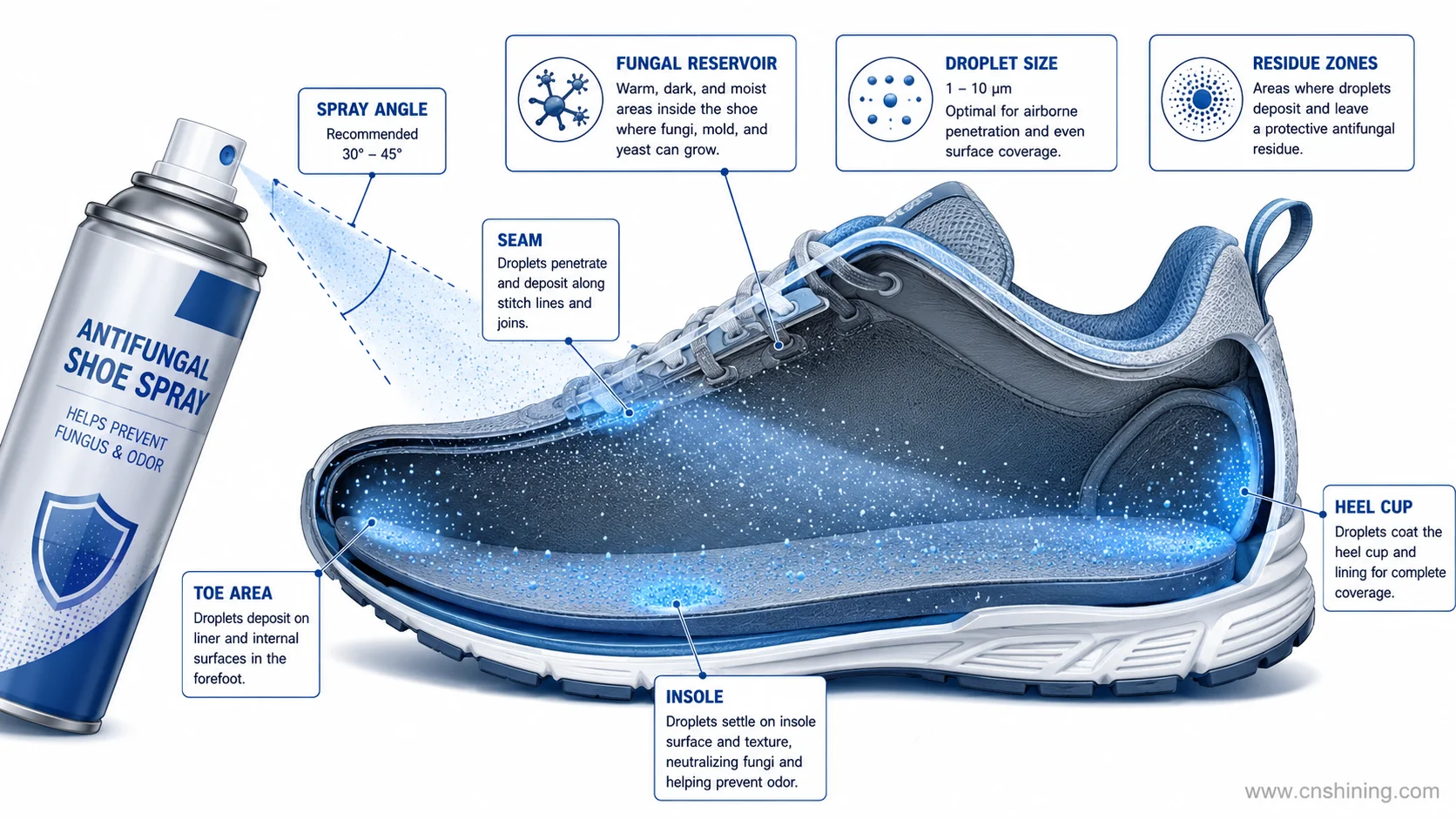
CDC notes that tinea pedis fungi prefer warm, dark, moist environments, and that keeping feet clean and dry while changing shoes and socks helps prevent or control infection. This is why the shoe matters. A treated foot placed back into an untreated, damp shoe cavity is a common recurrence pattern. See the CDC foot hygiene page for the underlying hygiene context: CDC guidance on foot hygiene and tinea pedis.
Common Actives and Supporting Systems
| Class | Representative ingredient | Common public concentration | Main mechanism | Packaging and formulation note |
|---|---|---|---|---|
| Azole | Miconazole nitrate | 2% | Inhibits 14α-demethylase and reduces ergosterol synthesis | Often appears with SD alcohol, isobutane, kaolin, starch, or similar spray-support systems |
| Azole | Clotrimazole | 1% | Same ergosterol-pathway logic | Common in creams and liquids; shoe-specific aerosol presence is less visible |
| Allylamine | Terbinafine HCl | 1% | Inhibits squalene epoxidase | Strong treatment recognition, but not automatically ideal for powder deposition inside shoes |
| Thiocarbamate | Tolnaftate | 1% | Classic topical antifungal action | Good fit for prevention and powder aerosol formats; see the DailyMed tolnaftate aerosol powder label |
| Natural active | Tea tree oil | Patent examples often cite ≥5%, products vary | Antifungal and odor-support activity | Odor control and batch consistency are harder than the label story suggests |
| Shoe sanitizing active | Quaternary ammonium or other biocidal systems | No stable public concentration across products | Surface sanitizing or microbial control | Good for shoe-surface claims only when the registration path supports them |
| Suspension and absorbent system | Kaolin, corn starch, sodium bicarbonate, magnesium stearate | Inactive support materials | Moisture absorption, odor control, dry feel | Useful, but the same powders create white residue complaints |
| Stabilizer and dispersant | PPG-12-Buteth-16, disteardimonium hectorite, hydroxypropyl cellulose | Inactive support materials | Suspension stability and spray consistency | A stable suspension can matter more to user experience than a stronger active name |
Atomization is not a decorative detail. Droplet or particle size is affected by valve structure, orifice, pressure, spray angle, flow rate, liquid viscosity, and surface tension. Public spray-engineering material explains that higher pressure often reduces drop size, wider spray angles may reduce drop size, and higher viscosity or surface tension can make droplets larger and coverage worse.
2. Format Comparison and Brand Landscape
Consumers do not buy only an active ingredient. They buy a dosage form. Powder, liquid, wipe, pump spray, and aerosol all solve the same foot or shoe problem differently. Aerosol remains attractive because it is no-touch, fast, and can reach the toe box and heel cup more easily than powders or wipes.
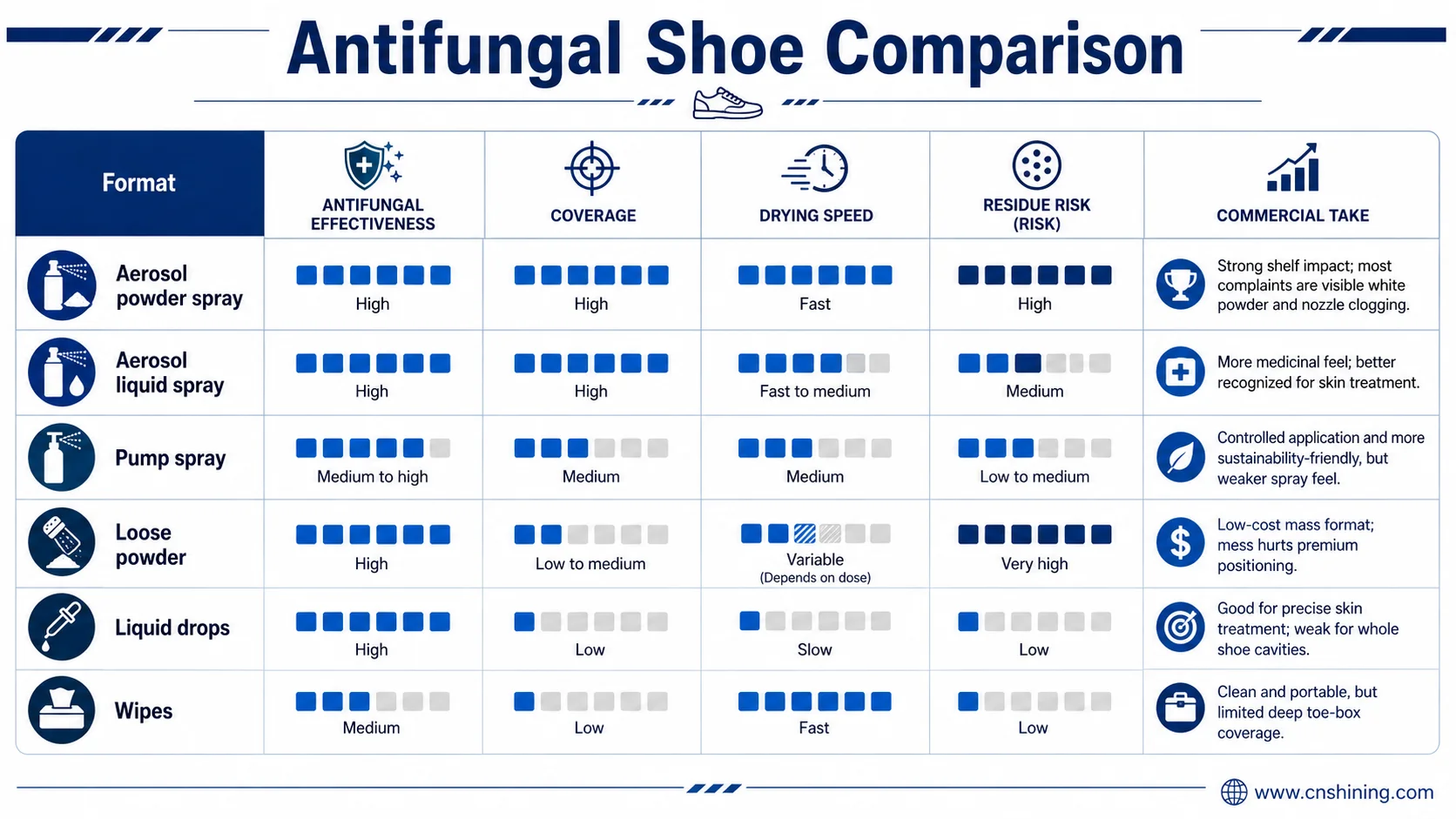
| Format | Theoretical antifungal usefulness | Shoe-cavity coverage | Drying speed | Residue risk | Commercial judgment |
|---|---|---|---|---|---|
| Aerosol powder spray | High, if active and regimen are correct | High | Fast | High on dark shoes and floors | Strong shelf impact; most exposed to white powder and clogging complaints. |
| Aerosol liquid spray | High | High | Fast to medium | Medium | Feels more like medicine; better for skin-treatment recognition. |
| Pump spray | Medium to high | Medium | Medium | Low to medium | More controlled and often easier for sustainability, but less strong in spray feel. |
| Loose powder | High | Low to medium | Depends on dose | Very high | Low-cost mass format. Mess limits premium positioning. |
| Liquid drops | High | Low | Slow | Low | Good for precise skin treatment; weak for whole shoe cavities. |
| Wipes | Medium | Low | Fast | Low | Clean and portable, but slow for deep toe-box coverage. |
3. Top 5 Antifungal Shoe Aerosol Brand
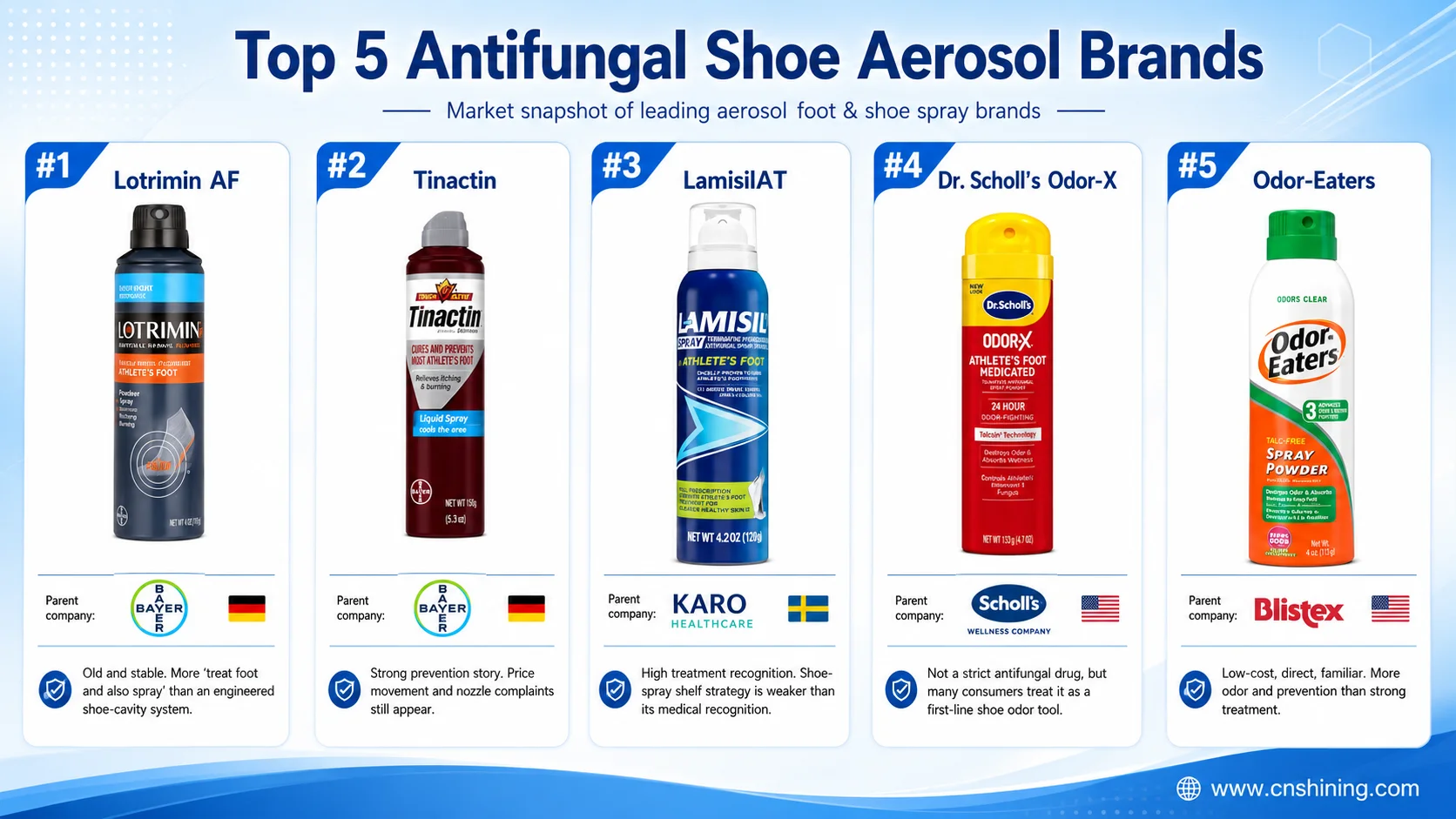
| Brand | Country | Parent company | Typical format | Observed price band | Technical comment |
|---|---|---|---|---|---|
| Lotrimin AF | Germany | Bayer | 4.6 oz powder spray | about $8–9 | Old and stable. More “treat foot and also spray” than engineered shoe-cavity system. |
| Tinactin | Germany | Bayer | 4.6 oz powder spray; 5.3 oz liquid spray | about $7–13 | Strong prevention story. Price movement and nozzle complaints still appear. |
| LamisilAT | Sweden | Karo Healthcare | 4.2 oz spray | about $11–14 | High treatment recognition. Shoe-spray shelf strategy is weaker than its medical recognition. |
| Dr. Scholl’s Odor-X | United States | Scholl’s Wellness Company | 4.7 oz spray powder | about $5–10 | Not a strict antifungal drug, but many consumers treat it as a first-line shoe odor tool. |
| Odor-Eaters | United States | Blistex | 4 oz spray powder | about $4–5 | Low-cost, direct, familiar. More odor and prevention than strong treatment. |
The split is obvious. Traditional OTC brands keep trust. Shoe-care brands and social-commerce brands sell convenience, odor control, packaging feel, and use scenarios. One side can look too much like medicine and not enough like shoe care. The other side can look like shoe care and not enough like treatment. The middle space is where better aerosol engineering can matter.
4. User Pain Points, Packaging Decisions, and Market Trends
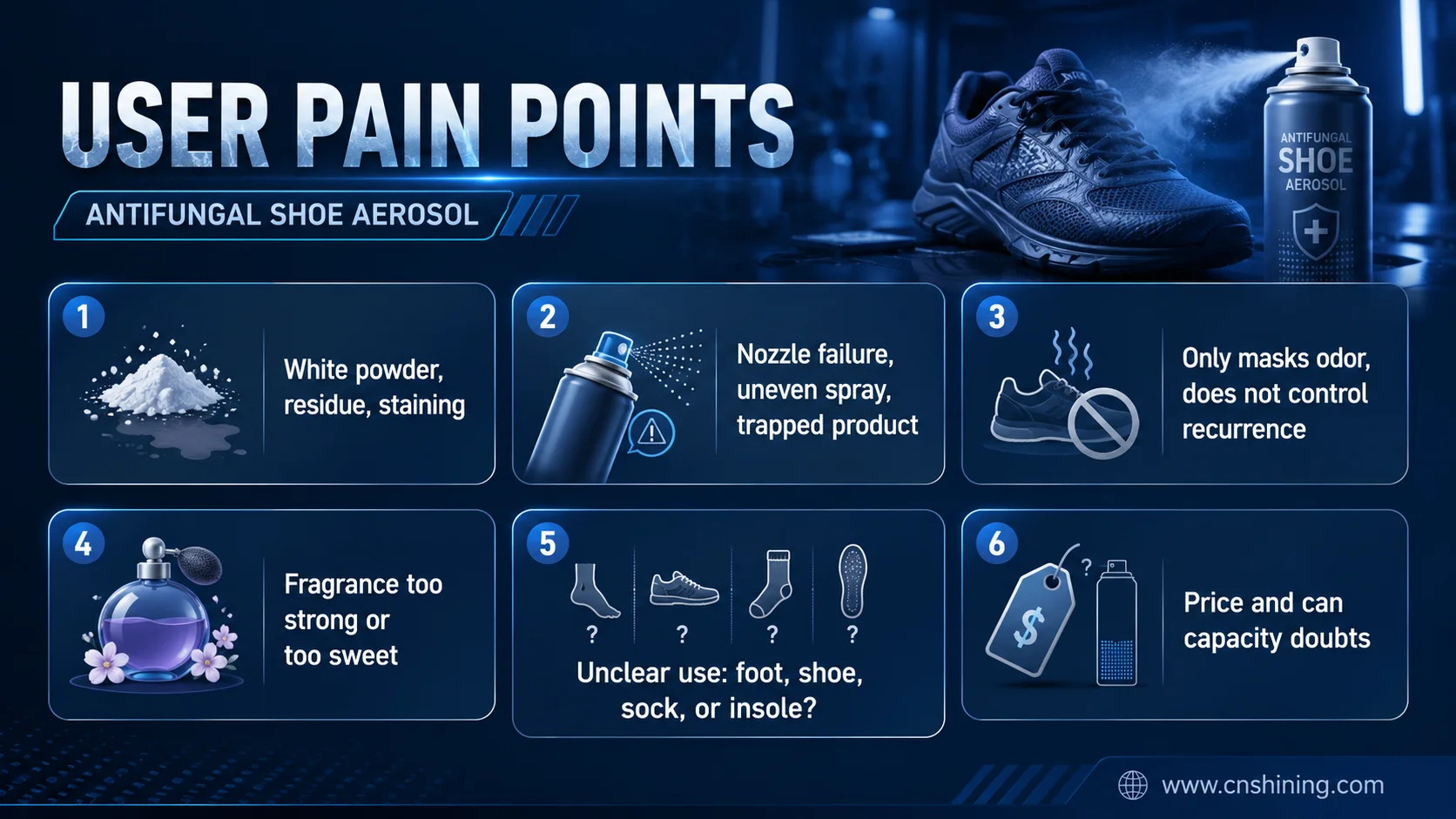
| Pain point | Directional frequency | Packaging or formulation meaning |
|---|---|---|
| White powder, residue, staining | High | Powder load, spray angle, droplet size, and dark-shoe compatibility need testing before launch. |
| Nozzle failure, uneven spray, remaining product trapped in can | Medium to high | Valve and actuator selection directly affects complaints and repeat purchase. |
| Only masks odor, does not control recurrence | High | The use instructions must explain foot, shoe, sock, insole, and drying behavior clearly. |
| Fragrance too strong or too sweet | Medium | Fragrance should not be used as a substitute for odor chemistry or hygiene instructions. |
| User does not know whether to spray foot, shoe, sock, or insole | High | Front label and icons should separate skin-use, shoe-use, wait time, and material warnings. |
| Price and can capacity doubts | Medium | Two sizes can help: 150–200 ml portable and 250 ml home-use shoe cabinet format. |
Valve and actuator design comes first. Suspension aerosols, especially powder sprays, need anti-clog design, suitable orifice sizing, short powder path, clear shake-before-use instructions, and spray behavior that still works after long storage. Some public labels even instruct users to clean a blocked nozzle with a pin. That is not a good user experience; it is a sign that formula and hardware have not fully agreed with each other.
Can ergonomics comes next. A shoe spray is rarely used upright in a calm cosmetic motion. The user bends down, pushes the actuator into the shoe opening, angles the can toward the toe box, and often sprays in a hurry. A tall slim can can work better than a short wide can if it gives better reach and pointing control.
Compatibility is the quiet failure point. Alcohol, isobutane, fragrances, powders, sodium bicarbonate, natural oils, suspension clays, elastomer gaskets, internal coatings, and valve components all meet inside one pressurized metal package. Long-term storage, cold-start spray, final sprays near empty, inverted use, shipping vibration, and hot-cold cycling should be part of the validation plan.
Trend-wise, the next generation is less about adding one more aggressive claim and more about cleaner systems: low residue, lower fragrance load, clearer use boundary, better shoe-cavity reach, recyclable cans, fewer plastic parts, low-GWP propellant choices where feasible, and more careful microbiome or probiotic narratives.
5. Packaging Hardware for Antifungal Shoe Aerosol: Shining Packaging Perspective
For this product type, packaging hardware is not an afterthought. The actuator determines whether the spray reaches the toe box without flooding the shoe opening. The valve determines whether a powder suspension keeps spraying after storage. The aerosol can determines pressure resistance, internal compatibility, print quality, corrosion control, and recycling value.
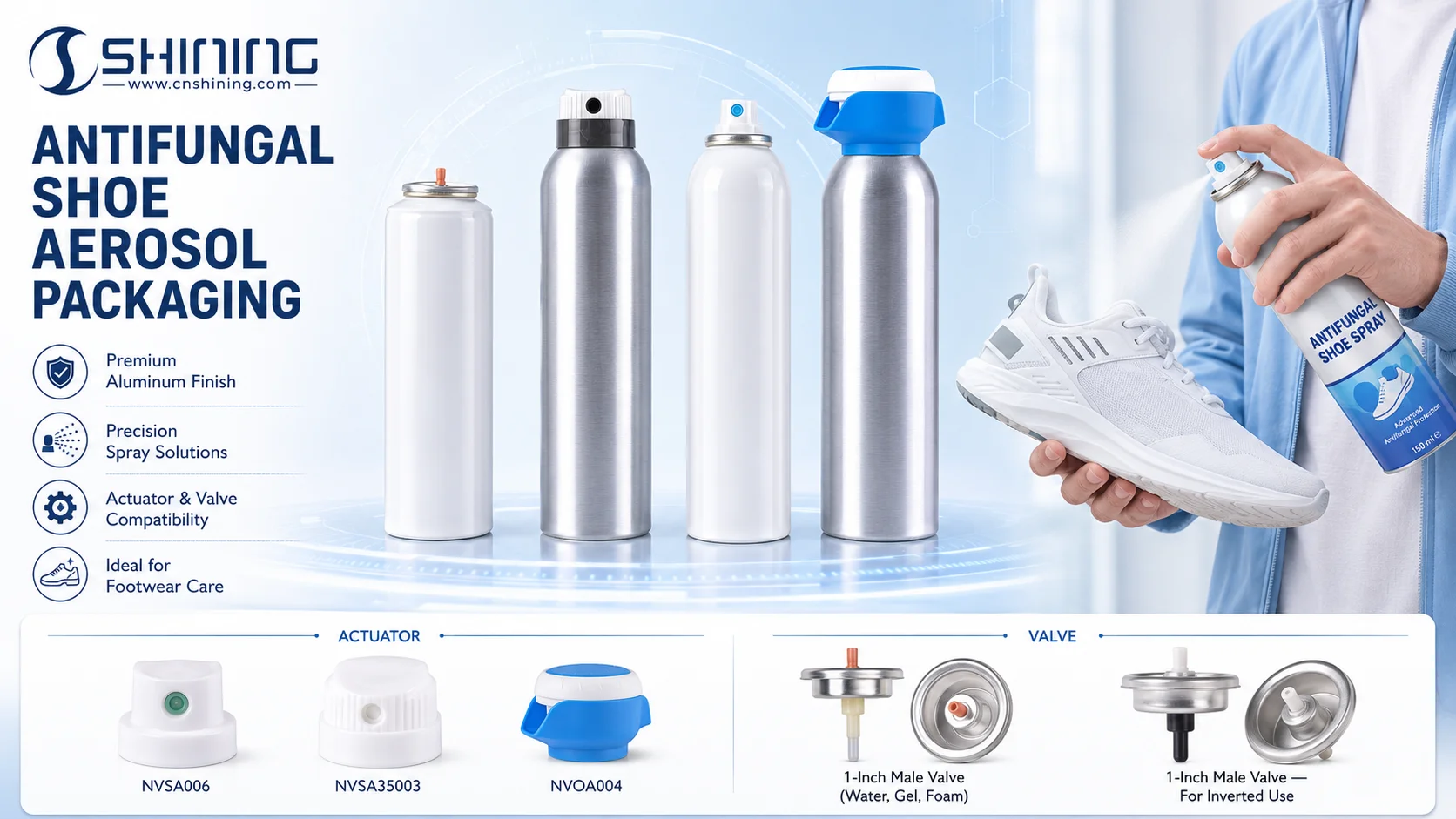
Shining Packaging fits into this discussion at the component level: actuators, aerosol cans, and valves for shoe spray, foot spray, deodorizing powder spray, and related aerosol formats. The technical work is not to make the package look louder. It is to match the spray hardware to the formula and use posture.
| Component | What matters in antifungal shoe aerosol | Practical check |
|---|---|---|
| Actuator | Spray direction, button comfort, orifice behavior, clog resistance, shoe-mouth access | Test upright, tilted, and near-inverted spraying into real shoes, not only onto flat boards. |
| Valve | Powder suspension flow, liquid spray stability, gasket compatibility, leakage control | Run storage, cold-start, repeated-use, and final-spray tests with actual formula. |
| Aerosol can | Pressure safety, internal coating, alcohol and fragrance compatibility, print durability, recyclability | Check coating compatibility, corrosion risk, transport vibration, and label warnings early. |
| Cap and labeling surface | Misuse prevention, shelf clarity, hygiene icons, warning visibility | Use simple icons: spray foot, spray shoe, shake, wait time, dark-shoe residue warning. |
A good aerosol package will not rescue a weak claim or an unstable formula. It can, however, reduce the common failures that users actually notice: blocked nozzles, poor toe-box reach, excessive floor overspray, white powder on dark shoes, fragrance leakage, and confusing use directions. That is where component engineering earns its place.
6. FAQ: Antifungal Shoe Aerosol Technical Questions
An antifungal shoe aerosol is a pressurized spray product designed to deliver antifungal, antimicrobial, deodorizing, absorbent, or recurrence-control ingredients to foot skin, toe spaces, shoe cavities, insoles, or related equipment surfaces. It may be a medicated OTC spray, a shoe sanitizing spray, or a daily prevention and deodorizing spray. The claim decides the regulatory route.
No. A shoe aerosol can improve surface deposition, moisture control, odor reduction, or contact with visible high-risk areas such as insoles, seams, heel cups, and toe boxes. It should not be treated as full deep sterilization of shoe materials. Foam, fabric, leather coating, rubber, adhesive zones, and stitching all retain spray differently.
Athlete’s foot often returns when the foot is treated but the shoe environment stays damp, warm, dark, and contaminated by skin debris. The shoe can act as a fungal reservoir. A useful product strategy should explain foot treatment, shoe drying, sock changes, insole hygiene, and waiting time after spray, not just active ingredient strength.
Public labels and OTC references commonly show miconazole nitrate at 2%, clotrimazole at 1%, tolnaftate at 1%, and terbinafine hydrochloride at 1%. Azoles affect ergosterol synthesis through 14α-demethylase inhibition. Terbinafine works through squalene epoxidase inhibition. Tolnaftate remains common because it is stable, familiar, and powder-spray compatible.
Powder aerosols often use absorbents such as kaolin, starch, sodium bicarbonate, or magnesium stearate to create a dry feel and control moisture. These solids can deposit unevenly, especially on black shoes, rubber edges, dark insoles, and floors. Spray angle, powder load, valve flow, shaking behavior, and actuator geometry all affect visible residue.
Clogging is common when suspended powders, clay stabilizers, fragrances, solvents, and propellants are not matched well with the valve and actuator. Long storage, cold temperature, inverted spraying, and low remaining fill can make the problem worse. Anti-clog actuator geometry, suitable valve path, shake instructions, and suspension stability testing reduce the risk.
It depends on the claim. A spray that claims to treat athlete’s foot or tinea pedis usually moves toward topical antifungal drug regulation. A spray that claims to kill fungi or bacteria on shoes may move into disinfectant, biocide, or pesticide logic. A deodorizing-only spray has a different and usually narrower claim boundary.
There is no single best pattern. A narrow stream may reach the toe box but can over-wet one spot. A very wide spray wastes product and soils the floor. For shoe cavities, testing should include real shoes, heel cup, toe box, insole edge, seams, dark materials, and angled hand positions. Flat-board testing alone is weak.
Bag-on-valve can work well for water-based, lower-odor, liquid spray systems where separation of product and propellant is useful. It is less natural for classic high-solid powder aerosols that depend on LPG-style continuous spray behavior. The choice should follow formula type, spray feel, drying target, cost, material compatibility, and sustainability goals.
Test active stability, formula-can compatibility, valve gasket compatibility, spray rate, spray angle, droplet or particle behavior, white residue on dark shoes, drying time, fragrance persistence, cold-start spray, final sprays near empty, leakage, flammability labeling, and long-term storage. Also test real user posture: angled spraying into shoes is the normal use case.