
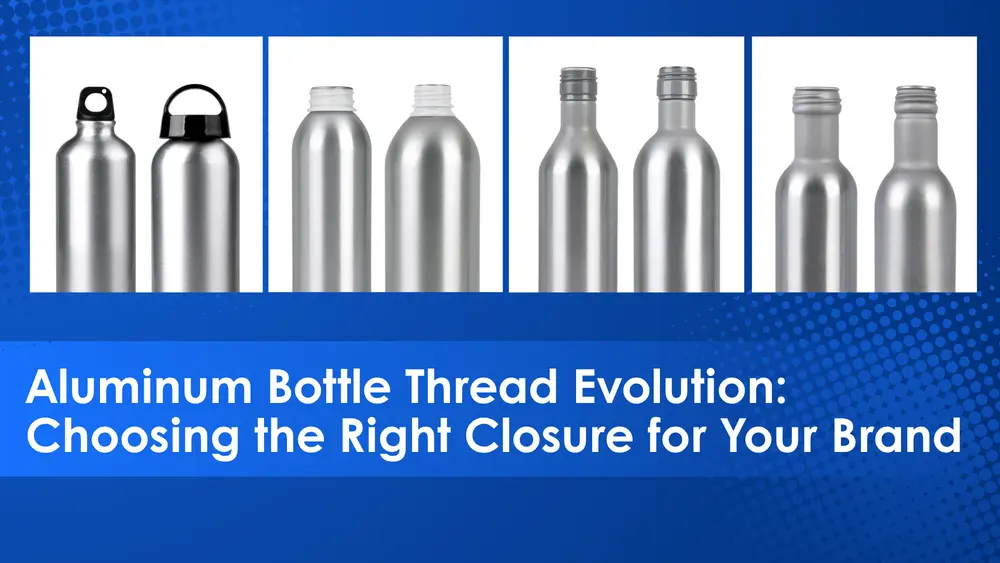
In the world of premium metal packaging, selecting the right thread type is a critical decision that impacts sealing integrity, sustainability credentials, and the overall user experience. Whether you are packaging high-end spirits, carbonated beverages, or personal care products, understanding the mechanics of Plastic-on-Aluminum versus All-Aluminum (Monomaterial) threads is key to a successful product launch.
The 4 Stages of Aluminum Bottle Thread Development
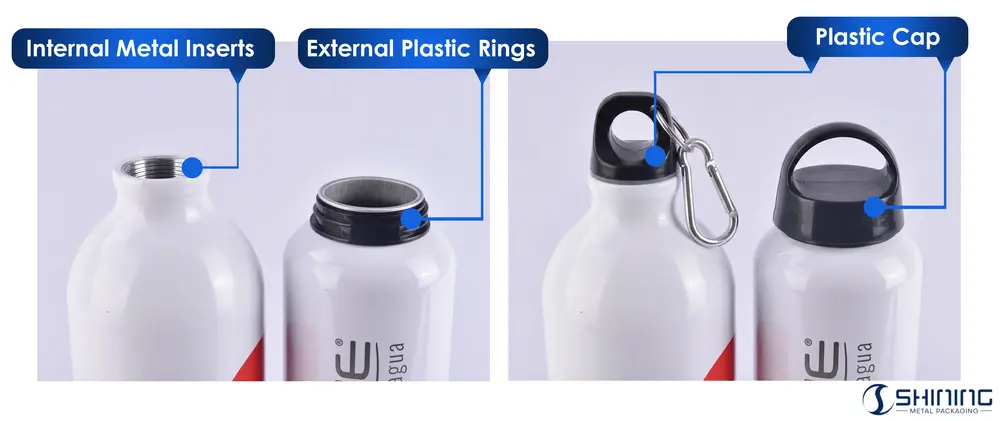
Stage 1: External/Internal Inserts (The Early Days) Early food-grade aluminum bottles, often used for sports canteens, utilized external plastic rings or internal metal inserts because direct aluminum threading technology was not yet mature. These lacked tamper-evident (TE) features and used basic plastic caps.
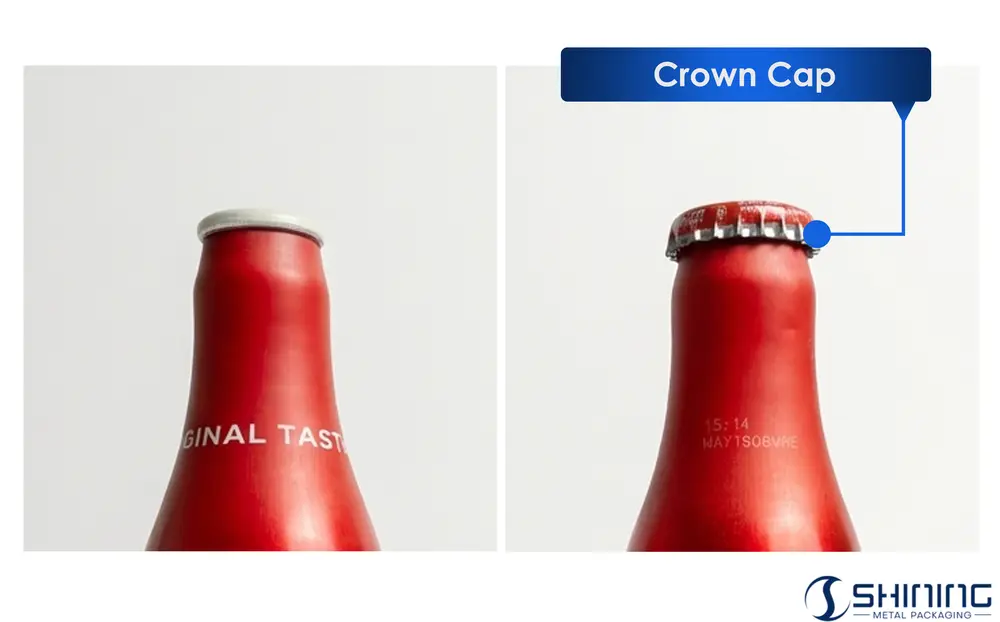
Stage 2: The Crimp & Crown Finish Popularized by global beer and soda giants, this method uses a crimped rim sealed with a crown cap. While production is efficient—compatible with standard brewery glass-bottling lines—it lacks resealability, making it a “one-and-done” consumer experience.
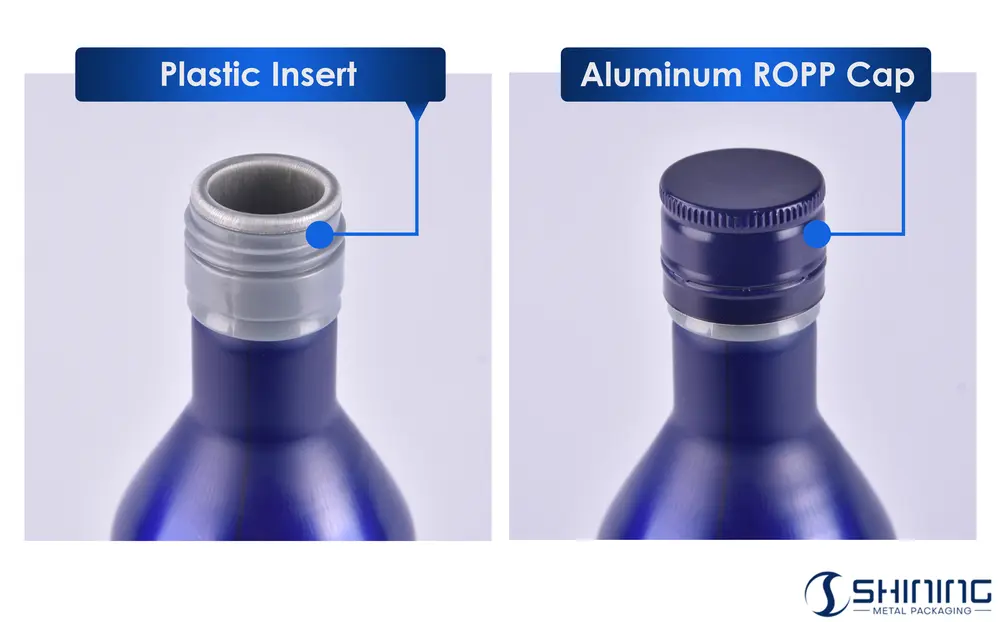
Stage 3: Plastic Inserts for Tamper-Evidence To meet the demand for tamper-evident closures in spirits and wine, high-precision plastic inserts returned. By using injection-molded plastic rings, brands can perfectly mimic the thread profiles of glass or plastic bottles.
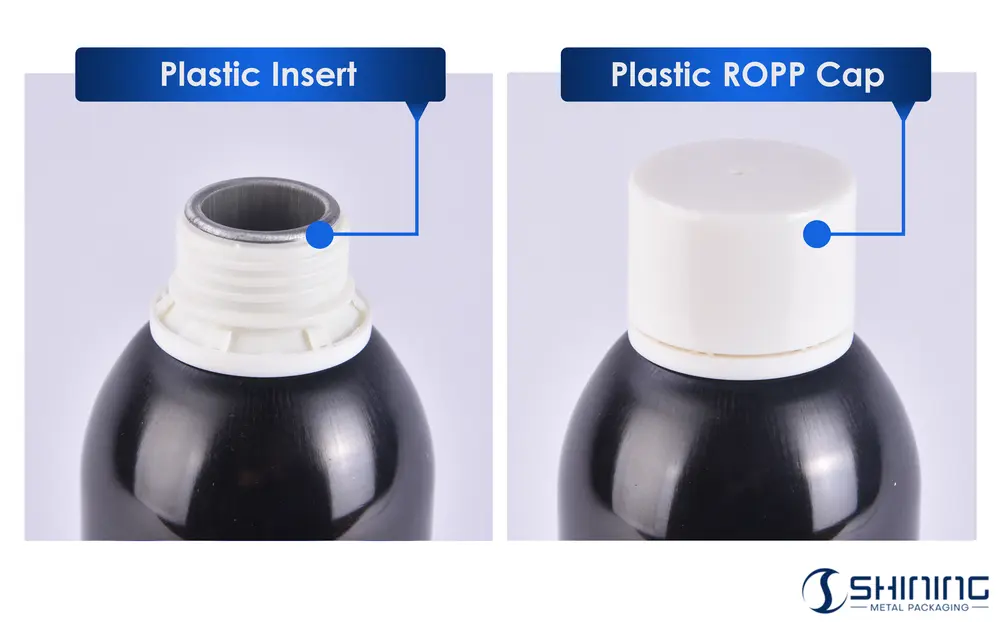
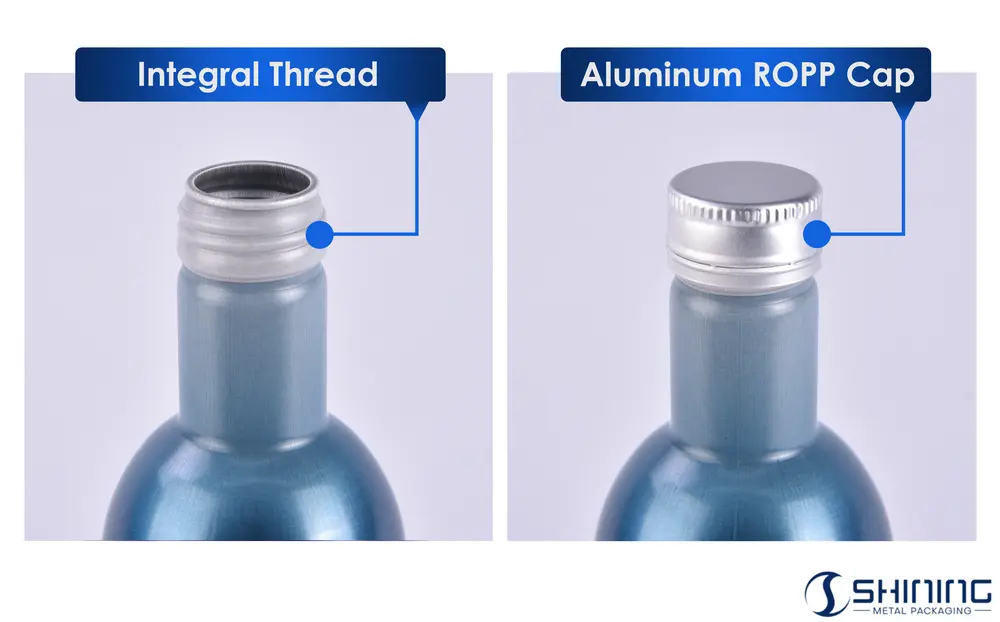
Stage 4: The All-Aluminum Integrated Thread (The Modern Standard) As technology advanced, the industry moved toward a Monomaterial design. By replacing plastic inserts with direct aluminum threads and crown caps with aluminum ROPP (Roll-On Pilfer-Proof) caps, the entire bottle becomes a single-material unit. This aligns with the highest environmental and carbon-reduction standards (such as EU EPR policies).
Technical Comparison: Plastic vs. Aluminum Threads
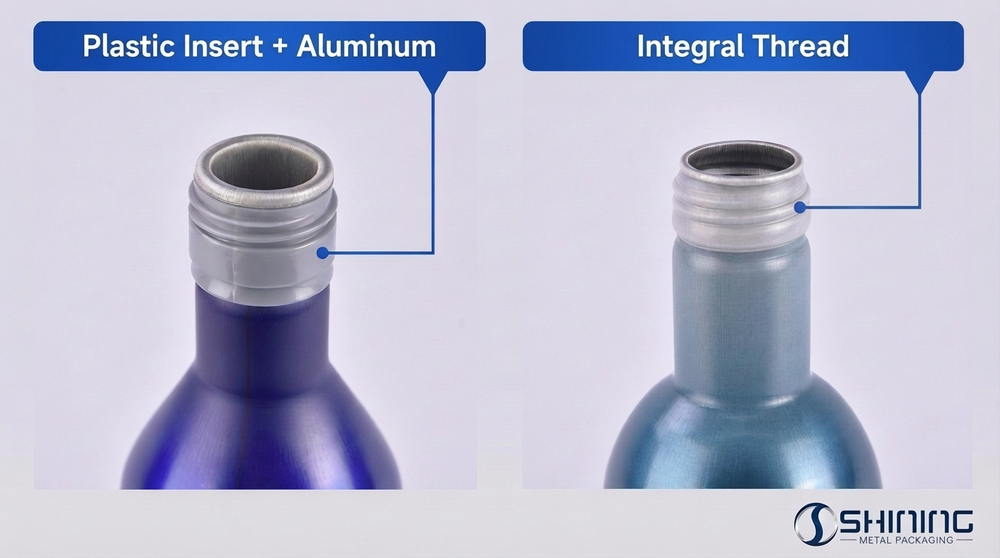
| Feature | Plastic Thread (Insert) | Aluminum Thread (Integrated) |
|---|---|---|
| Compatible Caps | Plastic Caps, Aluminum Caps | Aluminum Caps |
| Capping Equipment | Low complexity (Screw/Capper) | High precision (Capper) |
| Recycling Difficulty | Requires material separation (Lower) | Extremely easy to recycle (High) |
| Tactile Feel | Warm, similar to PET bottles | Firm, premium metallic feel |
| Cost Structure | Higher (Multiple parts + assembly) | Lower (One-step molding, high speed) |
Key Industry Insights for B2B Buyers
1. The Push for 100% Plastic-Free
In the B2B sector, integrated aluminum threads are becoming the dominant trend. While achieving high precision in aluminum threads is technically challenging, brands are increasingly removing plastic components to comply with global “Plastic-Free” initiatives and EPR (Extended Producer Responsibility) regulations.
2. The Refill Revolution
Brands focusing on “Refillable” models (like Pathwater) often still prefer the plastic-on-plastic combination. When using an aluminum cap on an aluminum thread repeatedly, the friction can eventually wear down the surface coating, leading to a “darkening” or oxidation effect. Plastic inserts eliminate this issue for long-term reusable bottles.
3. Sealing Pressure & Carbonation
While plastic threads offer 90-degree edges for a tighter “bite,” our advanced aluminum thread technology, paired with custom-matched gaskets, has passed rigorous pressure tests to meet the standards for carbonated beverages.
4. Capping Machine Parameters
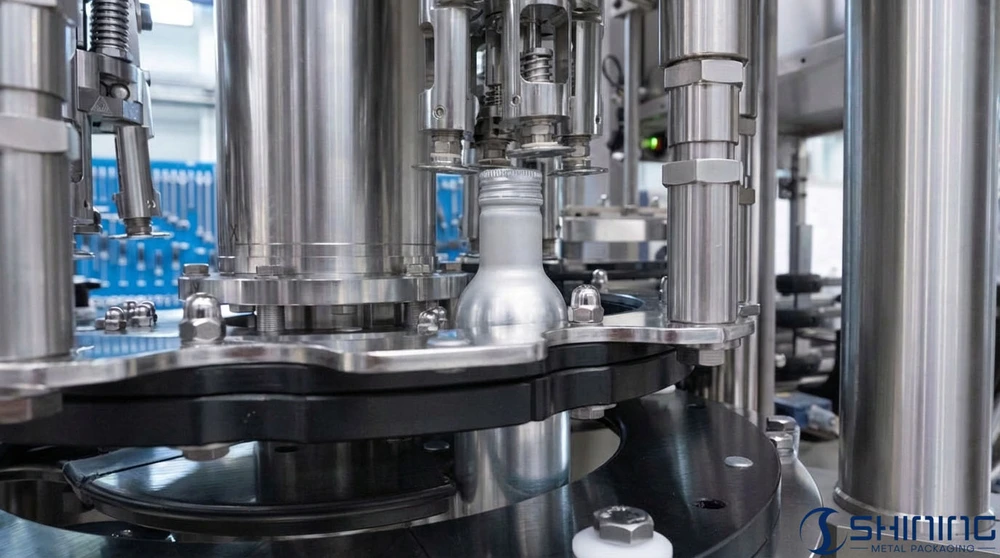
Because aluminum is thinner than glass, the axial and lateral pressure of your capping rollers must be adjusted lower than glass-bottling parameters to prevent thread deformation.
Why Partner with Shining Packaging?
As a global leader in aluminum packaging, Shining Packaging provides end-to-end solutions for all threading requirements. Whether your project requires the sustainability of an All-Aluminum Monomaterial design or the durability of a Plastic-Insert Refillable system, we provide the technical expertise, capping parameters, and pressure testing to ensure your product’s success.
Ready to upgrade your packaging? Contact our engineering team for technical specifications or samples.