
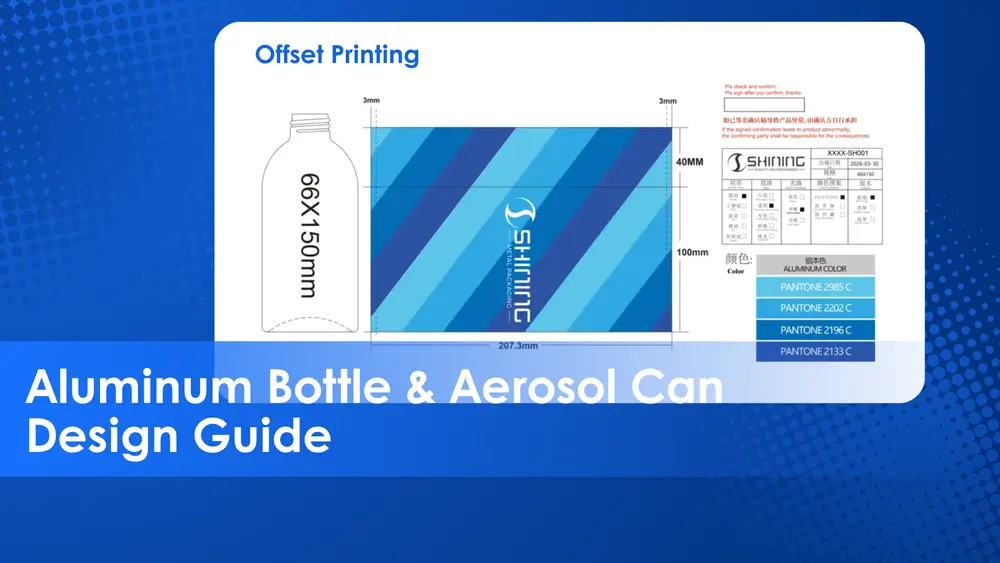
In the competitive world of packaging, the brilliance of an aluminum container is only as good as the precision of its print. Unlike paper or plastic, printing on cylindrical aluminum requires a deep understanding of metal-specific offset processes and mechanical constraints. To ensure your brand’s vision translates perfectly from screen to bottle, we have compiled this comprehensive guide to our design and prepress standards.
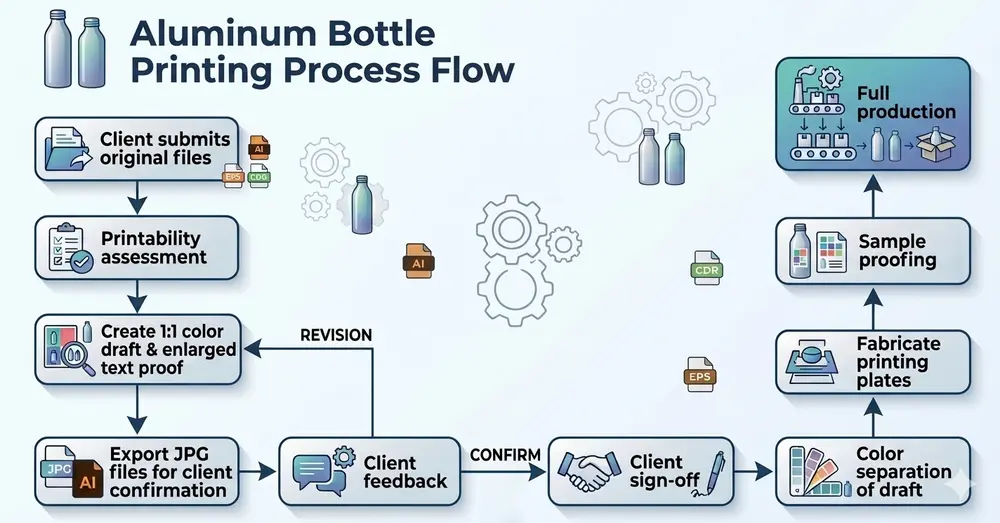
1. The Printing Process: Offset printing Technology
All our aluminum bottles and aerosol cans are decorated using Offset Offset Printing.
- The Mechanism: Your digital artwork is converted into resin relief plates. Ink is transferred from these plates to a rubber blanket cylinder, which then “offsets” the final image onto the rotating aluminum can.
- Speed and Scale: Our high-speed lines can produce up to 100-200 Pcs per minute, ensuring both efficiency and consistency.
- Color Capacity: Our presses support up to 8 spot colors.
- Base Coating: Since raw aluminum has a greyish tint, we typically apply a White Base Coat for high vibrancy. Alternatively, a Transparent Base Coat can be used to achieve a “Brushed Metal” effect.
- Varnishing: Every can receives a final layer of protective varnish (Gloss or Matte) to provide scratch resistance and a premium finish.
2. Artwork Specifications & Prepress Workflow
To avoid production delays, all digital files must meet the following criteria:
- File Formats: We accept Adobe Illustrator (.AI or .EPS) and CorelDRAW (.CDR) formats.
- Text & Fonts: All text must be converted to outlines (Vectorized). If future edits are required, please provide the original font files.
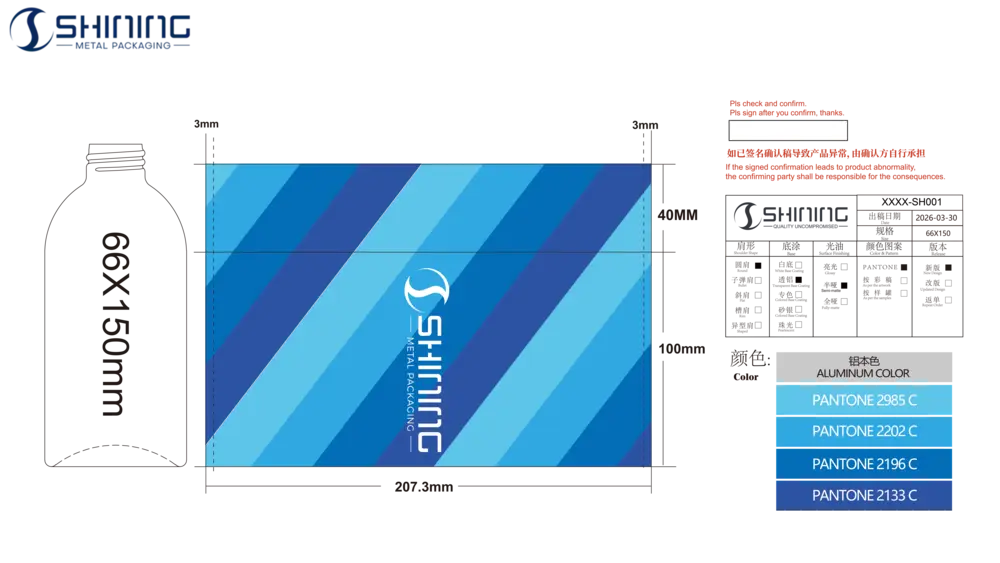
- The 1:1 Rule: We produce a 1:1 scale color proof for layout confirmation. For quick viewing, we provide 300dpi JPGs in RGB mode.
- Version Control: Any revisions will be marked with a sequence number (e.g., -1, -2) and a date to ensure the correct version reaches the production line.
3. Critical Design Standards
Color Management (Pantone Matching)
We utilize a Spot Color System rather than CMYK.
- No CMYK Overprinting: You cannot mix Cyan and Magenta to make Purple on the press. You must select a specific Purple Pantone shade.
- Tints and Halftones: To create depth without adding extra ink stations, you can use “screens” or gradients of a single color (e.g., a 100% Dark Blue transitioning to a 50% Blue).
- White as a Color: If you do not use a full white base coat, white elements in your design will occupy one of the 8 available ink slots.
Typography & Line Weights
- Minimum Font Size: 6pt is the absolute minimum to ensure legibility on a curved surface.
- Stroke Width: Positive lines must be at least 0.15mm. “Reverse-out” (knockout) text or lines must be at least 0.25mm to prevent “filling in” during the ink transfer.
Barcode Placement
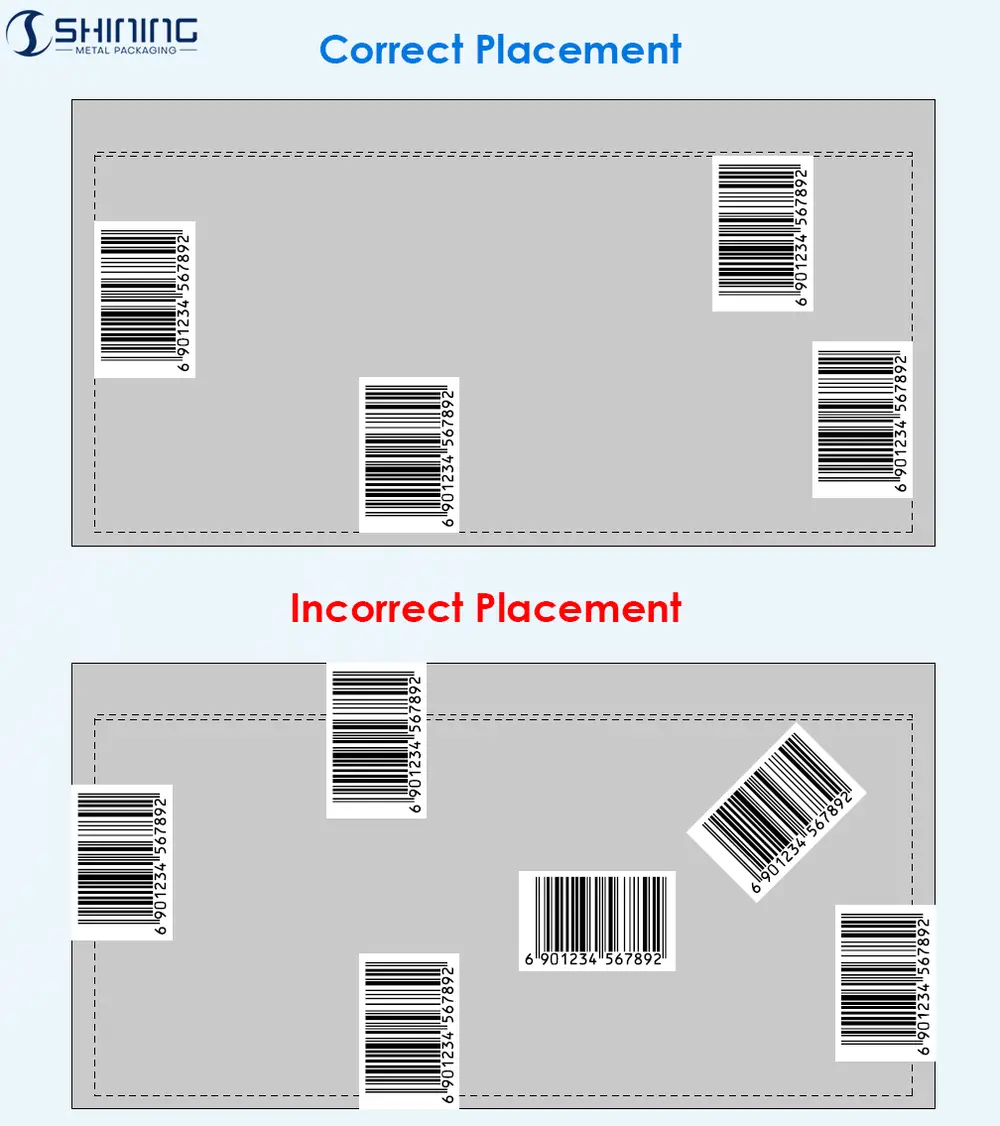
- Orientation: Barcodes must be oriented correctly to prevent distortion during the necking/shaping process.
- Location: Keep barcodes strictly within the designated “Text Printing Area.” Never place them on the shoulder or the “neck” of the bottle, as the taper will make them un-scannable.
4. Plate-Making & Sampling
We offer two paths for final production prep:
- Traditional Film: A cost-effective method using black-and-white film to create resin plates.
- Laser Engraving: Direct-to-plate digital output for higher precision and sharper detail (additional costs apply).
Prototyping:
- On-line Sampling: Direct production line samples—the most accurate representation of the final product.
- Off-line Sampling: This requires pausing the production line for half a day to a full day. Due to the significant downtime and setup required, this service incurs an additional fee.
Get Started with Your Design
Navigating metal decoration is a collaborative journey. To ensure your brand translates perfectly from digital concept to physical reality, we offer full technical support:
- Request Design Templates: [Contact Us] today to receive 1:1 die-line and dimension drawings tailored to your specific bottle or can size.
- Download Technical Standards: Get a portable version of these requirements for your design team here: [Download: Printing Requirements PDF]
- Expert Review: Our team is ready to review your initial drafts and provide feedback on color optimization and layout to ensure high-speed manufacturing viability.
We look forward to bringing your vision to life with technical perfection!