
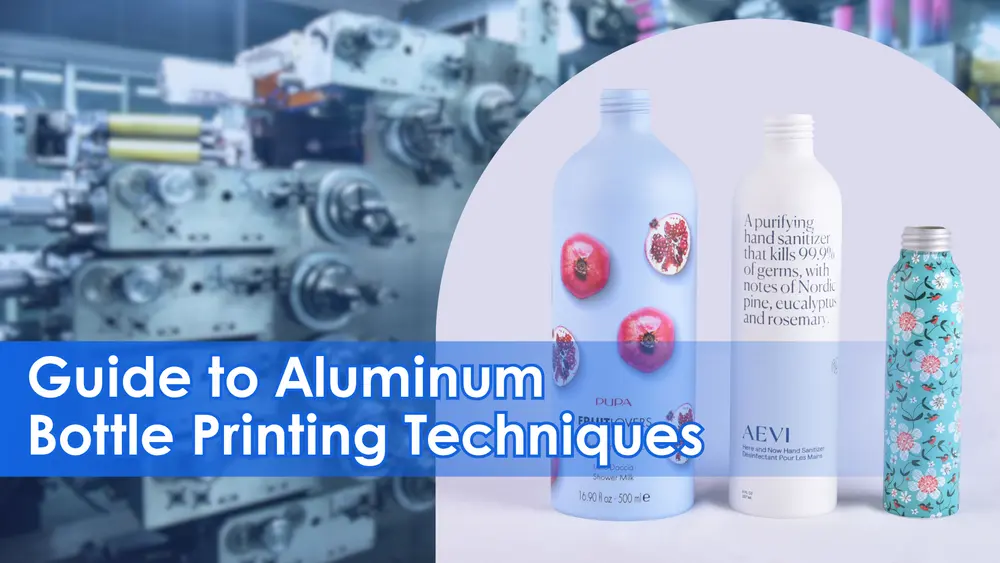
In the world of premium packaging, the visual appeal of an aluminum bottle is just as important as the product inside. There are three primary printing technologies used to decorate aluminum: Offset Printing, Heat Transfer, and Silk Screen.
Understanding the mechanics, costs, and limitations of each is key to selecting the best fit for your project.
1. Offset Printing (High-Speed & Efficient)
Offset printing is an indirect transfer process best suited for high-volume production.
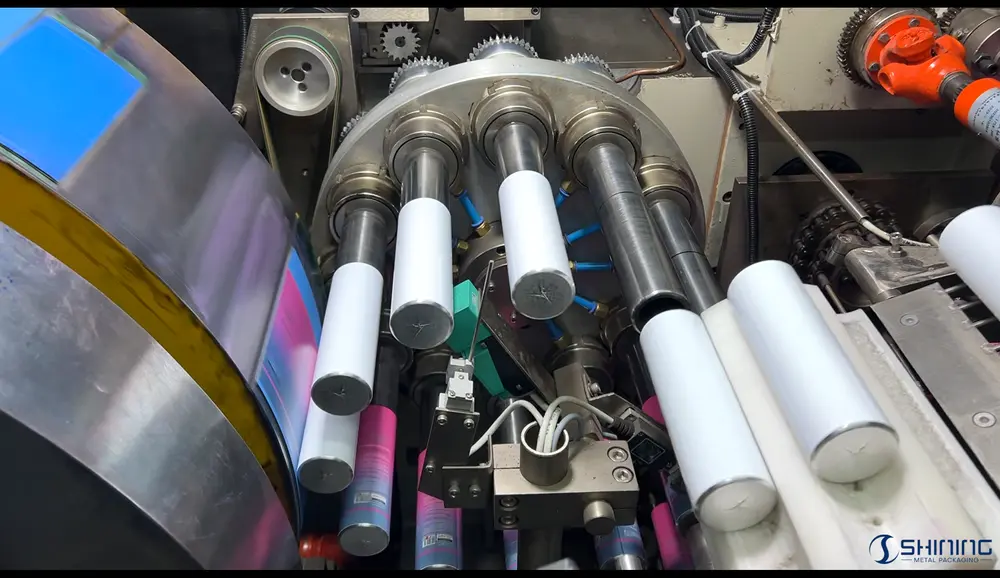
How it Works: The “Indirect” Principle
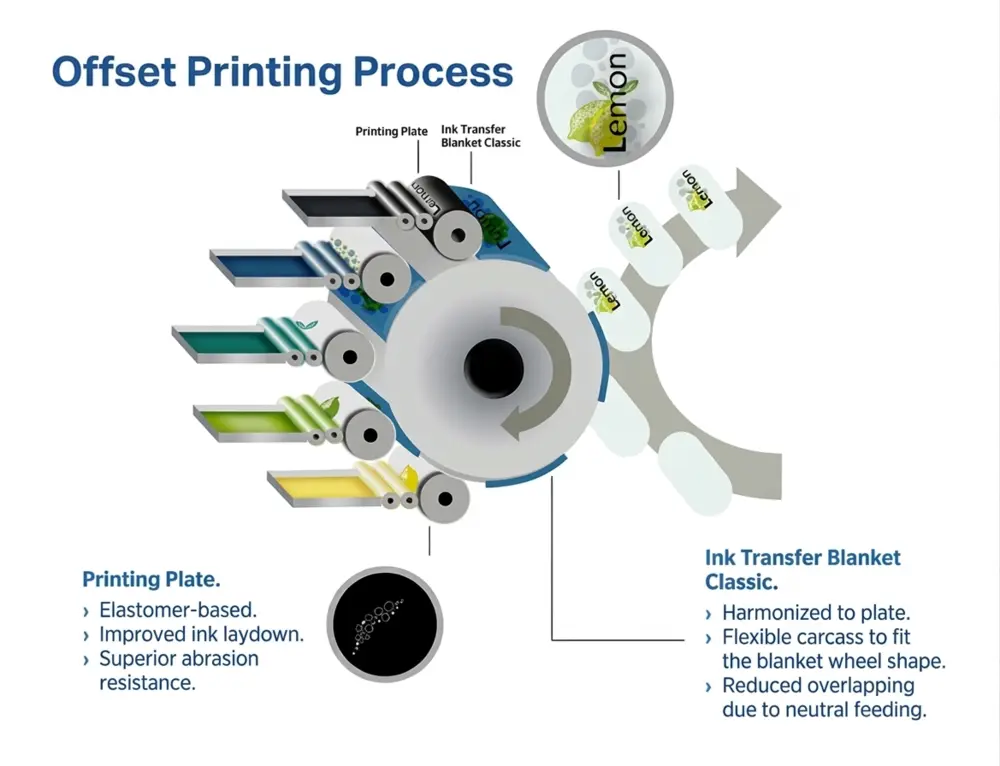
This method relies on the fact that water and oil do not mix.
- Plate to Blanket: Ink is first applied to the printing plate (positive image).
- Blanket to Bottle: The ink transfers to a rubber blanket cylinder (reverse image), which then rolls the ink onto the aluminum bottle (positive image).
- Pressure: An impression cylinder provides the necessary pressure to ensure a clean transfer.
Technical Requirements
- Equipment: Machines are categorized by bottle size, typically ranging from 6-color to 9-color systems.
- Inks & Coating: Since metal cannot absorb ink, “heat-set” inks are used. After printing, a protective varnish (gloss/matte) is applied and cured in an oven to prevent scratches, wear, and corrosion.
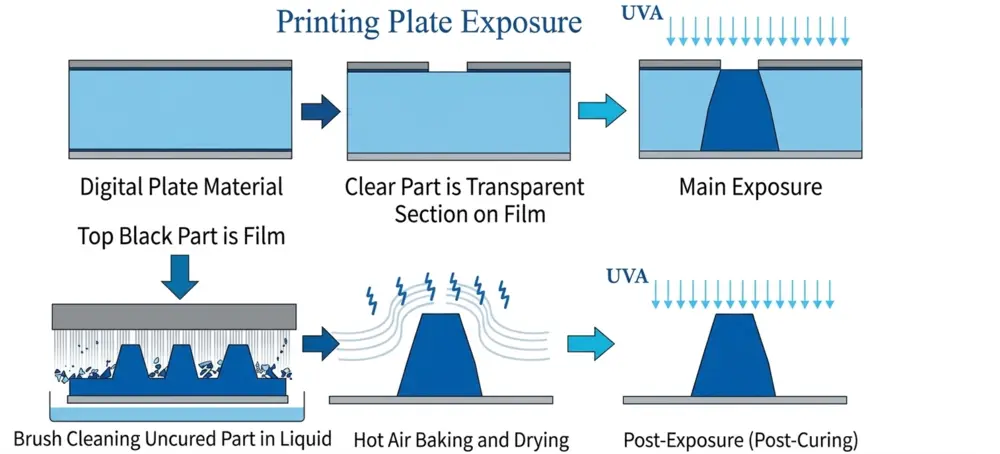
- Plate Making: This involves “color separation” from digital files to create film, which is then exposed to UVA light on a resin plate. The plate is washed to remove uncured areas, dried, and cured again for durability.
Pros and Cons
- Advantages: Extremely fast (100–200 bottles per minute) and the most cost-effective for large orders as you only pay for the ink. It can handle curved side-wall printing effectively.
- Disadvantages: High MOQ (30,000 units). Because all inks are applied before the final drying stage, colors can contaminate each other, making it unsuitable for high-detail photos; it is better for “spot colors.”
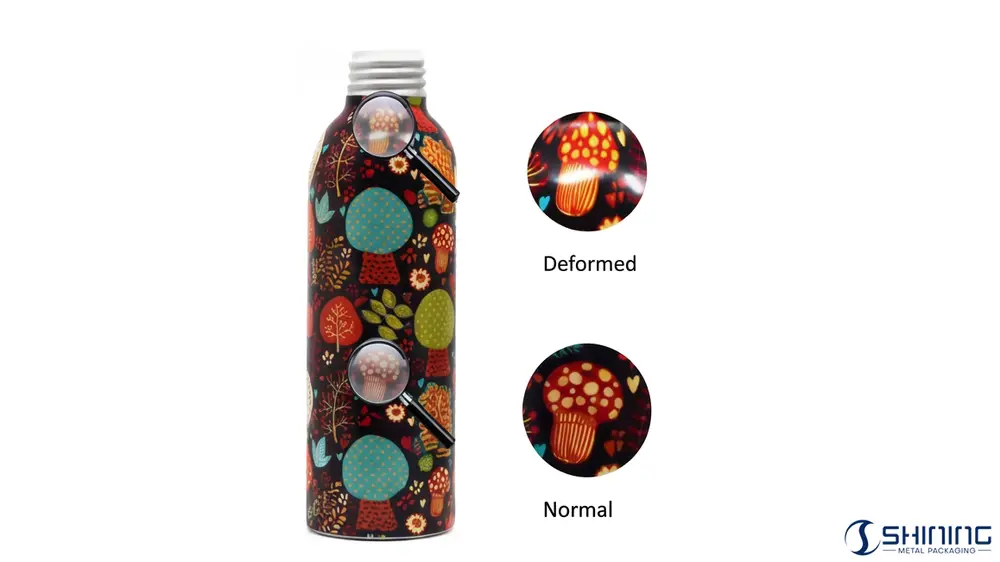
- Design Tip: Avoid placing text or logos on the “shoulder” (curved top) as the image will deform unless “pre-distorted” in the design file.
2. Heat Transfer Printing (Vibrant & Complex)
If your brand requires photographic quality or complex gradients, heat transfer is the superior choice.
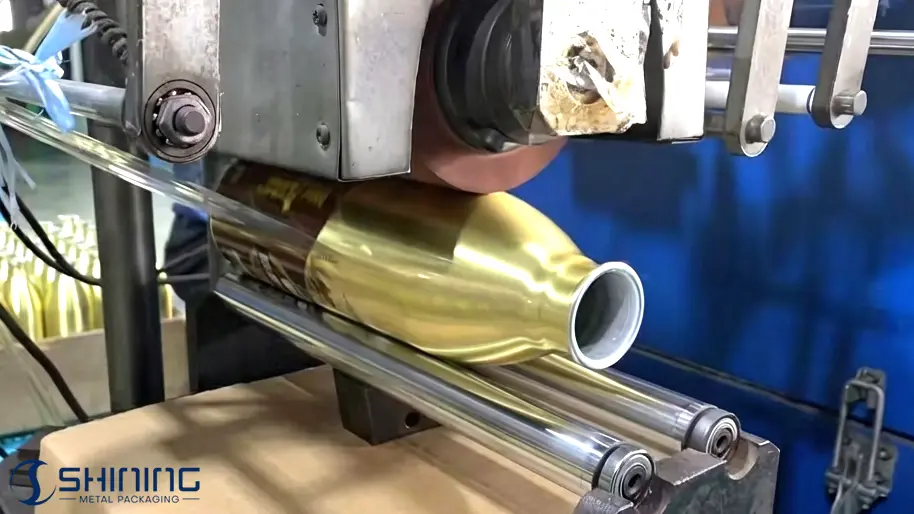
The “Two-Step” Process
- Pre-Printing: The design is first offset-printed onto a specialized transfer film/paper. Because this happens on film rather than the bottle, colors can be applied one by one without contamination.
- Thermal Transfer: A heat transfer machine uses heat and pressure to bond the ink layer from the film onto the aluminum bottle.

Key Characteristics
- Seamless Finish: Bottles are usually spray-painted with a base color (transparent or solid) before transfer. This eliminates the “seam line” often seen in offset printing.
- Speed: While the transfer itself is faster than silk screening because all colors are applied at once, the total process is slower than offset.
Pros and Cons
- Advantages: High precision for complex patterns, vibrant colors, and a lower MOQ 10,000 units).
- Disadvantages: High cost. You must pay for the film, manual labor, and significant plate fees (approx. $700–$1,000 USD). It cannot be used on curved/arc areas of the bottle.
3. Silk Screen Printing (Bold & Tactile)
Silk screen (or screen printing) is a traditional method that creates a premium, “hand-crafted” feel.
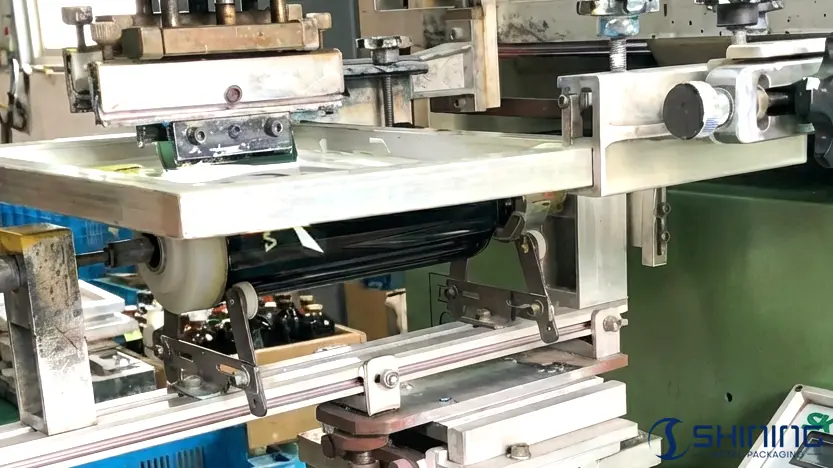
The “Stencil” Principle
A mesh screen (nylon or polyester) acts as a template. Image areas are left open, while non-image areas are blocked with an emulsion. A squeegee forces thick ink through the mesh directly onto the bottle.
Key Characteristics
- Pre-treatment: Like heat transfer, bottles are often spray-painted first.
- Special Effects: This method is excellent for local “spot” effects like gold stamping or creating a tactile, “embossed” texture you can feel with your fingers.
Pros and Cons
- Advantages: Very thick, vibrant ink that stands out on dark backgrounds. Low setup costs (approx. $50 per color plate).
- Disadvantages: Very slow and inefficient for large batches. It cannot handle gradients, large-area patterns (which may cause “pinholes”), or fine details like barcodes and QR codes. Costs increase significantly with each added color.
Summary: Which one should you choose?
| Feature | Offset Printing | Heat Transfer | Silk Screen |
|---|---|---|---|
| Best For | Large scale / Low cost | Complex graphics / Gradients | 1-2 Colors / Premium feel |
| MOQ | 30,000 pcs | 10,000 pcs | 5,000 pcs |
| Setup Cost | $200 | $700-$1000 | $50/color |
Choosing the right printing process is a balance between your design’s complexity, your budget, and your production volume. To summarize:
- Choose Offset Printing if you need high-speed, large-scale production (30,000+ units) and want the lowest unit cost for spot-color designs.
- Choose Heat Transfer if your brand relies on vivid, photographic details or complex gradients and you prefer a mid-range MOQ of 10,000 units.
- Choose Silk Screen if you want a premium, tactile “embossed” feel for 1-2 colors or need a low-cost setup for smaller, specialized batches.
Design Specifications: Understanding Your Canvas
When preparing your artwork, the dimensions of your design file depend entirely on the printing method you select. This is because Offset Printing can cover the curved shoulder area of the bottle, whereas Heat Transfer and Silk Screen are restricted to the flat, cylindrical body.
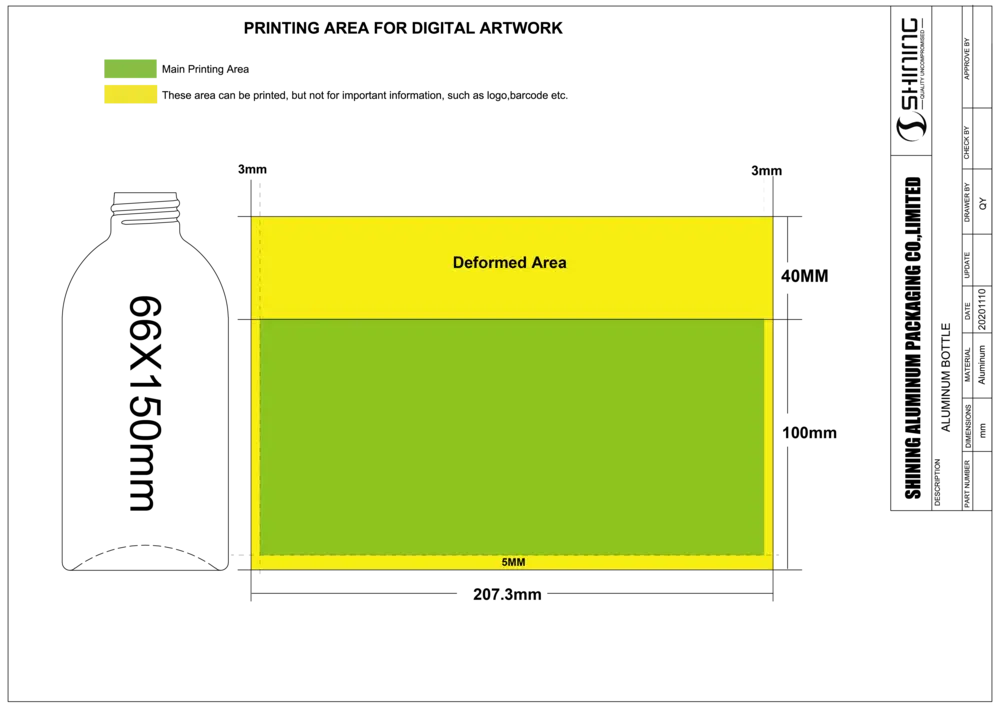

Calculating Your Design Width
Regardless of the method, the width of your design is based on the circumference of the bottle:
- Formula: Width = 3.14 * {Bottle Diameter}
Calculating Your Design Height
The printable height varies significantly between processes:
- Offset Printing (Full-Body Coverage):
- Scope: Since offset printing occurs before the bottle is fully formed into its final shape, it can achieve printing on the side walls including the curved shoulder area.
- Height: The design height is equivalent to the total height of the bottle.
- Note: If printing on the shoulder, “pre-distortion” of the artwork is required to ensure the logo looks correct once the bottle is shaped.
- Heat Transfer & Silk Screen (Straight-Body Only):
- Scope: These methods are applied after the bottle is formed. Because the machinery cannot easily navigate the curves of the neck or shoulder, printing is limited to the straight cylindrical section.
- Height: The design height is the total bottle height minus the shoulder and neck dimensions.
Beyond the Basics: Premium Surface Finishes
While the three methods above are the industry standards, other high-end surface treatments can further elevate your brand’s presence:
- Anodizing: For a durable, metallic colored finish.
- UV Coating: For a high-gloss, mirror-like chrome effect.
- Embossing/Debossing: To add physical depth and texture to the aluminum itself.
Due to their higher production costs, these premium processes are used less frequently.
Contact Us Today
Ready to start your next project? If you need further details on aluminum bottle production or want to explore our advanced surface treatments, our team is here to help you find the perfect fit for your brand.