
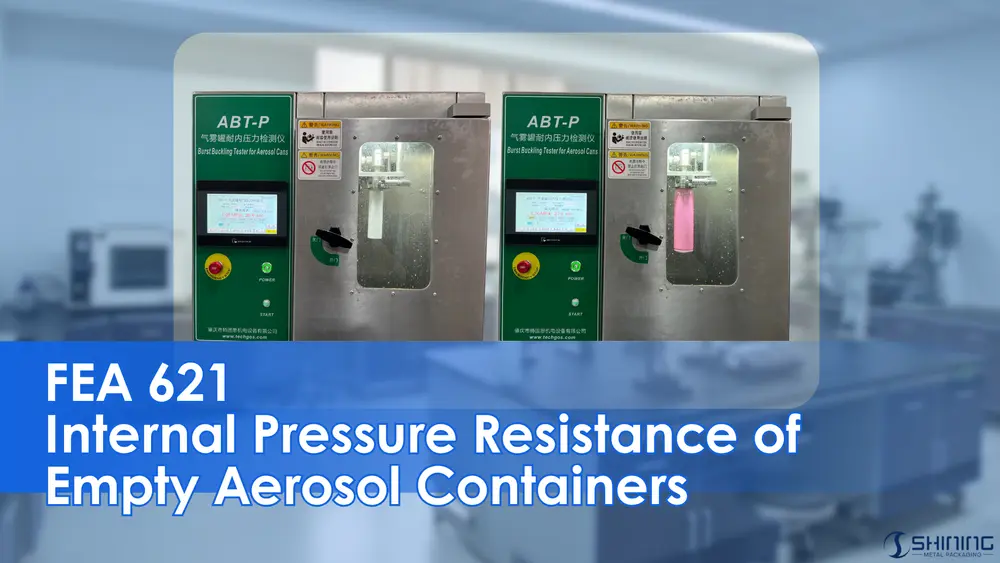
Standard Overview
FEA 621 is an industry standard issued by the European Aerosol Federation (FEA) that defines a hydraulic pressure test method for measuring the internal pressure resistance of empty aerosol containers without valves.
The method is required by multiple regulatory frameworks, including Directive 75/324/EEC and transport regulations (ADR / RID), to verify that aerosol containers meet minimum safety margins before filling.
Key Regulatory Definitions
Test Pressure
Test pressure is the pressure that an unfilled aerosol container must withstand for 25 seconds without leakage or unacceptable permanent deformation.
A slight, symmetrical deformation of the base or upper profile may be acceptable, provided the container subsequently passes the burst test.
Bursting Pressure
Bursting pressure is the minimum internal pressure that causes the container to rupture or leak.
It is important to distinguish between:
- The calculated burst test pressure derived from regulations
- The actual bursting pressure observed during testing
Actual Distortion Pressure
Actual distortion pressure is the lowest pressure that causes a visible and permanent deformation of the container.
Objective of the Test
FEA 621 describes a method to:
- Verify that containers withstand the required test pressure
- Measure the actual distortion pressure
- Verify compliance with the calculated burst pressure
- Measure the actual bursting pressure
All assessments are performed sequentially on the same container.
Test Apparatus
The test setup consists of:
- Hydraulic pump tightly fitted to the container aperture
- Pressure gauge with 0.1 bar resolution and maximum pressure indicator
- Reference gauge or calibration device
- Protective safety screen for operator protection
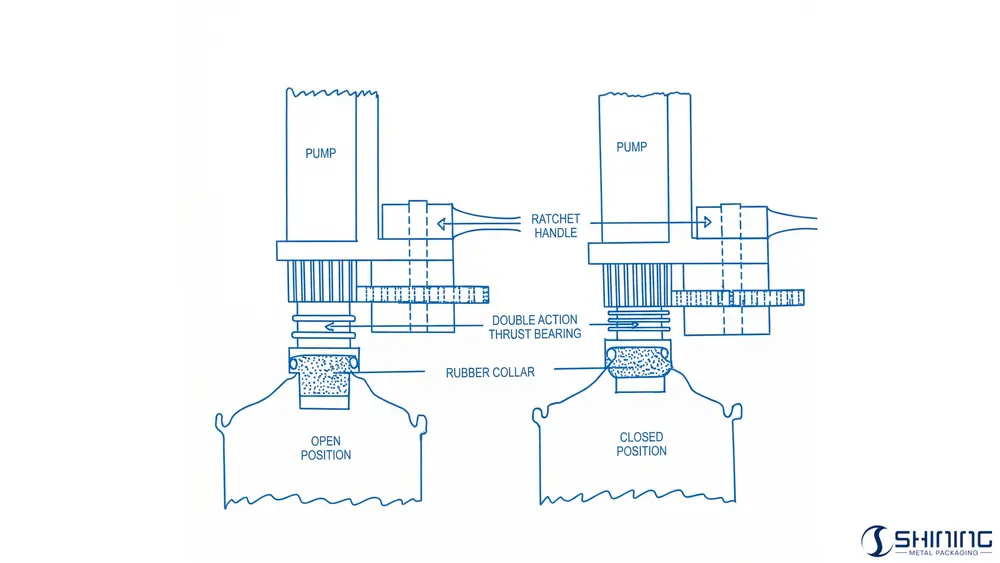
Test Method – Engineering Interpretation
The empty container is completely filled with water at 20 ± 5 °C and connected to the hydraulic pump.
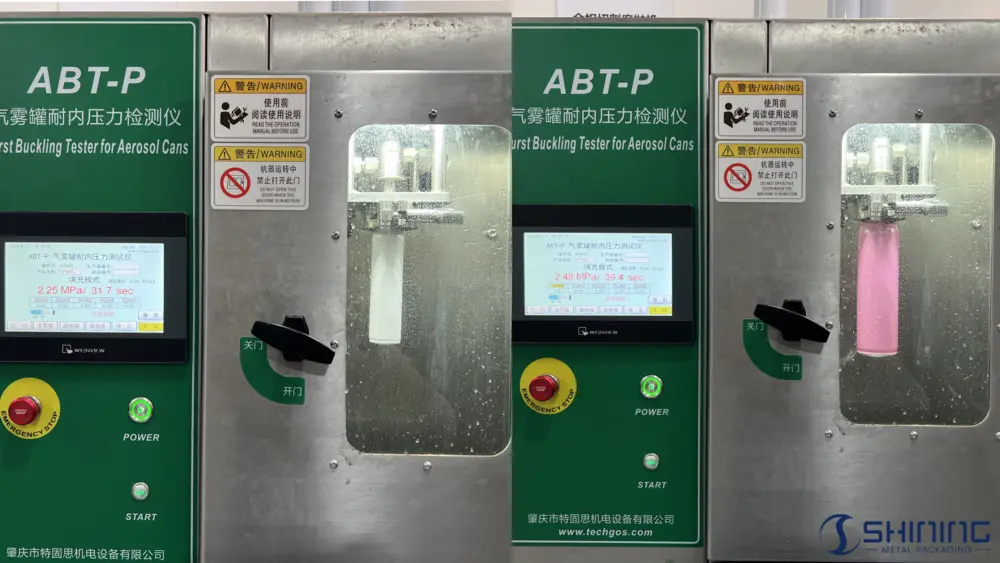
During testing:
- The container must remain unrestrained, suspended only by the connection
- Pressure increase must be controlled at a maximum rate of 1 bar per second
Step 1 – Verification of Test Pressure
Pressure is raised to the prescribed test pressure and held for 25 seconds.
The container passes if no leakage or unacceptable deformation is observed.
Step 2 – Measurement of Actual Distortion Pressure
From the test pressure, pressure is further increased until visible permanent deformation occurs.
The distortion pressure is read from the maximum pressure indicator, together with the location and nature of the deformation.
Step 3 – Verification of Calculated Burst Pressure
Pressure is increased further until the calculated burst pressure is reached.
Any leakage observed during this phase is classified as a burst failure.
Step 4 – Measurement of Actual Burst Pressure
Pressure is maintained at the controlled rate until rupture or leakage occurs.
The maximum pressure reached is recorded as the actual burst pressure.
Reporting Requirements
The test report must include:
- Container details (type, material, dimensions)
- Sample size
- Confirmation of test pressure compliance
- Actual distortion pressure with description
- Confirmation of calculated burst pressure compliance
- Actual burst pressure with failure description
- Any non-standard test conditions
Engineering Significance
FEA 621 provides the fundamental verification that an aerosol container has sufficient mechanical strength before valve assembly and filling.
It separates:
- Structural container integrity (FEA 621)
- Filled pack pressure behaviour (FEA 606)
Relationship with Other Standards
- Directive 75/324/EEC – Aerosol Dispensers Directive
- ADR / RID – Transport of dangerous goods
- FEA 606 – Water bath testing of filled aerosol packs
Download the Standard PDF
FEA 621 standard describing the hydraulic test method for measuring internal pressure resistance of empty aerosol containers without valves, including procedures for verifying test pressure, distortion pressure, and burst pressure to ensure compliance with European aerosol safety regulations.
FAQ – Engineering & Compliance
Yes, for demonstrating container compliance with European aerosol and transport safety regulations. It is a core structural safety test.
Water is incompressible and significantly reduces stored energy, making the test safer and more controllable.
Rapid pressurisation artificially raises burst values. Controlled loading reflects real mechanical behaviour.
No. Any external restraint alters deformation behaviour and invalidates the test result.
FEA 621 tests empty container strength. FEA 606 verifies pressure behaviour of the filled aerosol pack. They address different safety questions.