
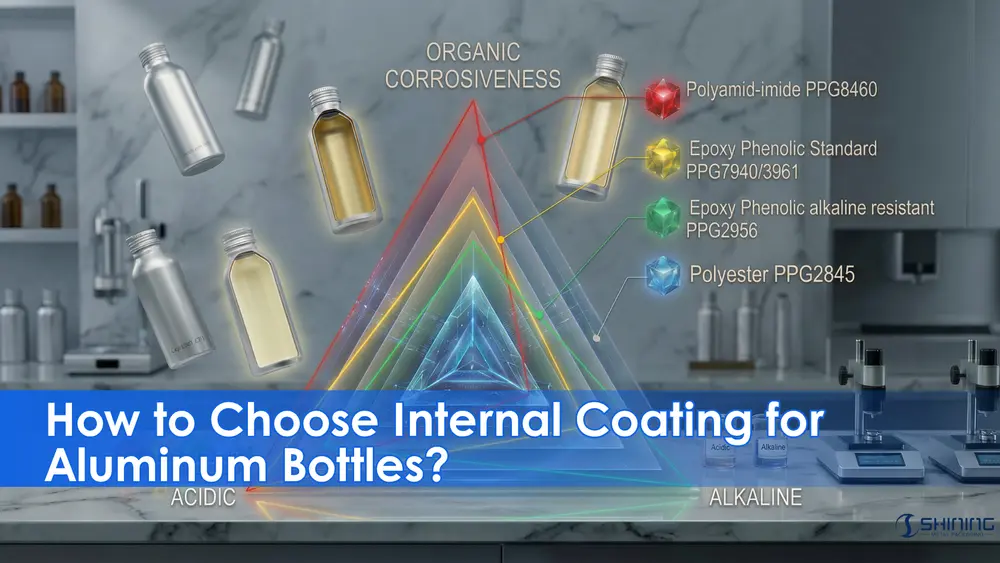
In the premium packaging sector, aluminum bottles are celebrated for their sustainability and 100% recyclability. However, the true performance of an aluminum bottle is defined by its “hidden guardian”: the Internal Liner.
1. The Invisible Guardian: Why Coating is Non-Negotiable
Aluminum is naturally prone to reaction with acids, alkalis, and moisture. The internal coating creates a hermetic barrier at the molecular level, ensuring that your formulation—whether a delicate fragrance or a premium mineral water—remains as pure as the day it was bottled.
2. Manufacturing Excellence: The Precision Coating Process
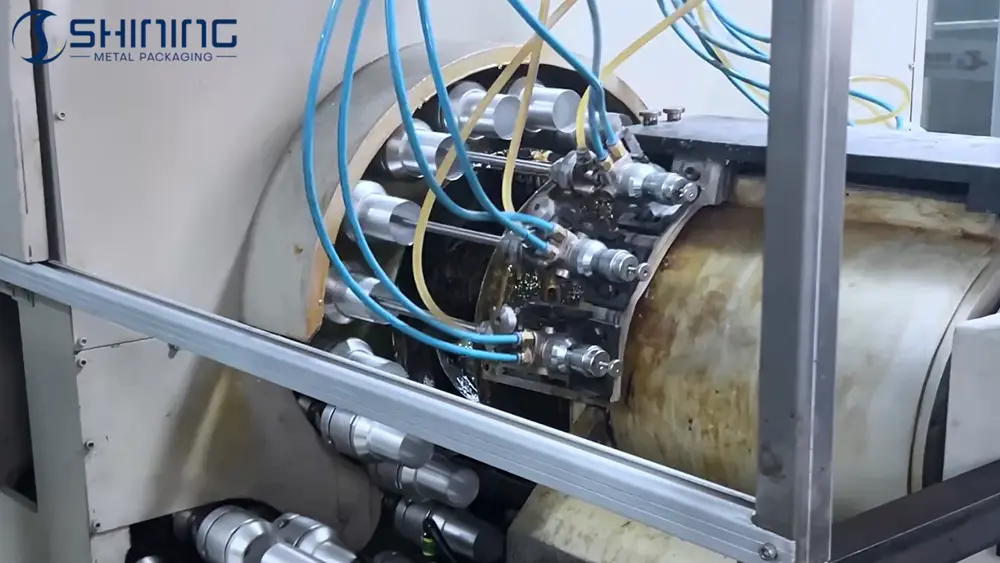
Applying a uniform liner inside a narrow-neck bottle is a high-tech feat involving several critical stages:
- Automized Spraying: A specialized nozzle enters the bottle, atomizing the liquid resin into a fine, consistent mist.
- Synchronized Rotation: The bottle spins at high speed during application to ensure 360° coverage without “thin spots” or pooling.
- Thermal Polymerization: Bottles pass through industrial ovens at 220°C – 260°C. This triggers chemical cross-linking, turning the resin into a rock-hard, inert protective layer.
3. Quality Verification: The Conductivity Test
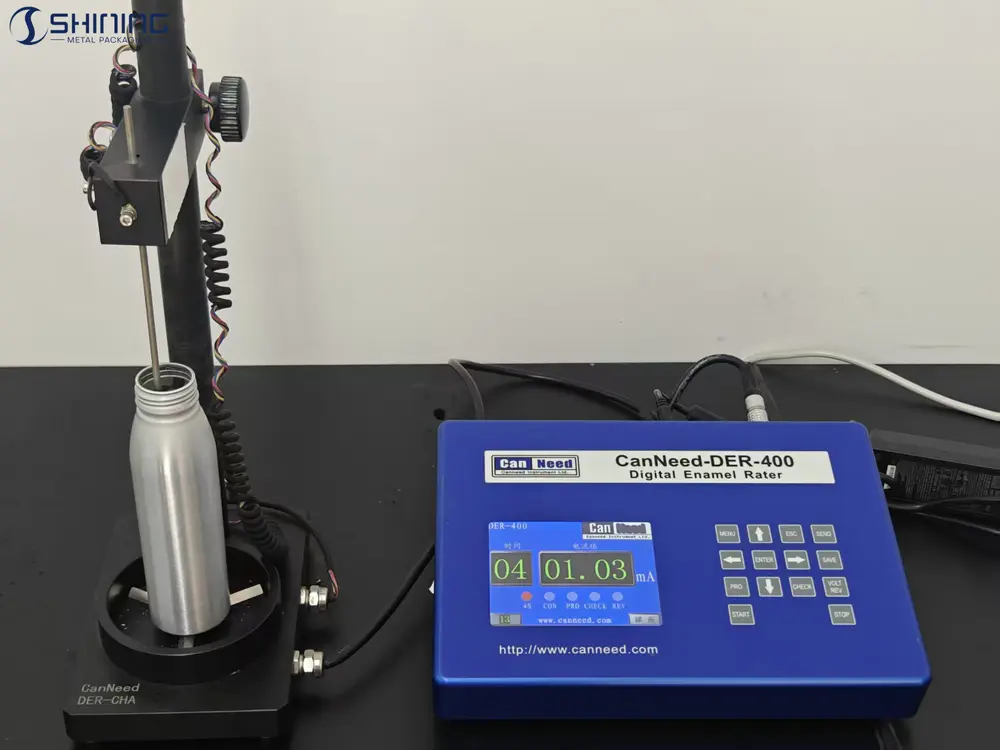
To ensure zero defects, we perform conductivity testing. If current flows, it indicates a breach in the inner coating
- Aerosol Cans: Must remain below 30mA for pressurized safety.
- Beverage Bottles: Due to the mechanical friction between neck-threading and neckning mold, we maintain a strict standard below 50mA to account for the tightening process.
4. Regulatory Evolution: BPA-NI vs. BPA-Free
Global regulations like EU 2024/3190 and California Prop 65 have redefined safety. We help brands navigate these requirements:
- BPA-NI (Not Intentional): The Stricter Standard. BPA is not used as a raw material input. This “Process-Based” approach prevents intentional presence and cross-contamination (e.g., PPG2845).
- BPA-Free: A “Result-Based” standard where final BPA levels are below detection limits (e.g., Valspar 13S93AA).
5. Global Technology Partners & Resin Classification
To ensure the highest safety and chemical resistance standards, Shining Packaging partners with global coating pioneers: PPG Industries and Valspar (now part of Sherwin-Williams).
- PPG Industries: A Fortune 200 leader and the world’s foremost supplier of packaging coatings. Their iSense and HPC series are the gold standard for aerosol and monobloc bottle protection.
- Valspar: Renowned for their “Safety-First” food contact resins, Valspar provides the industry’s most trusted BPA-Free solutions, ensuring absolute taste neutrality for sensitive beverages.
Based on our deep collaboration with these giants, we have categorized our primary internal liners into four performance pillars to match your specific formulation needs:
| Application Sector(color) | Recommended Liner Model | Chemistry & Compliance Highlights |
|---|---|---|
| Personal Care & Cosmetics (Gold) | PPG3961 / Valspar 29S43MC | Epoxy Phenolic Resin: Specifically engineered for high resistance to essential oils, fragrances, and solvent-based aerosols. |
| Food, Water & Beverage (Clear) | PPG2845 / Valspar 13S93AA | BPA-NI / BPA-Free Polyester: Formulated for taste neutrality. Meets EU migration limit of < 0.05mg/kg. |
| Heavy Industrial & Corrosive (Gold) | PPG8460 / PPG8560 | PAM (Polyamide-imide): The “Heavy Armor” for aggressive chemicals. Offers unparalleled resistance to extreme pH and industrial solvents. |
| Alkaline & High-pH Products | PPG BI8560 | Alkali-Resistant Coating: An specialized resin designed to withstand alkaline degradation in hair removal creams and similar formulas. |
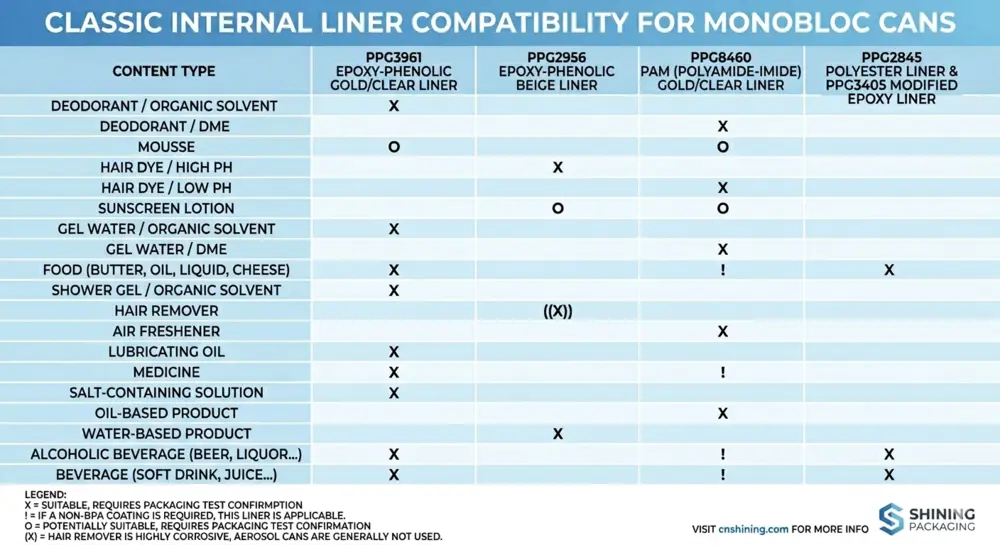
Download the Standard PDF
These Safety Data Sheets (SDS/MSDS) provide comprehensive technical and safety information for a range of internal coating materials used in aerosol cans, monobloc bottles, and beverage packaging. They cover key aspects such as chemical composition, flammability, health hazards, handling and storage requirements, and regulatory compliance. Together, they help manufacturers and engineers evaluate coating performance, ensure safe processing, and select suitable liners for food, cosmetic, and industrial applications.
6. Choosing Your Internal Armor: 3-Step Guide
- Verify Formulation pH: Standard liners work for neutral pH; acidic or alkaline products require PAM-based coatings.
- Market Compliance: If exporting to Europe or California, prioritize BPA-NI solutions to avoid warning labels or customs delays.
- Compatibility Testing: We provide samples for 3-6 month stability testing to ensure the liner performs perfectly with your specific active ingredients.
Conclusion: Protect Your Brand Integrity
The internal coating is the unsung hero of your product’s success. At Shining Packaging, we partner with PPG and Valspar to provide “One Product, One Strategy” solutions. Contact us today to find the perfect internal coating for your aluminum bottles.