
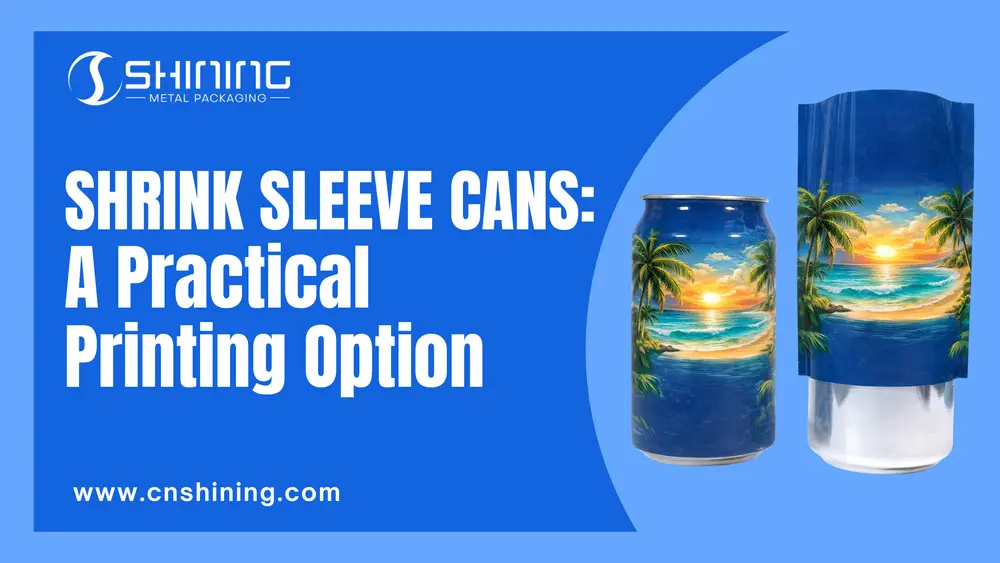
Across the beverage industry—from craft beer to ready-to-drink products—aluminum cans are becoming increasingly widespread. Beyond their functionality and sustainability, one of the key drivers behind this resurgence is the wide range of decoration options they offer, including shrink sleeve labeling. If your required volume is under 300,000 units and you prefer a custom design rather than blank cans, you will typically be choosing between pressure-sensitive labels, digital direct printing, and shrink sleeves. Today, shrink sleeve cans remain a favored option because they strike a practical balance between design flexibility and production feasibility for many beverage brands.
What Are Shrink Sleeve Cans?
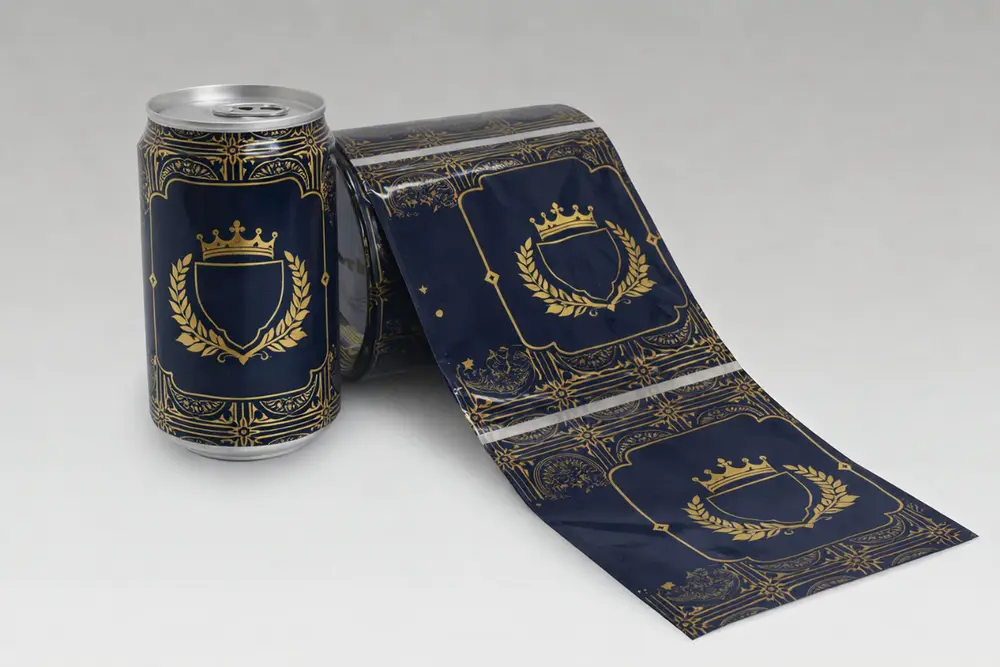
A shrink sleeve can is essentially a standard aluminum can that has been wrapped with a printed plastic film rather than having graphics applied directly onto the metal surface. The sleeve material (typically a polyester film) is printed with the artwork on its inner surface, then positioned over the can. When heat is applied in a shrink tunnel, the sleeve contracts and conforms tightly to the shape of the container, providing full 360-degree coverage.
Unlike pressure-sensitive labels that rely on adhesives or printed cans that require ink applied directly to metal via traditional or digital methods, shrink sleeves are secured by heat shrinking alone. This distinction affects how they look, how they perform, and how they compare to other decoration methods.
How Shrink Sleeves Work
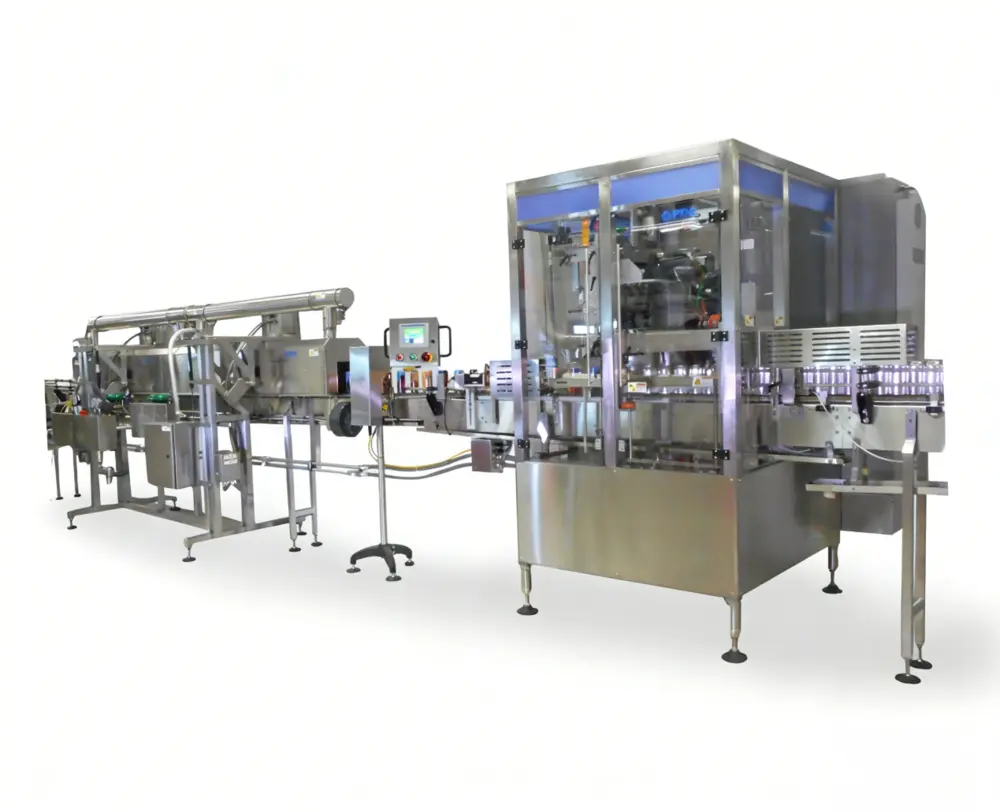
The shrink sleeve process begins with printing the film. The design is printed on the inside of the sleeve so that the ink stays protected by the plastic once applied. After printing, the film is formed into a tubular shape sized to the can. During production, sleeves are automatically placed over the cans using machinery designed for this task. Once positioned, cans pass through a controlled heat environment — often a steam or hot-air tunnel — which causes the film to uniformly shrink around the can’s contours.
This method allows the sleeve to conform to complex shapes, including around curves and up onto shoulders, which can be more challenging for other labeling systems. The result is a smooth, seamless surface with full-body graphics that cover areas traditional labels might miss.
Key Advantages of Shrink Sleeve Cans
360° Graphic Coverage
One of the main features of shrink sleeves is their ability to wrap the entire can. This provides a larger printable area than pressure-sensitive labels, which typically leave blank metal exposed, and enables more expressive visual designs without interruptions.
Design Flexibility
Because the artwork is pre-printed on the film before application, it allows for virtually unlimited colors and intricate vector graphics without the constraints of traditional offset plate-making. This enables brands to easily incorporate bold colors, gradient effects, and complex logo elements, helping their products stand out on retail shelves and capture consumer attention. The consistency and reliability of the design application process also give brands a high level of confidence.
Moderate Minimum Orders
Shrink sleeve labeling is well suited for medium production volumes—higher than pressure-sensitive labels but below traditionally printed cans, which often require full truckload quantities. At the same time, it is more cost-effective than digital direct printing at larger volumes. This balance makes shrink sleeves an especially attractive option for brands that have outgrown simple labeling but are not yet ready to commit to large-scale custom printed can production.
Comparing Printing Methods
When evaluating shrink sleeve cans, it is useful to consider how they compare to other decoration approaches:
| Method | Typical MOQ per SKU | Lead Time | Design Flexibility | Durability | Environmental Note |
|---|---|---|---|---|---|
| Traditional Printed Cans (Offset) | ~300,000 cans | Long (plate setup) | High volume only | Heat-sensitive inks | None (metal only) |
| Direct Digital Printing | Very low | Short (no plates) | Excellent for changes | UV Printing | Metal only |
| Shrink Sleeve Printing | Moderate (between labels & litho) | Moderate | Unlimited colors & gradients | Protected inner ink | Plastic film recycling restrictions |
Shrink sleeve decoration sits between these two extremes: higher MOQs than digital but lower than traditional litho printing. Sleeves are typically printed separately and then applied, which avoids some of the lead time and volume constraints of direct printing. They are particularly suited to vibrant vector graphics and full-color designs, though the presence of plastic film has environmental considerations not present with printed cans.
In some regions, the plastic nature of shrink sleeve films has led to recycling restrictions (for example, in Quebec), highlighting that sustainability factors may influence your choice as much as design or cost.
When Shrink Sleeves Are a Practical Option
Shrink sleeve cans tend to be relevant in scenarios where:
- The production run is too large for simple pressure-sensitive labels but not large enough to justify the cost and inventory tied to traditional printed cans.
- Full-body graphics or complex art are desired without the setup of plates or the technical limitations of printing directly on metal.
- The production infrastructure already supports heat-shrinking equipment, reducing the need for significant new capital investment.
At Shining Packaging, every printing method involves trade-offs—no single solution fits all scenarios. Choosing between shrink sleeves, traditional printing, and digital printing ultimately comes down to finding the right balance among volume, cost, design requirements, and logistical considerations.
Conclusion
Shrink sleeve cans remain a widely used packaging and decoration method in the beverage industry because they combine graphic flexibility with moderate order requirements and durable results. Although digital printing is gaining traction and traditional printing is still efficient at very high volumes, shrink sleeves provide a middle ground that many beverage brands find suitable for mid-sized runs that require full-body, high-impact visuals without overly large inventory commitments.
Frequently Asked Questions
A: Moderate volumes — higher than pressure-sensitive labels but significantly lower than traditional litho printed cans (~300,000 per SKU). Procurement teams should confirm exact MOQ with the chosen printer to avoid excess inventory for mid-volume SKUs.
A: Yes, provided the line includes a steam or hot-air shrink tunnel after filling. Engineers must verify tunnel temperature uniformity and conveyor speed compatibility before scaling production to prevent wrinkling or incomplete shrink.
A: Inner-printed ink is protected by the film, offering good abrasion and moisture resistance. However, acceptance testing under your specific temperature/time profile is required to confirm no delamination or color shift occurs.
A: The polyester film component can trigger restrictions in certain jurisdictions (e.g., Quebec). Procurement should review local material recovery facility guidelines and consider alternative mono-material options if sustainability targets are strict.
A: Yes — the heat-shrink process conforms to curves and shoulders better than pressure-sensitive labels. Confirm sleeve lay-flat width and shrink ratio (typically 60–70%) match your can geometry during the design review phase.
A: Protected inner ink provides superior scratch and moisture resistance versus exposed digital inks. For high-abrasion distribution routes, sleeves often outperform digital prints without additional over-varnish.
A: Check for uniform shrink (no wrinkles or air pockets), full 360° coverage without gaps, and ink adhesion after simulated abrasion testing. Reject batches showing >2% defect rate on graphic registration or film thickness variation.
A: When order volumes exceed digital’s economical range but fall below traditional litho thresholds, and full-body graphics with protected ink are required. Sleeves also allow faster artwork changes than plate-based methods.