
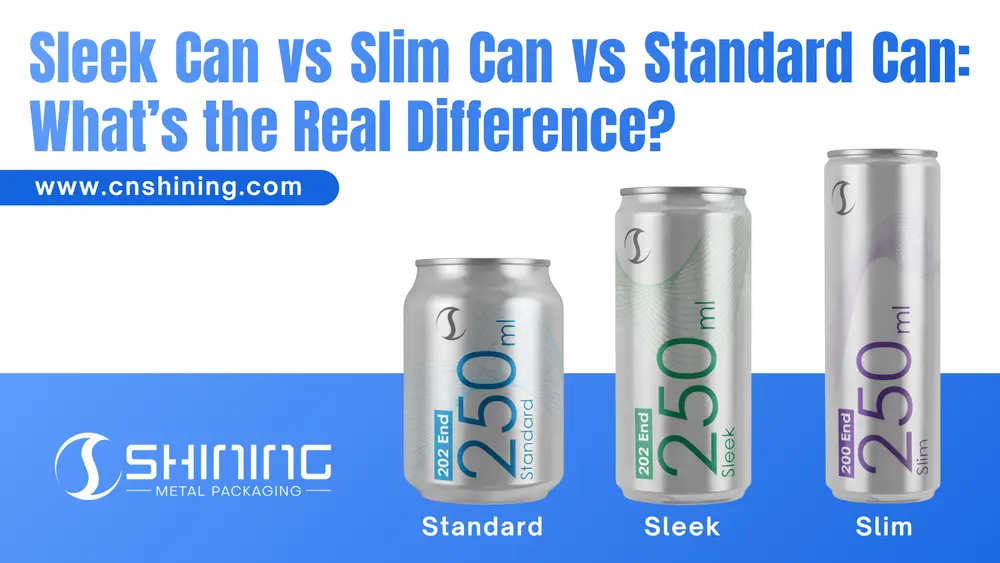
In beverage packaging, slim, sleek, and standard cans may sound similar, but they have key differences in size and production. Both slim and sleek cans look taller and thinner than a standard 12‑oz can, but they aren’t identical. In fact, the main distinctions are in the body diameter and can-end type. For example, a standard 12‑oz can has a 66 mm (2.60″) diameter and uses the common “202” end. In contrast, a sleek can is about 57 mm (2.24″) across (using the same 202 end), while a slim can is only 53 mm (2.09″) and requires a narrower “200” end. These dimension differences affect everything from filling lines to packaging.
Can Styles at a Glance
Standard Cans: The classic beverage can (≈66 mm diameter, often 12 oz/355 ml or 16 oz) used for sodas, beers, sparkling waters and most mass-market drinks. They fit virtually all canning lines, trays, and carriers (e.g. Martec standard carriers) and are the safest “default” choice. In fact, market reports confirm standard cans hold the largest share of the global can market.(source)
Sleek Cans: A moderately tall, slender can (≈57 mm diameter) that still uses the same 202 end as standard cans. The 12-oz sleek can has become popular in the U.S. – it’s now one of the most utilized cans for hard seltzers, energy drinks, and premium beverages. (source) Sleek cans (also in 6.8–12 oz) appeal to brands seeking a modern, upscale look without heavily modifying production. They typically serve premium sodas, seltzers, kombuchas, craft beers and the like.
Slim Cans: The narrowest tall can (≈53 mm diameter) requiring the uncommon 200 end. Slim cans stand taller than standard or sleek cans for the same volume (e.g. a 250 ml slim can is ~134 mm high vs. ~92 mm for a standard can of the same volume). They are more common in Europe and parts of Asia (e.g. 250 ml energy drinks in Thailand), but rare in North America. Brands often use slim cans (in 187–250 ml sizes) for energy drinks, ready-to-drink coffees, wines and other specialty beverages that benefit from a premium, on-the-go image. (Larger “king” cans, like 24–32 oz crowlers for craft beer to-go, are a separate category.)
| Feature | Standard Can | Sleek Can | Slim Can |
|---|---|---|---|
| Body Diameter | 211 / 66.1 mm / 2.60 inch | 204 / 57.4 mm / 2.26 inch | 202 / 53.4 mm / 2.10 inch |
| Can height (250 ml example) | 92 mm / 3.62 inch | 115 mm / 4.53 inch | 133.9 mm / 5.27 inch |
| Common Volumes | 330 ml, 355 ml (12 oz) | 250 ml (8.4 oz), 330 ml | 250 ml (8.4 oz) |
| Lid (End) Size | 202 End / 52.4 mm / 2.06 inch | 202 End / 52.4 mm / 2.06 inch | 200 End / 50.0 mm / 1.97 inch |
| Weight (250 ml example) | 8.60g (±0.5g) | 10.00g (±0.5g) | 9.66g (±0.5g) |
| Key Characteristics | Classic diameter, widely used, cost-efficient | Taller and slimmer profile, modern look | Narrow diameter, compact and elegant |
| Typical Uses | Mass-market and everyday consumption (Carbonated soft drinks, beer, juice) | Premium branding and lifestyle-driven products (premium sodas, seltzers, kombuchas, craft beers) | Functional, portable, and portion-controlled beverages (energy drinks, ready-to-drink coffees, wines) |
Sleek Can vs Slim Can: Key Differences
Size and Manufacturing Differences
In practice, the difference between sleek and slim cans is only a few millimeters—but it has a real impact. Sleek cans (57 mm diameter) use the standard 202 end, making them compatible with most existing production lines with minimal adjustments. Slim cans (53 mm diameter), however, require smaller 200 ends and customized trays or cartons, which can complicate logistics.
Their taller shape also means slim cans may require adjustments in filling and seaming processes. In many cases, this leads to added costs, higher MOQs, and more complex supply chains. Sleek cans, by comparison, are easier to source and integrate into standard systems.
Slim cans are also slightly lighter due to thinner aluminum, which can offer some cost and sustainability benefits—but this comes with added operational complexity.
Usage and Market Trends
| Aspect | Slim Can | Sleek Can |
| Typical Beverages | Energy drinks, RTD coffee, wine, functional drinks | Hard seltzers, sparkling water, kombucha, premium sodas |
| Brand Positioning | Niche, premium, distinctive | Modern, versatile, widely appealing |
| Consumer Appeal | Portable, easy to grip, on-the-go | Stylish with a familiar drinking experience |
| Regional Popularity | Strong in Europe & Asia, growing in North America | Widely used in the U.S. and Europe |
| Market Trend | Growing in functional and portable segments | Popular as a practical upgrade from standard cans |
So, Which Can Should You Choose?
There’s no one-size-fits-all answer – it depends on your brand positioning, production capacity, and costs. Slim cans can help a product pop and feel premium, but they demand special sourcing and higher startup costs. You’d need to secure 200‑end can lids, custom trays, and likely a larger minimum order. The payoff is exclusivity and a distinct look. Many niche energy, coffee, or wine brands do just this to signal quality.
Sleek cans offer a compromise: you get a thinner profile and modern style with far fewer headaches. Because they use standard 202 ends and are almost the same width as regular cans, you can often run them on existing lines and pack them in normal carriers. A 12‑oz sleek can is a particularly easy swap if you already make 12‑oz standard cans. Many brands find sleek cans let them stand out (on‑trend in e.g. seltzers and craft beers) without needing a complete retool.
If uncertainty remains, standard cans are always the safe bet – they’re proven, readily available, and the simplest to produce. They’ll cost less per unit than specialty shapes and fit any line.
Ultimately, weigh your priorities. If your brand identity and shelf impact are paramount, and you can handle the added logistics, a slim or sleek can can add value. If efficiency and cost are your top drivers, stick with standard cans. In many cases, manufacturers even use a mix: e.g. a flagship drink in a standard can and a limited‑edition in a sleek or slim.
Summary
Standard cans (66 mm dia) remain the workhorse format, compatible with all lines and carriers. Sleek cans (57 mm dia, same end) give a tall, refined look with minimal production changes. Slim cans (53 mm dia, 200 end) are the narrowest and most premium-looking, but they require special ends and packaging. In practice, standard cans are easiest to use, sleek cans add modern appeal with few trade-offs, and slim cans maximize distinctiveness at the cost of complexity. Whether you value cost and convenience or standout design will guide your choice.