
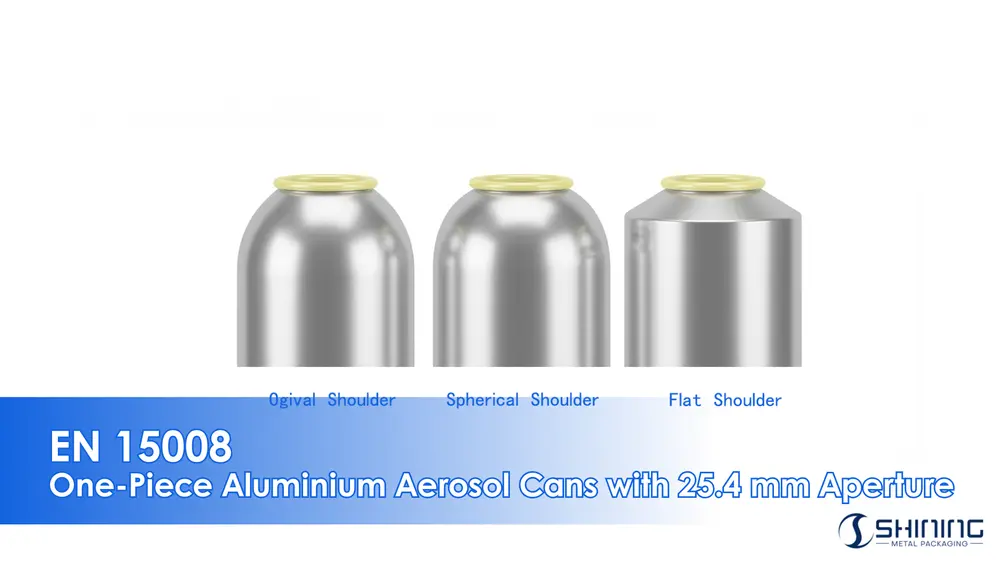
Standard Overview
EN 15008 is the European Standard that specifies the dimensions and filling volumes of one-piece (monobloc) aluminium aerosol containers with a 25.4 mm (1 inch) aperture.
Unlike aperture-focused standards, EN 15008 defines the container as a finished product, making it the primary reference for aluminium aerosol can selection, specification, and procurement.
1. Scope and Classification
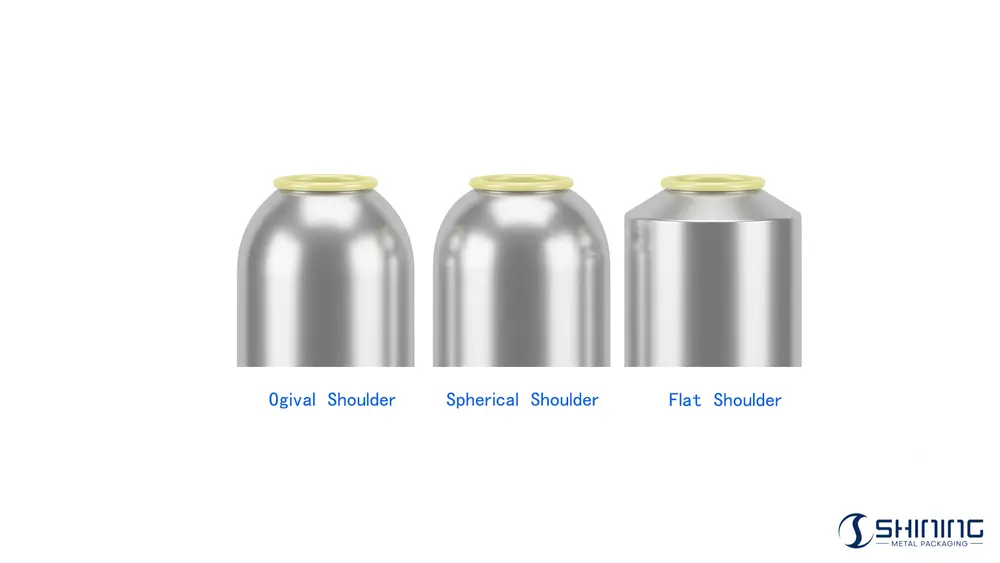
The standard applies to aluminium containers of monobloc construction (without welding, seaming or soldering), using one of the following shoulder profiles:
- Ogival shoulder
- Spherical shoulder
- Flat shoulder
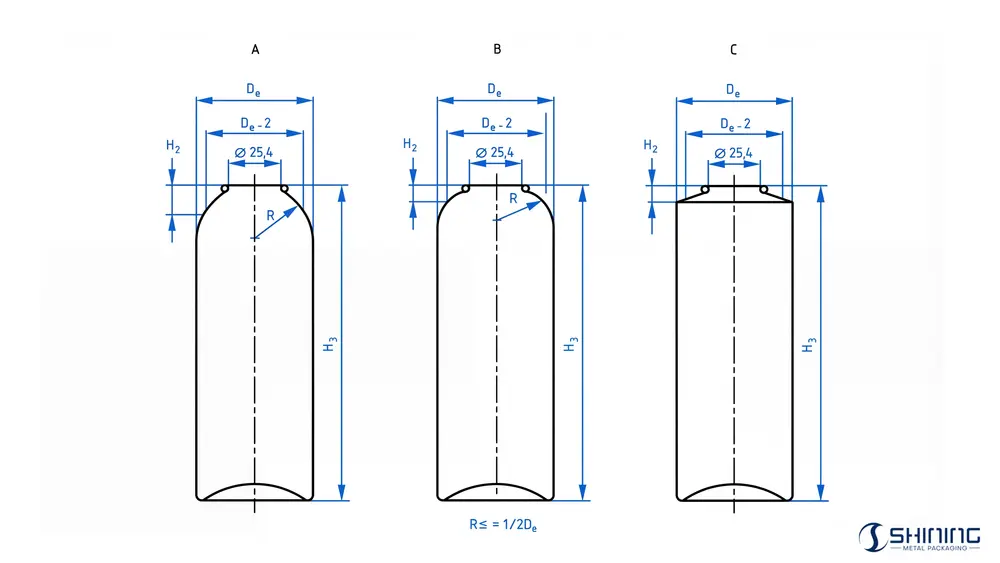
Each container is classified by five characteristic parameters:
- C2 – nominal brimful capacity (ml)
- De – nominal outside diameter (mm)
- H3 – nominal overall height (mm)
- H2 – cover seat height (mm)
- Shoulder type
2. Relationship with Other Standards
EN 15008 functions within a coordinated standards system:
- ISO 90-3 – method for calculating brimful capacity
- EN 15006 – 25.4 mm aperture geometry for aluminium cans
- EN 14848 – valve cup dimensions
- EN 15010 – clinch-related tolerances
3. Capacity and Filling Logic
The standard distinguishes clearly between:
- Brimful capacity (C2): volume of the empty container without valve
- Nominal filling volume (V): usable product volume
Minimum and maximum capacity values are calculated in accordance with ISO 90-3, ensuring consistency across aluminium and tinplate container standards.
4. Typical Dimensions – Ogival Shoulder Containers
Table 1 — Containers with ogival shoulder
| Brimful capacitya C2 |
Nominal filling volume V |
De | H3 | H2 | |||
|---|---|---|---|---|---|---|---|
| nom. ml |
min. ml |
max. ml |
liquefied gasb ml |
compressed gasc ml |
mm | mm | mm |
| 47 | 45 | 49 | — | 25 | 35 | 59 | 7.7 |
| 75 | 72 | 78 | 50 | — | 35 | 88 | 7.7 |
| 89 | 85 | 93 | — | 50 | 35 | 105 | 7.7 |
| 38 | 90 | 11.0 | |||||
| 110 | 106 | 114 | 75 | — | 35 | 125 | 7.7 |
| 38 | 110 | 11.0 | |||||
| 40 | 100 | 12.0 | |||||
| 140 | 134 | 146 | 100 | 75 | 35 | 156 | 7.7 |
| 38 | 138 | 11.0 | |||||
| 40 | 125 | 12.0 | |||||
| 42 | 115 | 12.5 | |||||
| 105 | 15.0 | ||||||
| 175 | 169 | 181 | 125 | 100 | 38 | 168 | 11.0 |
| 40 | 156 | 12.0 | |||||
| 42 | 142 | 12.5 | |||||
| 45 | 125 | 15.0 | |||||
| 210 | 204 | 216 | 150 | 125 | 40 | 183 | 12.0 |
| 42 | 165 | 12.5 | |||||
| 45 | 150 | 15.0 | |||||
| 47 | 137 | 16.5 | |||||
| 50 | 125 | 18.5 | |||||
| 270 | 262 | 278 | 200 | 150 | 45 | 190 | 15.0 |
| 47 | 176 | 16.5 | |||||
| 50 | 156 | 18.5 | |||||
| 53 | 142 | 20.5 | |||||
| 335 | 325 | 345 | 250 | 200 | 47 | 214 | 16.5 |
| 50 | 190 | 18.5 | |||||
| 53 | 173 | 20.5 | |||||
| 55 | 162 | 22.0 | |||||
| 59 | 142 | 24.5 | |||||
| 405 | 393 | 417 | 300 | 250 | 47 | 254 | 16.5 |
| 50 | 225 | 18.5 | |||||
| 53 | 205 | 20.5 | |||||
| 55 | 191 | 22.0 | |||||
| 57 | 180 | 23.5 | |||||
| 59 | 169 | 24.5 | |||||
| 64 | 150 | 28.5 | |||||
| 66 | 143 | 29.0 | |||||
| 520 | 507 | 533 | 400 | 300 | 53 | 260 | 20.5 |
| 55 | 242 | 22.0 | |||||
| 57 | 226 | 23.5 | |||||
| 59 | 214 | 24.5 | |||||
| 64 | 185 | 28.5 | |||||
| 66 | 178 | 29.0 | |||||
| 650 | 637 | 663 | 500 | 400 | 57 | 277 | 23.5 |
| 59 | 265 | 24.5 | |||||
| 64 | 230 | 28.5 | |||||
| 66 | 218 | 29.0 | |||||
| 800 | 784 | 816 | 600 | 500 | 66 | 263 | 29.0 |
| 74 | 210 | 34.5 | |||||
| 1000 | 980 | 1020 | 750 | 600 | 66 | 322 | 29.0 |
| 74 | 263 | 34.5 | |||||
De: Nominal outside diameter
H3: Nominal overall height
H2: Cover seat height
a The minimum and maximum values have been calculated in accordance with EN ISO 90-3.
b Products propelled by liquefied gas.
c Products propelled by compressed gases alone or by mixtures of nitrous oxide or carbon dioxide when the product has a Bunsen coefficient ≤ 1.2.
5. Practical Application Scenarios
5.1 Aluminium Can Manufacturing
EN 15008 provides harmonised dimensional targets suitable for impact extrusion and ironing processes.
5.2 Filling and Clinching
Standardised H2 and H3 values ensure compatibility with filling heads, clinching tools, and cap assemblies.
5.3 Procurement and Multi-Sourcing
Using EN 15008 designations allows buyers to compare aluminium cans from different suppliers on a like-for-like basis.
Download the Standard PDF
This document provides EN 15008, specifying dimensional requirements for one-piece aluminium aerosol containers with a 25.4 mm aperture. It defines brimful capacities, filling volumes, outside diameters, heights, and shoulder profiles to support standardized container design and dimensional verification.
FAQ – Engineering & Purchasing
EN 15008 is not legally mandatory, but it is the accepted European reference for one-piece aluminium aerosol cans. In practice, it is widely used by can manufacturers, fillers, and buyers to avoid ambiguity in dimensions and filling volumes.
No. EN 15008 applies exclusively to one-piece aluminium containers. Steel aerosol cans are covered by EN 15007, which follows different construction and dimensional logic.
Different shoulder types may be used on the same filling line only after proper equipment adjustment and validation. Changes in shoulder geometry affect filling head alignment, clinch behavior, and cap positioning.
Cover seat height defines how caps, overcaps, and actuators are positioned on the finished container. Incorrect H2 values often result in poor cap fit, visual misalignment, or interference during downstream packaging.
No. EN 15008 defines container dimensions, while EN 15010 defines clinch-related tolerances. Both standards should be specified together to ensure reliable sealing performance on aluminium cans.
No. EN 15008 defines brimful capacity ranges, not fixed filling volumes. Actual filling volume depends on propellant type, internal pressure, and safety margins defined by the filler.
Only valves compliant with EN 14848 should be used. Using non-compliant valves may lead to sealing instability, even if the aperture diameter appears correct.
Yes. Referencing EN 15008 significantly reduces misunderstandings between suppliers and buyers. It provides a clear, standardized basis for container selection, comparison, and quality control.