
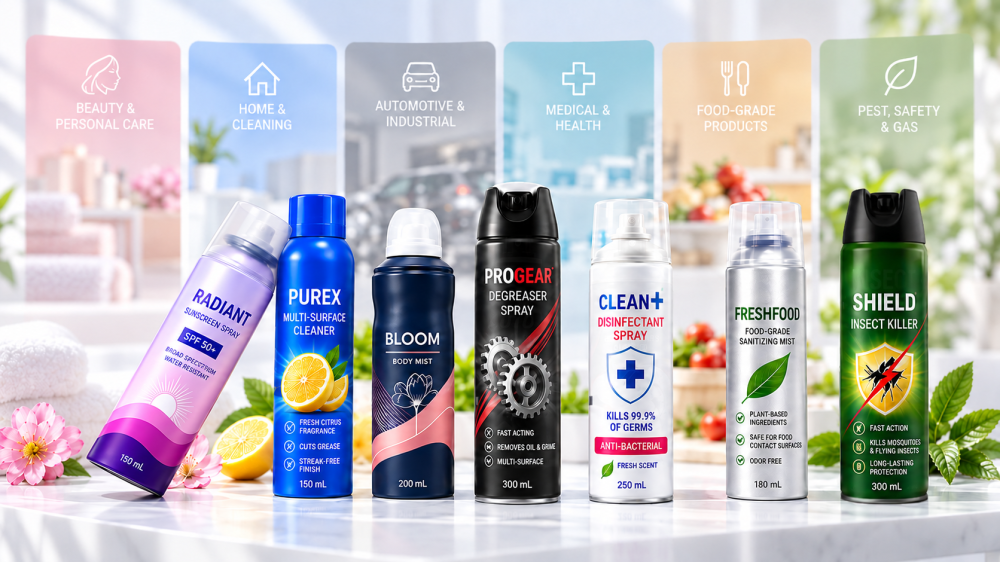
Consumer, healthcare & industrial markets
Aerosol Packaging Solutions for Every Application
Shining Packaging combines aerosol packaging expertise with responsive, application-focused support to help customers turn product requirements into practical packaging solutions. A single packaging format can freshen a room, style hair, protect a surface, treat a wound, portion food or support an emergency product. The application determines how the can, valve, actuator and pressure system must work together.
Keeps the unused product enclosed between applications
Produces the required mist, stream, foam, cream or gel
Dispenses without pouring or directly handling the product
Provides portable, ready-to-use dispensing wherever needed
Supports consumer, healthcare, food and industrial products
Match the Packaging to the Product and Its Spray
An aerosol package is more than a container. It is a complete dispensing system that brings together the can, internal coating, valve, actuator and propellant or compressed gas. Each component must be selected around the formulation, the required output and the way the product will be used.
Dry shampoo needs a fine, even spray; engine cleaner require a focused stream; whipped cream depends on controlled food-contact dispensing; and spray adhesive must handle a very different formula and coverage pattern. The application guide below shows where aerosol packaging is used and which packaging requirements should be considered for each market.
Consumer care
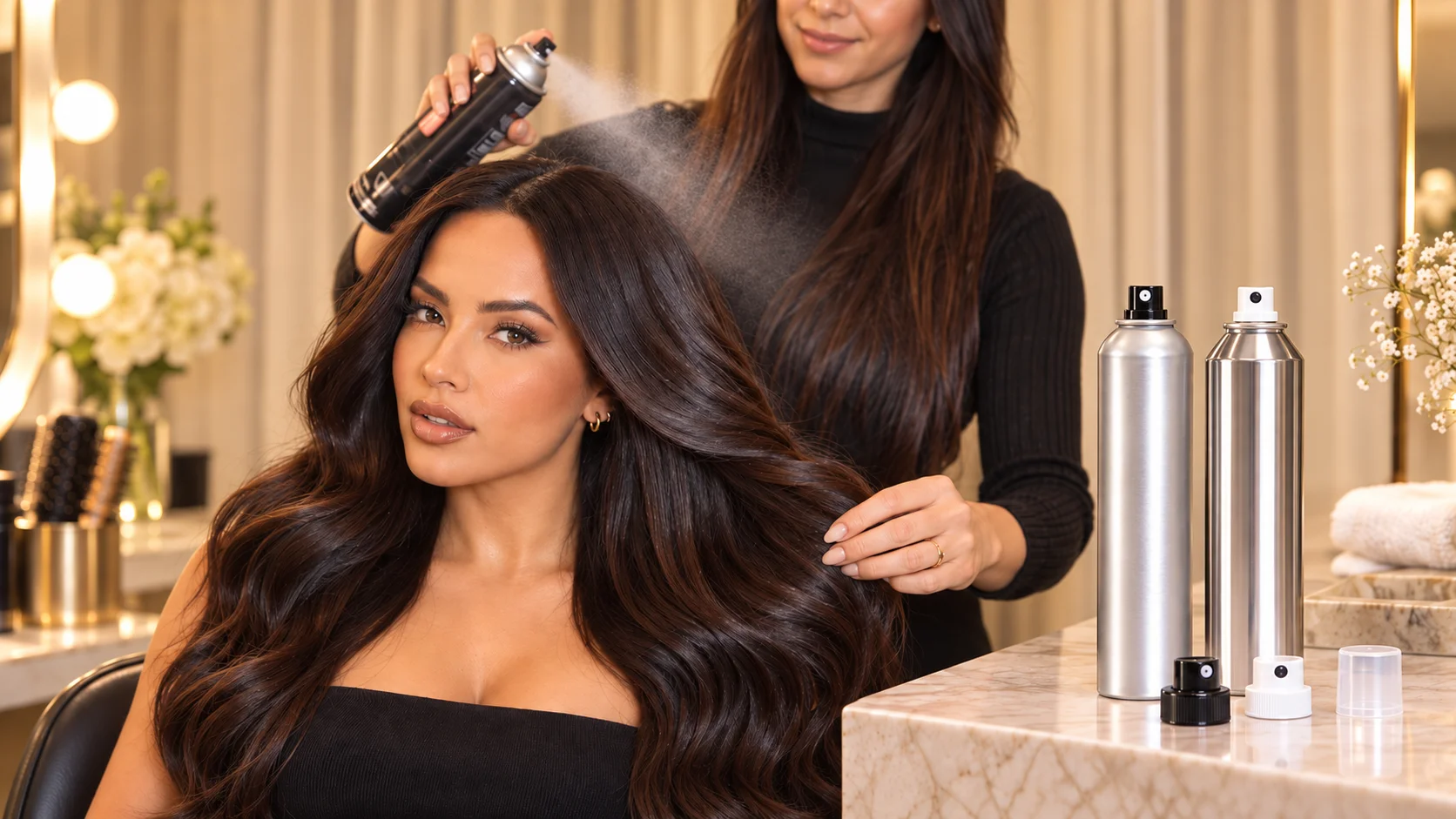
Beauty & Personal Care
From weightless hair mists to dense shaving foams, personal-care aerosols must translate a formulation into a consistent sensory experience.
Hair care
Face & body
Shaving & fragrance
Packaging priorities
- Particle size, coverage and sensory feel
- Dry spray, mist, mousse, foam or gel output
- Formula compatibility and internal coating
- Comfortable actuation and controlled flow
- Decoration aligned with the care routine
Everyday environments
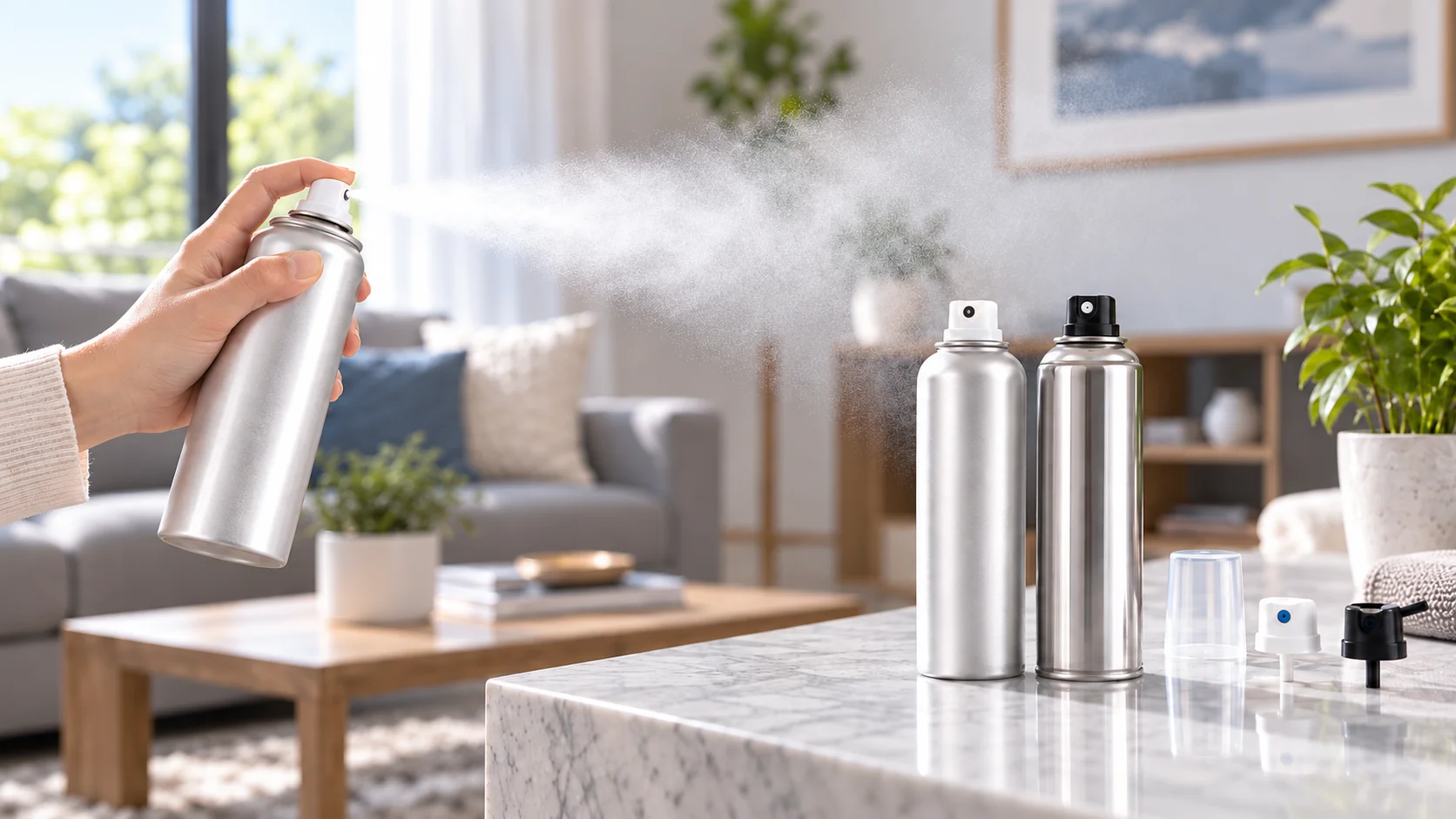
Home & Cleaning
Household aerosols may disperse fragrance, sanitize fabric, lift soil from a surface or place cleaner into a difficult gap.
Surface cleaning
Home maintenance
Packaging priorities
- Room mist, surface spray, stream or foam
- Coverage area, wetting and cling time
- Resistance to cleaners and active ingredients
- Storage stability and leakage control
- Clear instructions for safe household use
Professional performance
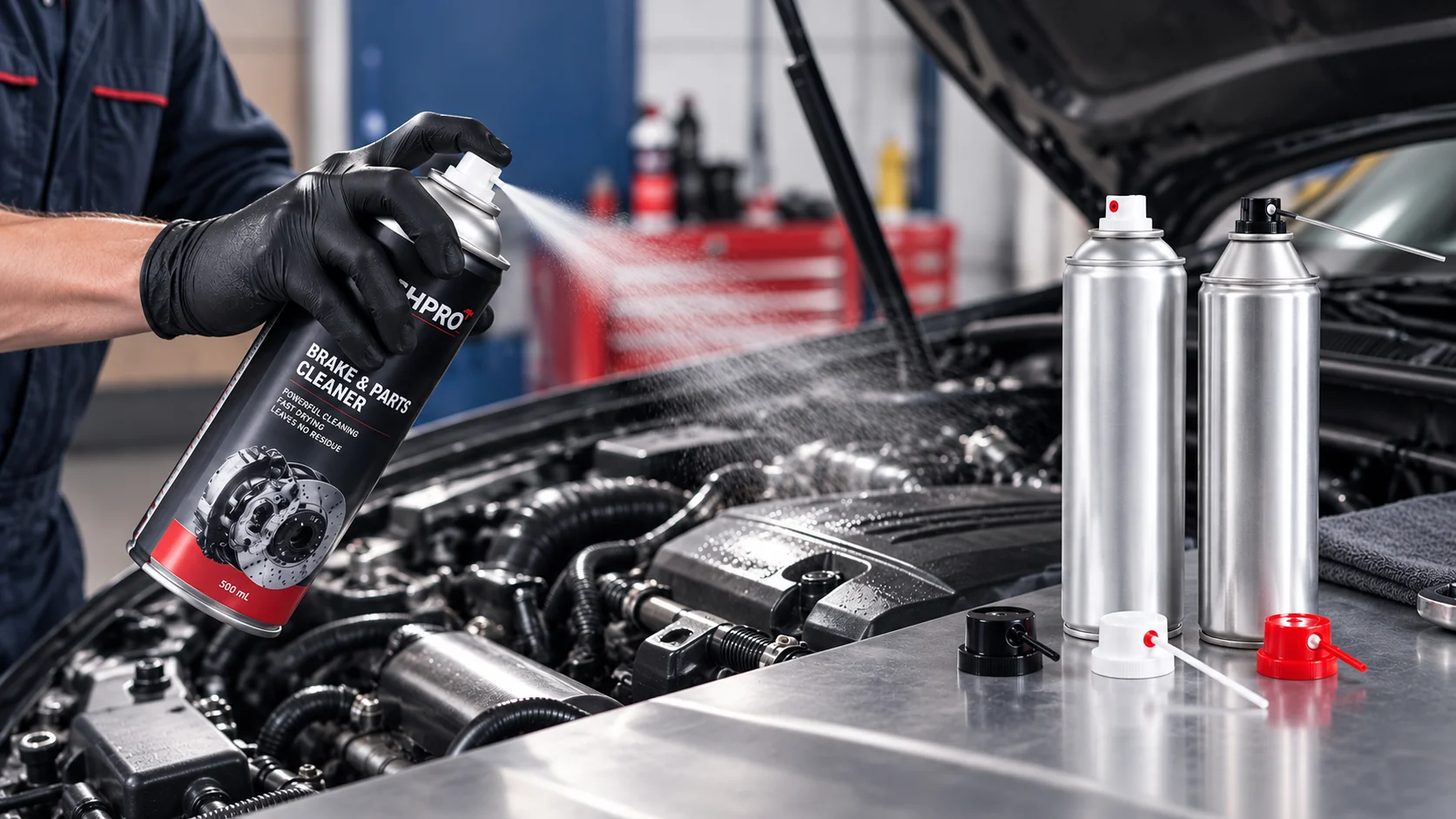
Automotive & Industrial
Technical aerosols place cleaners, lubricants, adhesives and coatings where the work is happening.
Automotive
Packaging priorities
- Solvent, resin and oil compatibility
- Focused jet, fan spray or heavy coating
- Pressure class and temperature exposure
- Clog resistance and repeat-use reliability
- Professional handling and transport needs
Controlled care
Medical, Health & First Aid
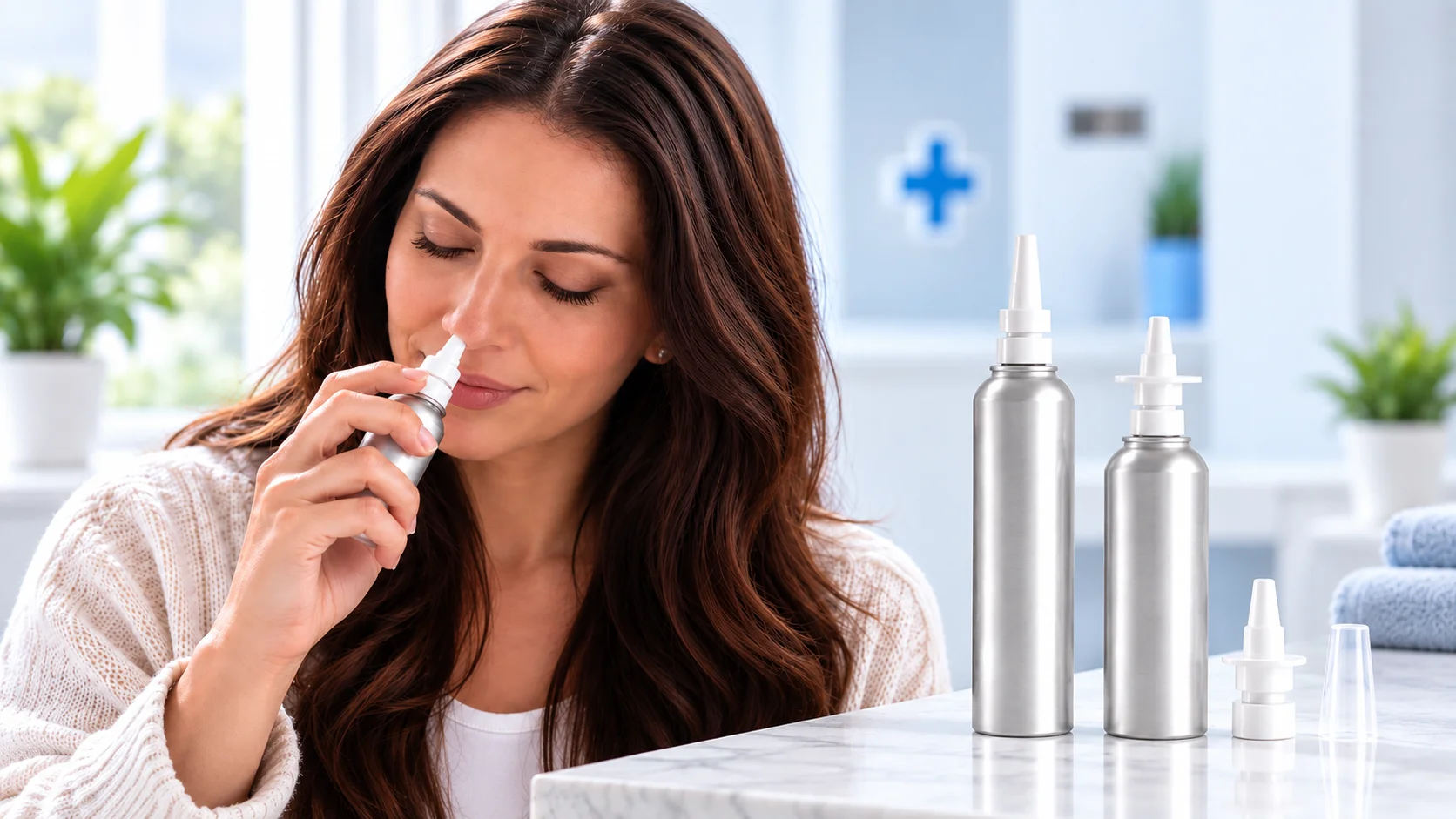
Health-related sprays can support hygienic, low-contact application, while claims and market requirements define the development path.
ENT & respiratory care
First aid & personal care
Packaging priorities
- Product-contact material compatibility
- Output accuracy and application comfort
- Cleanliness and low-contact dispensing
- Use orientation and target-area control
- Claim, classification and market requirements
Portion and texture
Food-Grade Aerosol Products
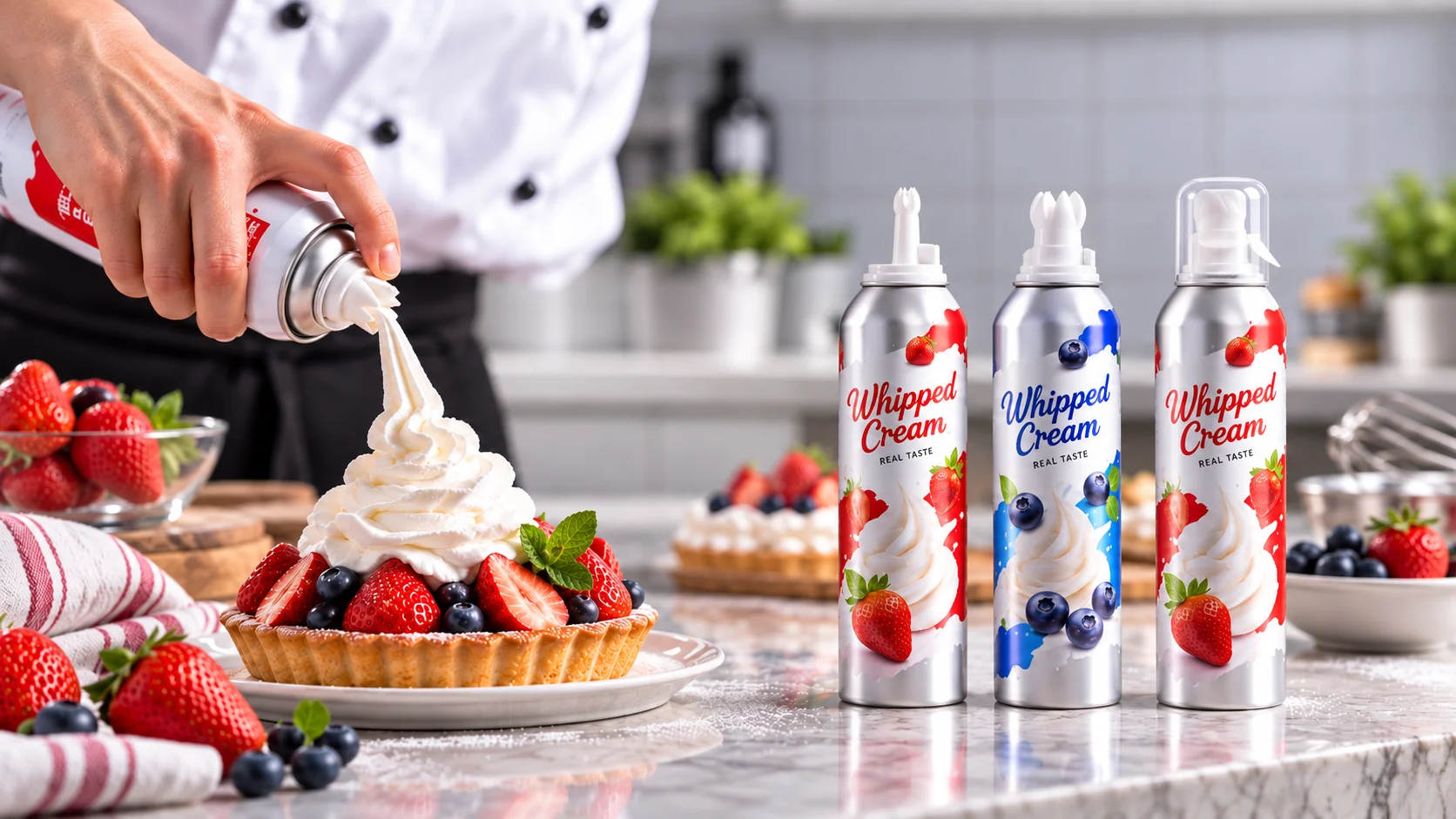
Food aerosols can portion an ingredient, coat a surface or create a texture that is difficult to achieve with an ordinary package.
Food & culinary applications
Packaging priorities
- Food-contact materials and component cleanliness
- Portion control, coating pattern or foam texture
- Formula isolation where the application needs it
- Viscosity and evacuation performance
- Filling process and destination-market compliance
Specialized systems
Pest Control, Safety & Energy Gas
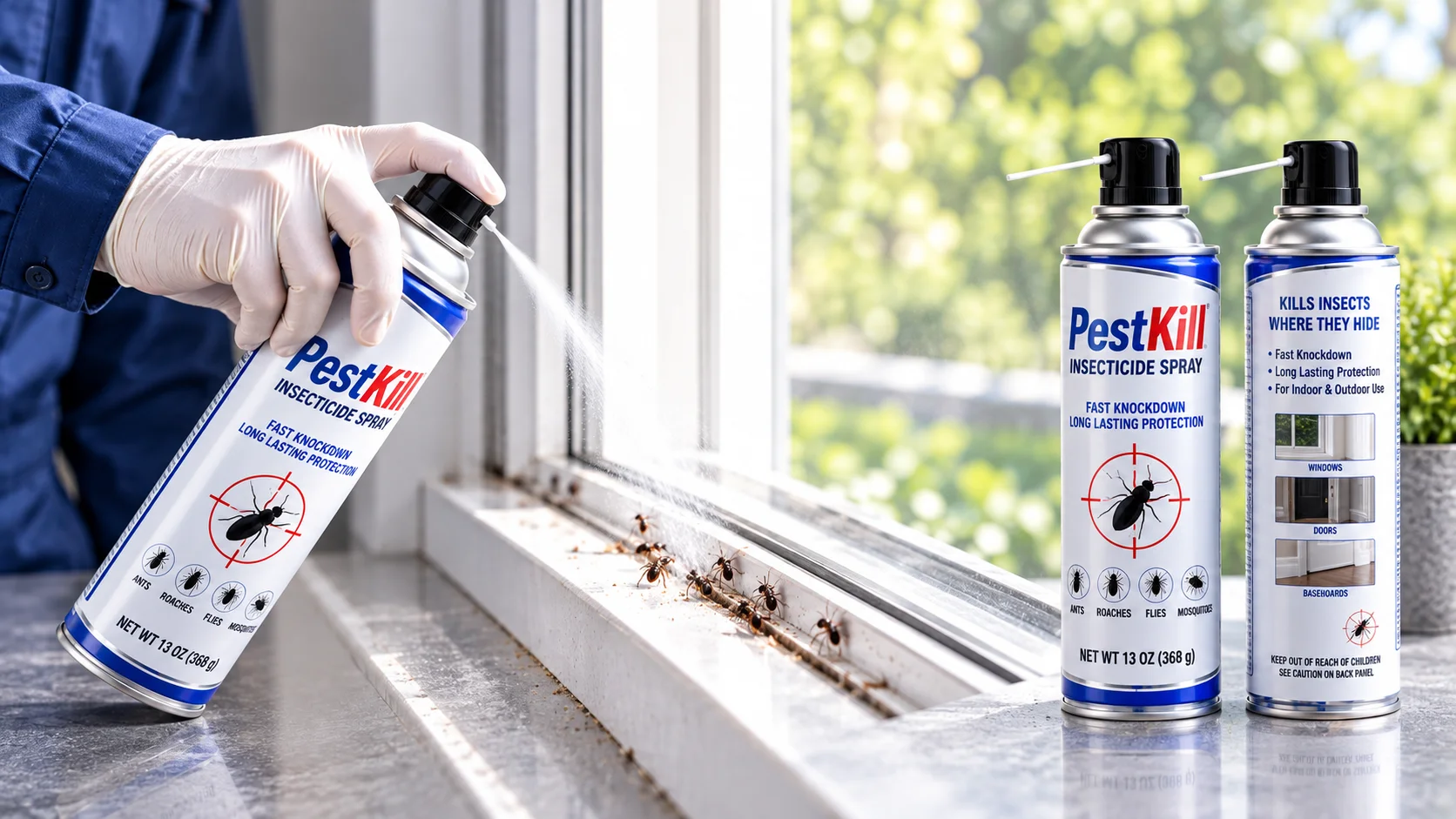
These packages may target an insect, suppress a small fire, store fuel gas or create a novelty effect.
Safety & energy gas
Packaging priorities
- Special valve or discharge mechanism
- Pressure resistance and pack configuration
- Transport classification and labeling
- Tamper and misuse considerations
- Clear operating and disposal instructions

Translate the application into packaging requirements
Begin with the product and the user experience—not a can diameter. A clear brief helps identify suitable container, coating, valve, actuator and pressure-system routes for testing.
-
01
Product
Formula family, viscosity, solvents, actives and sensitivity
-
02
Delivery
Mist, stream, foam, cream, gel, powder, output and target area
-
03
Use
Orientation, frequency, environment, user group and expected experience
-
04
Market
Fill volume, destination, annual quantity, decoration and compliance path
Continue to the Right Product Page
Use this page to define the application. Use the dedicated product pages to compare formats, construction, sizes and component options.
Frequently Asked Question
Short answers about matching an aerosol format to a product category. Final specifications must be validated with the intended formula and filling conditions. Please contact us if you have any needs!
What types of products can be delivered in aerosol packaging?
Aerosol packages can deliver products as fine mists, broad sprays, directional streams, foams, creams, gels, pastes and selected powders. Common categories include personal care, home care, automotive maintenance, coatings, healthcare, food and specialty products.
Why are different valves and actuators needed for different applications?
The valve controls flow and sealing while the actuator shapes the user-facing output. A cosmetic mist, cleaning foam, lubricant stream and food topping require different flow rates, orifices, spray patterns and component materials.
Can healthcare and food products use aerosol systems?
Yes, but these applications require suitable product-contact materials, hygienic handling, compatible filling technology, relevant market approvals and validation with the final formulation. Regulated drug-delivery applications require specialist development and regulatory review.
Does every aerosol application use the same can material?
No. Aluminum and steel aerosol cans offer different size, construction, shaping, decoration and commercial options. The correct choice depends on formula compatibility, pressure, dimensions, target market, production quantity and required presentation.
What should be included in an aerosol packaging brief?
A useful brief includes the product category, formula family, target fill volume, pressure source or propellant, required output, use orientation, target market, annual quantity and decoration requirements. Please contact us if you have any needs!